



Cephalin form bovine brain
Based on 3 publication(s) in Google Scholar
Cephalin form bovine brain is an orally active phospholipid widely present in organisms.Cephalin form bovine brain participates in the formation of autophagosome membrane as a lipid anchor of autophagy-related protein Atg8/LC3. Cephalin form bovine brain enhances Autophagic flux, promotes cell differentiation, regulates lipid droplet fusion, delays aging, and also affects lipid metabolism and membrane integrity.
For research use only. We do not sell to patients.
- Purity: 98.0%
- CAS No.: 90989-93-8
-
Storage:Pure form -20°C, 3 years , 4°C, 2 years ; In solvent -80°C, 6 months , -20°C, 1 month

To place orders, for customer services and technical support, please contact: MedChemExpress USA
Tel: 609-228-6898 E-mail: [email protected] [email protected]


-
 Biological Activity
-
Chemical Information
-
Solvent & Solubility
- Purity & Documentation
- References
-
 Help & FAQs
-

Metabolism/Protease Compound Library
HY-L012
-
Autophagy Compound Library
HY-L029
-
Anti-Aging Compound Library
HY-L034
-
Lipid Compound Library
HY-L043
-
Endocrinology Compound Library
HY-L047
-
Orally Active Compound Library
HY-L061
-
Traditional Chinese Medicine Active Compound Library
HY-L065
-
Human Metabolite Library
HY-L123
-
Cell Death Library
HY-L162
-
Mitophagy Compound Library
HY-L180
-
Bioactive Compound Library Max
HY-L181
-
Bioactive Compound Library
HY-L001
-
Miao Ethnicity Medicine Compound Library
HY-L190
-
High-Throughput Bioactive Compound Library
HY-L205
-
Liposome Library
HY-L214
-
Cosmetic Ingredient Compound Library
HY-L221
-
Mongolian Medicine Compound Library
HY-L238
-
Tonifying Traditional Chinese Medicine Monomer Compound Library
HY-L246


Publications Citing Use of MedChemExpress (MCE) Cephalin form bovine brain
More Customer Validation & Images

-
Cell Proliferation/Viability Assay


Biological Activity
Cephalin form bovine brain (DHA-containing) (50 μM, 72-h co-treatment with dbcAMP) combined with dbcAMP enhances cell differentiation and growth inhibition of HL-60 cells[2].
MedChemExpress (MCE) has not independently confirmed the accuracy of these methods. They are for reference only.
Cephalin form bovine brain (2 g added to the basal diet containing 8 g of soybean oil; p.o.; dietary administration; ad libitum; 15-18 days) causes a decrease in serum cholesterol, phospholipid, apolipoprotein A-I (apoA-I) and apoE, an increase in high molecular weight apoB, alters the distribution of hepatic phospholipids and the fatty acid composition of serum and hepatic phospholipids in rats[6].
MedChemExpress (MCE) has not independently confirmed the accuracy of these methods. They are for reference only.
-
Animal Model:Male Wistar rats (weight: 143 g, specific age not mentioned) fed cholesterol-free semipurified diet[6]
-
Dosage:2 g of Phosphatidylethanolamine added to the basal diet containing 8 g of soybean oil
-
Administration:Dietary administration, ad libitum, 15-18 days
-
Result:Led to a significant decrease in serum cholesteryl ester, phospholipid, apoA-I and apoE, while serum apoB was higher compared to the PC and control groups.
Decreased hepatic cholesterol.
Altered the relative distribution of phospholipid subclasses in the liver.
Altered the fatty acid composition of liver PC and PE.
Enhanced the excretion of fecal neutral steroids.
Showed higher hepatic HMG-CoA reductase activity.


Chemical Information
-
CAS No. 90989-93-8
-
Appearance Oil
-
Color Light yellow to yellow
-
SMILES
[Cephalin form bovine brain]
-
Shipping
Room temperature in continental US; may vary elsewhere.
-
Storage
Pure form -20°C 3 years 4°C 2 years In solvent -80°C 6 months -20°C 1 month


Publications (3)
-
Journal Impact Factor
-
Most Recent
-
Adv Sci (Weinh)
2026 Jul;13(39):e20095. PMID: 41972457 -
Adv Sci (Weinh)
Obesity-Associated TRIM15 Promotes the Proliferation of Esophageal Adenocarcinoma Through the YY2/FOXRED1 Axis. [Abstract]2025 Nov 14:e17330. PMID: 41237333
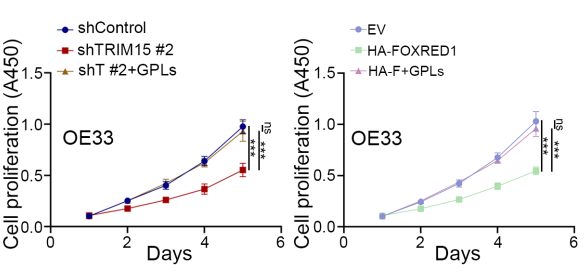
Cephalin form bovine brain purchased from MedChemExpress. Usage Cited in: Adv Sci (Weinh). 2025 Nov 14:e17330. [Abstract]
Addition of GPLs (PCs, PEs, LysoPCs, and LysoPAs; each at 10 µg/mL) to EAC cells for 5 days attenuated the inhibitory effect of TRIM15 knockdown or FOXRED1 overexpression on cell proliferation.
-
Phytomedicine
Morus alba L. (Sangzhi) alkaloids alleviate diabetic nephropathy by suppressing endoplasmic reticulum stress and modulating AMPK-associated phosphatidylethanolamine content. [Abstract]2026 Mar:152:157836. PMID: 41570782


Solvent & Solubility
Ethanol : 50 mg/mL (Need ultrasonic)
DMSO : 5 mg/mL (Need ultrasonic; Hygroscopic DMSO has a significant impact on the solubility of product, please use newly opened DMSO)
Select the appropriate dissolution method based on your experimental animal and administration route.
- For the following dissolution methods, please ensure to first prepare a clear stock solution using an In Vitro approach and then sequentially add co-solvents:
- To ensure reliable experimental results, the clarified stock solution can be appropriately stored based on storage conditions. As for the working solution for In Vivo experiments, it is recommended to prepare freshly and use it on the same day.
- The percentages shown for the solvents indicate their volumetric ratio in the final prepared solution. If precipitation or phase separation occurs during preparation, heat and/or sonication can be used to aid dissolution.
Add each solvent one by one: 10% EtOH 40% PEG300 5% Tween-80 45% Saline
Solubility: ≥ 2.5 mg/mL; Clear solution
This protocol yields a clear solution of ≥ 2.5 mg/mL (saturation unknown).
Taking 1 mL working solution as an example, add 100 μL EtOH stock solution (25.0 mg/mL) to 400 μL PEG300, and mix evenly; then add 50 μL Tween-80 and mix evenly; then add 450 μL Saline to adjust the volume to 1 mL.
Preparation of Saline: Dissolve 0.9 g sodium chloride in ddH₂O and dilute to 100 mL to obtain a clear Saline solution.
Add each solvent one by one: 10% EtOH 90% (20% SBE-β-CD in Saline)
Solubility: 2.5 mg/mL; Suspended solution; Need ultrasonic
This protocol yields a suspended solution of 2.5 mg/mL. Suspended solution can be used for oral and intraperitoneal injection.
Taking 1 mL working solution as an example, add 100 μL EtOH stock solution (25.0 mg/mL) to 900 μL 20% SBE-β-CD in Saline, and mix evenly.
Preparation of 20% SBE-β-CD in Saline (4°C, storage for one week): 2 g SBE-β-CD powder is dissolved in 10 mL Saline, completely dissolve until clear.
Add each solvent one by one: 10% EtOH 90% Corn Oil
Solubility: ≥ 2.5 mg/mL; Clear solution
This protocol yields a clear solution of ≥ 2.5 mg/mL (saturation unknown). If the continuous dosing period exceeds half a month, please choose this protocol carefully.
Taking 1 mL working solution as an example, add 100 μL EtOH stock solution (25.0 mg/mL) to 900 μL Corn oil, and mix evenly.
Please enter the basic information of animal experiments:
-
-
-
-
Recommended: Prepare an additional quantity of animals to account for potential losses during experiments.
Please enter your animal formula composition:
-
%DMSO +
Recommended: Keep the proportion of DMSO in working solution below 2% if your animal is weak.
-
%+
-
+%Tween-80 + +
-
%Saline +
The co-solvents required include: DMSO, . All of co-solvents are available by MedChemExpress (MCE). , Tween 80. All of co-solvents are available by MedChemExpress (MCE).
Working solution concentration: 0.22 mg/mL
Method for preparing stock solution: mg drug dissolved in μL DMSO. Stock solution concentration: mg/mL.
1. Take μL DMSO stock solution;
2. Add μL .
μL , mix evenly;
3. Then add μL Tween 80, mix evenly;
4. Then add μL
Please ensure that the stock solution in the first step is dissolved to a clear state, and add co-solvents in sequence. You can use ultrasonic heating (ultrasonic cleaner, recommended frequency 20-40 kHz), vortexing, etc. to assist dissolution.


Purity & Documentation
-
Data Sheet (271 KB)
-
SDS (788 KB)
- English - EN (788 KB)
- Français - FR (788 KB)
- Deutsch - DE (788 KB)
- Norwegian - NO (788 KB)
- Español - ES (788 KB)
- Swedish - SV (788 KB)
- Italian - IT (788 KB)
- Korean - KR (788 KB)
- Portuguese - PT (788 KB)
-
Handling Instructions (2659 KB)
References
[1]. Rockenfeller P, et al. Phosphatidylethanolamine positively regulates autophagy and longevity. Cell Death Differ. 2015 Mar;22(3):499-508. [Content Brief]
[2]. Ishigamori H, et al. Docosahexaenoic acid-containing phosphatidylethanolamine enhances HL-60 cell differentiation by regulation of c-jun and c-myc expression. Mol Cell Biochem. 2005 Jul;275(1-2):127-33. [Content Brief]
[3]. Cohen BC, et al. Lipid Droplet Fusion in Mammary Epithelial Cells is Regulated by Phosphatidylethanolamine Metabolism. J Mammary Gland Biol Neoplasia. 2017 Dec;22(4):235-249. [Content Brief]
[4]. Wellner N, et al. Studies on the anorectic effect of N-acylphosphatidylethanolamine and phosphatidylethanolamine in mice. Biochim Biophys Acta. 2011 Sep;1811(9):508-12. [Content Brief]
[5]. Li Z, et al. The ratio of phosphatidylcholine to phosphatidylethanolamine influences membrane integrity and steatohepatitis. Cell Metab. 2006 May;3(5):321-31. [Content Brief]
[6]. Imaizumi K, et al. The contrasting effect of dietary phosphatidylethanolamine and phosphatidylcholine on serum lipoproteins and liver lipids in rats. J Nutr. 1983 Dec;113(12):2403-11. [Content Brief]
[7]. Imaizumi K, et al. Effect of phosphatidylethanolamine and its constituent base on the metabolism of linoleic acid in rat liver. Biochim Biophys Acta. 1989 Oct 17;1005(3):253-9. [Content Brief]

Calculators
Concentration (start) × Volume (start) = Concentration (final) × Volume (final)


Cephalin form bovine brain Related Classifications
HY-W250118 Related Classifications
 Powered by Bioz