1. Search Result
Search Result
Results for "

2,4-D

" in MedChemExpress (MCE) Product Catalog:

26

Inhibitors & Agonists

3

Biochemical Assay Reagents

1

Peptides

2

Natural
Products

7

Isotope-Labeled Compounds

4

Antibodies

Cat. No. Product Name Target Research Areas Chemical Structure
  • HY-18572
    2,4-D
    1 Publications Verification

    2,4-Dichlorophenoxyacetic acid

    Environmental Pollutants Herbicide Apoptosis DNA/RNA Synthesis Cancer
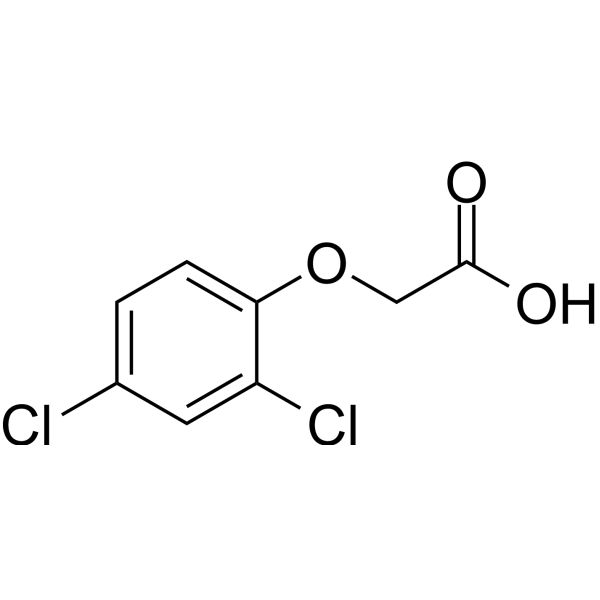
    2,4-D (2, 4-dichlorophenoxyacetic acid) is a selective herbicide that can be used for the control of broad-leaved weeds. 2,4-D can induce apoptosis. 2,4-D inhibits DNA and protein synthesis, thereby preventing normal plant growth and development .
    2,4-D
  • HY-18572A
    2,4-D sodium
    1 Publications Verification

    2,4-Dichlorophenoxyacetic acid sodium

    Environmental Pollutants Apoptosis Herbicide DNA/RNA Synthesis Cancer
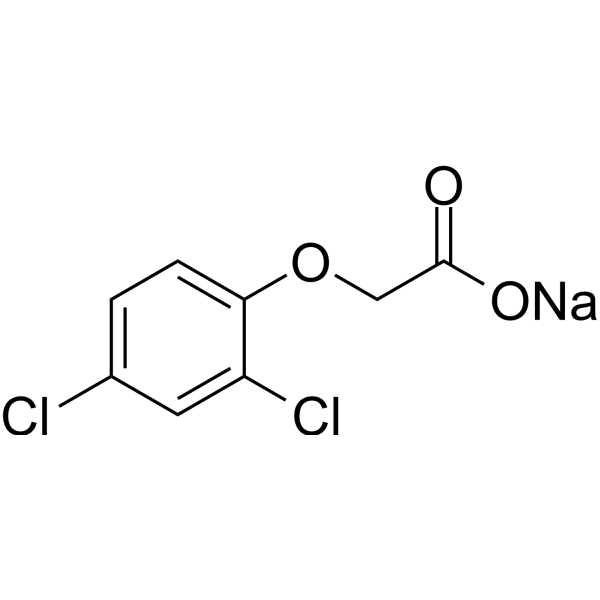
    2,4-D (2,4-Dichlorophenoxyacetate) sodium is a selective herbicide that can be used for the control of broad-leaved weeds. 2,4-D sodium salt can induce < b>apoptosis. 2,4-D sodium salt inhibits DNA and protein synthesis, thereby preventing normal plant growth and development .
    2,4-D sodium
  • HY-B0867

    Environmental Pollutants Herbicide Others
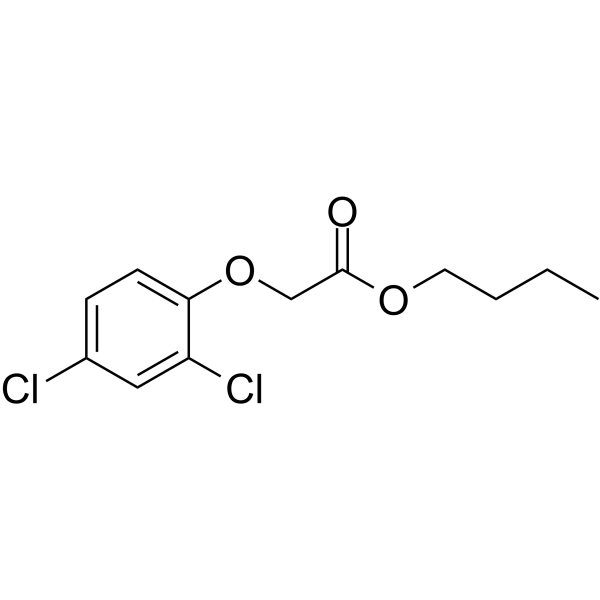
    2,4-D Butyl ester is a phenoxyacetic acid herbicide used to control woody broadleaf weeds. 2,4-D Butyl ester shows high toxicity to fish and aquatic invertebrates. In animals, 2,4-D Butyl ester hydrolyzes to produce n-butanol, which further induces neurobehavioral toxicity such as ataxia in rats .
    2,4-D Butyl ester
  • HY-18572S2

    Isotope-Labeled Compounds Herbicide DNA/RNA Synthesis Apoptosis Cancer
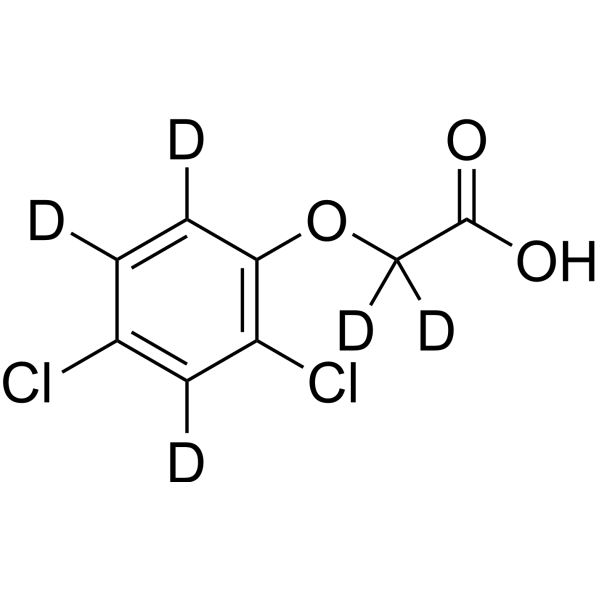
    2,4-D-d5 (2,4-Dichlorophenoxyacetic acid-d5) is the deuterium labeled 2,4-D (HY-18572) . 2,4-D (2,4-Dichlorophenoxyacetic acid) is a selective systemic herbicide for the control of broad-leaved weeds. 2,4-D acts as a plant hormone, causing uncontrolled growth in the meristematic tissues. 2,4-D inhibits DNA and protein synthesis and thereby prevents normal plant growth and development .
    2,4-D-d5
  • HY-18572R

    2,4-Dichlorophenoxyacetic acid (Standard)

    Reference Standards Herbicide DNA/RNA Synthesis Apoptosis Cancer
    2,4-D (Standard) is the analytical standard of 2,4-D (HY-18572). This product is intended for research and analytical applications. 2,4-D (2, 4-dichlorophenoxyacetic acid) is a selective herbicide that can be used for the control of broad-leaved weeds. 2,4-D can induce apoptosis. 2,4-D inhibits DNA and protein synthesis, thereby preventing normal plant growth and development .
    2,4-D (Standard)
  • HY-18572S

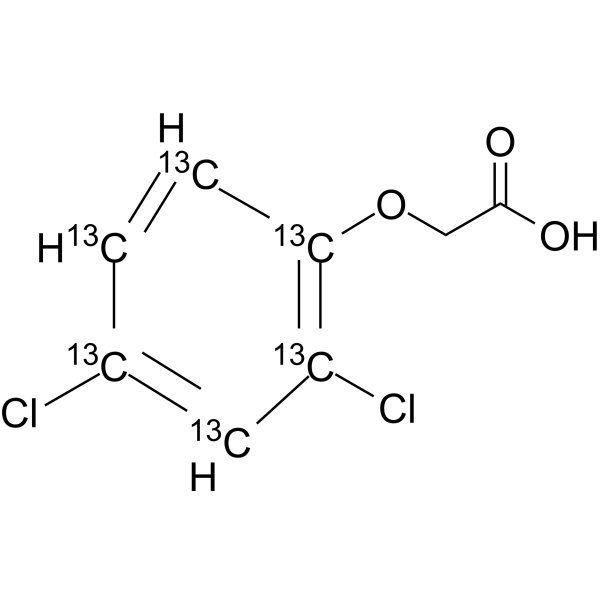
    2,4-Dichlorophenoxyacetic acid-13C6

    Isotope-Labeled Compounds Herbicide DNA/RNA Synthesis Apoptosis Cancer
    2,4-D- 13C6 is the 13C-labeled 2,4-D (HY-18572). 2,4-D (2,4-Dichlorophenoxyacetic acid) is a selective systemic herbicide for the control of broad-leaved weeds. 2,4-D acts as a plant hormone, causing uncontrolled growth in the meristematic tissues. 2,4-D inhibits DNA and protein synthesis and thereby prevents normal plant growth and development .
    2,4-D-13C6
  • HY-N8440S1

    Isotope-Labeled Compounds Infection
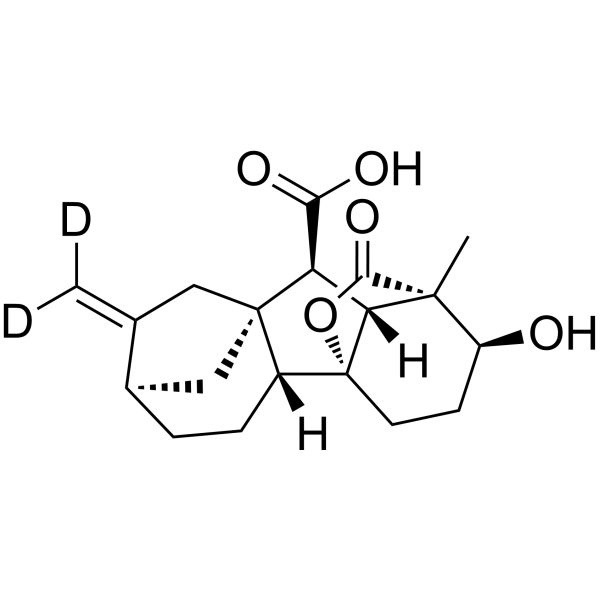
    Gibberellin A4-d2 is the deuterium labeled Gibberellin A4 (HY-N8440) .
    Gibberellin A4-d2
  • HY-B0868

    Herbicide Others
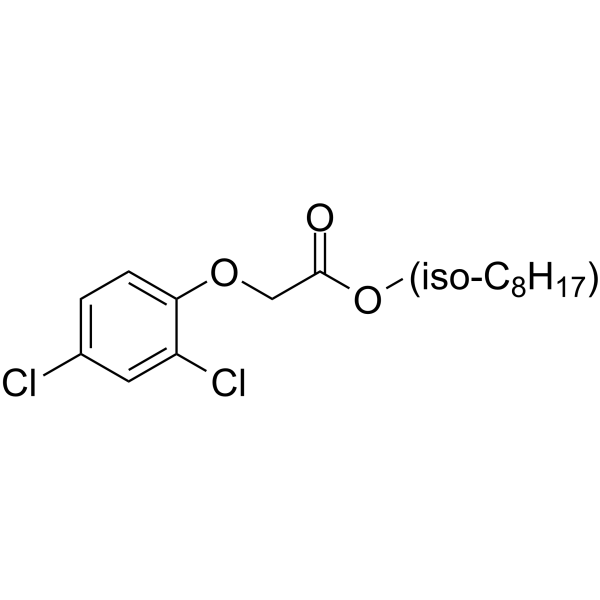
    2,4-D isooctyl ester, a synthetic auxin herbicide, is a TIR1 protein transport inhibitor. 2,4-D isooctyl ester interacts with TIR1 to facilitate auxin signal transduction, activating auxin-mediated growth responses. 2,4-D isooctyl ester functions as a pro-herbicide bio-transformed into phytotoxic 2,4-D post-plant absorption, disrupting normal plant growth. 2,4-D isooctyl ester can be used to control broadleaf weeds .
    2,4-D isooctyl ester
  • HY-P11032

    SARS-CoV Virus Protease Infection
    Mp-4D7-pF2, a cell-penetrating bicyclic peptide, is a noncovalent SARS-CoV-2 main protease inhibitor with an IC50 of 4.51 μM. Mp-4D7-pF2 has an antiviral activity against SARS-CoV-2 with no cytotoxicity. Mp-4D7-pF2 can used for COVID-19 infections research .
    Mp-4D7-pF2
  • HY-124547

    Endogenous Metabolite Others
    2,4-D methyl ester is a bioactive compound with the activity of promoting the accumulation of nutritional and medicinal components. 2,4-D methyl ester can be used to enhance the production of bioactive components in Cordyceps militaris. 2,4-D methyl ester showed an inductive effect on bioactive components at specific concentrations. The application of 2,4-D methyl ester provides an effective strategy to improve the fruit quality of Cordyceps militaris. 2,4-D methyl ester, as a biostimulant, can induce dose-dependent responses in different components .
    2,4-D methyl ester
  • HY-B0867R

    Herbicide Reference Standards Environmental Pollutants Others
    2,4-D Butyl ester (Standard) is the analytical standard of 2,4-D Butyl ester (HY-B0867). This product is intended for research and analytical applications. 2,4-D Butyl ester is a phenoxyacetic acid herbicide used to control woody broadleaf weeds. 2,4-D Butyl ester shows high toxicity to fish and aquatic invertebrates. In animals, 2,4-D Butyl ester hydrolyzes to produce n-butanol, which further induces neurobehavioral toxicity such as ataxia in rats .
    2,4-D Butyl ester (Standard)
  • HY-124547S

    Isotope-Labeled Compounds Others
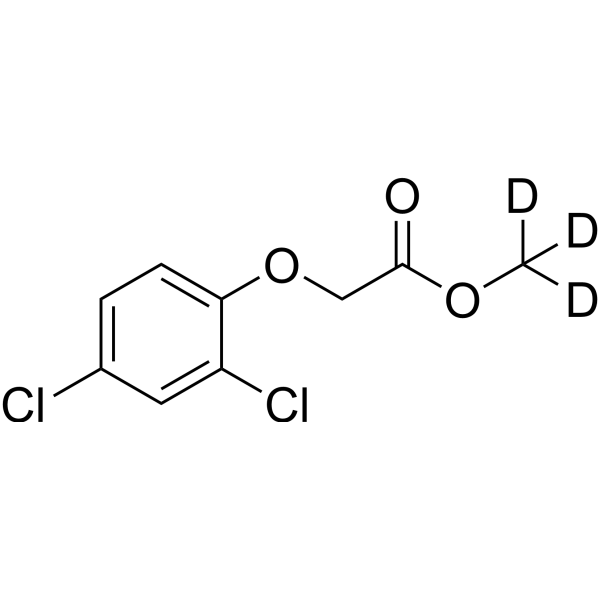
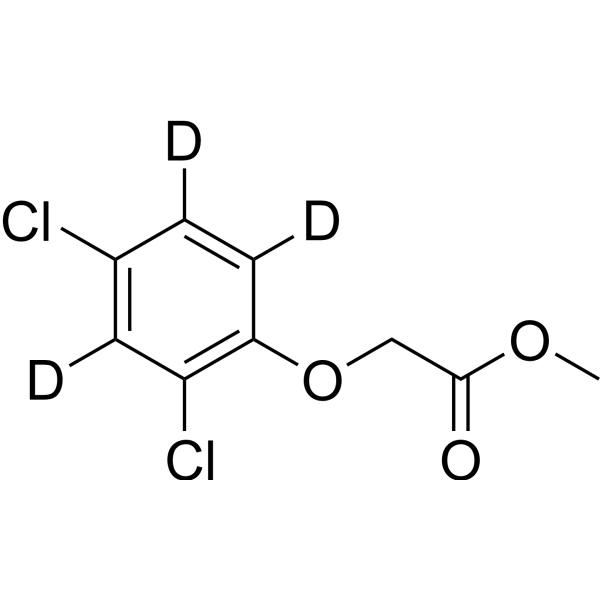
    2,4-D methyl ester-d3 is the deuterium labeled 2,4-D methyl ester (HY-124547). 2,4-D methyl ester is a bioactive compound with the activity of promoting the accumulation of nutritional and medicinal components. 2,4-D methyl ester can be used to enhance the production of bioactive components in Cordyceps militaris. 2,4-D methyl ester showed an inductive effect on bioactive components at specific concentrations. The application of 2,4-D methyl ester provides an effective strategy to improve the fruit quality of Cordyceps militaris. 2,4-D methyl ester, as a biostimulant, can induce dose-dependent responses in different components .
    2,4-D methyl ester-d3
  • HY-18572AR

    2,4-Dichlorophenoxyacetic acid sodium (Standard)

    Reference Standards Herbicide DNA/RNA Synthesis Apoptosis Cancer
    2,4-D sodium (Standard) is the analytical standard of 2,4-D sodium (HY-18572A). This product is intended for research and analytical applications. 2,4-D sodium is a selective herbicide that can be used for the control of broad-leaved weeds. 2,4-D sodium can induce < b>apoptosis. 2,4-D sodium inhibits DNA and protein synthesis, thereby preventing normal plant growth and development .
    2,4-D sodium (Standard)
  • HY-124547R

    Endogenous Metabolite Reference Standards Others
    2,4-D methyl ester (Standard) is the analytical standard of 2,4-D methyl ester. This product is intended for research and analytical applications. 2,4-D methyl ester is a bioactive compound with the activity of promoting the accumulation of nutritional and medicinal components. 2,4-D methyl ester can be used to enhance the production of bioactive components in Cordyceps militaris. 2,4-D methyl ester showed an inductive effect on bioactive components at specific concentrations. The application of 2,4-D methyl ester provides an effective strategy to improve the fruit quality of Cordyceps militaris. 2,4-D methyl ester, as a biostimulant, can induce dose-dependent responses in different components .
    2,4-D methyl ester (Standard)
  • HY-124547S1

    Isotope-Labeled Compounds Others
    2,4-D Methyl ester-d3-1 is the deuterium labeled 2,4-D methyl ester .
    2,4-D Methyl ester-d3-1
  • HY-W547534

    2,4-Dichlorophenoxyacetic acid ammonium

    Herbicide DNA/RNA Synthesis Apoptosis Cancer
    2,4-D (2, 4-dichlorophenoxyacetic acid) ammonium is a selective herbicide that can be used for the control of broad-leaved weeds. 2,4-D ammonium can induce apoptosis. 2,4-D ammonium inhibits DNA and protein synthesis, thereby preventing normal plant growth and development .
    2,4-D ammonium
  • HY-18572S1

    Isotope-Labeled Compounds Herbicide DNA/RNA Synthesis Apoptosis Cancer
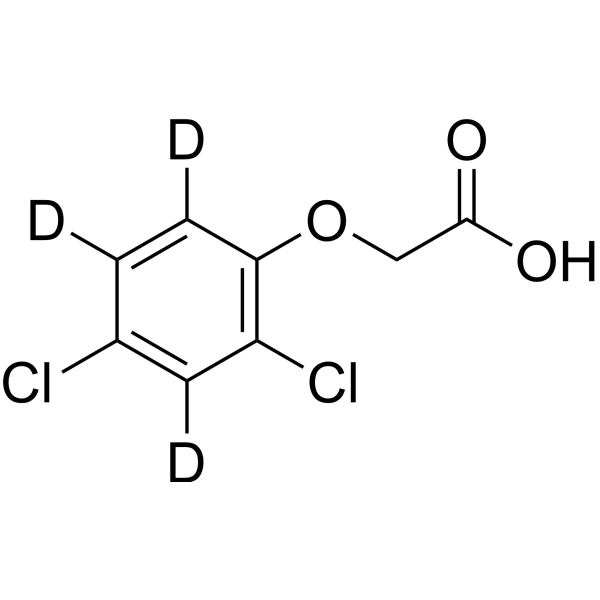
    2,4-D-d3 is the deuterium labeled 2,4-D (HY-18572) . 2,4-D (2,4-Dichlorophenoxyacetic acid) is a selective systemic herbicide for the control of broad-leaved weeds. 2,4-D acts as a plant hormone, causing uncontrolled growth in the meristematic tissues. 2,4-D inhibits DNA and protein synthesis and thereby prevents normal plant growth and development .
    2,4-D-d3
  • HY-174382

    Akt mTOR NF-κB ROR Apoptosis Cancer
    ROR1-IN-3 (Compound 24d) is a potent and highly selective ROR1 kinase inhibitor (IC50 = 17.6 nM). ROR1-IN-3 demonstrates robust antitumor activity and inhibitory effect against ROR1 both in vitro and in vivo. ROR1-IN-3 has robust antiproliferative efficacy in vitro and in vivo. ROR1-IN-3 induces apoptosis in cancer cell lines. ROR1-IN-3 inhibits ROR1 downstream AKT/mTOR and NF-κB signaling pathway. ROR1-IN-3 can be studied in antitumor research .
    ROR1-IN-3
  • HY-18572C

    Biochemical Assay Reagents Others
    2,4-D Sterile Solution (1 mg/mL) is a ready-to-use, filtered and sterilized plant hormone storage solution commonly used in plant tissue culture research.
    2,4-D Sterile Solution (1 mg/ml)
  • HY-173564

    Epigenetic Reader Domain Necroptosis Inflammation/Immunology
    DW34 is an orally active pan-BRD4-D1 biased inhibitor with additional BRD4-D2 inhibitive activity. DW34 displays comparable inhibitive efficacy to I-BET151 (HY-13235) (EC50 = 0.16 μM) with low nanomolar EC50 values of 0.14 μM. DW34 significantly reduces liver inflammation induced by LPS (HY-D1056) and APAP (HY-66005) via reducing chemokine expression and cellular necrosis .
    DW34
  • HY-116739R

    Brassidic acid (Standard); trans-13-Docosenoic acid (Standard)

    Drug Derivative Reference Standards Others Metabolic Disease
    2,4-D methyl ester (Standard) is the analytical standard of 2,4-D methyl ester. This product is intended for research and analytical applications. 2,4-D methyl ester is a bioactive compound with the activity of promoting the accumulation of nutritional and medicinal components. 2,4-D methyl ester can be used to enhance the production of bioactive components in Cordyceps militaris. 2,4-D methyl ester showed an inductive effect on bioactive components at specific concentrations. The application of 2,4-D methyl ester provides an effective strategy to improve the fruit quality of Cordyceps militaris. 2,4-D methyl ester, as a biostimulant, can induce dose-dependent responses in different components .
    13(E)-Docosenoic acid (Standard)
  • HY-133813AR

    Reference Standards Drug Metabolite Neurological Disease
    2,4-D Butyl ester (Standard) is the analytical standard of 2,4-D Butyl ester. This product is intended for research and analytical applications. 2,4-D Butyl ester is an organic phenoxy herbicide and used to control woody broad-leaf weeds. 2,4-D butyl ester produces its herbicidal effect by mimicking natural plant growth hormones causing plants to grow too rapidly to survive .
    Apovincaminic acid hydrochloride salt (Standard)
  • HY-158273

    DNA/RNA Synthesis Inflammation/Immunology
    2,4-D/BSA is a biochemical reagent that can be used as a biological material or organic compound for life science related research .
    2,4-D/BSA
  • HY-158287

    DNA/RNA Synthesis Inflammation/Immunology
    2,4-D/KLH is a biochemical reagent that can be used as a biological material or organic compound for life science related research .
    2,4-D/KLH
  • HY-130046S1

    Bacterial Isotope-Labeled Compounds Others
    16β-Hydroxy-17β-estradiol-2,4-d2 is the deuterium labeled 16β-Hydroxy-17β-estradiol-2,4 .
    16β-Hydroxy-17β-estradiol-2,4-d2
  • HY-167959

    Herbicide Infection
    MCPA-isooctyl is a selective conductive phenoxycarboxylate herbicide and an alternative to 2,4-D Butyl ester (HY-B0867). MCPA-isooctyl effectively controls broadleaf weeds in various crop fields via post-emergence foliar or soil treatment. MCPA-isooctyl is absorbed by the roots, stems and leaves of plants; it is easily metabolized and detoxified in gramineous crops, but difficult to metabolize in dicotyledonous weeds, causing stem and leaf distortion, root deformation, and eventually weed death. When formulated into chitosan nanoparticles, MCPA-isooctyl still significantly inhibits the growth of weeds in wheat fields, and reduces their chlorophyll content and biomass at low doses .
    MCPA-isooctyl

Inquiry Online

Your information is safe with us. * Required Fields.

Salutation


Country or Region *

Applicant Name *


Organization Name *

Department *


Email Address *


Product Name *

Cat. No.


Requested quantity *

Phone Number *


Remarks

Inquiry Online

Inquiry Information

Product Name:
Cat. No.:
Quantity:
MCE Japan Authorized Agent:

