



1. Search Result
Search Result
Pathways Recommended: Stem Cell/Wnt Cell Cycle/DNA Damage
Results for "

Advanced Non-Small Cell Lung Cancer

" in MedChemExpress (MCE) Product Catalog:

36

Inhibitors & Agonists

1

Fluorescent Dye

1

Peptides

15

Inhibitory Antibodies

3

Isotope-Labeled Compounds

1

Click Chemistry

1

Oligonucleotides

Cat. No. Product Name Target Research Areas Chemical Structure
  • HY-114277
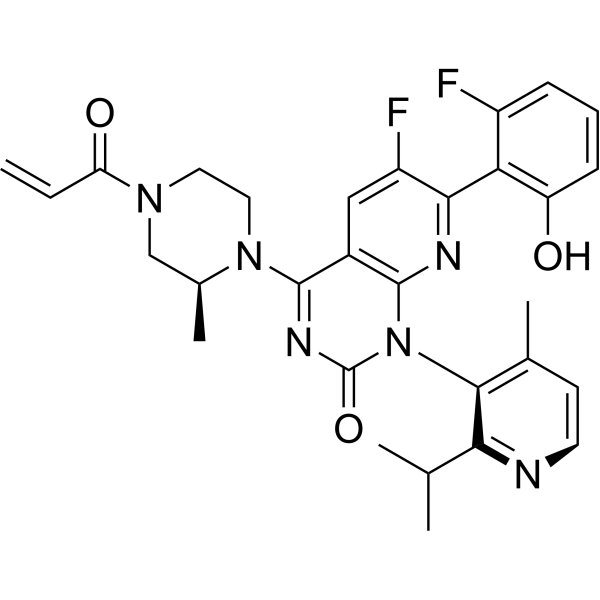
    Sotorasib
    Maximum Cited Publications
    109 Publications Verification

    AMG-510

    Ras Cancer
    Sotorasib (AMG-510) is a first-in-class, orally bioavailable, and selective KRAS G12C covalent inhibitor. Sotorasib irreversibly inhibits KRAS G12C by locking it in an inactive GDP-bound state. Sotorasib leads to the regression of KRAS G12C‑mutated locally advanced or metastatic non‑small cell lung cancer (NSCLC) .
    Sotorasib
  • HY-P9903
    Nivolumab
    20+ Cited Publications

    BMS-936558; ONO-4538; MDX-1106

    PD-1/PD-L1 Infection Cancer
    Nivolumab is a programmed death receptor-1 (PD-1) blocking human IgG4 antibody to treat advanced (metastatic) non-small cell lung cancer.
    Nivolumab
  • HY-P99675
    Ivonescimab
    1 Publications Verification

    AK112

    PD-1/PD-L1 VEGFR Cancer
    Ivonescimab (AK112) is a PD-1/VEGF bispecific antibody. Ivonescimab competitively inhibiting PD-1/PD-L1 interaction, reversing the immunosuppression mediated by it, and blocks the binding of VEGF-A to VEGFR2, inhibiting tumour angiogenesis in the tumour microenvironment. Ivonescimab also has significantly anticancer activity against EGFR-mutated locally advanced or metastatic non-squamous non-small cell lung cancer (NSCL) .
    Ivonescimab
  • HY-112870
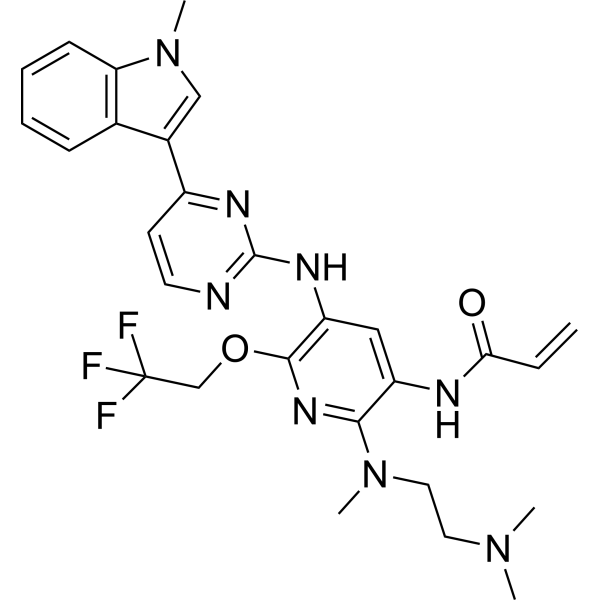
    Firmonertinib
    5+ Cited Publications

    Alflutinib; Furmonertinib; AST2818

    EGFR Cancer
    Firmonertinib (Alflutinib; Furmonertinib) is an orally active, mutant-selective, and highly brain penetrant EGFR inhibitor. Firmonertinib inhibits EGFR active mutations as well as the T790M acquired resistant mutation. Firmonertinib has the potential for the research of cancer diseases, especially advanced non-small cell lung cancer (NSCLC) with EGFR ex20ins mutation .
    Firmonertinib
  • HY-175749

    Molecular Glues Wee1 Inflammation/Immunology Cancer
    BMS-986463, a CRBN E3 ligase modulator (CELMoD), is a WEE1 kinase molecular glue degrader. BMS-986463 significantly inhibits tumor regression and reduces the level of phospho-CDK2. BMS-986463 can be used for advanced malignant solid tumors like non-small cell lung cancer (NSCLC) research .
    BMS-986463
  • HY-171945

    ABBV-400; Temab-A

    Antibody-Drug Conjugates (ADCs) Topoisomerase c-Met/HGFR Cancer
    Telisotuzumab Adizutecan (ABBV-400) is an anti-c-Met antibody-drug conjugate (ADC). Telisotuzumab Adizutecan is composed of the humanized anti-c-Met antibody Telisotuzumab (HY-P99391) and the topoisomerase 1 inhibitor (7-MAD-MDCPT) (HY-132162). Telisotuzumab Adizutecan exhibits significant anti-tumor activity against advanced solid tumors such as colorectal cancer, gastric cancer, and non-small cell lung cancer .
    Telisotuzumab Adizutecan
  • HY-400902

    YAP VEGFR Hippo (MST) Cancer
    VT3989 is an orally active pan-TEAD autopalmitoylation inhibitor that modulates the Hippo signaling pathway. VT3989 directly binds to TEAD transcription factors to block their palmitoylation modification, thereby disrupting the formation of YAP/TAZ-TEAD complexes and inhibiting downstream oncogenic transcriptional activity. VT3989 effectively inhibits the growth of NF2-deficient schwannoma and meningioma cells and reverses the Schwann cell phenotype. In addition, VT3989 exerts a synergistic effect when combined with Osimtinib (HY-15772) in EGFR-mutant non-small cell lung cancer models, significantly delaying tumor recurrence and prolonging survival. VT3989 can be used for the research of epithelioid hemangioendothelioma, malignant pleural mesothelioma, type 2 neurofibromatosis and related advanced solid tumors .
    VT3989
  • HY-P991097

    PM-8002; BNT-327

    VEGFR PD-1/PD-L1 Cancer
    Pumitamig (PM-8002, BNT-327) is a bispecific antibody targeting PD-L1 and VEGF-A, with immune activation and anti-angiogenic activities. By binding to PD-L1, Pumitamig restores the function of effector T cells, while neutralizing VEGF-A in the tumor microenvironment to reverse its inhibition on the infiltration and activation of immune cells and normalize tumor blood vessels. Pumitamig can also be combined with various ADCs targeting TROP2, B7H3, HER2, HER3 for the research of advanced/metastatic solid tumors, including non-small cell lung cancer, ovarian cancer, triple-negative breast cancer, cervical cancer, etc. Pumitamig also exhibits potential efficacy in "cold" tumors with low PD-L1 expression that are insensitive to immunotherapy .
    Pumitamig
  • HY-P991628

    PF-08634404

    PD-1/PD-L1 VEGFR Cancer
    SSGJ-707 (PF-08634404) is a bispecific antibody targeting VEGF and PD-1. SSGJ-707 exerts dual anti-tumor effects by neutralizing VEGF and blocking the PD-1 signaling pathway. SSGJ-707 can be combined with platinum-based chemotherapy to inhibit advanced non-small cell lung cancer (NSCLC), and its inhibitory effect is not limited by PD-L1 expression levels. In the HARMONi-2 trial, the objective response rate of SSGJ-707 correlates with the PD-L1 tumor proportion score, and the incidence of grade ≥3 adverse events is comparable to that of Inetetamab (HY-P99969). SSGJ-707 is being extensively investigated for a variety of malignancies including advanced NSCLC, colorectal cancer and small cell lung cancer .
    SSGJ-707
  • HY-112870A
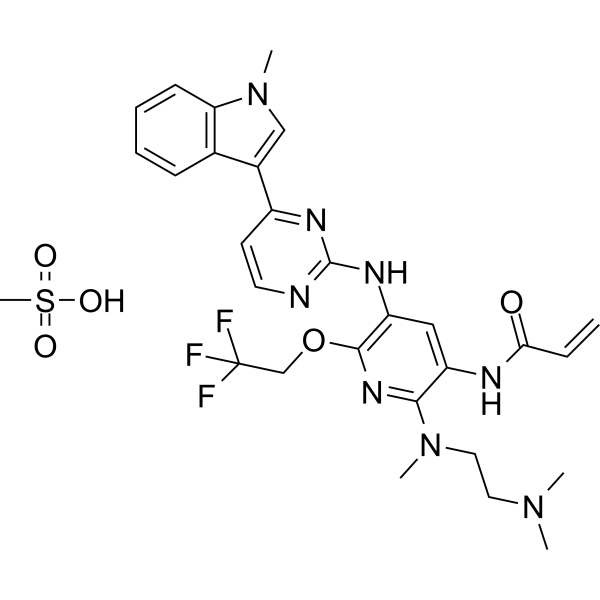
    Firmonertinib mesylate
    5+ Cited Publications

    Alflutinib mesylate; Furmonertinib mesylate; AST2818 mesylate

    EGFR Inflammation/Immunology Cancer
    Firmonertinib (Alflutinib; Furmonertinib) mesylate is is an orally active, mutant-selective, and blood-brain barrier penetrant EGFR inhibitor. Firmonertinib mesylate inhibits EGFR active mutations as well as the T790M acquired resistant mutation. Firmonertinib mesylate has the potential for the research of cancer diseases, especially advanced non-small cell lung cancer (NSCLC) with EGFR ex20ins mutation .
    Firmonertinib mesylate
  • HY-156617A

    SHR169265

    ADC Payload Topoisomerase Cancer
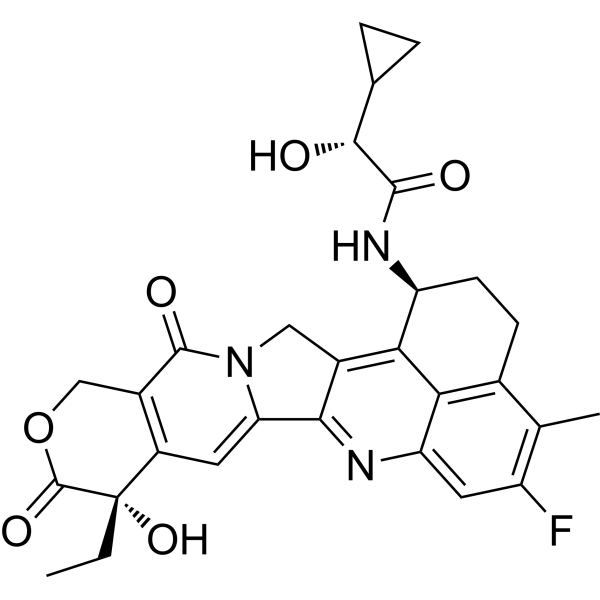
    (αR)-Cyclopropaneacetamide-Exatecan (SHR169265) is a DNA Topoisomerase I inhibitor with enhanced membrane permeability (with an IC50 of 1.34 μM against the human DNA Topoisomerase I). (αR)-Cyclopropaneacetamide-Exatecan exerts cytotoxic effects by inhibiting the enzymatic activity of Topoisomerase I, and this anticancer effect is independent of the expression level of HER2. (αR)-Cyclopropaneacetamide-Exatecan is an ADC Cytotoxin derived from Exatecan (HY-13631), which can be used in research related to advanced cancers such as breast cancer, gastric cancer, colorectal cancer and non-small cell lung cancer .
    (αR)-Cyclopropaneacetamide-Exatecan
  • HY-P990957

    BCA-101; FMAB2

    EGFR TGF-beta/Smad Inflammation/Immunology Cancer
    Ficerafusp alfa (BCA-101) is a bispecific antibody targeting EGFR and TGFβ, with a Kd of 2.58 nM against EGFR and a Kd of 61.3 nM against TGFβ1. Ficerafusp alfa binds to EGFR, inhibits EGFR phosphorylation, blocks EGF-dependent cell proliferation, and mediates antibody-dependent cellular cytotoxicity against EGFR-positive tumor cells. Ficerafusp alfa sequesters TGFβ via its TGFβRII ECD domain, neutralizes the activity of TGFβ and TGFβ1, and blocks TGFβ-dependent processes, including epithelial-mesenchymal transition, cell invasion, and differentiation of inducible regulatory T cells. Ficerafusp alfa is applicable to research related to head and neck squamous cell carcinoma, advanced solid tumors, squamous non-small cell lung cancer, anal squamous cell carcinoma, colorectal cancer, and pancreatic cancer .
    Ficerafusp alfa
  • HY-19815

    CK-101; RX518

    EGFR Cancer
    Olafertinib (CK-101) is an orally available, third generation and irreversible epidermal growth factor receptor tyrosine kinase inhibitor (EGFR-TKI). Olafertinib selectively inhibits both EGFR-TKI-sensitizing and resistance mutations with minimal activity on wild-type EGFR. Olafertinib can be used in research for non-small cell lung cancer (NSCLC) with EGFR mutations and other advanced malignancies .
    Olafertinib
  • HY-P10762

    CBP-1008; LDC 10B

    Peptide-Drug Conjugates (PDCs) Folate Receptor (FR) TRP Channel Cancer
    Ricorfotide vedotin (CBP-1008) is a dual-ligand peptide-drug conjugate (PDC) conjugated to MMAE (HY-15162), targeting Folate receptor α (FRα) and TRPV6. Ricorfotide vedotin binds to FRα with high affinity and TRPV6 with low affinity. Ricorfotide vedotin has antitumor activity, and can be used in advanced solid tumor research (eg: colorectal cancer, breast cancer, non-small cell lung cancer, ovarian cancer, adrenocortical carcinoma and follicular dendritic cell sarcoma) .
    Ricorfotide vedotin
  • HY-P99943

    KN-046

    PD-1/PD-L1 CTLA-4 Cancer
    Erfonrilimab (KN-046) is a monoclonal antibody targeting PD-L1/CTLA-4. Erfonrilimab blocks the PD-L1 and CTLA-4 pathways, thereby regulating T cell function. Erfonrilimab enhances the secretion of IL-2 in superantigen-stimulated peripheral blood mononuclear cells. Erfonrilimab inhibits tumor growth in xenograft and double gene knock-in mouse models. Erfonrilimab can be used in research related to a variety of advanced solid tumors, including non-small cell lung cancer and nasopharyngeal carcinoma.
    Erfonrilimab
  • HY-139300

    HMPL-813

    EGFR Cancer
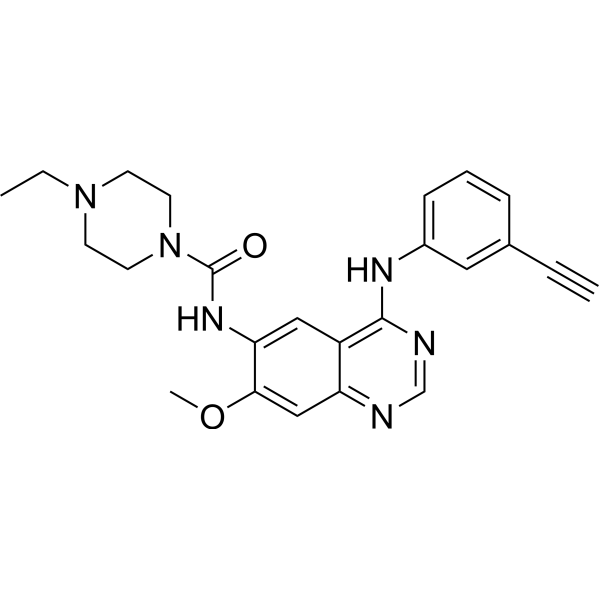
    Epitinib (HMPL-813) is a selective, orally active, blood-brain barrier-permeable EGFR tyrosine kinase inhibitor. Epitinib is applicable to research on EGFR T790M-positive non-small cell lung cancer with brain metastasis and advanced solid tumors .
    Epitinib
  • HY-P990049

    JMT-101; MRG003 Antibody

    EGFR Cancer
    Becotatug (JMT-101) is a humanized IgG1 antibody targeting EGFR. Becotatug can also be conjugated to Afatinib (HY-10261) and Osimertinib (HY-15772) as a synthetic ADC. Becotatug can be used for the study of EGFR-mutated advanced non-small cell lung cancer (NSCLC) .
    Becotatug
  • HY-P990073

    REGN-5093

    c-Met/HGFR Cancer
    Davutamig (REGN-5093) is a human IgG4-kappa, anti-MET bispecific antibody. Davutamig binds 2 distinct epitopes of MET, blocking ligand binding and inducing MET internalization and degradation. Davutamig is applicable to the research of advanced non-small cell lung cancer with MET gene abnormalities .
    Davutamig
  • HY-P991740

    PD-1/PD-L1 Interleukin Related Cancer
    IBI-363 is a PD-1/IL-2 bispecific antibody with functions of blocking the PD-1/PD-L1 pathway and activating the IL-2 pathway. The IL-2 arm of IBI-363 retains affinity for IL-2Rα but attenuates binding ability to IL-2Rβ and IL-2Rγ to reduce toxicity. The PD-1 binding arm of IBI-363 enables PD-1 blockade and selective delivery of IL-2. IBI-363 can be used in cancer research, such as non-small cell lung cancer .
    IBI-363
  • HY-148511

    CMP-001

    Toll-like Receptor (TLR) IFNAR PD-1/PD-L1 Indoleamine 2,3-Dioxygenase (IDO) Cancer
    Vidutolimod (CMP-001) is a virus-like particle containing a TLR9 activator . Vidutolimod induces human peripheral blood mononuclear cells to secrete IFNα, and upregulates the gene expression of CXCL10, PDL1, IDO and CD80. Vidutolimod activates TLR9, which in turn triggers plasmacytoid dendritic cell activation, production of IFNγ and TNFα, induction of CXCL10, and recruitment of antitumor T cells. Vidutolimod causes influenza-like symptoms, hypotension and tumor regression, and its activity depends on the presence of anti- antibodies. Vidutolimod modulates monocyte function, promotes CD4 T cell proliferation, and activates multiple immune cell types in an environment with anti-Qβ antibodies. Vidutolimod prolongs the survival of tumor-bearing mice. Vidutolimod is used in research related to advanced melanoma, head and neck squamous cell carcinoma, and advanced non-small cell lung cancer .
    Vidutolimod
  • HY-164493

    Ras Cancer
    KRASG12C IN-13 (LY3499446) is a potent KRAS G12C inhibitor. KRASG12C IN-13 is promising for research of advanced solid tumors including non-small cell lung cancer and colorectal cancer .
    KRASG12C IN-13
  • HY-114277R

    AMG-510 (Standard)

    Ras Reference Standards Cancer
    Sotorasib (Standard) is the analytical standard of Sotorasib. This product is intended for research and analytical applications. Sotorasib (AMG-510) is a first-in-class, orally bioavailable, and selective KRAS G12C covalent inhibitor. Sotorasib irreversibly inhibits KRAS G12C by locking it in an inactive GDP-bound state. Sotorasib leads to the regression of KRAS G12C‑mutated locally advanced or metastatic non‑small cell lung cancer (NSCLC) .
    Sotorasib (Standard)
  • HY-114277S

    AMG-510-d7

    Isotope-Labeled Compounds Ras Cancer
    Sotorasib-d7 (AMG-510-d7) is a deuterium-labeled Sotorasib (HY-114277). Sotorasib (AMG-510) is a first-in-class, orally bioavailable, and selective KRAS G12C covalent inhibitor. Sotorasib irreversibly inhibits KRAS G12C by locking it in an inactive GDP-bound state. Sotorasib leads to the regression of KRAS G12C‑mutated locally advanced or metastatic non‑small cell lung cancer (NSCLC) .
    Sotorasib-d7
  • HY-P991742

    15A7.5; ETx-22 Antibody

    ADC Antibody Cancer
    LY4101174 Antibody is an ADC antibody. LY4101174 is an antibody-drug conjugate (ADC) that targets the nectin-4 protein present on the surface of certain cancer cells. It can directly deliver a potent chemotherapy agent (Exatecan (HY-13631)) to the tumor site and is used for the study of advanced cancers, such as urothelial carcinoma, triple-negative breast cancer, and non-small cell lung cancer .
    LY4101174 Antibody
  • HY-13554

    Antibiotic Cancer
    Annamycin is an anthracycline antibiotic with antitumor activity. Annamycin interacts with topoisomerase II, induces double-strand DNA breaks, triggers cell death, and exerts cytotoxic effects. In mice, Annamycin inhibits the growth of advanced subcutaneous melanoma and subcutaneous squamous cell carcinoma, and prolongs the survival of mice with subcutaneous reticulosarcoma and in lung cancer lung metastasis models. Annamycin can be used in research related to melanoma, reticulum cell sarcoma, lung cancer, non-small cell lung cancer, small cell lung cancer .
    Annamycin
  • HY-P991620

    Transmembrane Glycoprotein Cancer
    JS006 is a humanized IgG4κ monoclonal antibody inhibitor targeting TIGIT/CD155. JS006 can be used to study advanced and/or metastatic cancers with resistance to PD-1/PD-L1 inhibitor such as non-small cell lung cancer (NSCLC), advanced lymphoma and advanced/metastatic triple negative breast cancer (TNBC) .
    JS006
  • HY-174387

    c-Met/HGFR Cancer
    KIN-8741 is a highly selective Type IIb c-Met inhibitor. KIN-8741 has broad activity against c-Met kinase mutations. KIN-8741 shows antitumor activity in MET gene amplified and exon 14 deleted non-small cell lung cancer models. KIN-8741 can be used in the research of c-Met driven cancers, especially advanced tumors carrying MET exon 14 jump mutations, acquired drug resistance mutations, etc .
    KIN-8741
  • HY-P991000

    AU-007; BD-8; BDG8

    Interleukin Related Cardiovascular Disease Inflammation/Immunology Cancer
    Imneskibart (AU-007) is a human monoclonal antibody that binds to the CD25-binding epitope of interleukin-2 (IL-2), blocking the binding of IL-2 to the trimeric IL-2 receptor while retaining the ability to bind to the dimeric IL-2 receptor. Imneskibart expands effector T cell and NK cell populations, reduces regulatory T cells, increases the effector T cell/regulatory T cell ratio, and alleviates vascular leakage. Imneskibart can be used in research related to melanoma and non-small cell lung cancer. The corresponding isotype control is: Human IgG1 kappa, Isotype Control (HY-P99001) .
    Imneskibart
  • HY-P991635

    TNF Receptor Cancer
    PF-07329640 is a humanized monoclonal antibody inhibitor targeting TNFRSF3. PF-07329640 can be used for advanced/metastatic solid tumors like non-small cell lung cancer (NSCLC) and colorectal cancer (CRC) research .
    PF-07329640
  • HY-P991612

    Sym024

    CD73 Inflammation/Immunology Cancer
    S095024 is a humanized IgG1 monoclonal antibody inhibitor targeting CD73. S095024 can be used to study acute respiratory distress syndrome (ARDS), non-small cell lung cancer (NSCLC) and advanced solid tumor malignancies .
    S095024
  • HY-114277S2

    AMG-510-d3

    Isotope-Labeled Compounds Ras Cancer
    Sotorasib-d3 (AMG-510-d3) is deuterium labeled Sotorasib. Sotorasib (AMG-510) is a first-in-class, orally bioavailable, and selective KRAS G12C covalent inhibitor. Sotorasib irreversibly inhibits KRAS G12C by locking it in an inactive GDP-bound state. Sotorasib leads to the regression of KRAS G12C?mutated locally advanced or metastatic non?small cell lung cancer (NSCLC) .
    Sotorasib-d3
  • HY-177895

    EGFR Cancer
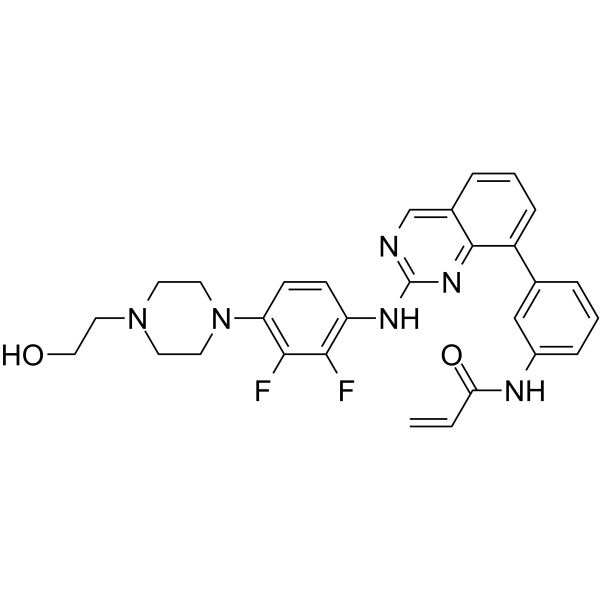
    IAM1363 is a selective, irreversible and brain-penetrant HER2 inhibitor. IAM1363 shows over 1,000-fold selectivity for HER2 compared to EGFR. IAM1363 can be used for the study of advanced HER2 cancers, such as HER2-driven non-small cell lung cancer (NSCLC) .
    IAM1363
  • HY-112870AS

    Alflutinib-d3 mesylate; Furmonertinib-d3 mesylate; AST2818-d3 mesylate

    Isotope-Labeled Compounds EGFR Inflammation/Immunology Cancer
    Firmonertinib-d3 (Alflutinib-d3) mesylate is the deuterium labeled Firmonertinib mesylate (HY-112870A). Firmonertinib (Alflutinib; Furmonertinib) mesylate is is an orally active, mutant-selective, and blood-brain barrier penetrant EGFR inhibitor. Firmonertinib mesylate inhibits EGFR active mutations as well as the T790M acquired resistant mutation. Firmonertinib mesylate has the potential for the research of cancer diseases, especially advanced non-small cell lung cancer (NSCLC) with EGFR ex20ins mutation.
    Firmonertinib-d3 mesylate
  • HY-P992361

    Transmembrane Glycoprotein Cancer
    HB0030 is a TIGIT inhibitor with antibody-dependent cellular cytotoxicity (ADCC) and complement-dependent cytotoxicity (CDC) activities. HB0030 enhances the expression of activation markers in natural killer (NK) cells, promotes the killing of regulatory T cells (Tregs), and reduces the proportion of FoxP3 + Treg in tumor-infiltrating lymphocytes. The combination of HB0030 with the anti-PD-L1/VEGF bispecific antibody HB0025 further enhances tumor suppression efficacy. HB0030 can be used in studies related to colorectal cancer, pancreatic adenocarcinoma, hepatocellular carcinoma, bladder cancer, breast cancer, non-small cell lung cancer, and advanced solid tumors .
    HB0030
  • HY-183118

    CDK Apoptosis Neurological Disease Cancer
    CID-078 is an orally active macrocyclic cyclin A and cyclin B inhibitor. CID-078 binds cyclin hydrophobic patches, disrupting interactions of cyclin A-Cdk2 with E2F1 and cyclin B-Cdk1 with Myt1, and selectively targets RxL binding motifs to block complex-substrate interactions. CID-078 induces DNA damage, G2/M cell cycle arrest, apoptosis, mitotic catastrophe, spindle assembly checkpoint activation, and neomorphic cyclin B-CDK2 complex formation, driving synthetic lethality in E2F-driven cancer cells. CID-078 can be used for the research of small cell lung cancer, non-small cell lung cancer, triple negative breast cancer, advanced solid tumors, luminal HR +/HER 2- breast cancer, RB1-altered solid tumors, and neuroblastoma .
    CID-078
  • HY-119869

    DNA/RNA Synthesis Cancer
    Anaxirone is an anti-tumor agent. The epoxy group in its structure can interfere with the proliferation of tumor cells by alkylating biological macromolecules such as DNA. Anaxirone has dose-limiting toxicity (DLT) and gastrointestinal toxicity. Anaxirone can be used for research on solid tumors such as non-small cell lung cancer (NSCLC) .
    Anaxirone

Inquiry Online

Your information is safe with us. * Required Fields.

Salutation


Country or Region *

Applicant Name *


Organization Name *

Department *


Email Address *


Product Name *

Cat. No.


Requested quantity *

Phone Number *


Remarks

Inquiry Online

Inquiry Information

Product Name:
Cat. No.:
Quantity:
MCE Japan Authorized Agent:

