



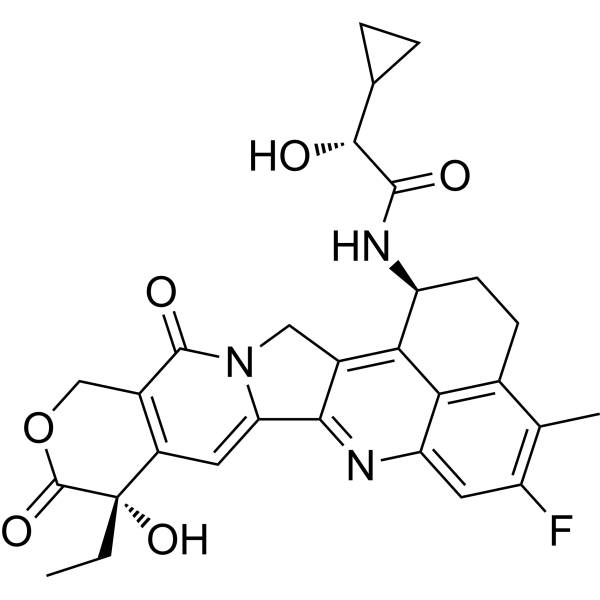
(αR)-Cyclopropaneacetamide-Exatecan

Based on 1 Customer Validation
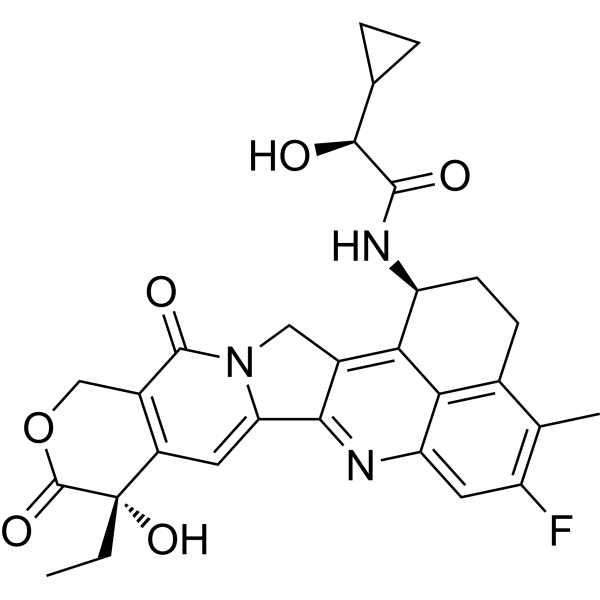
(αR)-Cyclopropaneacetamide-Exatecan (SHR169265) is a DNA Topoisomerase I inhibitor with enhanced membrane permeability (with an IC50 of 1.34 μM against the human DNA Topoisomerase I). (αR)-Cyclopropaneacetamide-Exatecan exerts cytotoxic effects by inhibiting the enzymatic activity of Topoisomerase I, and this anticancer effect is independent of the expression level of HER2. (αR)-Cyclopropaneacetamide-Exatecan is an ADC Cytotoxin derived from Exatecan (HY-13631), which can be used in research related to advanced cancers such as breast cancer, gastric cancer, colorectal cancer and non-small cell lung cancer.
商品は「研究用試薬」です。人や動物の医療用・臨床診断用・食品用の製品ではありません。
研究用途以外に使用した場合、当社は一切の責任を負いかねます。
- 純度 : 99.93%
- CAS 番号: 2414254-37-6
- 分子式: C29H28FN3O6
- 分子量:533.55
-
保管条件:Powder -20°C, 3 years , 4°C, 2 years ; In solvent -80°C, 6 months , -20°C, 1 month

To place orders, for customer services and technical support, please contact: MedChemExpress USA
Tel: 609-228-6898 E-mail: [email protected] [email protected]


-
 生物活性
生物活性
-
化学情報
-
溶剤 & 溶解度
- プロトコル
- 純度とドキュメンテーション
- 参考文献
-
 Help & FAQs


-
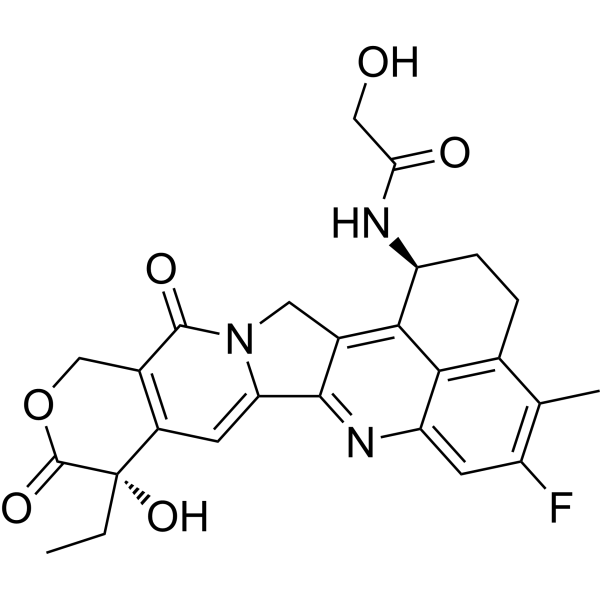
HY-13631D
DXdTopoisomerase I Inhibitor -
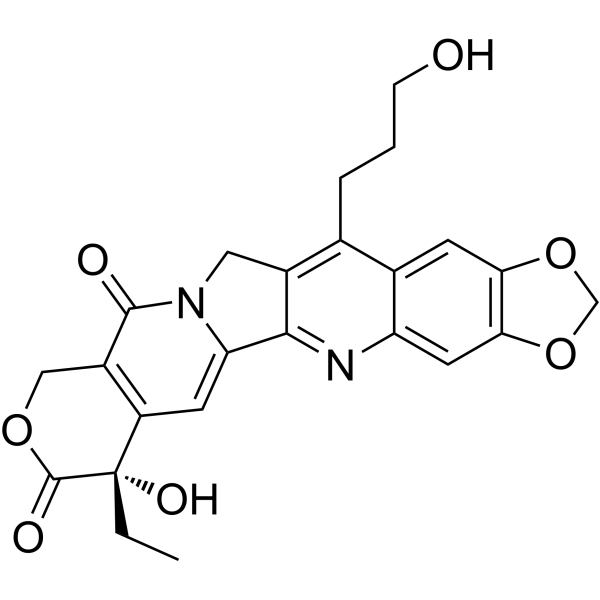
HY-156856
FL118-14-PropanolFL118 Derivative -
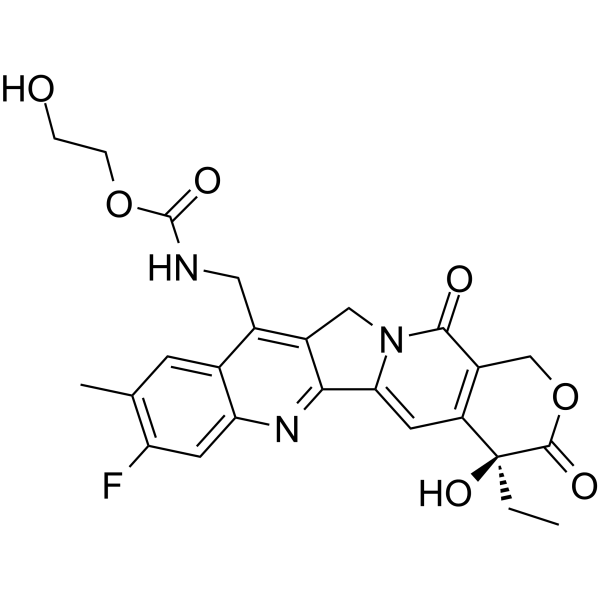
HY-156513
ZD06519ADC Cytotoxin/TopI Inhibitor -
HY-156617
Cyclopropaneacetamide-ExatecanADC Cytotoxin -
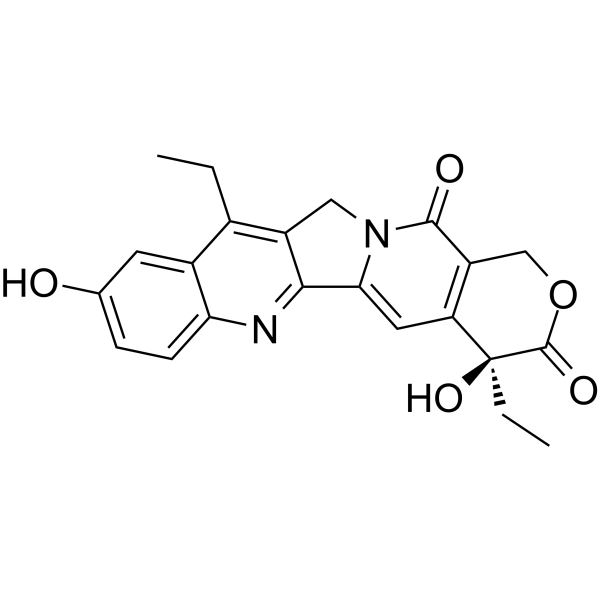
HY-13704
SN-38Topoisomerase I Inhibitor -
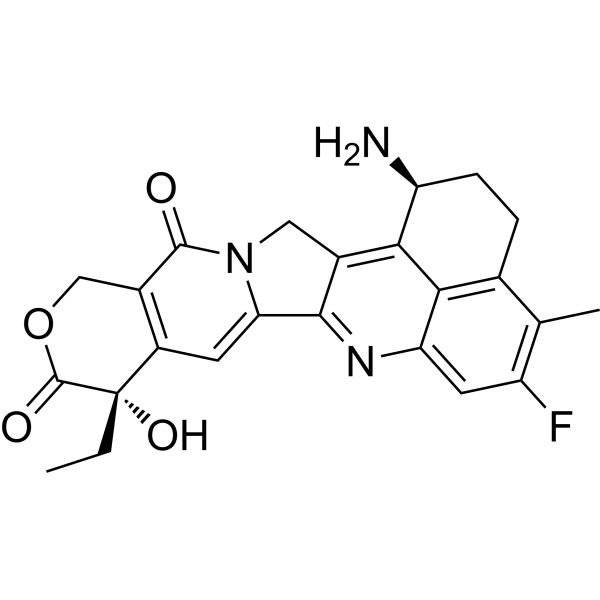
HY-13631
ExatecanTopoisomerase I Inhibitor -
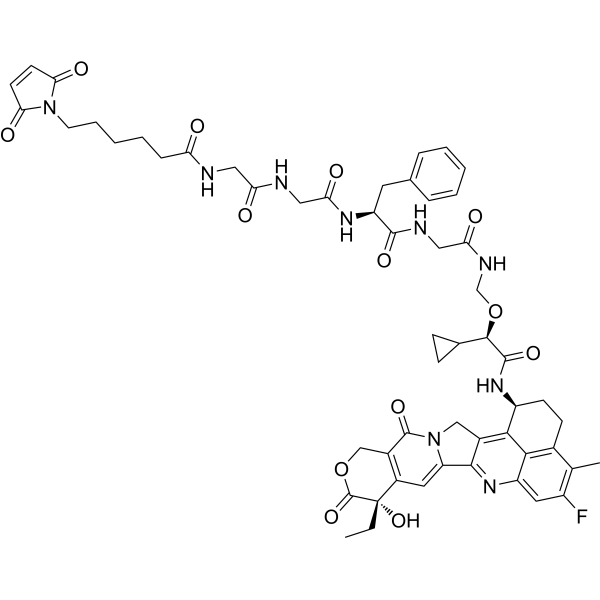
HY-148668
MC-Gly-Gly-Phe-Gly-(R)-Cyclopropane-ExatecanDrug-Linker Conjugate for ADC -
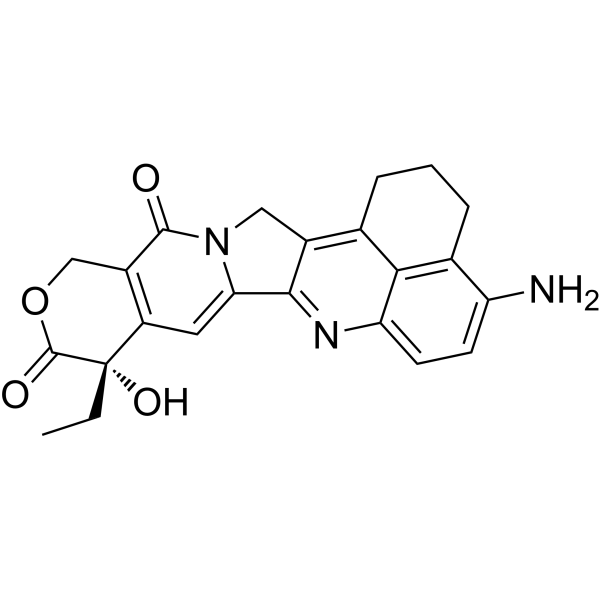
HY-145397
(4-NH2)-ExatecanTopoisomerase Inhibitor -
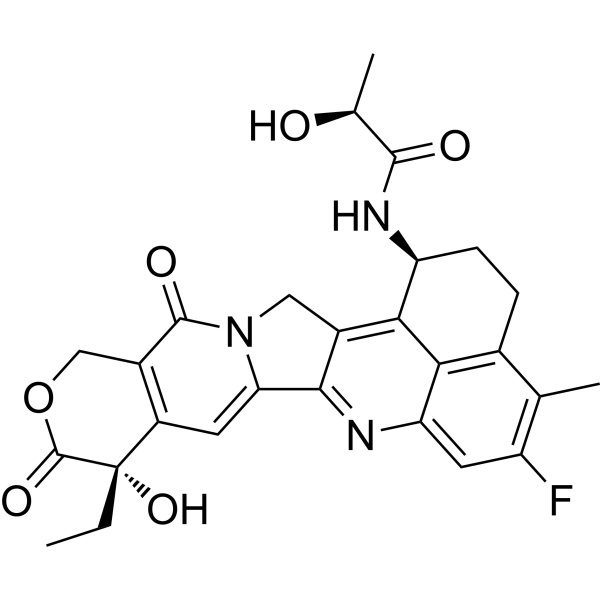
HY-153891
Deruxtecan 2-hydroxypropanamideDeruxtecan Analog -
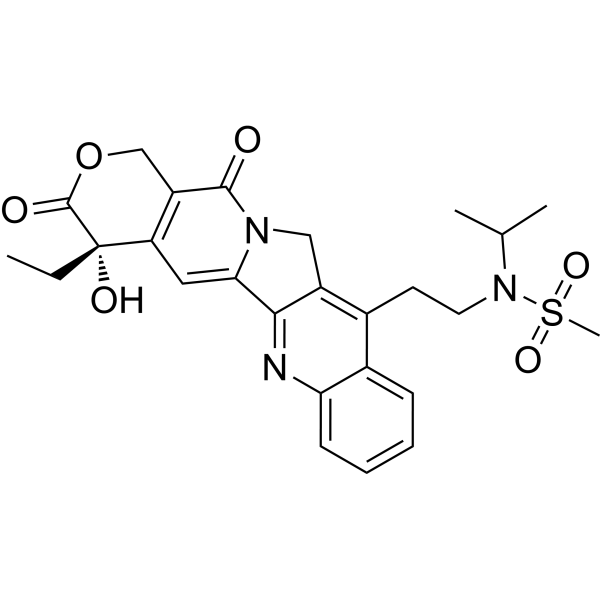
HY-148185
T01-1Anticancer Agent -
![NH2-bicyclo[1.1.1]pentane-7-MAD-MDCPT](https://file.medchemexpress.com/product_pic/hy-148819.gif)
HY-148819
NH2-bicyclo[1.1.1]pentane-7-MAD-MDCPTTopoisomerase I Inhibitor


生物活性
製品説明
IC50 & Target
|
Camptothecins |
体外実験
SHR169265 exhibits potent, HER2 expression-independent cytotoxicity against 9 human cancer cell lines, with IC50 values ranging from 0.30 nM to 2.32 nM after 6 days of incubation[1].
MedChemExpress (MCE) has not independently confirmed the accuracy of these methods. They are for reference only. Further protocols information, click here.
-
Cell Line:NCI-N87, SK-BR-3, HCC1954, JIMT-1, Capan-1, AGS, MKN45, SNU-16, MDA-MB-468
-
Concentration:Serially diluted concentrations
-
Incubation Time:6 days
-
Result:Induced strong cytotoxicity across all tested cell lines, with IC50 values of 1.00±0.07 nM (NCI-N87), 0.58±0.10 nM (SK-BR-3), 0.55±0.19 nM (HCC1954), 2.32±0.45 nM (JIMT-1), 0.38±0.07 nM (Capan-1), 0.36±0.11 nM (AGS), 0.30±0.07 nM (MKN45), 0.57±0.19 nM (SNU-16), and 0.56±0.09 nM (MDA-MB-468).
Parmacokinetics
| Species | Dose | Route | Cmax | AUC0-t | T1/2 | CL | Vss |
|---|---|---|---|---|---|---|---|
| Mice[1] | 0.5 mg/kg | i.v. | 250 ng/mL | 113 ng·h/mL | 0.37 h | 72.6 mL/min/kg | 1815 mL/kg |
体内実験
SHR-A1811 (1-10 mg/kg; i.p.; single dose; once weekly for 2 doses), delivering target reagent SHR169265, induces dose-dependent tumor growth inhibition (57.9% to 108.8% TGI) in HER2-moderate breast cancer xenografts, with repeated dosing enhancing efficacy[1].
SHR-A1811 (1-6 mg/kg; i.p.; single dose), delivering target reagent SHR169265, induces dose-dependent tumor growth inhibition (91% to 120% TGI) in HER2-low pancreatic cancer xenografts[1].
MedChemExpress (MCE) has not independently confirmed the accuracy of these methods. They are for reference only.
-
Animal Model:NU/NU nude mice with Gastric cancer (female, 15-18g); Beige SCID mice (female, 15-18g); Balb/c nude mice (female, 15-18g)[1]
-
Dosage:1 mg/kg; 3 mg/kg; 6 mg/kg
-
Administration:i.p.; single dose
-
Result:Induced 85% TGI at 1 mg/kg.
Induced 124% TGI with sustained tumor regression through day 17 at 3 mg/kg.
Induced 119% TGI with sustained tumor regression through day 17 at 6 mg/kg.
Maintained low and stable tumoral levels at 1 mg/kg.
Reached tumoral Cmax at 24 hours at 3 mg/kg.
Reached tumoral Cmax at 72 hours at 6 mg/kg.
Induced PARP cleavage in tumor cells, with degree correlated with tumoral SHR169265 levels.
-
Animal Model:NU/NU nude mice with Breast cancer (female, 15-18g); Beige SCID mice (female, 15-18g); Balb/c nude mice (female, 15-18g)[1]
-
Dosage:5 mg/kg (single dose); 10 mg/kg (single dose); 1 mg/kg (weekly x2); 3 mg/kg (weekly x2); 6 mg/kg (weekly x2)
-
Administration:i.p.; single dose; once weekly for 2 doses
-
Result:Induced 57.9% TGI at 5 mg/kg single dose.
Induced 80.7% TGI at 10 mg/kg single dose.
Induced 91.8% TGI at 1 mg/kg once weekly for 2 doses.
Induced 108.8% TGI at 3 mg/kg once weekly for 2 doses.
Induced 101.4% TGI at 6 mg/kg once weekly for 2 doses.


化学情報
-
CAS 番号 2414254-37-6
-
性状 Solid
-
分子量 533.55
-
分子式 C29H28FN3O6
-
Color Light yellow to yellow
-
SMILES
O[C@H](C1CC1)C(N[C@@H]2C3=C4C(C(N5C4)=CC([C@](O)(C(OC6)=O)CC)=C6C5=O)=NC7=CC(F)=C(C)C(CC2)=C73)=O
-
別名
SHR169265
-
輸送条件
Room temperature in continental US; may vary elsewhere.
-
保管条件
Powder -20°C 3 years 4°C 2 years In solvent -80°C 6 months -20°C 1 month


溶剤 & 溶解度
体外:
DMSO : 100 mg/mL (187.42 mM; Need ultrasonic; Hygroscopic DMSO has a significant impact on the solubility of product, please use newly opened DMSO)
Please refer to the solubility information to select the appropriate solvent. Once prepared, please aliquot and store the solution to prevent product inactivation from repeated freeze-thaw cycles.
Storage method and period of stock solution: -80°C, 6 months; -20°C, 1 month. When stored at -80°C, please use it within 6 months. When stored at -20°C, please use it within 1 month.
Please refer to the solubility information to select the appropriate solvent. Once prepared, please aliquot and store the solution to prevent product inactivation from repeated freeze-thaw cycles.
Storage method and period of stock solution: -80°C, 6 months; -20°C, 1 month. When stored at -80°C, please use it within 6 months. When stored at -20°C, please use it within 1 month.
濃度 (開始) × 体積 (開始) = 濃度 (終了) × 体積 (終了)
体内:
Select the appropriate dissolution method based on your experimental animal and administration route.
- For the following dissolution methods, please ensure to first prepare a clear stock solution using an In Vitro approach and then sequentially add co-solvents:
- To ensure reliable experimental results, the clarified stock solution can be appropriately stored based on storage conditions. As for the working solution for In Vivo experiments, it is recommended to prepare freshly and use it on the same day.
- The percentages shown for the solvents indicate their volumetric ratio in the final prepared solution. If precipitation or phase separation occurs during preparation, heat and/or sonication can be used to aid dissolution.
In Vivo Dissolution Calculator
Please enter the basic information of animal experiments:
-
-
-
-
Recommended: Prepare an additional quantity of animals to account for potential losses during experiments.
Please enter your animal formula composition:
-
%DMSO +
Recommended: Keep the proportion of DMSO in working solution below 2% if your animal is weak.
-
%+
-
+%Tween-80 + +
-
%Saline +
The co-solvents required include: DMSO, . All of co-solvents are available by MedChemExpress (MCE). , Tween 80. All of co-solvents are available by MedChemExpress (MCE).
Working solution concentration: 0.22 mg/mL
Method for preparing stock solution: mg drug dissolved in μL DMSO. Stock solution concentration: mg/mL.
1. Take μL DMSO stock solution;
2. Add μL .
μL , mix evenly;
3. Then add μL Tween 80, mix evenly;
4. Then add μL
Please ensure that the stock solution in the first step is dissolved to a clear state, and add co-solvents in sequence. You can use ultrasonic heating (ultrasonic cleaner, recommended frequency 20-40 kHz), vortexing, etc. to assist dissolution.

プロトコル
-
RNA extraction experimental
By lysing cells, releasing RNA, and removing impurities such as proteins and DNA, high-purity RNA products are finally obtained. The commonly used traditional method is the guanidine isothiocyanate/phenol/chloroform method (Trizol), which is suitable for a variety of animal materials including animal tissues, microorganisms, cultured cells, etc., and most plant materials.
-
Cell Cytotoxicity Assay
Cytotoxicity assays are usually based on the assessment of cell membrane damage, which can also be indirectly detected by measuring cell viability. Detection methods include MTT assay, CKK-8 assay, LDH assay and ATP assay, etc.
-
Transepithelial/transendothelial electrical resistance assay
TEER measures electrical resistance across epithelial or endothelial monolayers cultured on permeable supports, and the readout reflects ionic conductance through the cell barrier, especially the paracellular pathway regulated by junctional integrity. TEER can be measured without destroying the monolayer and is commonly used before or during transport, permeability, barrier-disruption, and barrier-maturation experiments. TEER values are influenced by biological maturation and technical conditions; reported factors include temperature, medium formulation, passage number, electrode geometry, membrane properties, and junctional length during early monolayer maturation. Therefore, TEER should be interpreted with blank-insert subtraction, area normalization, repeated readings, and, when possible, orthogonal barrier readouts such as FITC-dextran flux or tight-junction staining.
-
Breast Cancer Modeling
Breast cancer is a heterogeneous cancer, and it has been distinguished into four subtypes: luminal A, luminal B, HER2-positive and basal-like. Molecular mutations, epigenetic alterations, hormone exposure and immune microenvironment are related to the progression of breast cancer.
-
Cell Viability Determination by MTT Colorimetric Assay
The following protocol uses the MTT colorimetric assay as a classic literature-established method for assessing cell viability/metabolic activity in cultured mammalian cells. MTT[3-(4,5-dimethylthiazol-2-yl)-2,5-diphenyltetrazolium bromide] is reduced by metabolically active cells to a colored formazan product; the amount of formazan is quantified spectrophotometrically and provides an indirect measure of metabolically active viable cells. Importantly, MTT reduction reflects cellular oxidoreductase/metabolic activity rather than an absolute direct count of living cells, so changes in cellular metabolism can alter the signal independently of cell number.


純度とドキュメンテーション
-
データシート (287 KB)
-
SDS (252 KB)
- English - EN (252 KB)
- Français - FR (252 KB)
- Deutsch - DE (252 KB)
- Norwegian - NO (252 KB)
- Español - ES (252 KB)
- Swedish - SV (252 KB)
- Italian - IT (252 KB)
- Korean - KR (252 KB)
- Portuguese - PT (252 KB)
-
取扱説明書 (2659 KB)
参考文献


Complete Stock Solution Preparation Table
Please refer to the solubility information to select the appropriate solvent. Once prepared, please aliquot and store the solution to prevent product inactivation from repeated freeze-thaw cycles.
Storage method and period of stock solution: -80°C, 6 months; -20°C, 1 month. When stored at -80°C, please use it within 6 months. When stored at -20°C, please use it within 1 month.
| Optional Solvent | Concentration Solvent Mass | 1 mg | 5 mg | 10 mg | 25 mg |
|---|---|---|---|---|---|
| DMSO | 1 mM | 1.8742 mL | 9.3712 mL | 18.7424 mL | 46.8560 mL |
| 5 mM | 0.3748 mL | 1.8742 mL | 3.7485 mL | 9.3712 mL | |
| 10 mM | 0.1874 mL | 0.9371 mL | 1.8742 mL | 4.6856 mL | |
| 15 mM | 0.1249 mL | 0.6247 mL | 1.2495 mL | 3.1237 mL | |
| 20 mM | 0.0937 mL | 0.4686 mL | 0.9371 mL | 2.3428 mL | |
| 25 mM | 0.0750 mL | 0.3748 mL | 0.7497 mL | 1.8742 mL | |
| 30 mM | 0.0625 mL | 0.3124 mL | 0.6247 mL | 1.5619 mL | |
| 40 mM | 0.0469 mL | 0.2343 mL | 0.4686 mL | 1.1714 mL | |
| 50 mM | 0.0375 mL | 0.1874 mL | 0.3748 mL | 0.9371 mL | |
| 60 mM | 0.0312 mL | 0.1562 mL | 0.3124 mL | 0.7809 mL | |
| 80 mM | 0.0234 mL | 0.1171 mL | 0.2343 mL | 0.5857 mL | |
| 100 mM | 0.0187 mL | 0.0937 mL | 0.1874 mL | 0.4686 mL |


(αR)-Cyclopropaneacetamide-Exatecan 関連分類
HY-156617A 関連分類
 Powered by Bioz
Keywords