61 Results for "

BRCA 1

" in MedChemExpress (MCE) Product Catalog:
Products (61)

61 Results for "BRCA 1" in MCE Product Catalog:

5
5 Cited Publications
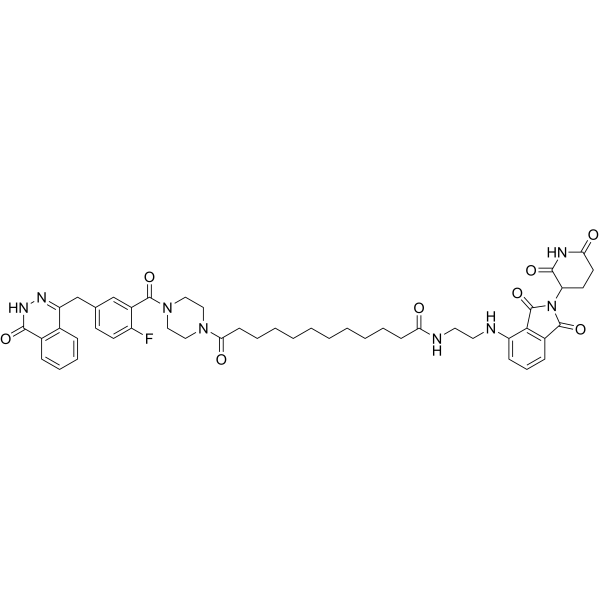
Cat. No.: HY-139156
CAS No.: 2523016-96-6
Purity:  99.86%
Target:  

PROTACs PARP

Research Areas:  

Cancer

SK-575 is a highly potent and specific proteolysis-targeting chimera (PROTAC) degrader of PARP1, with an IC50 of 2.30 nM. SK-575 potently inhibits the growth of cancer cells bearing BRCA1/2 mutations .
loading...
    loading...
4
4 Cited Publications
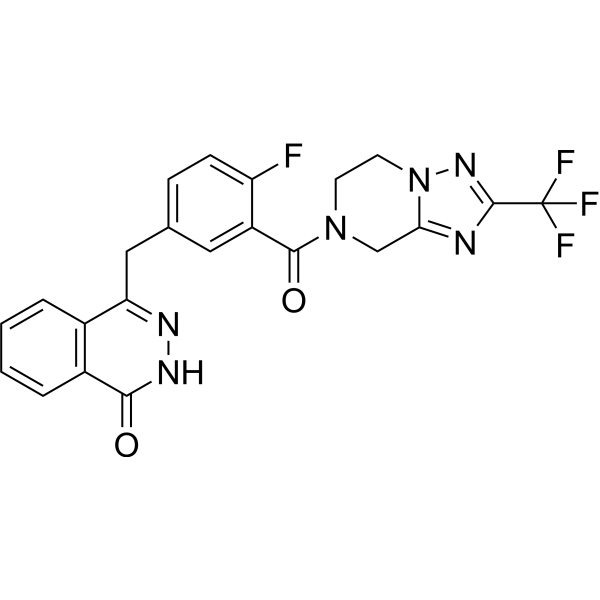
Cat. No.: HY-114778
CAS No.: 1358715-18-0
Purity:  99.96%
Synonyms: SHR3162; Fuzuloparib
Target:  

PARP

Research Areas:  

Cancer

Fluzoparib (SHR3162) is a potent and orally active PARP1 inhibitor (IC50=1.46±0.72 nM, a cell-free enzymatic assay) with superior antitumor activity. Fluzoparib selectively inhibits the proliferation of homologous recombination repair (HR)-deficient cells, and sensitizes both HR-deficient and HR-proficient cells to cytotoxic agents. Fluzoparib exhibits good pharmacokinetic properties in vivo and can be used for BRCA1/2-mutant relapsed ovarian cancer research .
loading...
    loading...
3
3 Cited Publications
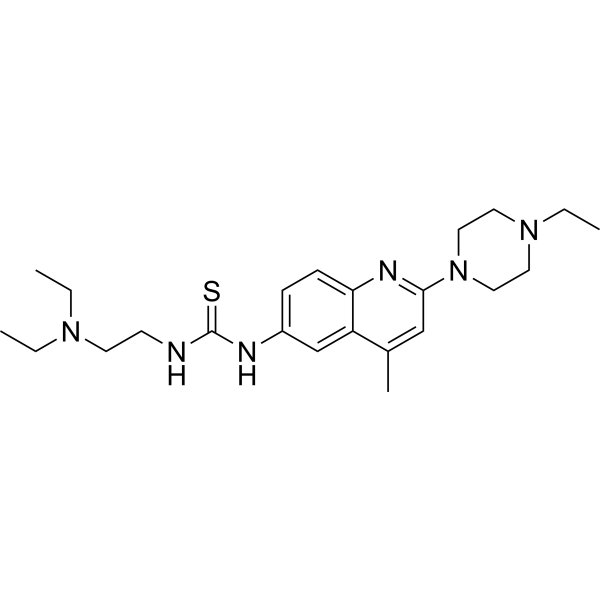
Cat. No.: HY-124691
CAS No.: 688342-78-1
Purity:  99.70%
Target:  

DNA/RNA Synthesis

Research Areas:  

Cancer

D-I03 is a selective RAD52 inhibitor with a Kd of 25.8 μM. D-I03 specifically inhibits RAD52-dependent single-strand annealing (SSA) and D-loop formation with IC50s of 5 μM and 8 μM, respectively. D-I03 suppresses growth of BRCA1- and BRCA2-deficient cells and inhibits formation of damage-induced RAD52 foci, but does not effect on RAD51 foci induced by Cisplatin .
loading...
    loading...
3
3 Cited Publications
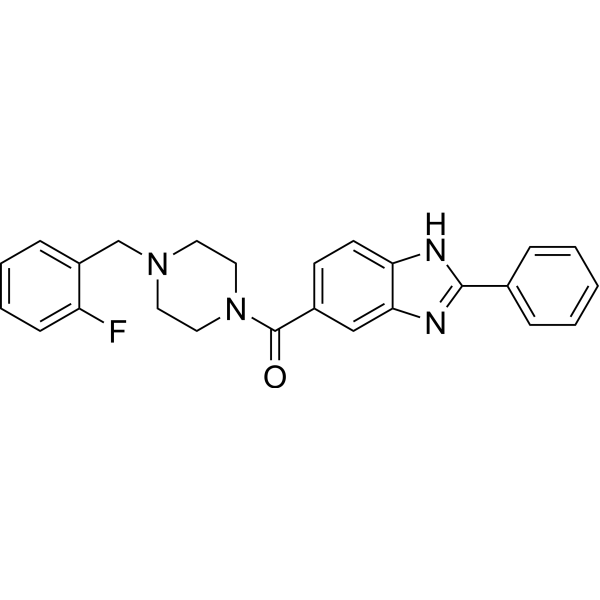
Cat. No.: HY-126020
CAS No.: 2290527-07-8
Purity:  99.90%
Target:  

DNA/RNA Synthesis RAD51

Research Areas:  

Cancer

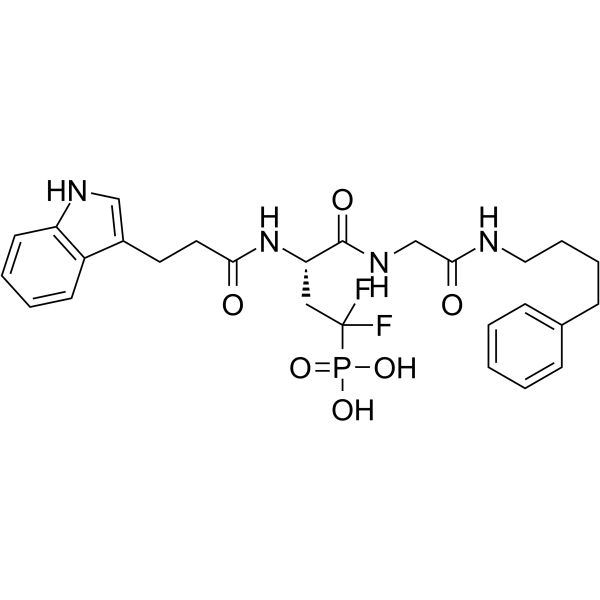
Bractoppin is a potent and selective agent-like inhibitor of phosphopeptide recognition by the human BRCA1 tandem(t) BRCT domain (binding IC50: 74 nM). Bractoppin diminishes BRCA1 recruitment to DNA breaks, in turn suppressing damage-induced G2 arrest and assembly of the recombinase, RAD51. Bractoppin preferentially inhibits BRCA1 tBRCT-dependent steps in the DNA damage response .
loading...
    loading...
3
3 Cited Publications
Cat. No.: HY-100862
CAS No.: 1622262-55-8
Purity:  98.04%
Target:  

PARP

Research Areas:  

Cancer

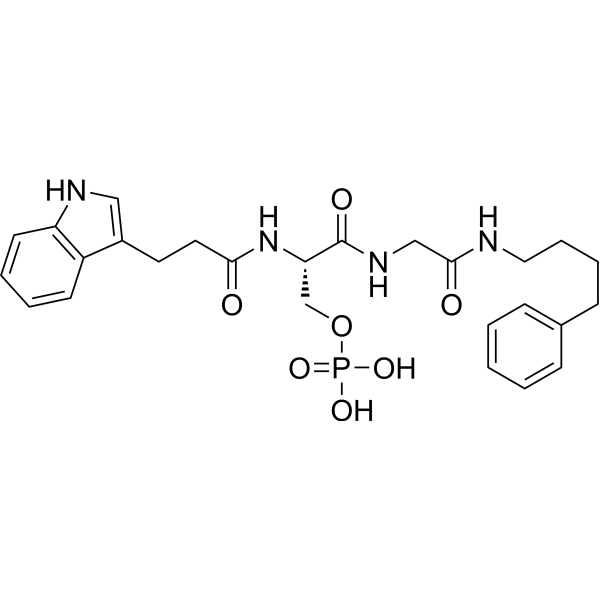
BRCA1-IN-2 (compound 15) is a cell-permeable protein-protein interaction (PPI) inhibitor for BRCA1 with an IC50 of 0.31 μM and a Kd of 0.3 μM, which shows antitumor activities via the disruption of BRCA1 (BRCT)2/protein interactions .
loading...
    loading...
1
1 Cited Publications
Cat. No.: HY-W327122
CAS No.: 353495-21-3
Target:  

Deubiquitinase

Research Areas:  

Cancer

BAP1-IN-1 (Compound 8) is a BRCA1 associated protein 1 (BAP1) catalytic activity inhibitor with an IC50 of 0.1-1 μM .
loading...
    loading...
1
1 Cited Publications
Cat. No.: HY-162706
CAS No.: 2519823-37-9
Target:  

PROTACs CDK

Research Areas:  

Cancer

BSJ-5-63 is a potent CDK12, CDK7, CDK9 PROTAC degrader. BSJ-5-63 BSJ-5-63 decreases the protein expression of CDK12, CDK7, CDK9, RNAPII, Cyclin K. BSJ-5-63 decreases the mRNA expression of BRCA1, BRCA2. BSJ-5-63 shows anticancer activity and has the potential for the research of prostate cancer .
loading...
    loading...
1
1 Cited Publications
Cat. No.: HY-162859
CAS No.: 2565637-94-5
Target:  

DNA/RNA Synthesis

Research Areas:  

Cancer

AB25583 is a Polθ helicase (Polθ-hel) small molecule inhibitor, with an IC50 value of 6 nM. AB25583 selectively kills BRCA1/2 deficient cells and works in synergy with Olaparib (HY-10162) in cancer cells carrying pathogenic BRCA1/2 mutations. AB25583 can be used for tumor research .
loading...
    loading...
Cat. No.: HY-174143
CAS No.: 1111188-09-0
Target:  

Apoptosis

Research Areas:  

Cancer

EXO1-IN-1 is a human exonuclease 1 (EXO1) inhibitor (IC50 = 15.7 μM). EXO1-IN-1 inhibits DNA end resection, promotes the accumulation of DNA double-strand breaks, and triggers S-phase polyamylation. EXO1-IN-1 induces apoptosis (Apoptosis) in BRCA1-deficient breast cancer cells. EXO1-IN-1 suppresses the growth of BRCA1-deficient breast cancer xenografts. EXO1-IN-1 can be used in research related to BRCA1-deficient breast cancer .
loading...
    loading...
Cat. No.: HY-100863
CAS No.: 1622262-74-1
Target:  

PARP

Research Areas:  

Cancer

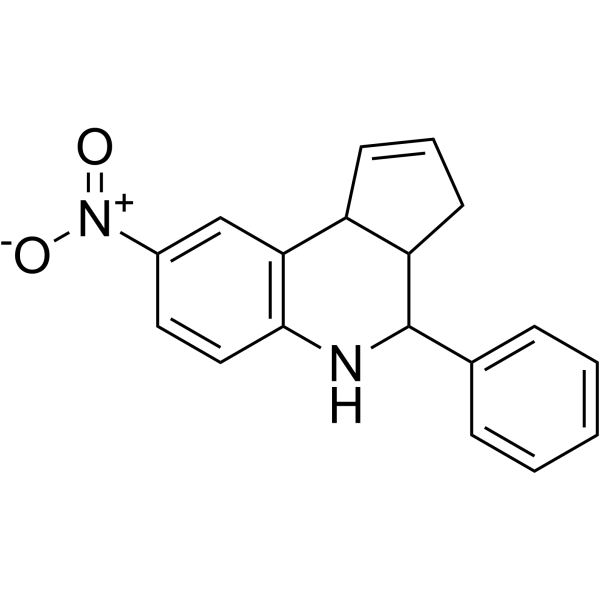
BRCA1-IN-1 is a novel small-molecule-like BRCA1 inhibitor with IC50 and Ki of 0.53 μM and 0.71 μM, respecrively.
loading...
    loading...
Cat. No.: HY-160700
CAS No.: 2839740-79-1
Target:  

Deubiquitinase JNK

Research Areas:  

Cancer

TNG348 is an orally available allosteric inhibitor of the ubiquitin-specific protease USP1. TNG348 specifically and efficiently inhibits the activity of USP1, inhibiting its deubiquitination of proliferative PCNA and FANCD2, thereby disrupting the DNA repair process. TNG348 has inhibitory activity against breast and ovarian cancers carrying BRCA1/2 mutations and other homologous recombination defects (HRD) .
loading...
    loading...
Cat. No.: HY-RS01593
Research Areas:  

Others

BRCA1 Human Pre-designed siRNA Set A contains three designed siRNAs for BRCA1 gene (Human), as well as a negative control, a positive control, and a FAM-labeled negative control.

loading...
    loading...
Cat. No.: HY-W116007
CAS No.: 556-67-2
Research Areas:  

Endocrinology

Octamethylcyclotetrasiloxane promotes the anchorage-independent growth of MCF-10A and MCF-10F cells. Octamethylcyclotetrasiloxane induces DNA damage, inhibits the expression of DNA-repairing protein BRCA1 under long-term and high-concentration exposure. Octamethylcyclotetrasiloxane exhibits intrinsic estrogenic activity .
loading...
    loading...
Cat. No.: HY-158346
CAS No.: 2922287-81-6
Target:  

DNA/RNA Synthesis

Research Areas:  

Cancer

RP-2119 is an orally bioactive Polymerase Theta (Polθ) inhibitor, with an IC50 of 0.7 nM against human Polθ ATPase. RP-2119 reduces Polθ activity and exerts antiproliferative effects in BRCA2-deficient cancer cells. RP-2119 exhibits antitumor activity in BRCA2-deficient cancer cell xenograft mouse models . RP-2119 can be used for the research of cancer and homologous recombination-deficient cancers, including brca1/brca2-mutant cancers and shld2-mutant cancers .
loading...
    loading...
Cat. No.: HY-162477
CAS No.: 1563260-97-8
Target:  

Cathepsin Apoptosis

Research Areas:  

Cancer

TS-24 is an inhibitor for cathepsin S, with an IC50 of 4.3 μM. TS-24 exhibits radiosensitizing activity in wild type breast cancer susceptibility gene 1 (BRCA1) and in TNBC xenograft mice model, through induction of apoptosis .
loading...
    loading...
Cat. No.: HY-122583
CAS No.: 1225141-73-0
Target:  

RAD51

Research Areas:  

Cancer

D-G23 is a selective RAD52 inhibitor. D-G23 disrupts RAD52-mediated DNA repair pathways and suppresses the growth of BRCA1- and BRCA2-deficient cancer cells. D-G23 is promising for research of homologous recombination-related cancers, such as hereditary breast cancer and ovarian cancer caused by BRCA1/2 mutations .
loading...
    loading...
Cat. No.: HY-RS16661
Research Areas:  

Others

Brca1 Mouse Pre-designed siRNA Set A contains three designed siRNAs for Brca1 gene (Mouse), as well as a negative control, a positive control, and a FAM-labeled negative control.

loading...
    loading...
Cat. No.: HY-RS23096
Research Areas:  

Others

Brca1 Rat Pre-designed siRNA Set A contains three designed siRNAs for Brca1 gene (Rat), as well as a negative control, a positive control, and a FAM-labeled negative control.

loading...
    loading...
Cat. No.: HY-179219S
CAS No.: 3035072-99-9
RTx-303 is an orally active, selective DNA polymerase θ (Polθ) inhibitor (IC50 = 5.1 nM). RTx-303 exhibits significantly high cellular potency and strongly potentiates PARPi in BRCA1/2 mutant cells and patient-derived xenograft models. RTx-303 can be used for the study of BRCA2-mutated breast cancer .
loading...
    loading...
Cat. No.: HY-179582
Target:  

PROTACs Glycosidase

Research Areas:  

Cancer

PROTAC DNPH1 Degrader 1 is a potent PROTAC DNPH1 degrader with a DC50 of 28 nM. PROTAC DNPH1 Degrader 1 mediates proteasome- and VHL-dependent DNPH1 knockdown, drives DNPH1 ubiquitination and proteasomal degradation. PROTAC DNPH1 Degrader 1 can be used for the research of brca1 mutant cancer .
loading...
    loading...

