1. Search Result
Search Result
Results for "

Basic dyes

" in MedChemExpress (MCE) Product Catalog:

217

Inhibitors & Agonists

202

Fluorescent Dye

9

Biochemical Assay Reagents

1

Natural
Products

9

Click Chemistry

1

Oligonucleotides

Cat. No. Product Name Target Research Areas Chemical Structure
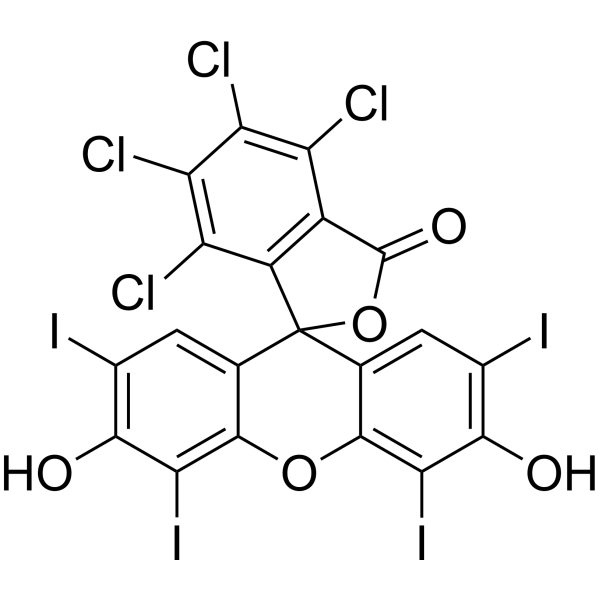
  • HY-D0214A
    Acid Red 94 lactone
    1 Publications Verification

    Fluorescent Dye Others
    Acid Red 94 lactone is a multifunctional dye. Dyes are important tools in biological experiments. They can help researchers observe and analyze cell structures, track biomolecules, evaluate cell functions, distinguish cell types, detect biomolecules, study tissue pathology and monitor microorganisms. Their applications range from basic scientific research to clinical A wide range of diagnostics. Dyes are also widely used in traditional fields such as textile dyeing, as well as in emerging fields such as functional textile processing, food pigments and dye-sensitized solar cells.
    Acid Red 94 lactone
  • HY-D0805

    Fluorescent Dye Others
    Eosin 5-isothiocyanate is a multifunctional dye. Dyes are important tools in biological experiments. They can help researchers observe and analyze cell structures, track biomolecules, evaluate cell functions, distinguish cell types, detect biomolecules, study tissue pathology and monitor microorganisms. Their applications range from basic scientific research to clinical A wide range of diagnostics. Dyes are also widely used in traditional fields such as textile dyeing, as well as in emerging fields such as functional textile processing, food pigments and dye-sensitized solar cells.
    Eosin 5-isothiocyanate
  • HY-D1198

    Acid Red 91

    Fluorescent Dye Others
    Eosin B (Acid Red 91) is a multifunctional dye. Dyes are important tools in biological experiments. They can help researchers observe and analyze cell structures, track biomolecules, evaluate cell functions, distinguish cell types, detect biomolecules, study tissue pathology and monitor microorganisms. Their applications range from basic scientific research to clinical A wide range of diagnostics. Dyes are also widely used in traditional fields such as textile dyeing, as well as in emerging fields such as functional textile processing, food pigments and dye-sensitized solar cells.
    Eosin B
  • HY-D0250

    Fluorescent Dye Others
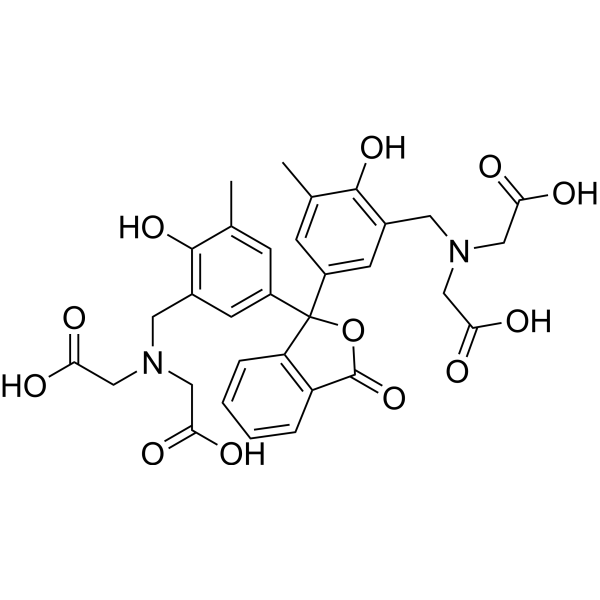
    o-Cresolphthalein complexone is a multifunctional dye. Dyes are important tools in biological experiments. They can help researchers observe and analyze cell structures, track biomolecules, evaluate cell functions, distinguish cell types, detect biomolecules, study tissue pathology and monitor microorganisms. Their applications range from basic scientific research to clinical A wide range of diagnostics. Dyes are also widely used in traditional fields such as textile dyeing, as well as in emerging fields such as functional textile processing, food pigments and dye-sensitized solar cells.
    o-Cresolphthalein complexone
  • HY-D0265

    Environmental Pollutants Fluorescent Dye Others
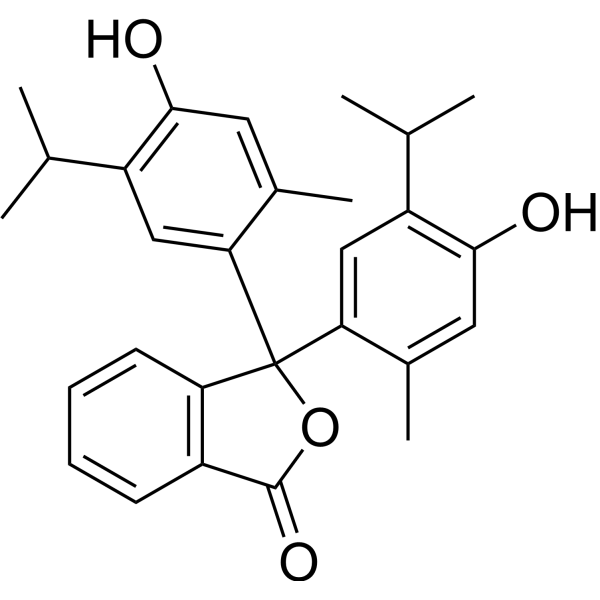
    Thymolphthalein is an electrochemically active dye due to the presence of thymol fragments. Thymolphthalein is a Phthalein dye used as an acid-base indicator. It is colourless in acid pH and is blue in basic pH .
    Thymolphthalein
  • HY-D0370

    Environmental Pollutants Biochemical Assay Reagents Others
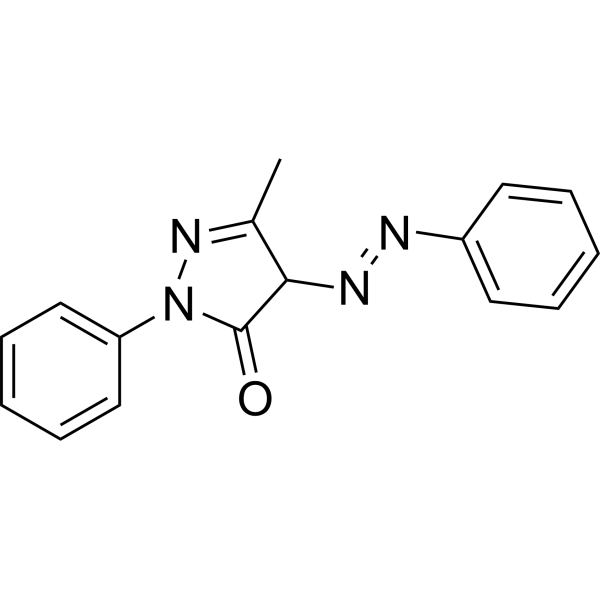
    Solvent Yellow 16 is a disperse dye. Dyes are important tools in biological experiments. They can help researchers observe and analyze cell structures, track biomolecules, evaluate cell functions, distinguish cell types, detect biomolecules, study tissue pathology and monitor microorganisms. Their applications range from basic scientific research to clinical A wide range of diagnostics. Dyes are also widely used in traditional fields such as textile dyeing, as well as in emerging fields such as functional textile processing, food pigments and dye-sensitized solar cells .
    Solvent Yellow 16
  • HY-D0563

    Fluorescent Dye Others
    Direct yellow 86 is a multifunctional dye. Dyes are important tools in biological experiments. They can help researchers observe and analyze cell structures, track biomolecules, evaluate cell functions, distinguish cell types, detect biomolecules, study tissue pathology and monitor microorganisms. Their applications range from basic scientific research to clinical A wide range of diagnostics. Dyes are also widely used in traditional fields such as textile dyeing, as well as in emerging fields such as functional textile processing, food pigments and dye-sensitized solar cells.
    Direct yellow 86
  • HY-D0253

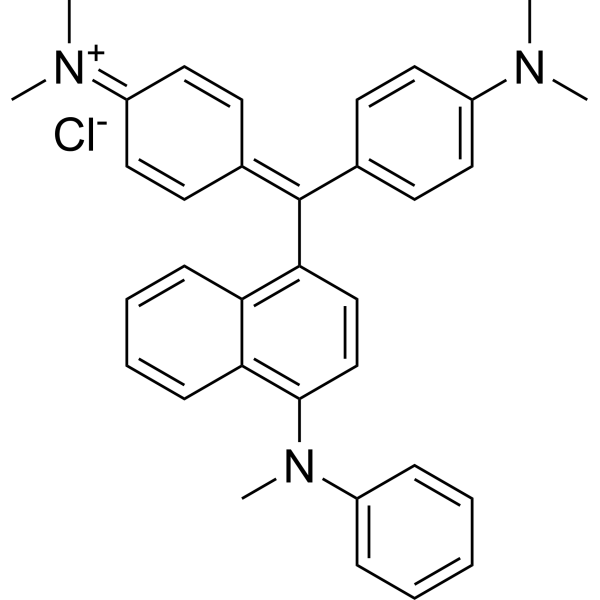
    Basic Blue 11

    Fluorescent Dye Others
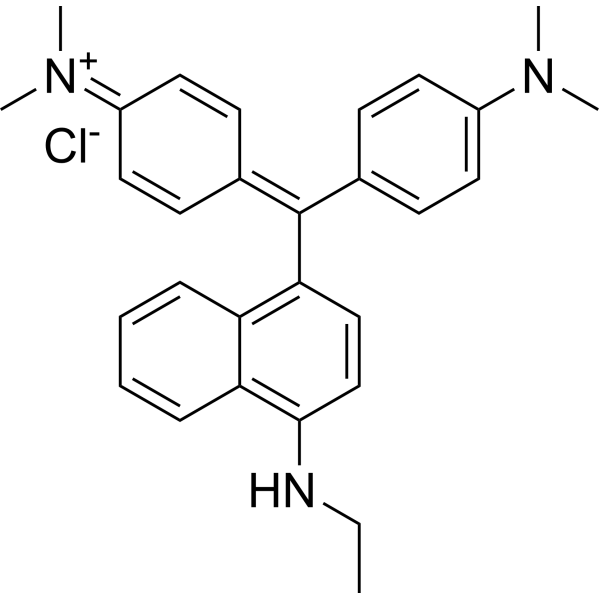
    Victoria Blue R (Basic Blue 11) is a multifunctional dye. Dyes are important tools in biological experiments. They can help researchers observe and analyze cell structures, track biomolecules, evaluate cell functions, distinguish cell types, detect biomolecules, study tissue pathology and monitor microorganisms. Their applications range from basic scientific research to clinical A wide range of diagnostics. Dyes are also widely used in traditional fields such as textile dyeing, as well as in emerging fields such as functional textile processing, food pigments and dye-sensitized solar cells.
    Victoria Blue R
  • HY-D1129

    Coumarin 40

    Fluorescent Dye
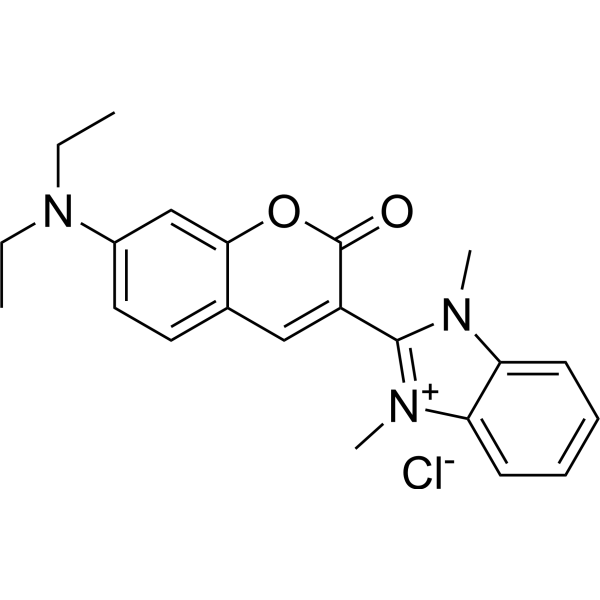
    Basic yellow 40 is an alkaline dye that can be removed from aqueous solutions in intermittent adsorption systems using tree ferns as biosorbents.
    Basic yellow 40
  • HY-D0492

    Fluorescent Dye
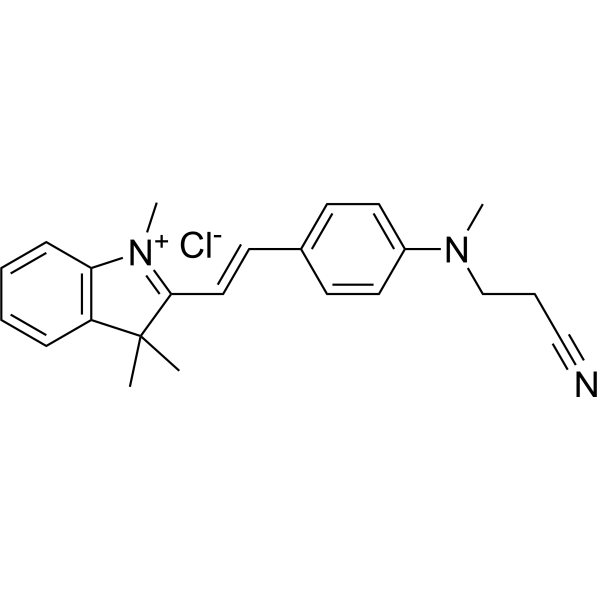
    C.I. Basic blue 41 is an alkaline dye that can be removed from aqueous solutions in intermittent adsorption systems using tree ferns as biosorbents.
    C.I. Basic blue 41
  • HY-D0478

    Fluorescent Dye
    C.I. Basic red 14 is an alkaline dye that can be removed from aqueous solutions in intermittent adsorption systems using tree ferns as biosorbents.
    C.I. Basic red 14
  • HY-D0783

    Fluorescent Dye Others
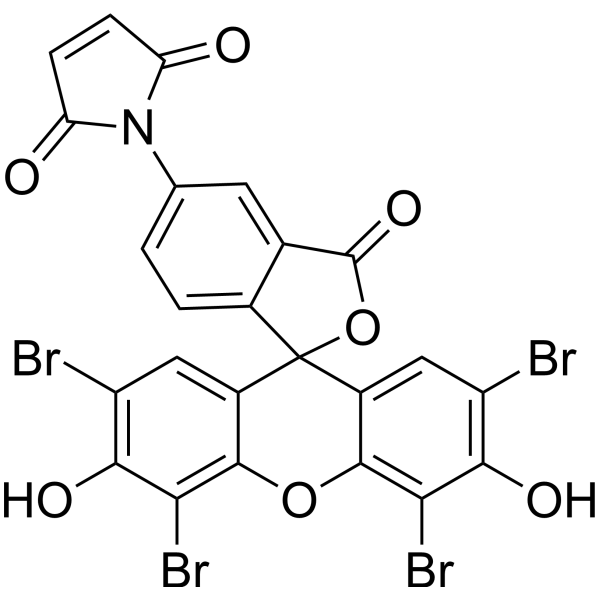
    5-Maleimido-eosin is a multifunctional dye. Dyes are important tools in biological experiments. They can help researchers observe and analyze cell structures, track biomolecules, evaluate cell functions, distinguish cell types, detect biomolecules, study tissue pathology and monitor microorganisms. Their applications range from basic scientific research to clinical A wide range of diagnostics. Dyes are also widely used in traditional fields such as textile dyeing, as well as in emerging fields such as functional textile processing, food pigments and dye-sensitized solar cells.
    5-Maleimido-eosin
  • HY-D0087

    Fluorescent Dye Others
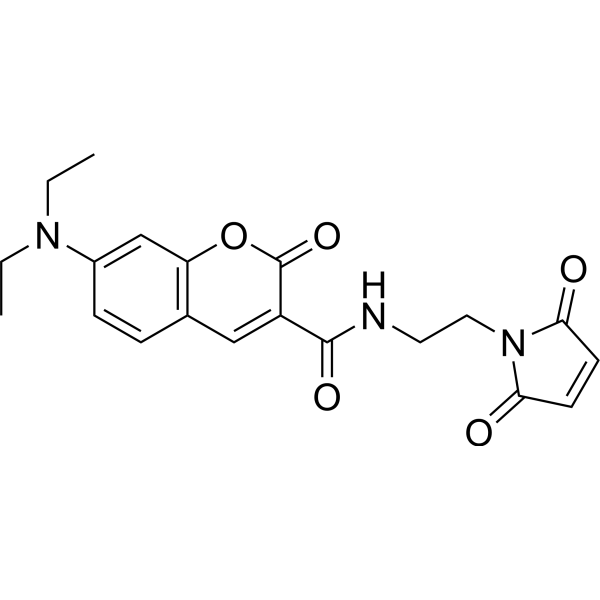
    MDCC is a multifunctional dye. Dyes are important tools in biological experiments. They can help researchers observe and analyze cell structures, track biomolecules, evaluate cell functions, distinguish cell types, detect biomolecules, study tissue pathology and monitor microorganisms. Their applications range from basic scientific research to clinical A wide range of diagnostics. Dyes are also widely used in traditional fields such as textile dyeing, as well as in emerging fields such as functional textile processing, food pigments and dye-sensitized solar cells.
    MDCC
  • HY-D0319

    Fluorescent Dye
    C.I. Basic Blue 8 is a basic dye.
    C.I. Basic Blue 8
  • HY-D0468

    Fluorescent Dye Others
    Basic Brown 1 is a diazo dyes .
    Basic Brown 1
  • HY-D0210

    Fluorescent Dye Others
    N-Ethyl-o-toluidine is a multifunctional dye. Dyes are important tools in biological experiments. They can help researchers observe and analyze cell structures, track biomolecules, evaluate cell functions, distinguish cell types, detect biomolecules, study tissue pathology and monitor microorganisms. Their applications range from basic scientific research to clinical A wide range of diagnostics. Dyes are also widely used in traditional fields such as textile dyeing, as well as in emerging fields such as functional textile processing, food pigments and dye-sensitized solar cells.
    N-Ethyl-o-toluidine
  • HY-D0010

    Dibromopyrogallolsulfonphthaleine

    Fluorescent Dye Others
    Bromopyrogallol red (Dibromopyrogallolsulfonphthaleine) is a multifunctional dye. Dyes are important tools in biological experiments. They can help researchers observe and analyze cell structures, track biomolecules, evaluate cell functions, distinguish cell types, detect biomolecules, study tissue pathology and monitor microorganisms. Their applications range from basic scientific research to clinical A wide range of diagnostics. Dyes are also widely used in traditional fields such as textile dyeing, as well as in emerging fields such as functional textile processing, food pigments and dye-sensitized solar cells.
    Bromopyrogallol red
  • HY-D1245

    Fluorescent Dye Others
    Oxazole blue is a multifunctional dye. Dyes are important tools in biological experiments. They can help researchers observe and analyze cell structures, track biomolecules, evaluate cell functions, distinguish cell types, detect biomolecules, study tissue pathology and monitor microorganisms. Their applications range from basic scientific research to clinical A wide range of diagnostics. Dyes are also widely used in traditional fields such as textile dyeing, as well as in emerging fields such as functional textile processing, food pigments and dye-sensitized solar cells.
    Oxazole blue
  • HY-W140934

    Fluorescent Dye Others
    Tris 4-aminophenyl methanol is a triamino-triphenylmethane chloride alkaline dye used to prepare Schiff reagent .
    Tris(4-aminophenyl)methanol
  • HY-D0386

    Fluorescent Dye Others
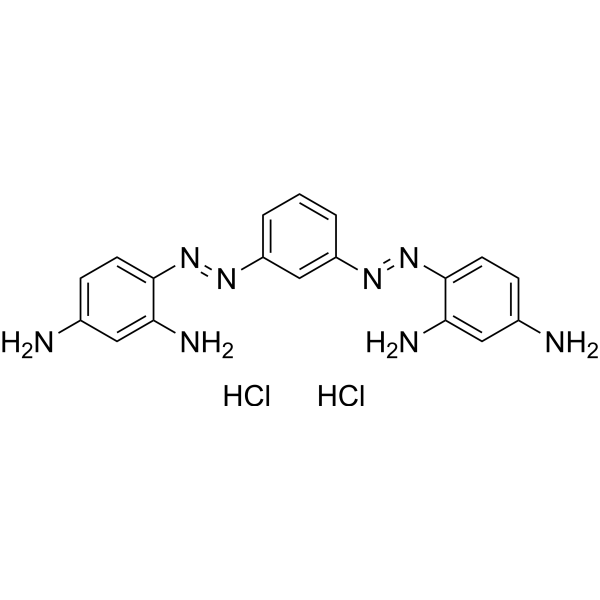
    Bismarck Brown R is a basic dyes .
    Bismarck Brown R
  • HY-D0578

    Fluorescent Dye Others
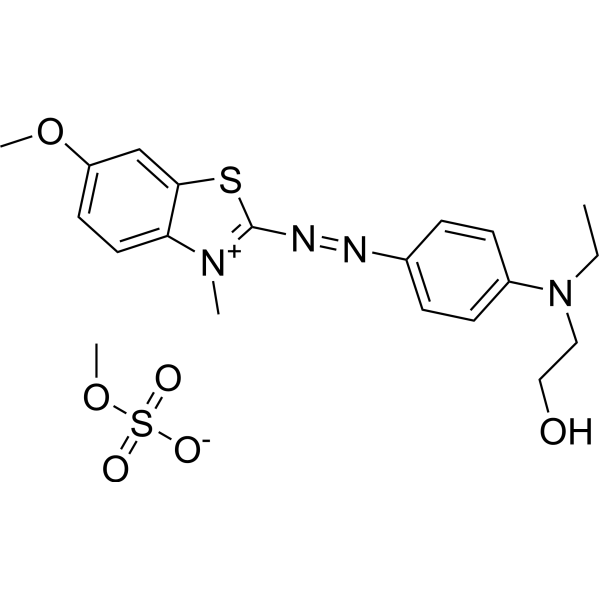
    Basic yellow 28 is a multifunctional dye. Dyes are important tools in biological experiments. They can help researchers observe and analyze cell structures, track biomolecules, evaluate cell functions, distinguish cell types, detect biomolecules, study tissue pathology and monitor microorganisms. Their applications range from basic scientific research to clinical A wide range of diagnostics. Dyes are also widely used in traditional fields such as textile dyeing, as well as in emerging fields such as functional textile processing, food pigments and dye-sensitized solar cells.
    Basic yellow 28
  • HY-D1214

    Cationic Red X-GRL

    Fluorescent Dye
    Basic Red 46 is an alkaline dye that can be removed from aqueous solutions in intermittent adsorption systems using tree ferns as biosorbents.
    Basic Red 46
  • HY-D1036

    Fluorescent Dye
    Basic red 18 (acetate) is an alkaline dye that can be removed from aqueous solutions in intermittent adsorption systems using tree ferns as biosorbents.
    Basic red 18 acetate
  • HY-D0724

    Fluorescent Dye
    Basic violet 16 (phosphate) is an alkaline dye that can be removed from aqueous solutions in intermittent adsorption systems using tree ferns as biosorbents.
    Basic violet 16 phosphate
  • HY-W110909

    Titan yellow; Clayton Yellow

    Biochemical Assay Reagents Others
    Thiazole yellow G, for microscopy is a cationic basic thiazine dye. Thiazole yellow G can be used for the determination of uranium and thorium .
    Thiazole Yellow G, for microscopy
  • HY-D1354

    Fluorescent Dye Others
    Azide MegaStokes dye 673 is a multifunctional dye. Dyes are important tools in biological experiments. They can help researchers observe and analyze cell structures, track biomolecules, evaluate cell functions, distinguish cell types, detect biomolecules, study tissue pathology and monitor microorganisms. Their applications range from basic scientific research to clinical A wide range of diagnostics. Dyes are also widely used in traditional fields such as textile dyeing, as well as in emerging fields such as functional textile processing, food pigments and dye-sensitized solar cells.
    Azide MegaStokes dye 673
  • HY-D0951

    Fluorescent Dye Others
    Methyl violet dye is a multifunctional dye. Dyes are important tools in biological experiments. They can help researchers observe and analyze cell structures, track biomolecules, evaluate cell functions, distinguish cell types, detect biomolecules, study tissue pathology and monitor microorganisms. Their applications range from basic scientific research to clinical A wide range of diagnostics. Dyes are also widely used in traditional fields such as textile dyeing, as well as in emerging fields such as functional textile processing, food pigments and dye-sensitized solar cells.
    Methyl violet dye
  • HY-D0311

    Fluorescent Dye Others
    Brown Y is a multifunctional dye. Dyes are important tools in biological experiments. They can help researchers observe and analyze cell structures, track biomolecules, evaluate cell functions, distinguish cell types, detect biomolecules, study tissue pathology and monitor microorganisms. Their applications range from basic scientific research to clinical A wide range of diagnostics. Dyes are also widely used in traditional fields such as textile dyeing, as well as in emerging fields such as functional textile processing, food pigments and dye-sensitized solar cells.
    Brown Y
  • HY-D0572

    Fluorescent Dye Others
    Acid red 260 is a multifunctional dye. Dyes are important tools in biological experiments. They can help researchers observe and analyze cell structures, track biomolecules, evaluate cell functions, distinguish cell types, detect biomolecules, study tissue pathology and monitor microorganisms. Their applications range from basic scientific research to clinical A wide range of diagnostics. Dyes are also widely used in traditional fields such as textile dyeing, as well as in emerging fields such as functional textile processing, food pigments and dye-sensitized solar cells.
    Acid red 260
  • HY-D0474

    Fluorescent Dye Others
    Acid green 12 is a multifunctional dye. Dyes are important tools in biological experiments. They can help researchers observe and analyze cell structures, track biomolecules, evaluate cell functions, distinguish cell types, detect biomolecules, study tissue pathology and monitor microorganisms. Their applications range from basic scientific research to clinical A wide range of diagnostics. Dyes are also widely used in traditional fields such as textile dyeing, as well as in emerging fields such as functional textile processing, food pigments and dye-sensitized solar cells.
    Acid green 12
  • HY-D0461

    Fluorescent Dye Others
    beta-Naphthol violet is a multifunctional dye. Dyes are important tools in biological experiments. They can help researchers observe and analyze cell structures, track biomolecules, evaluate cell functions, distinguish cell types, detect biomolecules, study tissue pathology and monitor microorganisms. Their applications range from basic scientific research to clinical A wide range of diagnostics. Dyes are also widely used in traditional fields such as textile dyeing, as well as in emerging fields such as functional textile processing, food pigments and dye-sensitized solar cells.
    beta-Naphthol violet
  • HY-D1303

    Fluorescent Dye Others
    Marina blue is a multifunctional dye. Dyes are important tools in biological experiments. They can help researchers observe and analyze cell structures, track biomolecules, evaluate cell functions, distinguish cell types, detect biomolecules, study tissue pathology and monitor microorganisms. Their applications range from basic scientific research to clinical A wide range of diagnostics. Dyes are also widely used in traditional fields such as textile dyeing, as well as in emerging fields such as functional textile processing, food pigments and dye-sensitized solar cells.
    Marina blue
  • HY-D0206

    Fluorescent Dye Others
    Chromotropic acid disodium is a multifunctional dye. Dyes are important tools in biological experiments. They can help researchers observe and analyze cell structures, track biomolecules, evaluate cell functions, distinguish cell types, detect biomolecules, study tissue pathology and monitor microorganisms. Their applications range from basic scientific research to clinical A wide range of diagnostics. Dyes are also widely used in traditional fields such as textile dyeing, as well as in emerging fields such as functional textile processing, food pigments and dye-sensitized solar cells.
    Chromotropic acid disodium
  • HY-D0634

    Fluorescent Dye Others
    Reactive Black 39 is a multifunctional dye. Dyes are important tools in biological experiments. They can help researchers observe and analyze cell structures, track biomolecules, evaluate cell functions, distinguish cell types, detect biomolecules, study tissue pathology and monitor microorganisms. Their applications range from basic scientific research to clinical A wide range of diagnostics. Dyes are also widely used in traditional fields such as textile dyeing, as well as in emerging fields such as functional textile processing, food pigments and dye-sensitized solar cells.
    Reactive Black 39
  • HY-D0399

    Fluorescent Dye Others
    C.I. Acid blue 40 is a multifunctional dye. Dyes are important tools in biological experiments. They can help researchers observe and analyze cell structures, track biomolecules, evaluate cell functions, distinguish cell types, detect biomolecules, study tissue pathology and monitor microorganisms. Their applications range from basic scientific research to clinical A wide range of diagnostics. Dyes are also widely used in traditional fields such as textile dyeing, as well as in emerging fields such as functional textile processing, food pigments and dye-sensitized solar cells.
    C.I. Acid blue 40
  • HY-D1679

    Fluorescent Dye Others
    Phalloidin-f-HM-SiR is a multifunctional dye. Dyes are important tools in biological experiments. They can help researchers observe and analyze cell structures, track biomolecules, evaluate cell functions, distinguish cell types, detect biomolecules, study tissue pathology and monitor microorganisms. Their applications range from basic scientific research to clinical A wide range of diagnostics. Dyes are also widely used in traditional fields such as textile dyeing, as well as in emerging fields such as functional textile processing, food pigments and dye-sensitized solar cells.
    Phalloidin-f-HM-SiR
  • HY-D0377

    Fluorescent Dye Others
    Solvaperm Green G is a multifunctional dye. Dyes are important tools in biological experiments. They can help researchers observe and analyze cell structures, track biomolecules, evaluate cell functions, distinguish cell types, detect biomolecules, study tissue pathology and monitor microorganisms. Their applications range from basic scientific research to clinical A wide range of diagnostics. Dyes are also widely used in traditional fields such as textile dyeing, as well as in emerging fields such as functional textile processing, food pigments and dye-sensitized solar cells.
    Solvaperm Green G
  • HY-D0655

    Fluorescent Dye Others
    Reactive red 24 is a multifunctional dye. Dyes are important tools in biological experiments. They can help researchers observe and analyze cell structures, track biomolecules, evaluate cell functions, distinguish cell types, detect biomolecules, study tissue pathology and monitor microorganisms. Their applications range from basic scientific research to clinical A wide range of diagnostics. Dyes are also widely used in traditional fields such as textile dyeing, as well as in emerging fields such as functional textile processing, food pigments and dye-sensitized solar cells.
    Reactive red 24
  • HY-D0013

    Dichlorophenolsulphonephthalein

    Fluorescent Dye Others
    Chlorophenol red (Dichlorophenolsulphonephthalein) is a multifunctional dye. Dyes are important tools in biological experiments. They can help researchers observe and analyze cell structures, track biomolecules, evaluate cell functions, distinguish cell types, detect biomolecules, study tissue pathology and monitor microorganisms. Their applications range from basic scientific research to clinical A wide range of diagnostics. Dyes are also widely used in traditional fields such as textile dyeing, as well as in emerging fields such as functional textile processing, food pigments and dye-sensitized solar cells.
    Chlorophenol red
  • HY-D0588

    Fluorescent Dye Others
    Acid red 266 is a multifunctional dye. Dyes are important tools in biological experiments. They can help researchers observe and analyze cell structures, track biomolecules, evaluate cell functions, distinguish cell types, detect biomolecules, study tissue pathology and monitor microorganisms. Their applications range from basic scientific research to clinical A wide range of diagnostics. Dyes are also widely used in traditional fields such as textile dyeing, as well as in emerging fields such as functional textile processing, food pigments and dye-sensitized solar cells.
    Acid red 266
  • HY-D0464

    Fluorescent Dye Others
    Pigment red 48:1 is a multifunctional dye. Dyes are important tools in biological experiments. They can help researchers observe and analyze cell structures, track biomolecules, evaluate cell functions, distinguish cell types, detect biomolecules, study tissue pathology and monitor microorganisms. Their applications range from basic scientific research to clinical A wide range of diagnostics. Dyes are also widely used in traditional fields such as textile dyeing, as well as in emerging fields such as functional textile processing, food pigments and dye-sensitized solar cells.
    Pigment red 48:1
  • HY-D1036A

    Fluorescent Dye
    Basic red 18 is a basic red dye whose dyeing effect can be removed by nanoclay adsorbent.
    Basic red 18
  • HY-D1120

    Basic Blue 16

    Fluorescent Dye
    Indoine blue is a basic dye.
    Indoine blue
  • HY-D1241

    Fluorescent Dye
    Janus red is a basic dye.
    Janus red
  • HY-D1131

    Fluorescent Dye
    Janus green is a basic dye.
    Janus green
  • HY-135256

    Acid yellow 1, 98%

    Biochemical Assay Reagents Others
    Naphthol yellow S, 98% (Acid yellow 1, 98%) is a basic protein-binding dye used for enzyme activity detection.
    Naphthol yellow S, 98%
  • HY-D1132

    Fluorescent Dye
    Basic red 12 is an alkaline dye that can be removed from aqueous solutions in intermittent adsorption systems using tree ferns as biosorbents.
    Basic red 12
  • HY-D0579

    Fluorescent Dye
    Basic red 18:1 is an alkaline dye that can be removed from aqueous solutions in intermittent adsorption systems using tree ferns as biosorbents.
    Basic red 18:1
  • HY-D0551

    Fluorescent Dye Others
    C.I. Basic red 24 is an alkaline dye that can be removed from aqueous solutions in intermittent adsorption systems using tree ferns as biosorbents.
    C.I. Basic red 24
  • HY-D0406

    Fluorescent Dye
    C.I. Basic yellow 37 is an alkaline dye that can be removed from aqueous solutions in intermittent adsorption systems using tree ferns as biosorbents.
    C.I. Basic yellow 37

Inquiry Online

Your information is safe with us. * Required Fields.

Salutation


Country or Region *

Applicant Name *


Organization Name *

Department *


Email Address *


Product Name *

Cat. No.


Requested quantity *

Phone Number *


Remarks

Inquiry Online

Inquiry Information

Product Name:
Cat. No.:
Quantity:
MCE Japan Authorized Agent:

