

15 Results for "

CD 1 mice

" in MedChemExpress (MCE) Product Catalog:
Products (15)

15 Results for "CD 1 mice" in MCE Product Catalog:

2
2 Cited Publications
Cat. No.: HY-B2232A
CAS No.: 8001-54-5
Synonyms: Alkyldimethylbenzylammonium chloride (solid)
Research Areas:  

Infection

Benzalkonium chloride (solid) (Alkyldimethylbenzylammonium chloride (solid)) is a quaternary ammonium preservative, cationic surfactant, and antimicrobial (Antimicrobial) agent. Benzalkonium chloride (solid) is toxic .
loading...
    loading...
1
1 Cited Publications
Cat. No.: HY-A0277
CAS No.: 94361-06-5
Research Areas:  

Others

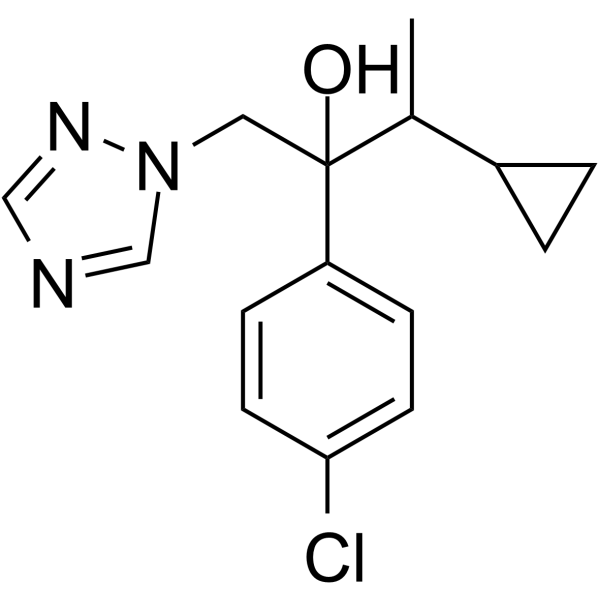
Cyproconazole is a triazole fungicide used to protect crops, fruits and vegetables against a wide range of fungal pathogens. Cyproconazole can cause hepatocellular adenomas and carcinomas in CD-1 mice. Cyproconazole also exhibits low toxicity to zebrafish embryos and affects locomotor activity .
loading...
    loading...
Cat. No.: HY-W002199
CAS No.: 647-42-7
Synonyms: 6:2 FTOH; 1H,1H,2H,2H-Perfluoro-1-octanol; 2-(Perfluorohexyl)ethanol
6:2 Fluorotelomer alcohol (6:2 FTOH) is an orally active, blood-brain barrier-permeable modulator of cyclin D1 and ETS1. 6:2 Fluorotelomer alcohol downregulates cyclin D1 expression, upregulates ETS1 via the TNF-α/ERK 1/2 pathway, impairs mitochondrial membrane potential and respiratory function, increases reactive oxygen species levels, disrupts calcium homeostasis and activates endoplasmic reticulum stress markers, and induces cell proliferation inhibition and endothelial-mesenchymal transition. Furthermore, 6:2 Fluorotelomer alcohol induces morphological abnormalities in zebrafish embryos and liver developmental damage, while disrupting the brain immune microenvironment in mice, causing systemic toxicity and delayed pup maturation in CD-1 mice. 6:2 Fluorotelomer alcohol also induces cortical neuron apoptosis, glial cell activation, synaptic abnormalities, colonic barrier damage, intestinal dysbiosis and autism spectrum disorder-like symptoms in mice. 6:2 Fluorotelomer alcohol shows no mutagenic, clastogenic, primary skin/eye irritation or skin sensitizing effects, exhibits no selective reproductive toxicity in CD-1 mice, and is classified as GHS Category 4 for acute oral toxicity. 6:2 Fluorotelomer alcohol can be used in studies of neurodevelopmental disorders and autism spectrum disorders .
loading...
    loading...
Cat. No.: HY-155478
CAS No.: 3016437-05-8
Purity:  98.07%
Target:  

Androgen Receptor

Research Areas:  

Cancer

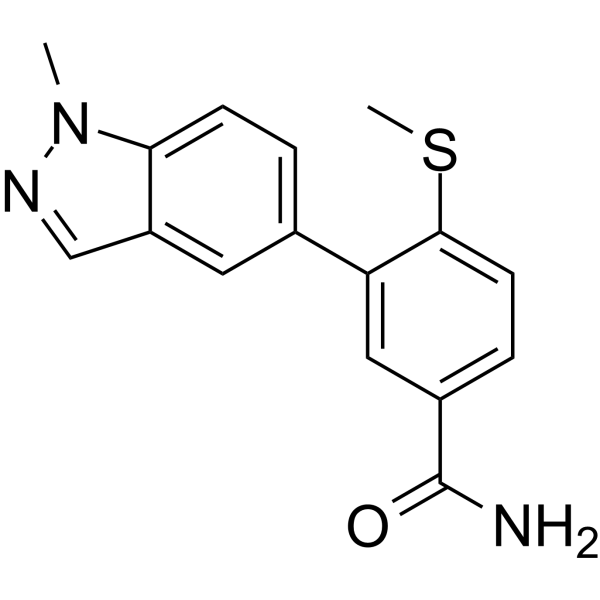
Androgen receptor-IN-6 (compound 16) is an orally available androgen receptor (Androgen Receptor) potent inhibitor (IC50=0.12 μM in vitro), targeting the disordered N-terminal domain (NTD). Androgen receptor-IN-6 has good Caco2 cell membrane permeability and has an oral activity (F/%) of 16% in male CD-1 mice .
loading...
    loading...
Cat. No.: HY-P1302
CAS No.: 178249-41-7
Target:  

Opioid Receptor

Research Areas:  

Neurological Disease

Orphanin FQ(1-11), a orphanin FQ or nociceptin (OFQ/N) fragment, is a potent NOP receptor (ORL-1; OP4) agonist, with a Ki of 55 nM. Orphanin FQ(1-11) has no affinity for μ, δ, κ1 and κ3 receptors (Ki>1000 nM). Orphanin FQ(1-11) is analgesic in CD-1 mice .
loading...
    loading...
Cat. No.: HY-B0430B
CAS No.: 599-54-2
Synonyms: (±)-Pantothenate; (±)-Vitamin B5
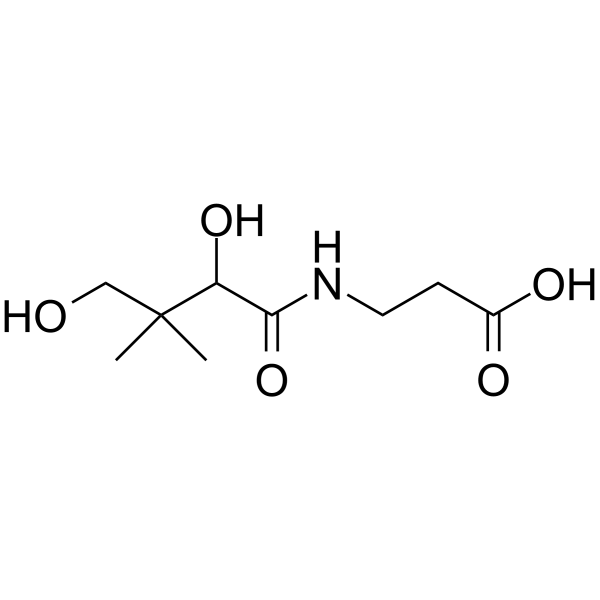
(±)-Pantothenic acid ((±)-Pantothenate), a B-vitamin, is an essential vitamin required for the biosynthesis of coenzyme A (CoA) in mammalian cells. Pantothenic acid has protective activity against valproic acid (VPA)-induced neural tube defects (NTD) in CD-1 mice .
loading...
    loading...
Cat. No.: HY-A0277R
CAS No.: 94361-06-5
Research Areas:  

Others

Cyproconazole (Standard) is the analytical standard of Cyproconazole. This product is intended for research and analytical applications. Cyproconazole is a triazole fungicide used to protect crops, fruits and vegetables against a wide range of fungal pathogens. Cyproconazole can cause hepatocellular adenomas and carcinomas in CD-1 mice. Cyproconazole also exhibits low toxicity to zebrafish embryos and affects locomotor activity .
loading...
    loading...
Cat. No.: HY-P1302A
Target:  

Opioid Receptor

Research Areas:  

Neurological Disease

Orphanin FQ(1-11) TFA, a orphanin FQ or nociceptin (OFQ/N) fragment, is a potent NOP receptor (ORL-1; OP4) agonist, with a Ki of 55 nM. Orphanin FQ(1-11) TFA has no affinity for μ, δ, κ1 and κ3 receptors (Ki>1000 nM). Orphanin FQ(1-11) TFA is analgesic in CD-1 mice .
loading...
    loading...
Cat. No.: HY-165425
CAS No.: 260554-07-2
Target:  

Angiotensin Receptor

Research Areas:  

Cardiovascular Disease

KR31173 is an AT1 antagonist with an IC50 of 3.27  nM. KR31173 can be used as a positron emission tomography (PET) tracer after being labeled with 11C isotope. KR31173 shows promising biodistribution and pharmacological properties in mice. KR31173 selectively binds to organs known to contain a high density of AT1 angiotensin receptors in CD-1 mice .
loading...
    loading...
Cat. No.: HY-163797
CAS No.: 3049092-06-7
Target:  

DNA/RNA Synthesis

Research Areas:  

Cancer

WRN inhibitor 10 (Compound P24) is an inhibitor for the Werner helicase WRN with an IC50 of 1.1 nM. WRN inhibitor 10 inhibits the proliferation of cancer cell SW48 with IC50 of 39 nM. WRN inhibitor 10 exhibits good liver microsomal stability and film permeability. WRN inhibitor 10 exhibits good pharmacokinetic characteristics in CD-1 mice .
loading...
    loading...
Cat. No.: HY-P11232
CAS No.: 1969250-99-4
Research Areas:  

Infection

NAB815 is a specific inhibitor of the Stx2a (Kd = 0.01 μM)/TLR4 interaction. NAB815 inhibits the neutrophil/Stx2a interaction (IC50 = 0.057 μg/mL). NAB815 inhibits the formation of Stx2-containing extracellular vesicles (EVs) produced by leukocytes and platelets and reduces their toxic effects in cellular (Vero cells) and animal models (CD-1 mice). NAB815 reduces bacterial loads in the kidneys, urine, and bladders of Escherichia coli-infected mice. NAB815 is useful in the study of hemolytic uremic syndrome (HUS) .
loading...
    loading...
Cat. No.: HY-163799
CAS No.: 3048425-88-0
Research Areas:  

Cancer

PRMT5-MTA-IN-1 (Compound A9a) is an inhibitor for protein arginine methyltransferase PRMT5-MTA. PRMT5-MTA-IN-1 inhibits the proliferation of colorectal cancer cell HCT116 wildtype and MTAP del mutant, with an IC50 of 16 nM and 2.47 μM. PRMT5-MTA-IN-1 exhibits good liver microsomal stability and film permeability. PRMT5-MTA-IN-1 exhibits good pharmacokinetic characteristics in CD-1 mice .
loading...
    loading...
Cat. No.: HY-163816
CAS No.: 2923508-77-2
Antiproliferative agent-53-d3 (Compound C1) is an inhibitor for theta-mediated end joining (TMEJ) in HEK293 cell with an IC50 of 0.14 µM. Antiproliferative agent-53-d3 is the inhibitor for CYP2C19 and CYP2C9 with IC50 of 0.77 and 3.1 µM. Antiproliferative agent-53-d3 inhibits the proliferation of DNA repair-compromised cells, with IC50 of 8.1 µM for BRCA2 -/- DLD-1. Antiproliferative agent-53-d3 exhibits good pharmacokinetic characteristics in CD-1 mice .
loading...
    loading...
Cat. No.: HY-162727
Research Areas:  

Inflammation/Immunology Cancer

GCS-12 is a Th1/2-balanced sulfonamide glycolipid with improved interaction with CD1d. GCS-12 is an agonist for natural killer T (NKT) cell, that induces the secretion of cytokine IFN-γ and IL-4, and exhibits immunomodulatory and anti-tumor activities in mice .
loading...
    loading...
Cat. No.: HY-P992059

Target:  

CD1

Research Areas:  

Cancer

Anti-Mouse CD1d Antibody (1B1) is an antibody targeting mouse CD1d (Kd=12.5 nM). By inserting into the lipid-binding groove of CD1d, Anti-Mouse CD1d Antibody (1B1) overlaps with the binding sites of type I and type II NKT cell receptors (TCR), thereby effectively blocking TCR-mediated interactions. Anti-Mouse CD1d Antibody (1B1) activates antigen-presenting cells such as dendritic cells and macrophages, induces them to release IL-12p70, and increases the levels of key cytokines including IL-12, IFN-γ and IFN-α in mouse serum. Anti-Mouse CD1d Antibody (1B1) can be used in studies related to renal cancer, breast cancer and colon adenocarcinoma. When combined with anti-DR5 or anti-CD137 antibodies and chemotherapeutic drugs, Anti-Mouse CD1d Antibody (1B1) exhibits significant tumor inhibitory and even eradication effects in mice .
loading...
    loading...
  • 1

