1. Search Result
Search Result
Results for "

CNS depression

" in MedChemExpress (MCE) Product Catalog:

13

Inhibitors & Agonists

1

Peptides

Cat. No. Product Name Target Research Areas Chemical Structure
  • HY-B0061
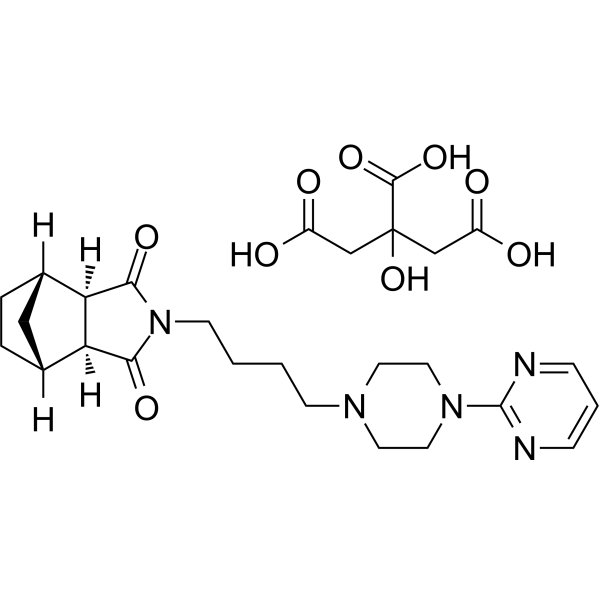
    Tandospirone citrate
    3 Publications Verification

    SM-3997 citrate

    5-HT Receptor Neurological Disease Metabolic Disease
    Tandospirone (SM-3997) citrate is a potent and selective 5-HT1A receptor partial agonist, with a Ki of 27 nM. Tandospirone citrate has anxiolytic and antidepressant activities. Tandospirone citrate can be used for the research of the central nervous system disorders and the underlying mechanisms .
    Tandospirone citrate
  • HY-14558
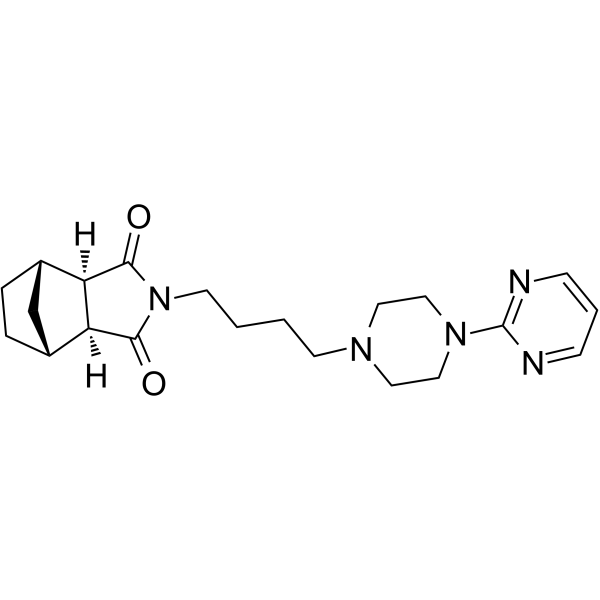
    Tandospirone
    3 Publications Verification

    SM-3997

    5-HT Receptor Neurological Disease
    Tandospirone (SM-3997) is a potent and selective 5-HT1A receptor partial agonist, with a Ki of 27 nM. Tandospirone has anxiolytic and antidepressant activities. Tandospirone can be used for the research of the central nervous system disorders and the underlying mechanisms .
    Tandospirone
  • HY-19699

    NAAM; 1-Naphthaleneacetamide; α-Naphthylacetamide

    Environmental Pollutants Phytohormone Neurological Disease Endocrinology
    1-Naphthylacetamide is an orally active nonsteroidal anti-inflammatory agent (NAIA) and also an indole-type auxin plant growth regulator. 1-Naphthylacetamide inhibits inflammatory response-related pathways and modulates plant hormone signaling, exhibiting anti-inflammatory, local anesthetic, antispasmodic, analgesic, and diuretic activities. 1-Naphthylacetamide promotes plant cell expansion, differentiation, and fruit enlargement. Additionally, 1-Naphthylacetamide induces central nervous system (CNS) depression in mice, characterized by reduced spontaneous activity, decreased irritability, decreased muscle tone, and attenuated ear-cuff reflex, ipsilateral flexor reflex, and corneal reflex [1][2].
    1-Naphthylacetamide
  • HY-110053

    SM-3997 hydrochloride

    5-HT Receptor Neurological Disease
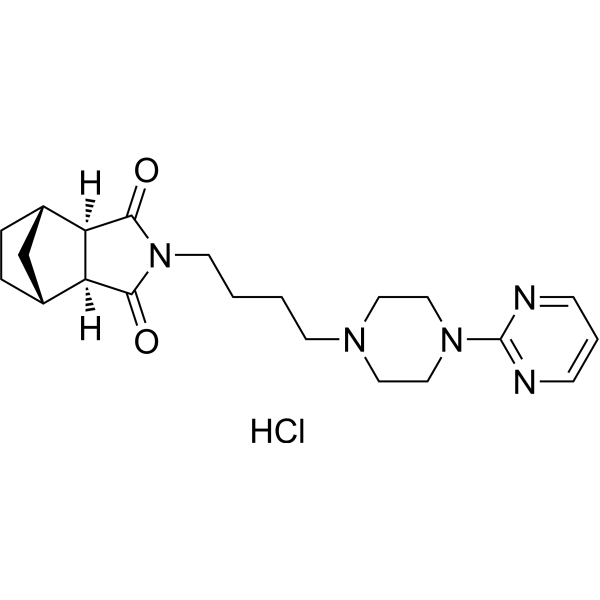
    Tandospirone (SM-3997) hydrochloride is a potent and selective 5-HT1A receptor partial agonist, with a Ki of 27 nM. Tandospirone hydrochloride has anxiolytic and antidepressant activities. Tandospirone hydrochloride can be used for the research of the central nervous system disorders and the underlying mechanisms .
    Tandospirone hydrochloride
  • HY-175285

    5-HT Receptor Neurological Disease
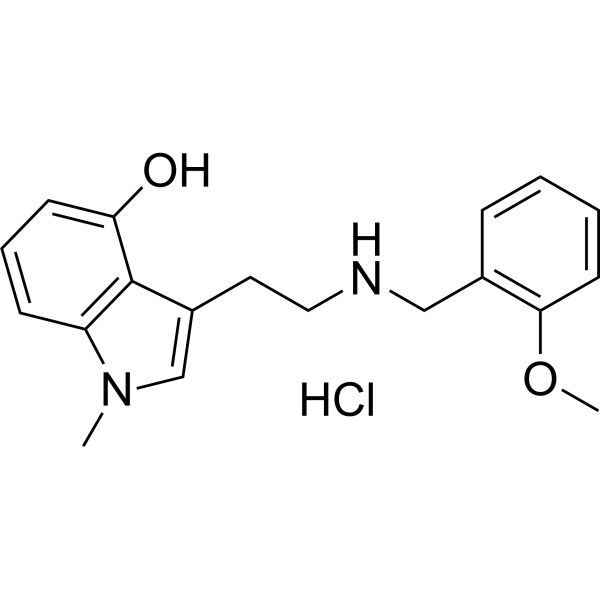
    5-HT2AR-IN-1 (Compound Ie) is an orally active 5-hydroxytryptamine 2A receptor (5-HT2AR) inhibitor with antidepressant efficacy. 5-HT2AR-IN-1 reduces 5-HT2AR expression and SERT protein levels. 5-HT2AR-IN-1 is promising for research of central nervous system (CNS), such as depression and addiction-related disorders .
    5-HT2AR-IN-1
  • HY-156533

    5-HT Receptor Cancer
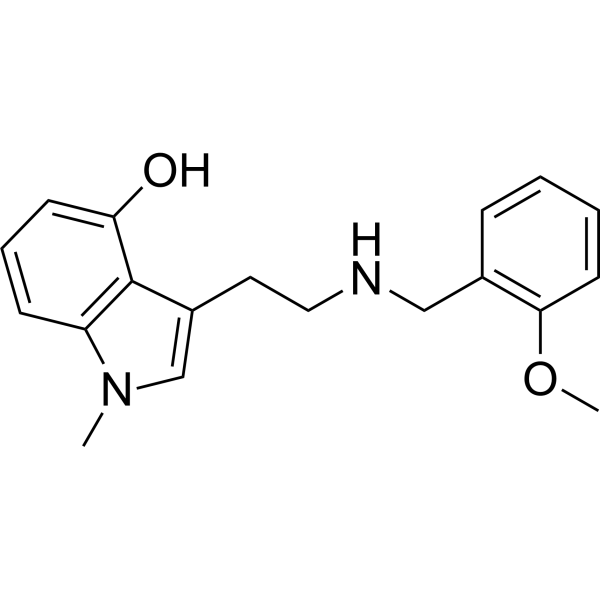
    5-HT2 agonist-1 (Compound 24) is a 5-HT2A & 5-HT2B & 5-HT2C agonist, with IC50s of 10 nM, 8.3, and 1.6 nM respectively. 5-HT2 agonist-1 free base can be used for research of depression, alcoholism, tobacco and cocaine addiction, inflammation, cluster headache, PTSD, seizure disorders and other CNS disorders .
    5-HT2 agonist-1
  • HY-156533A

    5-HT Receptor Neurological Disease Inflammation/Immunology Cancer
    5-HT2 agonist-1 (Compound 24) free base is a 5-HT2A & 5-HT2B & 5-HT2C agonist, with IC50s of 10 nM, 8.3, and 1.6 nM respectively. 5-HT2 agonist-1 free base can be used for research of depression, alcoholism, tobacco and cocaine addiction, inflammation, cluster headache, PTSD, seizure disorders and other CNS disorders .
    5-HT2 agonist-1 free base
  • HY-156534

    5-HT Receptor Neurological Disease Inflammation/Immunology Cancer
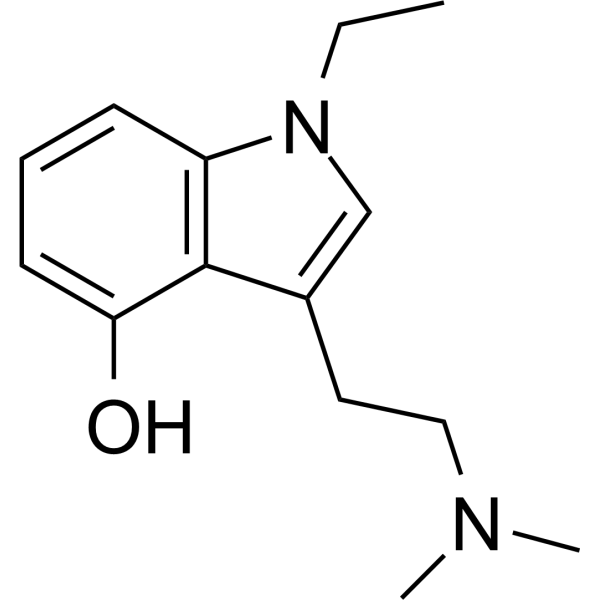
    5-HT2A&5-HT2C agonist-1 (Example 2) is a 5-HT2A & 5-HT2C agonist, with IC50s of 196 nM and 0.9 nM respectively. 5-HT2A&5-HT2C agonist-1 can be used for research of depression, alcoholism, tobacco and cocaine addiction, inflammation, cluster headache, PTSD, seizure disorders and other CNS disorders .
    5-HT2A&5-HT2C agonist-1
  • HY-P1625

    Dynorphin A ethylamide (1-9)

    Opioid Receptor Neurological Disease
    Daeatal (Dynorphin A ethylamide (1-9)) is an ethylamine-modified dynorphin fragment that can be used in the study of analgesia, addiction, depression, etc. Dynorphin A is an endogenous opioid peptide involved in inhibitory neurotransmission in the central nervous system (CNS). Dynorphin A is a highy potent kappa opioid receptor (KOR) agonist, and is also an agonist for other opioid receptors, such as mu (MOR) and delta (DOR). Dynorphin A can induce neuronal death, and can be used in the research of neurological disease .
    Daeatal
  • HY-14558R

    SM-3997 (Standard)

    Reference Standards 5-HT Receptor Neurological Disease
    Tandospirone (Standard) is the analytical standard of Tandospirone. This product is intended for research and analytical applications. Tandospirone (SM-3997) is a potent and selective 5-HT1A receptor partial agonist, with a Ki of 27 nM. Tandospirone has anxiolytic and antidepressant activities. Tandospirone can be used for the research of the central nervous system disorders and the underlying mechanisms .
    Tandospirone (Standard)
  • HY-105704

    NSC 170955; WA 335

    5-HT Receptor Neurological Disease
    Danitracen (NSC 170955) is an orally active, CNS penetrant serotonin antagonist with antidepressant activity. Danitracen reduces serotonin levels in the cerebrum, cerebellum, medulla and the whole brain. Danitracen exhibits anticataleptic effects in rat catalepsy models. Danitracen can be used for catalepsy and depression research .
    Danitracen
  • HY-183269

    Serotonin Transporter Neurological Disease
    SERT-IN-5 is a potent, selective, and CNS-penetrant serotonin transporter (SERT) inhibitor with a Ki of 0.3 nM. SERT-IN-5 blocks serotonin reuptake to increase synaptic serotonin levels. SERT-IN-5 exhibits anti-anxiety effects in mice. SERT-IN-5 can be used for the research of anxiety, depression .
    SERT-IN-5
  • HY-179282

    Opioid Receptor Neurological Disease
    Mu opioid receptor antagonist 9 is potent, selective and CNS-pentrant mu-opioid receptor (MOR) antagonist with a Ki of 77.3 nM. Mu opioid receptor antagonist 9 exhibits selectivity over kappa-opioid receptor (KOR), and delta-opioid receptor (DOR). Mu opioid receptor antagonist 9 effectively blocks the antinociceptive effects of psychoactive substances. Mu opioid receptor antagonist 9 can reverse psychoactive substances-induced respiratory depression in mice. Mu opioid receptor antagonist 9 can be used for the research of Opioid Use Disorder (OUD) .
    Mu opioid receptor antagonist 9

Inquiry Online

Your information is safe with us. * Required Fields.

Salutation


Country or Region *

Applicant Name *


Organization Name *

Department *


Email Address *


Product Name *

Cat. No.


Requested quantity *

Phone Number *


Remarks

Inquiry Online

Inquiry Information

Product Name:
Cat. No.:
Quantity:
MCE Japan Authorized Agent:

