44 Results for "

Cucumber

" in MedChemExpress (MCE) Product Catalog:
Products (44)

44 Results for "Cucumber" in MCE Product Catalog:

3
3 Cited Publications
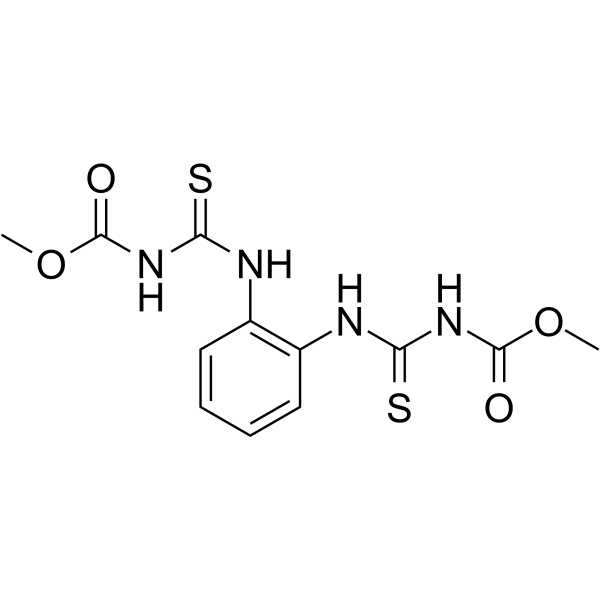
Cat. No.: HY-B0842
CAS No.: 23564-05-8
Thiophanate-Methyl is a pesticide residue and fungicide. Thiophanate-Methyl induces hepatotoxicity via caspase-3-mediated apoptosis and oxidative stress, thereby causing metabolic imbalance in the liver of zebrafish. Thiophanate-Methyl impairs the rhizobacteria-mediated defense response of cucumber against fusarium wilt .
1
1 Cited Publications
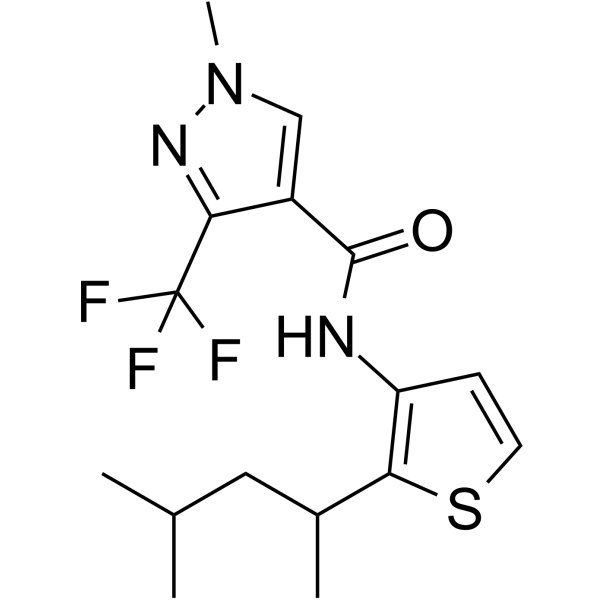
Cat. No.: HY-17520
CAS No.: 183675-82-3
Synonyms: MTF-753
Research Areas:  

Infection

Penthiopyrad (MTF-753) is a carboxamide Fungicide. Penthiopyrad inhibits SDH. Penthiopyrad exhibits broad-spectrum antifungal activity, being effective not only against Basidiomycetes, but also against Ascomycetes and Deuteromycetes. Penthiopyrad inhibits the mycelial growth of Alternaria mali, Botrytis cinerea, Monilinia mali, Rhizoctonia solani and Sclerotinia sclerotiorum on PDA medium, with EC50 values ranging from <0.4 ppm to 0.34 ppm and MIC values ranging from 6.6 ppm to 47.9 ppm .
Cat. No.: HY-W753375
CAS No.: 1383809-87-7
Fluindapyr is a broad-spectrum pyrazolamide chiral fungicide of succinate dehydrogenase inhibitor (SDHIs) with broad bactericidal spectrum and good efficacy. Fluopimomide is effective against M. incognita in vitro and application of fuopimomide shows some growth promotion effect in cucumber .
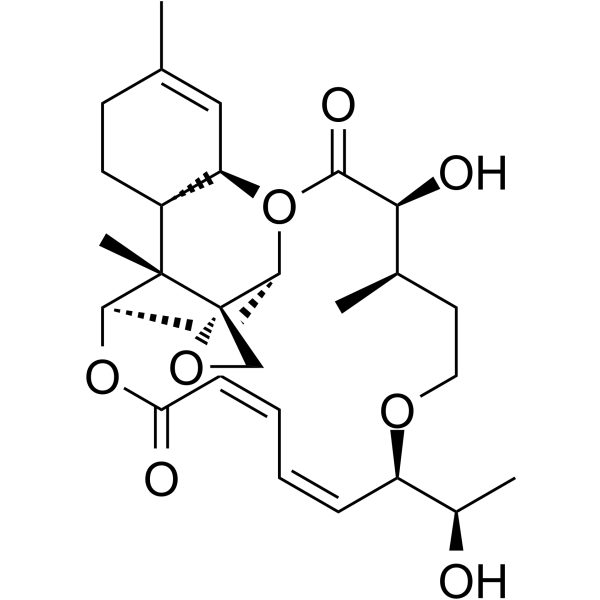
Cat. No.: HY-N9599
CAS No.: 14729-29-4
Roridin A acts as an inhibitor of pollen development in Arabidopsis thaliana and nematicide. Roridin A is isolated from the fungus Cylindrocarpon sp. Roridin A delays the flowering time of Arabidopsis thaliana, inhibits pollen development and stem elongation, and blocks plant growth. Roridin A induces larval death of the southern root-knot nematode (Meloidogyne incognita) .
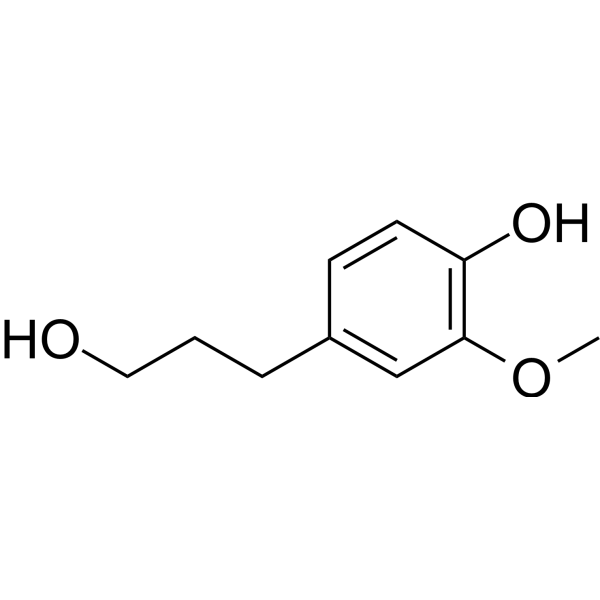
Cat. No.: HY-W016393
CAS No.: 2305-13-7
Dihydroconiferyl alcohol is a cell division factor. Dihydroconiferyl alcohol can be isolated from the American sycamore (Acer pseudoplatanus L.). Dihydroconiferyl alcohol inhibits the degradation of Indole-3-acetic acid (HY-18569). Dihydroconiferyl alcohol can stimulate the growth of soybean and tobacco callus tissue and synergistically enhance Indole-3-acetic acid-induced hypocotyl elongation in cucumber. Dihydroconiferyl alcohol can be used in the research of plant growth regulation .
Cat. No.: HY-N2558
CAS No.: 19668-69-0
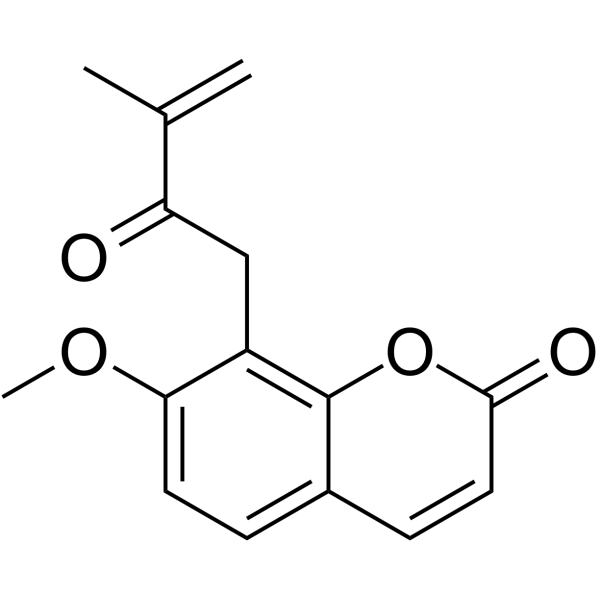
Murrayone is a coumarin compound with antifungal and antiplatelet activities. Murrayone disrupts fungal redox homeostasis, impairs cell membrane integrity, inhibits sporulation, spore germination and hyphal growth, and causes morphological damage to fungal cells. Murrayone reduces the disease severity of blueberry fruits infected with Botrytis cinerea. Murrayone can be used in studies related to fungal infections and vascular diseases .
Cat. No.: HY-116992
CAS No.: 2675-77-6
Purity:  ≥95.0%
Synonyms: Demosan; TERSAN SP(R)
Research Areas:  

Infection

Chloroneb (Demosan) is a pesticide with fungicidal and plant-protective activities. Chloroneb can be used to detect organochlorine pesticide residues, showing good selectivity, stability and reproducibility. Chloroneb has been applied to the detection of licorice, cucumber, river water and soil samples with satisfactory results .
Cat. No.: HY-B2026
CAS No.: 24579-73-5
Target:  

Fungal

Research Areas:  

Infection

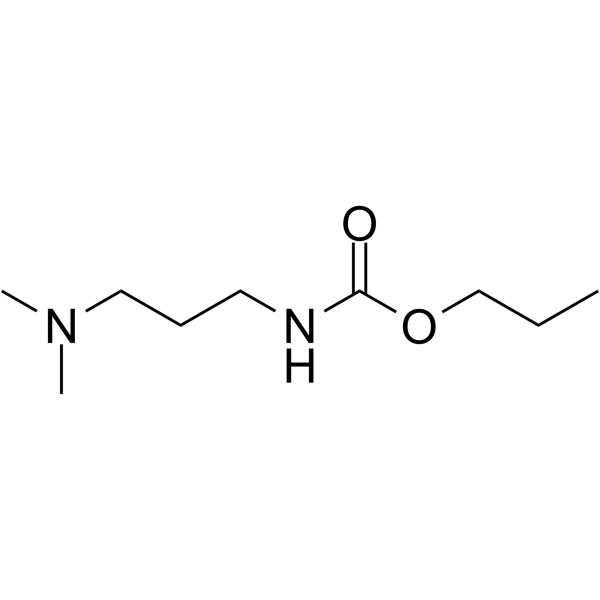
Propamocarb is a systemic fungicide. Propamocarb is widely used to protect cucumbers, tomatoes and other plants from pathogens .
Cat. No.: HY-P2742A
CAS No.: 9029-44-1
Target:  

Endogenous Metabolite

Research Areas:  

Metabolic Disease

L-Ascorbate oxidase, Cucumber belongs to the family of oxidoreductases acting on diphenols and related substances as donor with oxygen as acceptor. L-Ascorbate oxidase, Cucumber catalyses the oxidation of L‐Ascorbate (HY-B0166) with oxygen to dehydroascorbate with the generation of water. L-Ascorbate oxidase, Cucumber can be used in baking processes and cereal‐based processes .
Cat. No.: HY-W726127
CAS No.: 25606-41-1
Target:  

Fungal

Research Areas:  

Infection

Propamocarb hydrochloride is a systemic fungicide. Propamocarb hydrochloride is widely used to protect cucumbers, tomatoes and other plants from pathogens .
Cat. No.: HY-W016393R
CAS No.: 2305-13-7
Dihydroconiferyl alcohol (Standard) is an analytical standard of Dihydroconiferyl alcohol (HY-W016393). This product is intended for research and analytical applications. Dihydroconiferyl alcohol is a cell division factor. Dihydroconiferyl alcohol can be isolated from the American sycamore (Acer pseudoplatanus L.). Dihydroconiferyl alcohol inhibits the degradation of Indole-3-acetic acid (HY-18569). Dihydroconiferyl alcohol can stimulate the growth of soybean and tobacco callus tissue and synergistically enhance Indole-3-acetic acid-induced hypocotyl elongation in cucumber. Dihydroconiferyl alcohol can be used in the research of plant growth regulation .
Cat. No.: HY-169987
CAS No.: 2883052-97-7
Target:  

Fungal

Research Areas:  

Infection

bc1 Complex-IN-1 (compound 12g) is a potent bc1 complex inhibitor. bc1 Complex-IN-1 shows fungicidal properties against Cucumber downy mildew (CDM) .
Cat. No.: HY-145324
CAS No.: 2755814-80-1
Target:  

TMV

Research Areas:  

Infection

Antiviral agent 14 is an antiviral agent against the tobacco mosaic virus (TMV) and cucumber mosaic virus (CMV). The EC50 values of Antiviral agent 14 against TMV and CMV with EC50 values of 135.5 μg/mL and 178.6 μg/mL, respectively .
Cat. No.: HY-174390
CAS No.: 3085095-22-0
Research Areas:  

Infection

SDH-IN-29 (Compound A33) is a SDH inhibitor with an IC50 of 0.0709 μM. SDH-IN-29 has a broad spectrum of antifungal activities (EC50s of 0.356, 0.798 and 0.146 μg/mL for Fusarium graminearum, Sclerotinia sclerotiorum, and Rhizoctonia solani, respectively). SDH-IN-29 has moderate to significant protective effects against rice blast, wheat scab and cucumber powdery mildew .
Cat. No.: HY-122118
CAS No.: 845-52-3
Synonyms: CP-17029
Target:  

Herbicide

Research Areas:  

Others

Lambast (CP-17029) is a herbicide. Lambast is more toxic to wheat and sorghum than to cucumber .
Cat. No.: HY-N7237
CAS No.: 78244-74-3
Stichloroside B1 is a class of antifungal triterpenoid oligosaccharide isolated from the sea cucumber Stichopus chloronotus (BRANDT) .
Cat. No.: HY-129548
CAS No.: 38819-28-2
Target:  

Antibiotic

Research Areas:  

Infection

Prumycin is an antifungal antibiotic with activity against cucumber powdery mildew. Prumycin significantly inhibited the disease, whereas other metabolites such as bacillomycin D and surfactin did not. Prumycin did not induce the expression of plant defense genes, indicating that its effects were not through plant defense responses. Observation of cucumber cotyledons treated with prumycin showed that it could inhibit spore germination of P. fusca .
Cat. No.: HY-129548A
CAS No.: 57420-47-0
Target:  

Fungal

Research Areas:  

Infection

Prumycin dihydrochloride is an antifungal antibiotic with activity against cucumber powdery mildew. Prumycin dihydrochloride significantly inhibited the disease, whereas other metabolites such as bacillomycin D and surfactin did not. Prumycin dihydrochloride did not induce the expression of plant defense genes, indicating that its effects were not through plant defense responses. Observation of cucumber cotyledons treated with prumycin showed that it could inhibit spore germination of P. fusca .
Cat. No.: HY-130072
CAS No.: 77394-04-8
Bivittoside B is a non-sulfated hexoside analog derived from Bovine sea cucumber, exhibiting antifungal and potential antitumor activities.
Cat. No.: HY-B2026S
CAS No.: 1398065-89-8
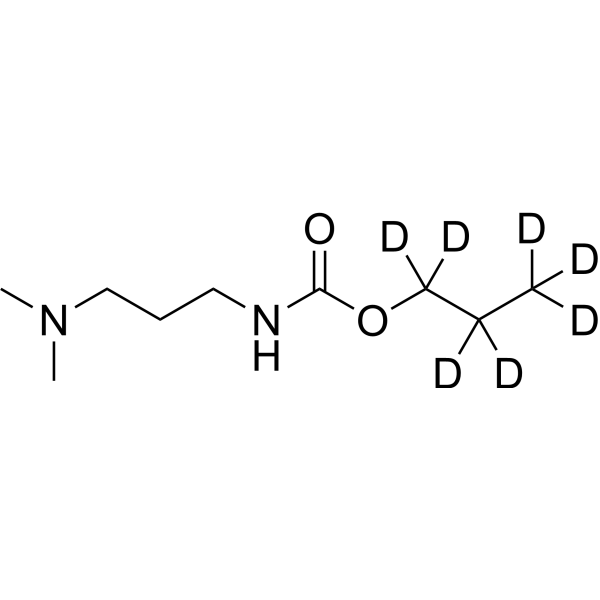
Propamocarb-d7 is the deuterium labeled Propamocarb . Propamocarb is a systemic fungicide. Propamocarb is widely used to protect cucumbers, tomatoes and other plants from pathogens .

