10 Results for "

H22 cells

" in MedChemExpress (MCE) Product Catalog:
Products (10)

10 Results for "H22 cells" in MCE Product Catalog:

1
1 Cited Publications
Cat. No.: HY-108551
CAS No.: 179324-22-2
Purity:  ≥95.0%
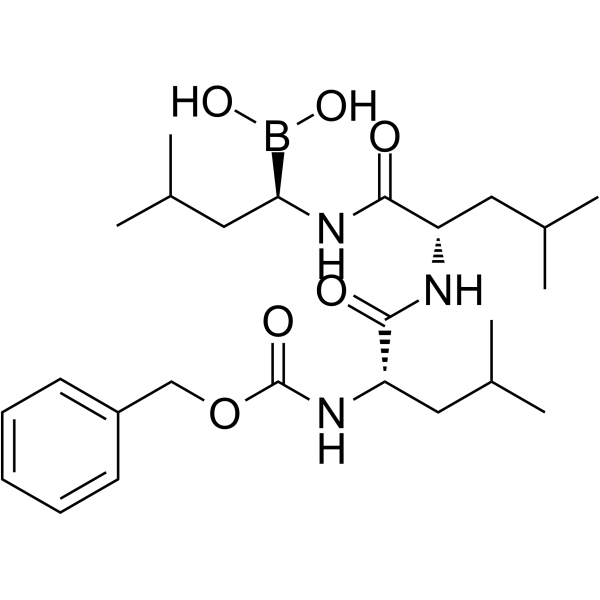
Synonyms: Z-Leu-Leu-LeuB(OH)2; ZL3B
MG-262 (Z-Leu-Leu-LeuB(OH)2; ZL3B) is a reversible proteasome inhibitor. MG-262 down-regulates VEGF receptor Flt-1. MG-262 inhibits cell growth and induces apoptosis in malignant cells. MG-262 induces reactive oxygen species (ROS). MG-262 can be used for anti-cancer study .
loading...
    loading...
Cat. No.: HY-Y0395
CAS No.: 25487-66-5
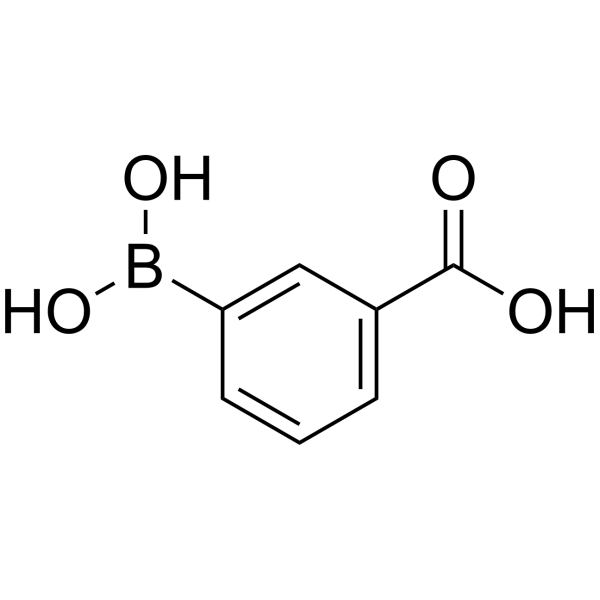
3-Carboxyphenylboronic acid is a biochemical reagent with multiple functions including nanoparticle enhancement, perovskite passivation, fluorescence quenching, and adhesion. 3-Carboxyphenylboronic acid improves tumor penetration and pulmonary retention of nanoparticles, and serves as a tumor-targeting ligand for carboxymethyl chitosan nanoparticles. 3-Carboxyphenylboronic acid optimizes film crystallization via coordinate chelation of free lead/iodide ions in perovskites. 3-Carboxyphenylboronic acid acts as an additive for n-i-p perovskite solar cells. Conjugation of 3-Carboxyphenylboronic acid with PPEG8 quenches the near-infrared fluorescence of single-walled carbon nanotubes, enabling aqueous dispersion of carbon nanotubes through binding to the diol structure of saccharides .
loading...
    loading...
Cat. No.: HY-161141
CAS No.: 2761180-01-0
Target:  

c-Met/HGFR

Research Areas:  

Cancer

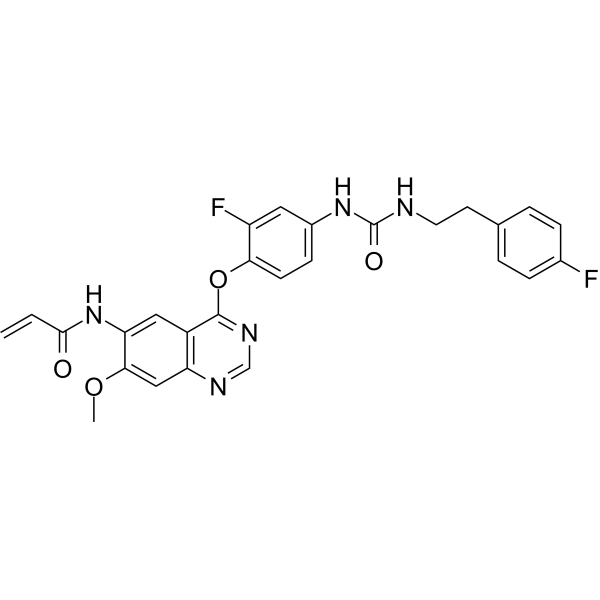
EGFR/ C-Met-in-2 (Compound H-22) is a dual inhibitor of EGFR/c-Met. EGFR/c-Met-IN-2 inhibits cell proliferation by arresting G2/M phase. EGFR/c-Met-IN-2 has antitumor activity .
loading...
    loading...
Cat. No.: HY-172108
Target:  

TGF-β Receptor

Research Areas:  

Cancer

TGFβRI-IN-7 (compound 16W) is a potent inhibitor of TGFβRI. TGFβRI-IN-7 inhibits SMAD2/3 phosphorylation and H22 cell viability with IC50 values of 12 and 65 nM, respectively. TGFβRI-IN-7 shows anti-tumor efficacy in a xenograft model of H22 cells, with TGI of 79.6 % .
loading...
    loading...
Cat. No.: HY-144232
CAS No.: 2768083-57-2
Target:  

Others

Research Areas:  

Cancer

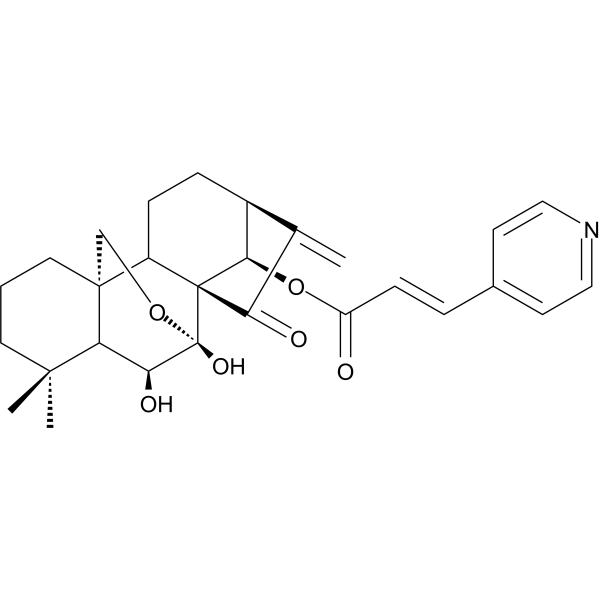
Anticancer agent 28 shows good antitumor activity in H22 allogeneic mice in vivo. Anticancer agent 28 has inhibitory potency in K562 cells of 50 times than oridonin, and its IC50 value is 0.09 μM.
loading...
    loading...
Cat. No.: HY-175459
Target:  

PROTACs FAK

Research Areas:  

Inflammation/Immunology Cancer

PROTAC FAK degrader 3 is a selective FAK PROTAC degrader (DC50 = 1.08 nM). PROTAC FAK degrader 3 induces FAK degradation dependent on the ubiquitin-proteasome system and its binding to FAK and CRBN. PROTAC FAK degrader 3 upregulates MHC-I gene transcription and tumor cell surface expression by inhibiting the non-catalytic activity of FAK, leading to increased antigen presentation and activation of cytotoxic CD8 T cells. PROTAC FAK degrader 3 enhances in vivo anti-tumor activity by promoting MHC-I expression and enhancing T cell activation. PROTAC FAK degrader 3 can be used in cancer research targeting FAK degradation in ovarian cancer, hepatocellular carcinoma, and other cancers .
loading...
    loading...
Cat. No.: HY-182447
CAS No.: 69095-83-6
Synonyms: DL111-IT
Target:  

CDK Apoptosis

Research Areas:  

Endocrinology Cancer

Contragestazol (DL111-IT) is a non-hormonal antifertility agent. Contragestazol reduces the expression of Cyclin D1 and CDK4, increases the expression of total retinoblastoma protein (pRb), and decreases the level of hyperphosphorylated pRb. Contragestazol induces G0/G1 phase cell cycle arrest. Contragestazol inhibits embryonic development by inducing luteal cell apoptosis and reducing intrauterine polyamine levels. Contragestazol exhibits antitumor activity against prostate cancer, S180 tumor and H22 tumor. Contragestazol shows extremely potent activity in terminating early pregnancy in animals .
loading...
    loading...
Cat. No.: HY-184926
PEG9MA10-PAB10-GalMA10 is a CD147 LYTAC degrader. PEG9MA10-PAB10-GalMA10 binds to the asialoglycoprotein receptor (ASGPR) via its galactose methacrylate domain, mediating its uptake by hepatoma cells. PEG9MA10-PAB10-GalMA10 induces lysosome-dependent degradation of CD147, resulting in concurrent loss of associated MCT1 and MCT4. PEG9MA10-PAB10-GalMA10 reduces extracellular lactate levels, increases intracellular lactate accumulation, inhibits glycolytic activity, and enhances mitochondrial respiratory capacity. PEG9MA10-PAB10-GalMA10 decreases the secretion of MMP-2 and MMP-9, and upregulates the expression of E-cadherin. PEG9MA10-PAB10-GalMA10 exhibits anti-tumor efficacy in hepatoma models. PEG9MA10-PAB10-GalMA10 can be used for research on liver cancer (hepatocellular carcinoma) .
loading...
    loading...
Cat. No.: HY-P991960

Research Areas:  

Cancer

JS007 is a humanized IgG1 monoclonal antibody and also a CTLA-4 binder, with a Kd of 0.21 nM for CTLA-4. JS007 blocks the interaction between CTLA-4 and B7-1. JS007 activates T cells, promotes increased IL-2 secretion, and inhibits tumor growth in CTLA-4 knock-in mouse syngeneic tumor models. JS007 is applicable to research related to cancer and advanced solid tumors.
loading...
    loading...
Cat. No.: HY-N17440
CAS No.: 15127-94-3
2-Methoxyjuglone, a naphthoquinone, is an apoptosis inducer. 2-Methoxyjuglone activates caspase-9 and caspase-3 via the mitochondrial cytochrome c-dependent intrinsic apoptosis cascade. 2-Methoxyjuglone increases pro-apoptotic Bax levels, decreases anti-apoptotic Bcl-2 levels, and promotes mitochondrial cytochrome c release. 2-Methoxyjuglone induces apoptosis morphological features, early apoptosis, S-phase and G2/M-phase cell cycle arrest, and DNA double-strand breaks. 2-Methoxyjuglone exerts activity against Gram-positive bacteria, pathogenic fungi, and phytopathogenic fungi. 2-Methoxyjuglone can be used for the research of hepatocellular carcinoma, osteosarcoma, colon adenocarcinoma, breast cancer, fungal infection, bacterial infection .
loading...
    loading...

