12 Results for "

HepaRG

" in MedChemExpress (MCE) Product Catalog:
Products (12)

12 Results for "HepaRG" in MCE Product Catalog:

6
6 Cited Publications
Cat. No.: HY-13690
CAS No.: 53-19-0
Purity:  99.92%
Synonyms: 2,4′-DDD; o,p'-DDD
Target:  

Apoptosis

Research Areas:  

Cancer

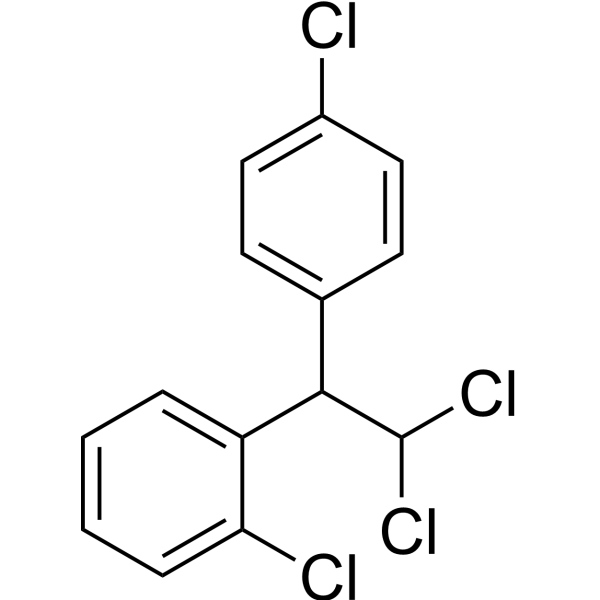
Mitotane (2,4′-DDD), an isomer of DDD and derivative of dichlorodiphenyltrichloroethane (DDT), is an antineoplastic agent, can be used to research adrenocortical carcinoma. Mitotane exert its adrenocorticolytic effect at least in part through lipotoxicity induced by intracellular free cholesterol (FC) accumulation. Mitotane can have direct pituitary effects on corticotroph cells. Mitotane can induce CYP3A4 gene expression via steroid and xenobiotic receptor (SXR) activation, and has agent-agent interactions .
loading...
    loading...
Cat. No.: HY-173072
CAS No.: 2883814-84-2
Research Areas:  

Others

SJPYT-310 is a selective PXR antagonist. SJPYT-310 shows no significant cytotoxicity .
loading...
    loading...
Cat. No.: HY-W203683
CAS No.: 375-95-1
Synonyms: PFNA; Heptadecafluorononanoic acid
Target:  

PPAR PERK

Research Areas:  

Metabolic Disease

Perfluorononanoic acid (PFNA) is an orally active PPARα activator. Perfluorononanoic acid activates PPARα-mediated gene expression, including upregulating target genes associated with lipid metabolism and triglyceride storage. Perfluorononanoic acid exhibits certain developmental and reproductive toxicity. Perfluorononanoic acid causes hepatomegaly in pregnant mice, induces high postnatal mortality in neonatal mice, and leads to dose-dependent delays in eye-opening time and puberty onset in mouse offspring .
loading...
    loading...
Cat. No.: HY-113848
CAS No.: 1030123-90-0
Purity:  99.83%
Target:  

Keap1-Nrf2

Research Areas:  

Cancer

AEM1 is an Nrf2 inhibitor with anti-tumor and oral activity. AEM1 promotes the differentiation of HepaRG cells towards mature liver cells, aiding in the recovery of damaged liver .
loading...
    loading...
Cat. No.: HY-175266
MI1013 is a PROTAC PXR degrader (DC50 = 89 nM, Dmax = 82%). MI1013 degrades PXR in human hepatocellular carcinoma RG cells (HepaRG). MI1013 specifically and safely regulates CYP3A4 promoter activity through PXR degradation. MI1013 affects several key genes involved in sulfate conjugation (e.g., SULT1E1), bile acid synthesis (CYP7A1), gluconeogenesis (PCK1), ketone synthesis (HMGCS20), and hepatocyte proliferation (MKI67). (Pink: PXR ligand 3: HY-175267, Blue: Pomalidomide-propargyl ligand: HY-W410002, Pink + Black: PXR ligand-Linker Conjugate 1: HY-175268) .
loading...
    loading...
Cat. No.: HY-13690R
CAS No.: 53-19-0
Synonyms: 2,4′-DDD (Standard); o,p'-DDD (Standard)
Research Areas:  

Cancer

Mitotane (Standard) is the analytical standard of Mitotane. This product is intended for research and analytical applications. Mitotane (2,4′-DDD), an isomer of DDD and derivative of dichlorodiphenyltrichloroethane (DDT), is an antineoplastic agent, can be used to research adrenocortical carcinoma. Mitotane exert its adrenocorticolytic effect at least in part through lipotoxicity induced by intracellular free cholesterol (FC) accumulation. Mitotane can have direct pituitary effects on corticotroph cells. Mitotane can induce CYP3A4 gene expression via steroid and xenobiotic receptor (SXR) activation, and has agent-agent interactions .
loading...
    loading...
Cat. No.: HY-18203
CAS No.: 315702-93-3
Target:  

Apoptosis Akt mTOR

Research Areas:  

Cancer

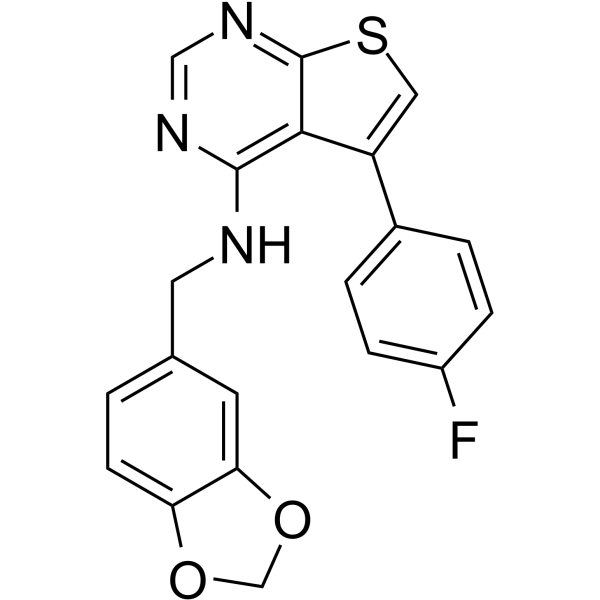
HBF-0079 is a selective anti-hepatocellular carcinoma agent. HBF-0079 induces cell cycle arrest and Apoptosis. HBF-0079 modulates cell-growth and anti-apoptotic signaling through AKT and mTOR. HBF-0079 exhibits antitumor activity against hepatocellular carcinoma .
loading...
    loading...
Cat. No.: HY-173033
CAS No.: 2530027-71-3
MI-883 is orally active constitutive androstane receptor (CAR) (EC50 of 73 nM) agonist and pregnane X Receptor (PXR) (IC50 of 100 nM) antagonist. MI-883 binds to CAR and PXR ligand-binding domains, promotes CAR LBD assembly, activates CAR3 variant, stimulates CAR cytoplasmic-nuclear translocation, upregulates CAR target genes, recruits coactivators NCOA1, NCOA2, NCOA3, inhibits basal and agonist-induced PXR activation, downregulates PXR target genes, disrupts PXR-NCOR2 interaction, blocks agonist-mediated PXR-NCOA1 recruitment. MI-883 reduces plasma total cholesterol, LDL cholesterol, and hepatic free cholesterol levels, increases fecal bile acid excretion, regulates genes involved in xenobiotic metabolism, cholesterol homeostasis, and bile acid homeostasis. MI-883 exhibits metabolic stability, liver-predominant distribution, a safety profile with no observed toxicity, and does not stimulate human hepatocyte hypertrophy or hyperplasia. MI-883 can be used for the research of diet-induced hypercholesterolemia .
loading...
    loading...
Cat. No.: HY-N10830
CAS No.: 78185-63-4
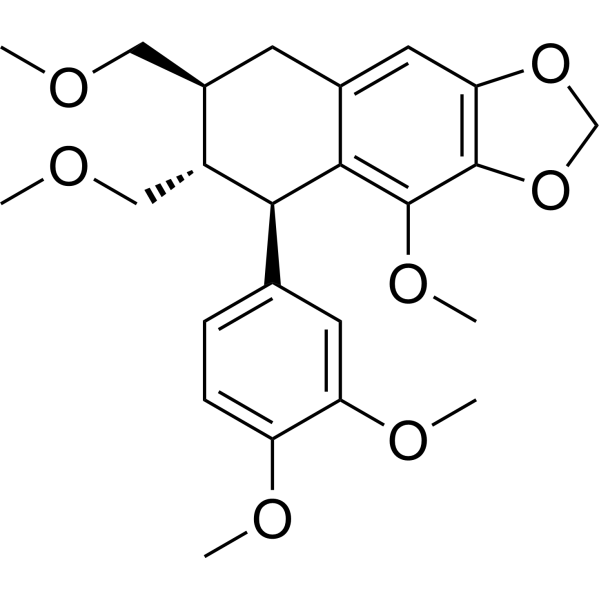
(±)-Nirtetralin is an isomer of Nirtetralin, which inhibits growth of hepatitis E virus (HEV) in HepaRG cells .
loading...
    loading...
Cat. No.: HY-173217
Target:  

PPAR Phosphatase

PPARα agonist 5 is an orally available, selective partial agonist of PPARα (EC50: 3 nM). PPARα agonist 5 reduces lipid accumulation and upregulates key PPARα target genes, exerting anti-fatty liver effects. PPARα agonist 5 also exhibits significant hypolipidemic and hypoglycemic effects through partial PPARγ agonist activity and mild inhibition of protein tyrosine phosphatase 1B (PTP1B) (IC50: 79.1 μM). PPARα agonist 5 has a good safety profile and can be used in the study of type 2 diabetes with dyslipidemia .
loading...
    loading...
Cat. No.: HY-W505108
CAS No.: 62927-08-6
Target:  

Drug Metabolite

Research Areas:  

Metabolic Disease

2,3-Dihydroxypropyl pentadecanoate is a monoacylglycerol that is found in wheat bran extracts. 2,3-Dihydroxypropyl pentadecanoate levels are increased in a HepaRG cell-based model of hepatic steatosis induced by BSA-conjugated palmitate .
loading...
    loading...
Cat. No.: HY-181559S
Synonyms: AG06827
Target:  

mAChR

Research Areas:  

Neurological Disease

VU6025733 (AG06827) is a highly selective, orally active and blood-brain barrier-penetrant positive allosteric modulator of the muscarinic acetylcholine receptor subtype M4 (M4 mAChR). VU6025733 exerts a potentiating effect on acetylcholine-induced receptor activation with an EC50 of 23 nM for hM4 and 55 nM for rM4. VU6025733 shows high selectivity over other muscarinic acetylcholine receptor subtypes, dose-dependently reduces amphetamine-induced hyperlocomotion in rats. VU6025733 is applicable to the research of schizophrenia, Parkinson's disease, and Alzheimer's disease .
loading...
    loading...
  • 1

