10 Results for "

HuCCA-1

" in MedChemExpress (MCE) Product Catalog:
Products (10)

10 Results for "HuCCA-1" in MCE Product Catalog:

13
13 Cited Publications
Cat. No.: HY-117661
CAS No.: 1818389-84-2
Target:  

SRPK VEGFR

Research Areas:  

Cardiovascular Disease Cancer

SPHINX31 is a potent and selective SRPK1 inhibitor, with an IC50 of 5.9 nM. SPHINX31 inhibits phosphorylation of serine/arginine-rich splicing factor 1 (SRSF1). SPHINX31 also decreases the mRNA expression of pro-angiogenic VEGF-A165a isoform. SPHINX31 can be used to research neovascular eye disease [1] .
loading...
    loading...
Cat. No.: HY-119631
CAS No.: 33403-37-1
Target:  

Bacterial

Research Areas:  

Infection

Nornidulin is a depsidone originally isolated from A. nidulans that has antibacterial activity against M. tuberculosis and M. ranoe as well as antifungal activity against T. tonsurans and M. audouini. It also inhibits the growth of methicillin-resistant S. aureus (MRSA; MIC=2 μg/mL).2 Nornidulin has cytotoxic activity in MOLT-3 cells (IC50=35.7 μM) but not HuCCA-1, HepG2, or A549 cells (IC50s=>116.4 μM).
loading...
    loading...
Cat. No.: HY-N16402
CAS No.: 1454585-77-3
Aspergillusidone D (Compound 1), a brominated depsidone, is a Aromatase inhibitor with an IC50 of 0.8  μM. Aspergillusidone D can be isolated from fungus Aspergillus unguis cultured in KBr medium. Aspergillusidone D has potent cytotoxicity against cancers cells, such as MOLT-3 cells. Aspergillusidone D can be used for cancers like breast cancer research [1].
loading...
    loading...
Cat. No.: HY-N16403
CAS No.: 1558007-47-8
Aspergillusidone F is a Depsidone and antibacterial agent. Aspergillusidone F can be isolated from a marine fungus Aspergillus unguis. Aspergillusidone F potently inhibits Aromatase with an IC50 of 0.5 μM. Aspergillusidone F exhibits antibacterial activity against Pseudomonas aeruginosa and Methicillin (HY-121544)-resistant Staphylococcus aureus. Aspergillusidone F exhibits potent larvicidal activity against Artemia salina larvae, with an LC50 value of 12.8 μM. Aspergillusidone F exhibits anticancer activity against intrahepatic cholangiocarcinoma, non-small cell lung cancer, and acute lymphoblastic leukemia [1] .
loading...
    loading...
Cat. No.: HY-147971
CAS No.: 2414491-13-5
Target:  

Parasite Topoisomerase

Research Areas:  

Infection Cancer

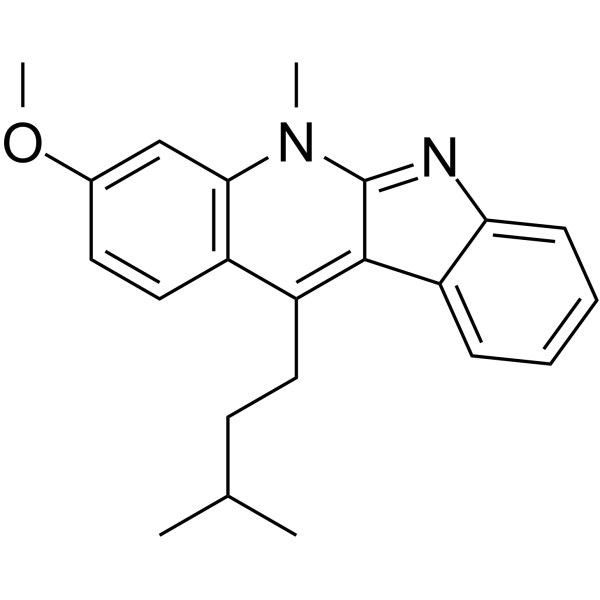
Anticancer agent 75 is a potent anticancer agent. Anticancer agent 75 shows cytotoxicity and selectivity in cancer cell lines. Anticancer agent 75 shows cytotoxicity to normal human kidney cell lines is at least 35 times lower than that of the Doxorubicin standard. Anticancer agent 75 shows good activity of antiplasmodial [1].
loading...
    loading...
Cat. No.: HY-149487
Target:  

FGFR

Research Areas:  

Cancer

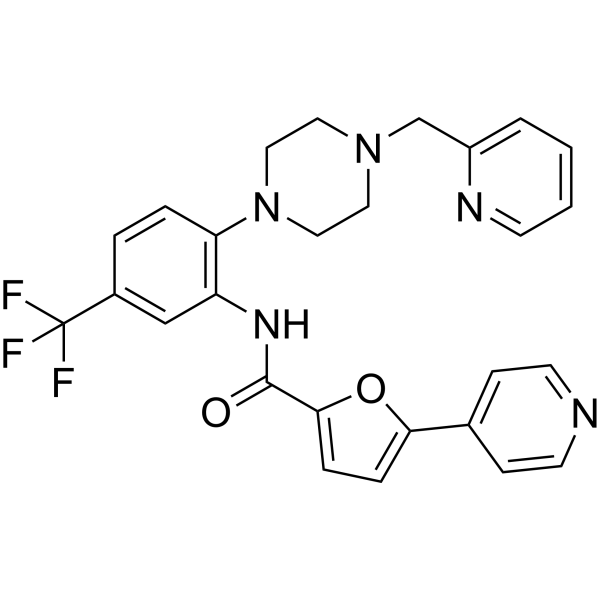
FGFR1 inhibitor-8 (Compound 9) is a FGFR1 inhibitor (IC50s: 0.5 nM). FGFR1 inhibitor-8 binds to the ATP-binding pocket of FGFR1. FGFR1 inhibitor-8 has anticancer activity [1].
loading...
    loading...
Cat. No.: HY-149488
Target:  

FGFR

Research Areas:  

Cancer

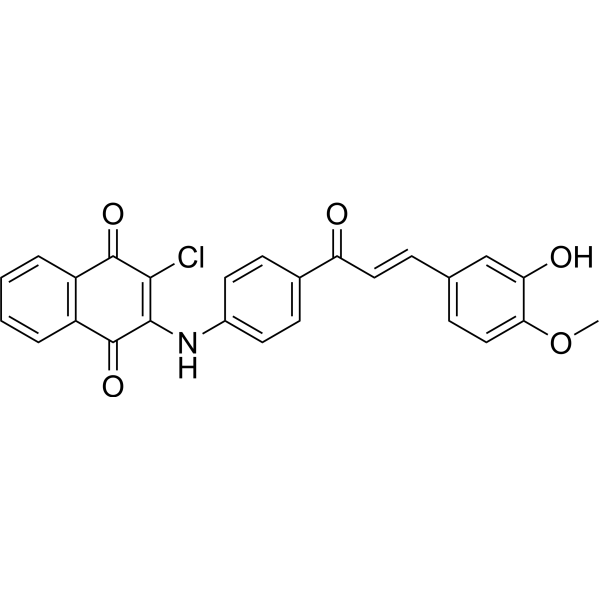
FGFR1 inhibitor-9 (Compound 7) is an FGFR1 inhibitor (IC50s: 0.85 nM). FGFR1 inhibitor-9 binds to the ATP-binding pocket of FGFR1. FGFR1 inhibitor-9 has anticancer activity [1].
loading...
    loading...
Cat. No.: HY-149486
Target:  

FGFR

Research Areas:  

Cancer

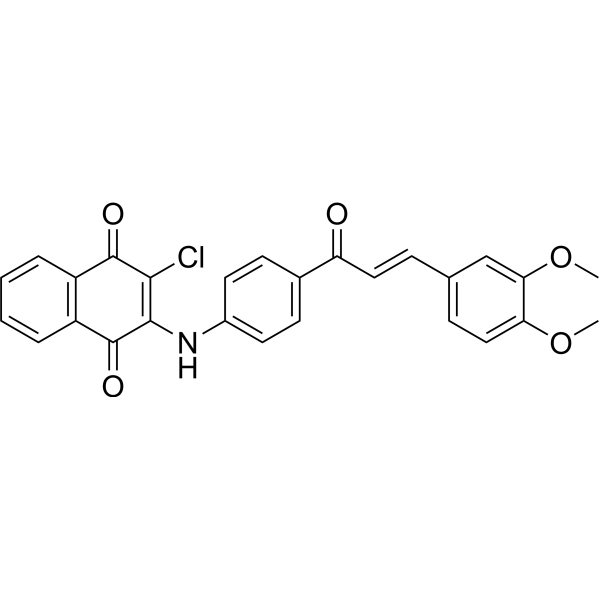
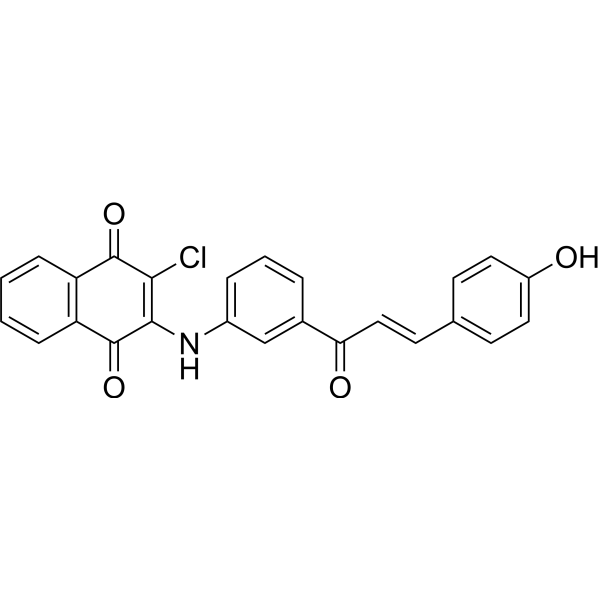
FGFR1 inhibitor 7 (compound 5) is an inhibitor of FGFR1 Tyrosine Kinase with IC50 value of 0.33 nM. FGFR1 inhibitor 7 shows broad-spectrum cytotoxicity agasinst human cancer cell lines, and inhibits MOLT3 cells with IC50 of 2.1 μM [1].
loading...
    loading...
Cat. No.: HY-182559
CAS No.: 1405-90-9
Candidin is an antioxidant flavonoid, which can be found in the roots of Millettia brandisiana. Candidin induces cytotoxic activity in human cancer cells. Candidin mediates antioxidant activity via peroxyl radical scavenging. Candidin can be used for the research of liver cancer and lung cancer [1].
loading...
    loading...
Cat. No.: HY-N19127
CAS No.: 1454586-51-6
Target:  

Cytochrome P450

Aspergillusidone E is an aromatase inhibitor with an aromatase IC50 of 1.0 μM. Aspergillusidone E exhibits cytotoxicity against cancer cells. Aspergillusidone E can be used in research related to various cancers such as breast cancer and liver cancer [1].
loading...
    loading...

