37 Results for "

HyT

" in MedChemExpress (MCE) Product Catalog:
Products (37)

37 Results for "HyT" in MCE Product Catalog:

  • Categories Recommended:
    More
5
5 Cited Publications
Cat. No.: HY-133129
CAS No.: 2225938-17-8
Purity:  98.92%
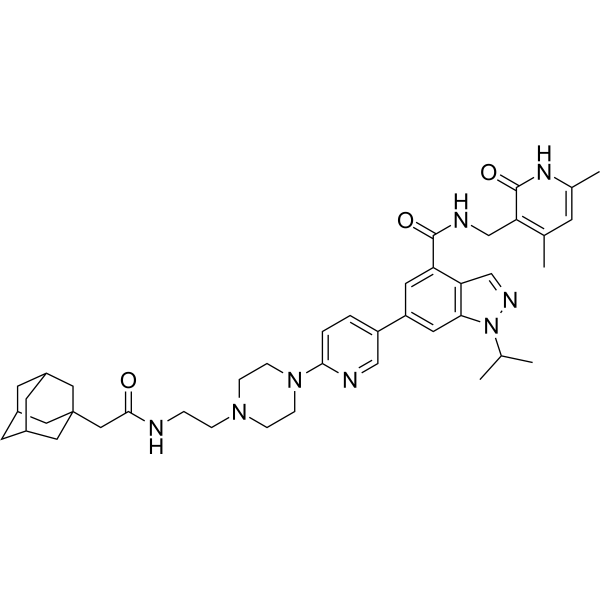
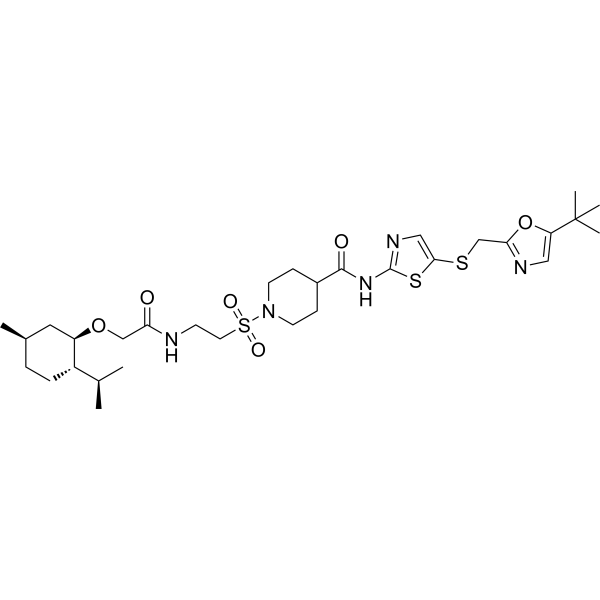
MS1943 is an orally active selective HyT degrader of EZH2 that effectively reduces EZH2 levels in cells. MS1943 has anticancer activity and exhibits cytotoxic effects in a variety of TNBC cells while sparing normal cells. In addition, MS1943 maintains high potency (IC50=120 nM) in inhibiting EZH2 methyltransferase activity and is highly selective for EZH2. (Structure Note: RED, EZH2 ligand (HY-148458); Blue, Hyt (HY-W001578)) .
loading...
    loading...
Cat. No.: HY-141676
CAS No.: 1323151-45-6
Purity:  ≥96.0%
Target:  

EGFR

Research Areas:  

Others

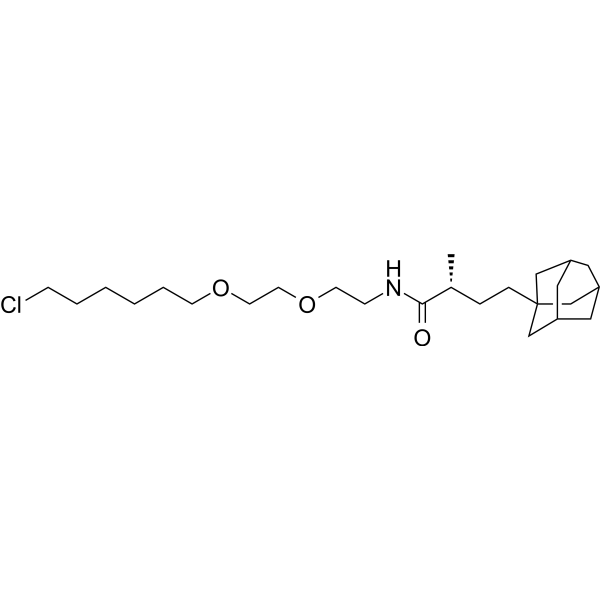
HyT36 is a low molecular weight hydrophobic tag that promotes the degradation of fusion protein and pseudokinase Her3 .
loading...
    loading...
Cat. No.: HY-149209
CAS No.: 3034487-84-5
Purity:  99.76%
Research Areas:  

Metabolic Disease Cancer

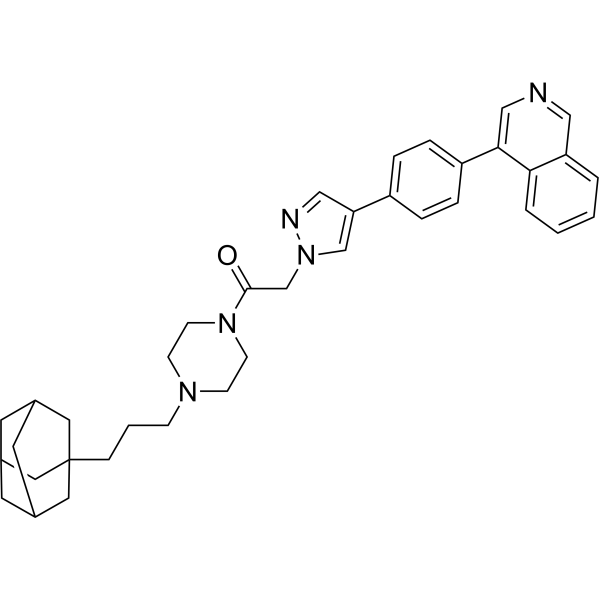
LL-K8-22 is a dual degrader of CDK8 and cyclin C HyT, with DC50 values of 2.52 μM and 2.64 μM, respectively. LL-K8-22 inhibits phosphorylation of STAT1 Ser 727, phosphorylation of the C-terminal domain Ser 2/5 of RNA polymerase II, and phosphorylation of Rb. LL-K8-22 represses E2F- and MYC-driven transcriptional programs and exhibits antiproliferative effects. LL-K8-22 synchronously induces proteasome-dependent selective degradation of CDK8 and cyclin C without degrading CDK19, other CDK family members, or other cyclins. LL-K8-22 can be used in the research of triple-negative breast cancer and colon cancer .
loading...
    loading...
Cat. No.: HY-W037848
CAS No.: 17768-41-1
Synonyms: 1-Aminomethyladamantane
Research Areas:  

Cancer

Adamantan-1-ylmethanamine (1-Aminomethyladamantane) is a Hyt hydrophobic group. Adamantan-1-ylmethanamine can be used in the synthesis of ZX782 (HY-161972) .
loading...
    loading...
Cat. No.: HY-130245
Purity:  98.33%
Target:  

HyT PCSK9

Research Areas:  

Metabolic Disease

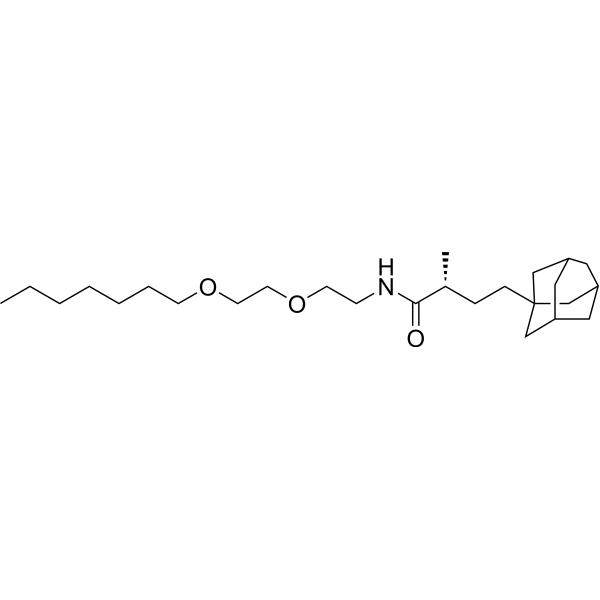
PCSK9 degrader 1 is a HyT-like PCSK9 degrader with a Ki of 107 nM. PCSK9 degrader 1 binds to the allosteric pocket between the catalytic domain and C-terminal domain of PCSK9. While maintaining key interactions with this protein, it extends the proteasome-recruiting moiety, thereby driving degradation via the proteasomal pathway. PCSK9 degrader 1 induces the degradation of both the precursor and mature forms of PCSK9, with DC50 values of 4.8 μM and 3.4 μM respectively, and does not significantly affect cell viability or the expression of housekeeping proteins. PCSK9 degrader 1 can be used in the research of coronary heart disease .
loading...
    loading...
Cat. No.: HY-156084
CAS No.: 2809353-52-2
Research Areas:  

Cancer

LL-K9-3 is a selective CDK9-cyclin T1 HyT degrader, with DC50 values of 0.662 μM and 0.589 μM for CDK9 and Cyclin T1, respectively. LL-K9-3 lacks an E3 ligand moiety and induces polyubiquitination and proteasome-mediated synchronous degradation of CDK9 and cyclin T1 via a hydrophobic tag-mediated mechanism. LL-K9-3 downregulates the protein levels of androgen receptor (AR) and c-Myc, and exhibits antiproliferative and pro-apoptotic (apoptosis) activity in prostate cancer cells. LL-K9-3 can be used in studies related to prostate cancer .
loading...
    loading...
Cat. No.: HY-164807
CAS No.: 1489236-55-6
Target:  

HyT Androgen Receptor HSP

Research Areas:  

Cancer

SARD279 is a HyT degrader of androgen receptor (AR). SARD279 binds to AR, recruits HSP70, mediates ubiquitin-dependent proteasomal degradation, and competitively inhibits the transactivation of AR. SARD279 exhibits antiproliferative activity in AR-dependent prostate cancer cells and castration-resistant prostate cancer cells, including those harboring the AR F876L mutation. SARD279 can be used in studies related to prostate cancer and castration-resistant prostate cancer .
loading...
    loading...
Cat. No.: HY-153887
Target:  

EGFR

Research Areas:  

Others

HyT36(-Cl) is the inactive control compound of HyT36, a small molecule hydrophobic tag compound that can be used in protein folding research .
loading...
    loading...
Cat. No.: HY-175527
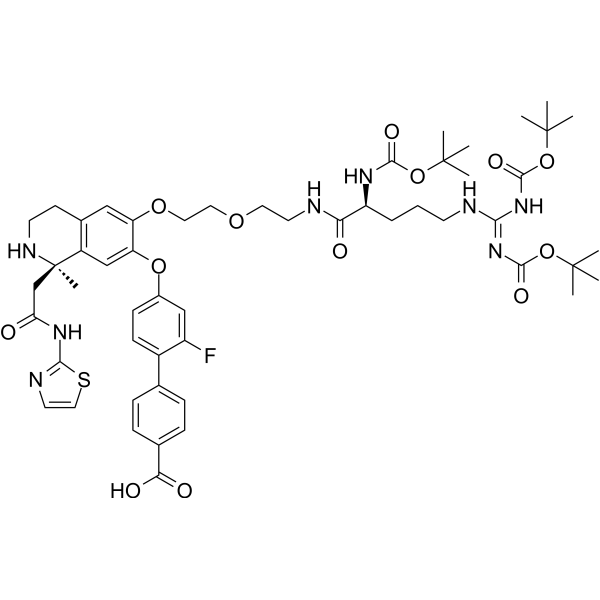
ALK degrader 2 is an orally active ALK HyT degrader that degrades EML4-ALK levels (DC50 = 8 nM) and nucleophosmin (NPM)-ALK protein levels (DC50 = 102 nM). ALK degrader 2 mediates ALK degradation via the Hsp70 chaperone system and ubiquitin-proteasome pathway. ALK degrader 2 induces significant S-phase cell cycle arrest and apoptosis in H3122 cells. ALK degrader 2 shows anti-tumor activity in mice bearing H3122 xenografts. ALK degrader 2 can be used for the study of non-small cell lung cancer (NSCLC). (Pink: ALK ligand (HY-W754809), Blue: Hyt (HY-W013021), Black: Linker (HY-Y1760), ALK ligand-linker conjugate (HY-175528)) .
loading...
    loading...
Cat. No.: HY-178114
CAS No.: 3065966-31-3
Research Areas:  

Cancer

SKLB-0124 is a selective PRMT6 degrader based on a hydrophobic labeling (HyT) method. SKLB-0124 is a selective PRMT6 degrader with DC50s of 15.4 μM and a 16.4 μM in HCC827 and MDA-MB-435 cells. SKLB-0124 does not degrade PRMT1 or PRMT8. SKLB-0124 exhibits an IC50 on PRMT6 of 1.6 μM. SKLB-0124 induces proteasome dependent degradation of PRMT6 and significantly inhibits the proliferation. SKLB-0124 effectively induces apoptosis and cell cycle arrest. SKLB-0124 can be used for the studies of lung cancer and breast cancer .
loading...
    loading...
Cat. No.: HY-175849
Research Areas:  

Cancer

ALK degrader 1 is a potent, hydrophobic tag (HyT)-based degrader that induces ubiquitin-proteasome system (UPS)-dependent EML4-ALK degradation (DC50 = 0.13 μM). ALK degrader 1 demonstrates potent ALK degradation and antiproliferative effects in ALK-dependent cell lines, while showing minimal cytotoxicity in ALK fusion-negative cells. ALK degrader 1 triggers cell cycle arrest at the G0/G1 phase and stimulates apoptosis. ALK degrader 1 not only facilitates efficient degradation of the ALK protein but also disrupts key downstream effectors, including the STAT3 signaling axis. ALK degrader 1 mediates robust EML4-ALK degradation in vivo. ALK degrader 1 can be used for ALK-related diseases research .
loading...
    loading...
Cat. No.: HY-176451
Target:  

HyT CDK Apoptosis

Research Areas:  

Cancer

CDK9 degrader-1 is a HyT-type CDK9 degrader that selectively induces protein degradation by recruiting ATG101 (with a DC50 of 0.4073 μM in HCT116 cells). CDK9 degrader-1 recruits ATG101 to initiate the autophagy-lysosome pathway, forming LC3-containing autophagosomes that fuse with lysosomes to degrade CDK9. CDK9 degrader-1 mediates the degradation of Cyclin T1 via the same autophagy-lysosome pathway. CDK9 degrader-1 induces downstream phenotypic effects associated with CDK9 degradation. CDK9 degrader-1 can be used in the research of colorectal cancer (Blue: hydrophobic group; Pnk: CDK9 ligand (HY-50940); Black: linker (HY-N0420)) .
loading...
    loading...
Cat. No.: HY-RS15146
Research Areas:  

Others

Tshr Mouse Pre-designed siRNA Set A contains three designed siRNAs for Tshr gene (Mouse), as well as a negative control, a positive control, and a FAM-labeled negative control.

loading...
    loading...
Cat. No.: HY-168682
CAS No.: 31685-38-8
Research Areas:  

Cancer

Adamantane-Butyl alcohol is a selective and persistent degrader targeting the CDK8-cyclin C complex. Adamantane-Butyl alcohol is the linker for LL-K8-22 (PROTAC CDK8-cyclin C, HY-149209) and HyT .
loading...
    loading...
Cat. No.: HY-162679
Target:  

c-Met/HGFR HyT

Research Areas:  

Cancer

c-Met degrader-1 is an orally active c-Met HyT degrader with a DC50 of 226.12 nM. c-Met degrader-1 exhibits anticancer activity against hepatocellular carcinoma. c-Met degrader-1 can be used in the research of hepatocellular carcinoma (HCC) (c-Met ligand: Tepotinib (HY-14721), hydrophobic tag moiety: Adamantan-1-ylmethanamine (HY-W037848)) .
loading...
    loading...
Cat. No.: HY-161972
Research Areas:  

Cancer

ZX782 is a HyT GPX4 degrader and a ferroptosis inducer, which induces GPX4 degradation and significantly increases lipid ROS accumulation in HT1080 cells. ZX782 can be used to treat AD by reducing the size and/or number of brain amyloid plaques and by inhibiting the spread of IL-1beta-positive microglial-like cells around amyloid plaques. ZX782 is labeled with hydrophobic benzyl alcohol (HBA) and appears bright blue under acidic conditions, which can be used for quantitative determination . ZX782 is composed of target protein ligand (red part) ML-210 (HY-100003), PROTAC linker (black part) Bromo-PEG2-CH2-Boc (HY-141371) and Hty molecule (blue part) Adamantan-1-ylmethanamine (HY-W037848). The conjugate consisting of Hyt and linker parts is Adamantan-C-amide-PEG2-C-Br (HY-161974), and the activity control of the target protein ligand is Hydroxyl-ML-210 (HY-161973).
loading...
    loading...
Cat. No.: HY-130245A
CAS No.: 2216703-12-5
Target:  

HyT PCSK9

(R,R)-PCSK9 degrader 1 is an isomer of PCSK9 degrader 1 (HY-130245). (R,R)-PCSK9 degrader 1 is a HyT-like PCSK9 degrader (IC50 of 655.4 nM) , and its PCSK9-binding site does not interfere with the binding of PCSK9 to LDL receptor. (R,R)-PCSK9 degrader 1 can be used in the research of atherosclerosis, hypercholesterolemia, coronary heart disease, metabolic syndrome, acute coronary syndrome, and related cardiovascular and cardiometabolic diseases .
loading...
    loading...
Cat. No.: HY-161641
Target:  

HyT Microtubule/Tubulin

Research Areas:  

Cancer

Tubulin degrader 2 is a tubulin HyT degrader and tubulin polymerization inhibitor, with a DC50 of 4.9 μM against α-tubulin in MCF-7 cells and an IC50 of 7.5 μM for the polymerization of purified recombinant tubulin. Tubulin degrader 2 binds to the colchicine-binding site of tubulin, induces proteasome-dependent degradation of α-tubulin and β-tubulin, inhibits the polymerization of purified recombinant tubulin, and triggers microtubule disruption and cell cycle arrest in cancer cells. Tubulin degrader 2 exhibits antitumor activity in a breast cancer allograft mouse model. Tubulin degrader 2 can be applied in the research of breast cancer, lung cancer, and colorectal cancer .
loading...
    loading...
Cat. No.: HY-182796
Target:  

HyT JNK

Research Areas:  

Cancer

JNK1 degrader-1 is a JNK1 HyT degrader. JNK1 degrader-1 can induce JNK1 degradation through the HyT-mediated ubiquitin-proteasome system and autophagy-lysosome pathway. JNK1 degrader-1 inhibits TGF-β1-induced epithelial-mesenchymal transition (EMT). JNK1 degrader-1 can be used for research on fibrotic diseases and cancer metastasis. (Pink: JNK1 ligand (HY-183006); Blue: Hyt hydrophobic group (HY-W037848); Black: Linker (HY-B1008)) .
loading...
    loading...
Cat. No.: HY-180276
Research Areas:  

Cancer

PARP1 degrader 1 (Compound 2c) is a comparatively potent PARP1 HyT degrader (DC50: 618 nM for intracellular PARP-1). PARP1 degrader 1 is also a HyT-Olaparib (HY-10162) conjugate. PARP1 degrader 1 induces UPR/autophagy, thus facilitating the degradation of PARP-1. PARP1 Degrader 1 can be used in the research of cancer .
loading...
    loading...

