Search Result
Results for "
KOR agonist
" in MedChemExpress (MCE) Product Catalog:
3
Isotope-Labeled Compounds
| Cat. No. |
Product Name |
Target |
Research Areas |
Chemical Structure |
-
- HY-17609
-
|
CR-845; FE-202845
|
Opioid Receptor
|
Neurological Disease
Inflammation/Immunology
|
|
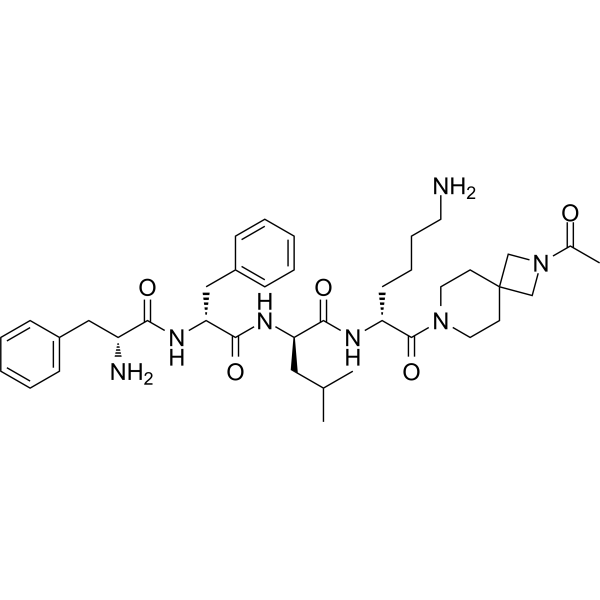
Difelikefalin (CR-845) is a peripherally restricted and selective agonist of kappa opioid receptor (KOR). Difelikefalin produces anti-inflammatory effects and has the potential in modulating pruritus in conditions such as chronic kidney disease .
|
-
-
- HY-10487
-
-
-
- HY-P1333
-
|
|
Opioid Receptor
Apoptosis
Caspase
Endogenous Metabolite
|
Neurological Disease
|
|
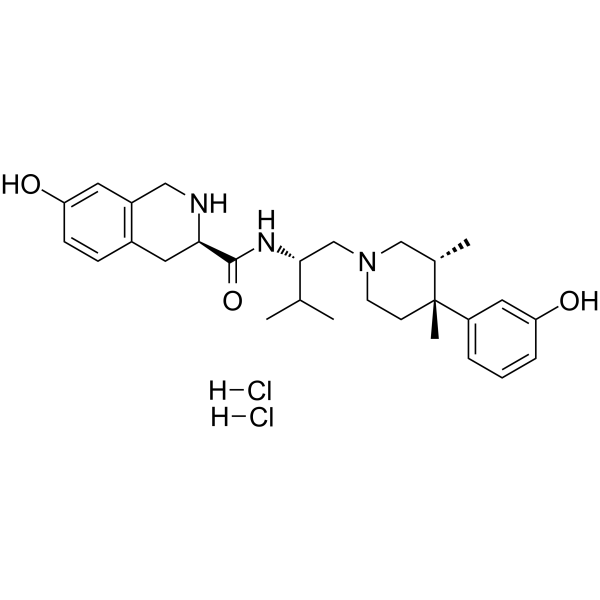
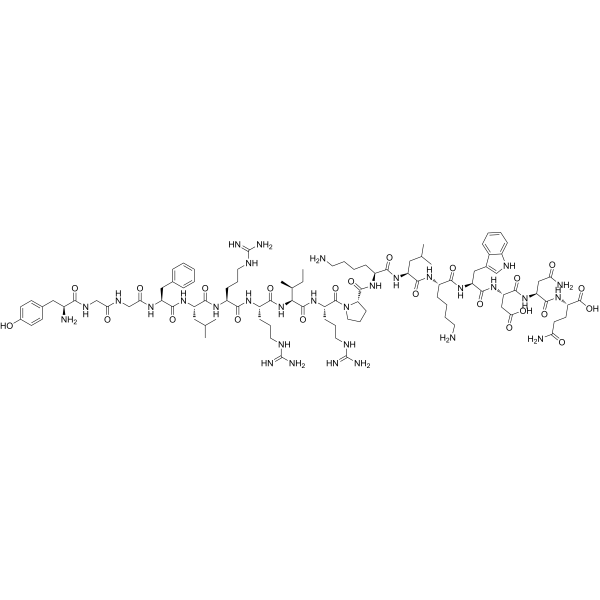
Dynorphin A is an endogenous opioid peptide involved in inhibitory neurotransmission in the central nervous system (CNS). Dynorphin A is a highy potent kappa opioid receptor (KOR) agonist, and is also an agonist for other opioid receptors, such as mu (MOR) and delta (DOR). Dynorphin A can induce neuronal death, and can be used in the research of neurological disease .
|
-
-
- HY-107744
-
-
-
- HY-145404
-
|
|
Opioid Receptor
|
Metabolic Disease
|
|
Mitragynine pseudoindoxyl is a potent orally active agonist of the μ-opioid receptor (MOR-1, Ki=0.8 nM) and an antagonist of the δ-opioid receptor (DOR-1, Ki=3.0 nM). Mitragynine pseudoindoxyl has moderate affinity for the κ-opioid receptor (KOR-1, Ki=24 nM) and does not recruit β-arrestin-2, acting through G protein-mediated signaling pathways without β-arrestin-2-related activation. Mitragynine pseudoindoxyl produces potent analgesic activity through a mixed μ-agonist/δ-antagonist mechanism, with low side effects such as physical dependence, respiratory depression, and constipation, and no rewarding or aversive behaviors. Mitragynine pseudoindoxyl reduces hyperactivity, inhibits GI transit, and enhances characteristics, making it a potential analgesic .
|
-
-
- HY-15997
-
|
(-)-Trans-(1S,2S)-U-50488 hydrochloride
|
Opioid Receptor
|
Infection
Cancer
|
|
(-)-U-50488 hydrochloride ((-)-Trans-(1S,2S)-U-50488 hydrochloride) is a selective kappa-opioid receptor (KOR) agonist (b>Kd=2.2 nM) over μ-opioid receptor (MOR) (b>Kd=430 nM). (-)-U-50488 hydrochloride is a more active enantiomer than (+)?trans-(1R,2R) U-50488 (HY-15997A)?or the (±)?trans-racemic mixture U-50488 (HY-15997B). (-)-U-50488 hydrochloride has a potent and sustained anti-HIV effect in fected blood monocyte-derived macrophages (MDM) .
|
-
-
- HY-15997B
-
|
(±)-Trans-(1R,2R)-U-50488 hydrochloride
|
Opioid Receptor
|
Neurological Disease
|
|
(±)-U-50488 ((±)-Trans-(1R,2R)-U-50488) hydrochloride is a selective κ opioid receptor (KOR) agonist .
|
-
-
- HY-15691
-
|
|
Opioid Receptor
mTOR
|
Neurological Disease
Metabolic Disease
|
|
PF-04455242 is an orally bioavailable, blood-brain barrier-permeable κ-opioid receptor (KOR) inhibitor. PF-04455242 blocks in vivo effects induced by KOR and MOR agonists, and elicits KOR-independent outward currents in ventral tegmental area neurons. PF-04455242 promotes energy expenditure and activates the hypothalamic mTOR pathway. PF-04455242 attenuates stress-induced behavioral effects and produces antidepressant-like effects. PF-04455242 can be used in studies related to pain, depression, addictive disorders, and obesity induced by estrogen withdrawal .
|
-
-
- HY-101079
-
|
|
Opioid Receptor
|
Neurological Disease
|
|
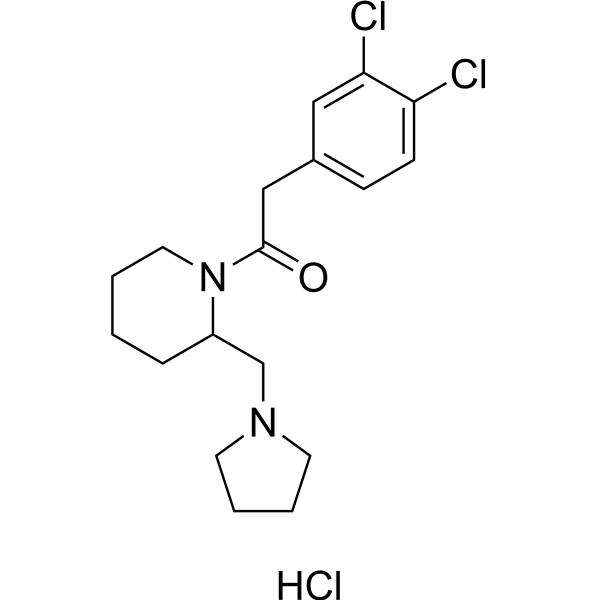
BRL 52537 hydrochloride is a highly selective κ-Opioid receptor (KOR) agonist with Kis of 0.24 nM and 1560 nM for κ and μ subtypes, respectively. BRL 52537 hydrochloride decreases ischemia-evoked NO production as a potential mechanism of neuroprotection. BRL 52537 hydrochloride attenuates early stroke damage .
|
-
-
- HY-170973
-
|
|
Opioid Receptor
|
|
|
KOR agonist 4 (compound 39) is an agonist of Kappa Opioid Receptor. KOR agonist 4 is an activator of G-protein signaling. KOR agonist 4 binds with GTPγS with an EC50 of 14 nM and with an Emax of 83 %. KOR agonist 4 demonstrates moderate to high intrinsic clearance in human hepatocytes. KOR agonist 4 exhibits 60- and 810-fold selectivities versus the related mu (MOR) and delta (DOR) opioid receptors. KOR agonist 4 is potential for central nervous system (CNS) disorders research .
|
-
-
- HY-110302
-
|
|
Opioid Receptor
|
Neurological Disease
|
|
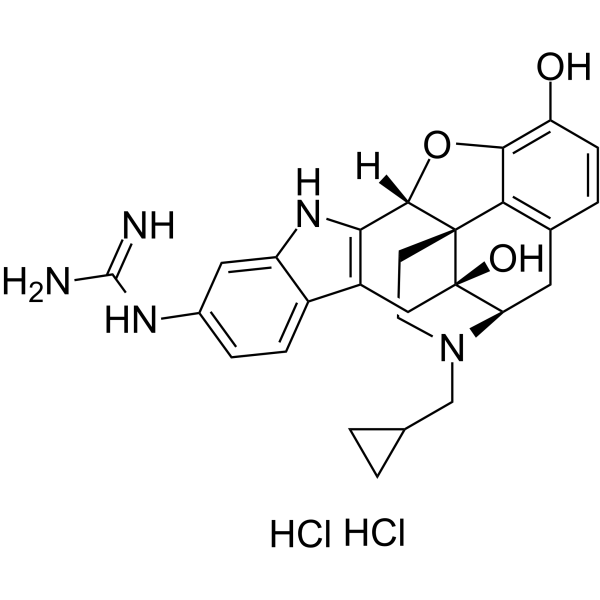
6'-GNTI dihydrochloride, a κ-opioid receptor (KOR) agonist, displays bias toward the activation of G protein-mediated signaling over β-arrestin2 recruitment. 6'-GNTI 6'-GNTI dihydrochloride only activates the Akt pathway in striatal neurons .
|
-
-
- HY-178945
-
|
|
Opioid Receptor
Interleukin Related
TNF Receptor
Sigma Receptor
|
Neurological Disease
Inflammation/Immunology
|
|
KOR agonist 7 (Compound 29) is a highly selective κ-opioid receptor (KOR) agonist with a Ki of 138 nM. KOR agonist 7 shows no activity at μ- and δ-opioid receptors or σ1 receptor, and exhibits extremely low affinity for σ2 receptor (Ki = 2.8 μM). KOR agonist 7 significantly reduces the secretion of pro-inflammatory cytokines such as IL-6, TNF-α, and IFN-γ, while increasing the production of the anti-inflammatory cytokine IL-10. KOR agonist 7 downregulates the expression of the pro-inflammatory M1 macrophage marker CD80 and upregulates the anti-inflammatory M2 macrophage marker CD163. KOR agonist 7 holds potential for applications in analgesia and immune modulation .
|
-
-
- HY-15997C
-
|
(±)-Trans-(1R,2R)-U-50488 hydrate hydrochloride
|
Opioid Receptor
|
Neurological Disease
|
|
(±)-U-50488 ((±)-Trans-(1R,2R)-U-50488) hydrate hydrochloride is a selective κ opioid receptor (KOR) agonist .
|
-
-
- HY-105235
-
|
CI-977
|
Opioid Receptor
|
Neurological Disease
|
|
Enadoline (CI-977) is a highly selective, brain-penetrating, and nonpeptide kappa-opioid receptor (KOR) agonist (Ki=1.25 nM). Antinociceptive effects .
|
-
-
- HY-120949
-
|
|
Opioid Receptor
|
Neurological Disease
|
|
(1R,2R)-U-50488 hydrochloride is the absolute stereochemistry of (±)-U-50488 hydrochloride. (±)-U-50488 hydrochloride is a selective κ opioid receptor (KOR) agonist .
|
-
-
- HY-106756
-
|
U-62066
|
Opioid Receptor
|
Neurological Disease
|
|
Spiradoline (U-62066), an arylacetamide, is a selective kappa opioid receptor (KOR) agonist with a Ki of 8.6 nM in guinea pig. The Ki values of Spiradoline for μ and δ receptors are 252 nM and 9400 nM, respectively. Spiradoline has potent diuretic, analgesic, antiarrythmic, antitussive, neuroprotective properties and easily penetrates the blood-brain barrier .
|
-
-
- HY-17609S1
-
|
CR-845-d5 hydrochloride; FE-202845-d5 hydrochloride
|
Isotope-Labeled Compounds
Opioid Receptor
|
Neurological Disease
Inflammation/Immunology
|
|
Difelikefalin-d5 (CR-845-d5) hydrochloride is the deuterium labeled Difelikefalin (HY-17609). Difelikefalin (CR-845) is a peripherally restricted and selective agonist of kappa opioid receptor (KOR). Difelikefalin produces anti-inflammatory effects and has the potential in modulating pruritus in conditions such as chronic kidney disease .
|
-
-
- HY-171236
-
|
|
Opioid Receptor
|
|
|
FEKAP is a brain-penetrant and selective kappa opioid receptor (KOR) agonist (Ki = 0.43 nM) which isotope labeled form exhibits excellent imaging properties. 11C-FEKAP can be utilized as a radiotracer for imaging KOR .
|
-
-
- HY-172407
-
|
|
Opioid Receptor
|
Others
|
|
KOR agonist 5 (Compound 10a) is a KOR/MOR modulator with agonistic activity towards KOR and antagonistic activity towards MOR. KOR agonist 5 can effectively block morphine-induced antinociception and inhibition of intestinal motility. KOR agonist 5 can be used in the research of Substance Use Disorder (SUD) .
|
-
-
- HY-175486
-
|
|
Opioid Receptor
|
Neurological Disease
|
|
KOR agonist 6 is a KOR agonist (Ki = 0.25 pM). KOR agonist 6 shows agonistic activity at MOR and DOR in CHO cells and inhibits Forskolin (HY-15371)-stimulated cAMP accumulation. KOR agonist 6 stimulates KOR-mediated [ 35S]GTPγS binding and inhibits cAMP accumulation in KOR-expressing HEK293 cells with potent agonistic activity, while showing lower β-arrestin recruitment potency. KOR agonist 6 demonstrates anti-nociceptive efficacy in mice. KOR agonist 6 can be used for the study of analgesics with reduced central nervous system (CNS) side effects .
|
-
-
- HY-162552
-
|
|
Opioid Receptor
|
Neurological Disease
|
|
KOR/DOR agonist 2 is a KOR and DOR opioid receptors agonist with Ki values of 0.14 nM, and 0.93 nM, respectively. KOR/DOR agonist 2 shows significant antinociceptive effects. KOR/DOR agonist 2 penetrates the blood-brain barrier .
|
-
-
- HY-159088
-
|
|
Opioid Receptor
|
Neurological Disease
|
|
KOR agonist 2 (Compound 23p) is an agonist for κ opioid receptor (KOR) with Ki of 1.9 nM. KOR agonist 2 exhibits analgesic effect in mouse models with ED50 of 1.30 mg/kg. KOR agonist 2 exhibits high clearance rate (2 mg/kg, i.v.) in mice, high metabolism and clearance in liver microsomes .
|
-
-
- HY-161539
-
|
|
Opioid Receptor
|
Neurological Disease
|
|
KOR agonist 1 (Compound 7a) is a selective agonist for opioid receptor, with EC50s of 3.4, 701.2 and 1649 nM, for KOR, MOR and DOR, respectively. KOR agonist 1 binds KOR, MOR and DOR, with Kis of 3.9, 1053 and 4196 nM, respectively. KOR agonist 1 exhibits antinociceptive effect in ICR mouse model (ED50 in hot plate test is 0.3 mg/kg, in abdominal constriction test is 0.2 mg/kg) .
|
-
-
- HY-B1485
-
|
|
Opioid Receptor
|
Neurological Disease
|
|
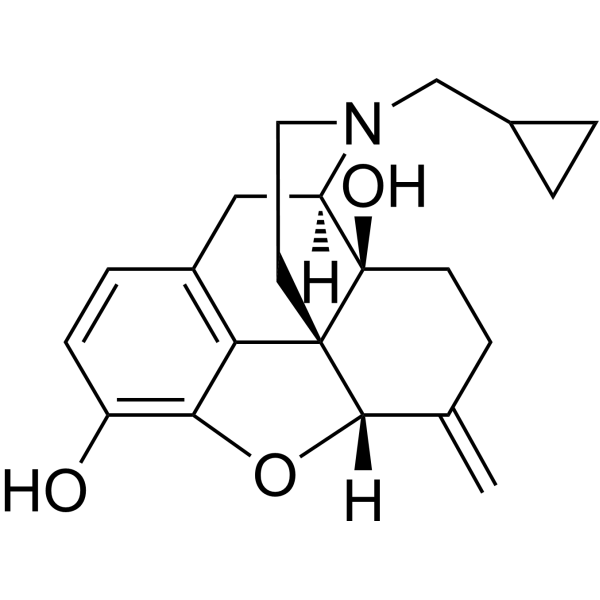
Nalmefene hydrochloride is a long acting opioid (MOR and DOR antagonist), and a partial KOR agonist. Nalmefene hydrochloride is used for opioid overdose and alcohol dependence .
|
-
-
- HY-173030
-
|
|
Opioid Receptor
|
Neurological Disease
|
|
Opioid receptor agonist 1 (Compound 2638-28) is the orally active agonist for opioid receptor that exhibits good affinity to MOR, DOR and KOR with Ki of 5, 24 and 212 nM, respectively. Opioid receptor agonist 1 exhibits analgesic activity in mouse warm water tail flick models and acetic acid writhing models .
|
-
-
- HY-124959
-
|
U-62066 mesylate
|
Opioid Receptor
|
Neurological Disease
|
|
Spiradoline mesylate (U-62066 mesylate), an arylacetamide, is a selective kappa opioid receptor (KOR) agonist with a Ki of 8.6 nM in guinea pig. The Ki values of Spiradoline mesylate for μ and δ receptors are 252 nM and 9400 nM, respectively. Spiradoline mesylate has potent diuretic, analgesic, antiarrythmic, antitussive, neuroprotective properties and easily penetrates the blood-brain barrier .
|
-
-
- HY-163277
-
|
|
Opioid Receptor
|
Inflammation/Immunology
|
|
PIPE-3297 (compound 25) is a selective kappa opioid receptor (KOR) agonist, which activates the G-protein signaling with EC50 of 1.1 nM and exhibits low β-arrestin-2 recruitment activity (10%). PIPE-3297 induces myelination and reveals an anti-inflammatory activity .
|
-
-
- HY-19070
-
|
|
Opioid Receptor
|
Cardiovascular Disease
|
|
BRL-52656 is a blood-brain barrier (BBB)-penetrable KOR receptor agonist that exhibits a biphasic effect. At low doses, BRL-52656 decreases blood pressure, whereas high doses have the opposite effect in spontaneously hypertensive rats. Additionally, BRL-52656 induces water diuresis by inhibiting the secretion of vasopressin (AVP) .
|
-
-
- HY-17609S
-
|
CR-845-d5; FE-202845-d5
|
Isotope-Labeled Compounds
Opioid Receptor
|
Neurological Disease
|
|
Difelikefalin-d5 (CR-845-d5) is deuterium labeled Difelikefalin. Difelikefalin (CR-845; FE-202845) is a peripherally restricted and selective agonist of kappa opioid receptor (KOR). Difelikefalin produces anti-inflammatory effects and has the potential in modulating pruritus in conditions such as chronic kidney disease .
|
-
-
- HY-W754114
-
-
-
- HY-135698
-
|
M-CAM
|
Opioid Receptor
|
Neurological Disease
|
|
Methocinnamox (M-CAM) a selective and long-acting μ-opioid receptor (MOR) antagonist with a Ki of 0.6 nM. Methocinnamox binds to the orthosteric site of the MOR in a pseudo-irreversible, non-covalent manner, resulting in prolonged receptor blockade that persists until new receptors are synthesized. Methocinnamox acts as a reversible antagonist at both the kappa-opioid receptor (KOR) (Ki = 4.9 nM) and delta-opioid receptor (DOR) (Ki = 2.2 nM), and it exhibits no intrinsic agonist activity at these receptors. Methocinnamox can be used to reverse and prevent opioid overdose and addiction .
|
-
-
- HY-175661
-
|
|
Opioid Receptor
Beta-secretase
|
Neurological Disease
|
|
SRI-22136 is a Delta Opioid Receptor (DOR) antagonist that can cross blood-brain barrier with a IC50 of 0.42 nM. SRI-22136 does not have agonistic activity but antagonistic activity against DOR, MOR (IC50 = 370 nM), KOR (IC50 = 54 nM) and can avoid addiction/aversion effects. SRI-22136 can effectively inhibit the BACE1 activity induced by DADLE (a DOR agonist) (HY-105343) (IC50 = 120 nM). SRI-22136 prevents completely Alzheimer’s-like pathology in mouse model. SRI-22136 can used for the study of Alzheimer’s disease .
|
-
-
- HY-178720
-
|
|
Opioid Receptor
|
Neurological Disease
|
|
SHR0687 is a selective tetrapeptide kappa opioid receptor (KOR) agonist with an EC50 of 0.53 pM. SHR0687 displays high potency and selectivity over MOR and DOR, with negligible blood-brain barrier penetration. SHR0687 activates KOR specifically, leading to potential modulation of neurological pathways without significant central nervous system effects. SHR0687 can be used for the research of pain .
|
-
-
- HY-181515
-
|
|
Opioid Receptor
|
Neurological Disease
|
|
KOR agonist 8 (Compound 8a) is a κ-opioid receptor (KOR) agonist and an analgesic agent, with a Ki value of 5.3 nM for human KOR, and EC50 values of 43.1 nM and 9236 nM for human KOR. It exhibits subtype selectivity for MOR/KOR and DOR/KOR. KOR agonist 8 is applicable for pain-related research .
|
-
-
- HY-183773
-
|
|
Opioid Receptor
|
Neurological Disease
|
|
KOR agonist-9 is a selective kappa opioid receptor (KOR) agonist with an EC50 of 1.41 nM. KOR agonist-9 exhibits >125-fold selectivity over μ/δ-opioid receptors. KOR agonist-9 antinociceptive and antipruritic effects in mice. KOR agonist-9 can be used for the research of pain, pruritus .
|
-
-
- HY-P10203
-
|
|
Opioid Receptor
|
Inflammation/Immunology
|
|
μ/κ/δ opioid receptor agonist 1 is a μ opioid receptor (MOR), κ opioid receptor (KOR), and δ opioid receptor (DOR) agonist. μ/κ/δ opioid receptor agonist 1 produces a strong and long-lasting analgesic effect through peripheral MOR and KOR in the tail-flick test .
|
-
-
- HY-122169
-
|
Ketocyclazocine
|
Opioid Receptor
|
Neurological Disease
|
|
Ketazocine (Ketocyclazocine) is a selective κ-opioid receptor (KOR) agonist. Ketazocine is promising for research of analgesics and sedatives .
|
-
-
- HY-161812
-
|
|
Opioid Receptor
|
Others
|
|
MOR agonist-4 (2d) is a G protein signaling-biased Kappa opioid receptor (KOR) agonist with an EC50 value of 11 nM. MOR agonist-4 contains an electron withdrawing CF3 group and a bias factor of 38 based on triazole. MOR agonist-4 is used in the research of pruritis and analgesia .
|
-
-
- HY-105235A
-
|
CI-977 hydrochloride
|
Opioid Receptor
|
Neurological Disease
|
|
Enadoline (CI-977) hydrochloride is a highly selective, brain-penetrating, and nonpeptide kappa-opioid receptor (KOR) agonist (Ki=1.25 nM). Antinociceptive effects .
|
-
-
- HY-163917
-
|
|
Opioid Receptor
|
Neurological Disease
|
|
SalA-VS-08 is a full agonist of kappa-opioid receptor (KOR) with selectivity and G-protein bias. SalA-VS-08 can be used in the research of analgesia .
|
-
-
- HY-163916
-
|
|
Opioid Receptor
|
Neurological Disease
|
|
SalA-VS-07 is a G protein-biased partial agonist for the Kappa-opioid receptor (KOR). SalA-VS-07 can be used for research of pain and other disorders .
|
-
-
- HY-15691A
-
|
|
Opioid Receptor
mTOR
|
Neurological Disease
Metabolic Disease
|
|
PF-4455242 hydrochloride is an orally bioavailable, blood-brain barrier-permeable κ-opioid receptor (KOR) inhibitor. PF-4455242 hydrochloride blocks in vivo effects induced by KOR and MOR agonists, and elicits KOR-independent outward currents in ventral tegmental area neurons. PF-4455242 hydrochloride promotes energy expenditure and activates the hypothalamic mTOR pathway. PF-4455242 hydrochloride attenuates stress-induced behavioral effects and produces antidepressant-like effects. PF-4455242 hydrochloride can be used in studies related to pain, depression, addictive disorders, and obesity induced by estrogen withdrawal .
|
-
-
- HY-107744R
-
-
-
- HY-17609C
-
|
CR-845 acetate; FE-202845 acetate
|
Opioid Receptor
|
Neurological Disease
|
|
Difelikefalin (CR-845; FE-202845) acetate is a peripherally restricted and selective agonist of kappa opioid receptor (KOR). Difelikefalin acetate produces anti-inflammatory effects and has the potential in modulating pruritus in conditions such as chronic kidney disease .
|
-
-
- HY-P1333A
-
|
|
Opioid Receptor
Apoptosis
Caspase
Endogenous Metabolite
|
Neurological Disease
|
|
Dynorphin A TFA is an endogenous opioid peptide involved in inhibitory neurotransmission in the central nervous system (CNS). Dynorphin A TFA is a highy potent kappa opioid receptor (KOR) agonist, and is also an agonist for other opioid receptors, such as mu (MOR) and delta (DOR). Dynorphin A TFA can induce neuronal death, and can be used in the research of neurological disease .
|
-
-
- HY-P4679
-
|
E2078
|
Opioid Receptor
|
Neurological Disease
|
|
(N-Me-Tyr1,N-Me-Arg7,D-Leu-NHEt8)-Dynorphin A (1-8) (E-2078), a stable Dynorphin A (1–8) (HY-P2159) analog, is a kappa opioid receptor (KOR) agonist .
|
-
-
- HY-130696
-
|
(+)-Trans-(1R,2R)-U-50488
|
Opioid Receptor
|
Neurological Disease
|
|
(+)-U-50488 ((+)-Trans-(1R,2R)-U-50488) is a less active κ opioid receptor (KOR) agonist than the enantiomer of (-)-Trans-(1S,2S)-U-50488 (HY-15997) .
|
-
-
- HY-15997A
-
|
(+)-Trans-(1R,2R)-U-50488 hydrochloride
|
Opioid Receptor
|
Neurological Disease
|
|
(+)-U-50488 (hydrochloride) (+)-Trans-(1R,2R)-U-50488 hydrochloride) is a less active κ opioid receptor (KOR) agonist than the enantiomer of (-)-Trans-(1S,2S)-U-50488 (HY-15997) .
|
-
-
- HY-P1625
-
|
Dynorphin A ethylamide (1-9)
|
Opioid Receptor
|
Neurological Disease
|
|
Daeatal (Dynorphin A ethylamide (1-9)) is an ethylamine-modified dynorphin fragment that can be used in the study of analgesia, addiction, depression, etc. Dynorphin A is an endogenous opioid peptide involved in inhibitory neurotransmission in the central nervous system (CNS). Dynorphin A is a highy potent kappa opioid receptor (KOR) agonist, and is also an agonist for other opioid receptors, such as mu (MOR) and delta (DOR). Dynorphin A can induce neuronal death, and can be used in the research of neurological disease .
|
-
-
- HY-179705
-
|
|
Opioid Receptor
|
Neurological Disease
|
|
MOR agonist-5 is a selective and potent mu-opioid receptor (MOR) agonist with an EC50 of 0.25 nM. MOR agonist-5 shows an EC50 of 10 nM for DOR and >10000 nM for KOR and NOR. MOR agonist-5 exerts significant antinociceptive activity. MOR agonist-5 can be used for the research of pain .
|
-
- HY-10487R
-
|
|
Reference Standards
Opioid Receptor
|
Neurological Disease
|
|
JDTic dihydrochloride (Standard) is the analytical standard of JDTic dihydrochloride (HY-10487). This product is intended for research and analytical applications. JDTic dihydrochloride is a potent antagonist of kappa-opioid receptors (KOR), blocking the κ-agonist U50, 488-induced antinociception.
|
-
- HY-180212A
-
|
|
Opioid Receptor
|
Neurological Disease
|
|
SYK-1106 dihydrochloride is a selective δ opioid receptor (DOR) agonist with an EC50 of 0.089 nM. SYK-1106 dihydrochloride shows high selectivity over MOR and KOR. SYK-1106 dihydrochloride exhibits antidepressant-like effects in the mouse forced-swimming tests. SYK-1106 dihydrochloride can be used for the research of depression .
|
-
| Cat. No. |
Product Name |
Target |
Research Area |
-
- HY-17609
-
|
CR-845; FE-202845
|
Opioid Receptor
|
Neurological Disease
Inflammation/Immunology
|
|
Difelikefalin (CR-845) is a peripherally restricted and selective agonist of kappa opioid receptor (KOR). Difelikefalin produces anti-inflammatory effects and has the potential in modulating pruritus in conditions such as chronic kidney disease .
|
-
- HY-P1333
-
|
|
Opioid Receptor
Apoptosis
Caspase
Endogenous Metabolite
|
Neurological Disease
|
|
Dynorphin A is an endogenous opioid peptide involved in inhibitory neurotransmission in the central nervous system (CNS). Dynorphin A is a highy potent kappa opioid receptor (KOR) agonist, and is also an agonist for other opioid receptors, such as mu (MOR) and delta (DOR). Dynorphin A can induce neuronal death, and can be used in the research of neurological disease .
|
-
- HY-P10203
-
|
|
Opioid Receptor
|
Inflammation/Immunology
|
|
μ/κ/δ opioid receptor agonist 1 is a μ opioid receptor (MOR), κ opioid receptor (KOR), and δ opioid receptor (DOR) agonist. μ/κ/δ opioid receptor agonist 1 produces a strong and long-lasting analgesic effect through peripheral MOR and KOR in the tail-flick test .
|
-
- HY-P1333A
-
|
|
Opioid Receptor
Apoptosis
Caspase
Endogenous Metabolite
|
Neurological Disease
|
|
Dynorphin A TFA is an endogenous opioid peptide involved in inhibitory neurotransmission in the central nervous system (CNS). Dynorphin A TFA is a highy potent kappa opioid receptor (KOR) agonist, and is also an agonist for other opioid receptors, such as mu (MOR) and delta (DOR). Dynorphin A TFA can induce neuronal death, and can be used in the research of neurological disease .
|
-
- HY-P4679
-
|
E2078
|
Opioid Receptor
|
Neurological Disease
|
|
(N-Me-Tyr1,N-Me-Arg7,D-Leu-NHEt8)-Dynorphin A (1-8) (E-2078), a stable Dynorphin A (1–8) (HY-P2159) analog, is a kappa opioid receptor (KOR) agonist .
|
-
- HY-P1625
-
|
Dynorphin A ethylamide (1-9)
|
Opioid Receptor
|
Neurological Disease
|
|
Daeatal (Dynorphin A ethylamide (1-9)) is an ethylamine-modified dynorphin fragment that can be used in the study of analgesia, addiction, depression, etc. Dynorphin A is an endogenous opioid peptide involved in inhibitory neurotransmission in the central nervous system (CNS). Dynorphin A is a highy potent kappa opioid receptor (KOR) agonist, and is also an agonist for other opioid receptors, such as mu (MOR) and delta (DOR). Dynorphin A can induce neuronal death, and can be used in the research of neurological disease .
|
| Cat. No. |
Product Name |
Chemical Structure |
-
- HY-17609S1
-
|
|
|
Difelikefalin-d5 (CR-845-d5) hydrochloride is the deuterium labeled Difelikefalin (HY-17609). Difelikefalin (CR-845) is a peripherally restricted and selective agonist of kappa opioid receptor (KOR). Difelikefalin produces anti-inflammatory effects and has the potential in modulating pruritus in conditions such as chronic kidney disease .
|
-
-
- HY-17609S
-
|
|
|
Difelikefalin-d5 (CR-845-d5) is deuterium labeled Difelikefalin. Difelikefalin (CR-845; FE-202845) is a peripherally restricted and selective agonist of kappa opioid receptor (KOR). Difelikefalin produces anti-inflammatory effects and has the potential in modulating pruritus in conditions such as chronic kidney disease .
|
-
-
- HY-W754114
-
|
|
|
Nalmefene Sulfate-d3 is the deuterium labeled Nalmefene (HY-107744). Nalmefene is a BBB-penetrable opioid receptor modulator. Nalmefene is an antagonist of MOR and DOR, and a partial agonist of KOR. Nalmefene has anti-inflammatory and neuroprotective activities. Nalmefene can be used in the research of reducing alcohol-dependent disorders .
|
-
Your information is safe with us. * Required Fields.
Inquiry Information
- Product Name:
- Cat. No.:
- Quantity:
- MCE Japan Authorized Agent:

