

1. Search Result
Search Result
Results for "

Locomotor behavior

" in MedChemExpress (MCE) Product Catalog:

18

Inhibitors & Agonists

3

Peptides

1

Natural
Products

2

Isotope-Labeled Compounds

Cat. No. Product Name Target Research Areas Chemical Structure
  • HY-W013150

    GABA Receptor Neurological Disease
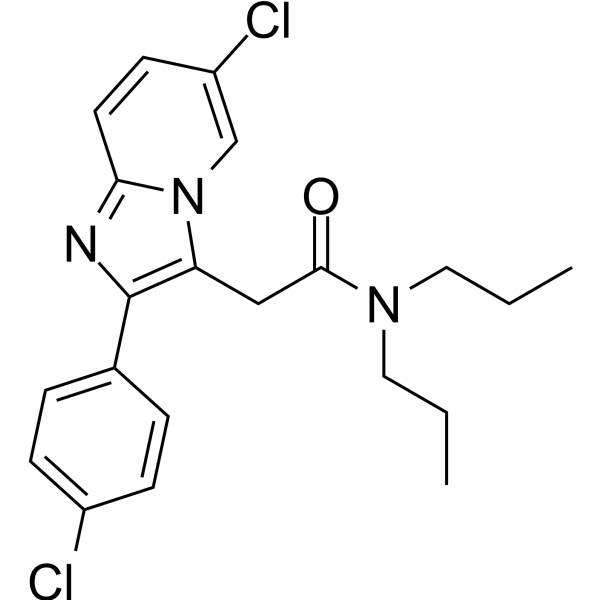
    Alpidem, an anxiolytic agent, is an orally active and brain-penetrant GABAA receptor ligand, binds to α1β2γ2 subunit-containing GABAA receptors (IC50 of 17 nM) over α5β2γ2 subunit-containing GABAA receptors (IC50 of >10 μM). Alpidem modulates calcium-induced mitochondrial permeability transition, induces glutathione depletion and hepatocyte necrosis, potentiates TNF-α toxicity, inhibits marble-burying and locomotor activity, enhances stressed rodent feeding behavior, and exerts anticonvulsant effects. Alpidem can be used for the research of anxiety, anxiety disorders, and convulsions .
    Alpidem
  • HY-117771
    DO34
    5 Publications Verification

    DAGL Neurological Disease Metabolic Disease
    DO34 is a selective DAGL inhibitor, with an IC50 of 6 nM for DAGLα conversion of SAG to 2-AG. DO34 blocks de novo 2-AG synthesis, and suppresses tonic CB1 receptor activation. DO34 blocks depolarization-induced suppression of excitation and inhibition in the cerebellum and hippocampus. DO34 regulates feeding behavior and locomotor activity in mice. DO34 abolishes AM251-mediated enhancement of parallel fiber-evoked excitatory postsynaptic currents in cerebellar slices from MAGL global knockout mice. DO34 can be used for the research of energy balance disorder and neuroinflammation .
    DO34
  • HY-175188

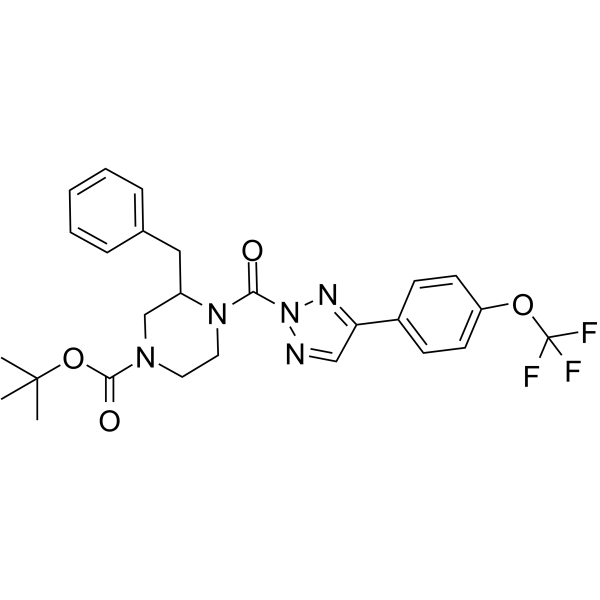
    BPN-0027490

    Myosin Neurological Disease
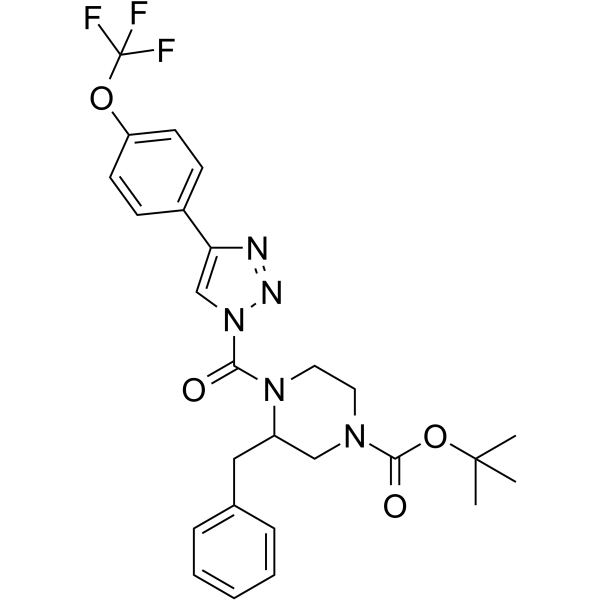
    MT-110 (BPN-0027490) is a non-muscle myosin NMIIB-selective inhibitor with high brain penetration and favorable safety profile. MT-110 specifically disrupts NMIIB-dependent actin dynamics in dendritic spines, while it exerts no significant adverse effects on cardiac myosin II and cardiac functions (such as cardiac output and heart rate) at tested concentrations. A single administration of MT-110 produces long-lasting (sustained for several weeks) blockade of methamphetamine motivation associated with environmental cues. MT-110 exhibits extremely high specificity, with no interference with cocaine motivation, hippocampus-dependent memory, fear memory, or locomotor and anxiety-like behaviors. MT-110 serves as a valuable tool compound for investigating the mechanisms of methamphetamine use disorder .
    MT-110
  • HY-172550

    HCN Channel Neurological Disease
    MS7710 is a hyperpolarization-activated cyclic nucleotide-gated (HCN) channel inhibitor with blood-brain barrier permeability and an excellent brain/plasma concentration ratio. MS7710 inhibits HCN channel-mediated Ih current, and reduces the firing frequency and burst activity of dopaminergic neurons in the ventral tegmental area. MS7710 ameliorates chronic social defeat stress-induced deficits in social interaction and impairments in reward-related cognitive flexibility in mice. MS7710 exerts only limited effects on ventral tegmental area dopaminergic neuron activity, social interaction, exploratory behavior, locomotor activity or sucrose preference in control mice. MS7710 is applicable to the research of major depressive disorder .
    MS7710
  • HY-101102

    Dopamine Receptor Neurological Disease
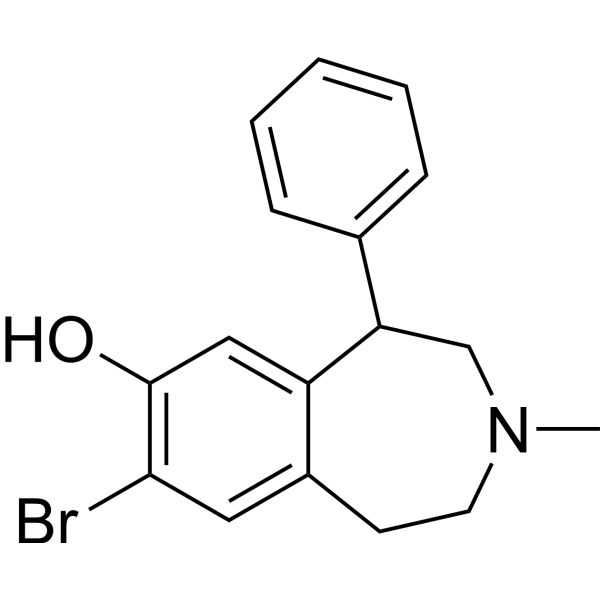
    7-Hydroxy-DPAT hydrobromide is a selective D3 dopamine receptor agonist, exhibiting significant pharmacological activity in modulating locomotor behavior and dopamine metabolism within the brain.
    7-Hydroxy-DPAT hydrobromide
  • HY-172587

    Cannabinoid Receptor Neurological Disease
    CB1R Allosteric modulator 5 (compound 3) is a selective, and blood-brain barrier (BBB) permeable Cannabinoid receptor type 1 allosteric modulator with a pIC50 of 6.89. CB1R Allosteric modulator 5 attenuates both cocaine-seeking behavior specific to cue-induced reinstatement and cocaine-induced behavioral sensitization without altering locomotor activity .
    CB1R Allosteric modulator 5
  • HY-160718

    ABT-431; DAS-431

    Dopamine Receptor Neurological Disease
    Adrogolide is an A-86929 (HY-171472) prodrug and dopamine D1 receptor agonist. Adrogolide is converted rapidly in plasma to A-86929. Adrogolide improves behavioral disability and locomotor activity scores. Adrogolide can also attenuate the ability of Cocaine to induce Cocaine-seeking behavior. Adrogolide can be used in the research of Parkinson's disease .
    Adrogolide
  • HY-134015

    7-OH-DPAT

    Dopamine Receptor Neurological Disease
    7-Hydroxy-DPAT (7-OH-DPAT) is a selective D3 dopamine receptor agonist. 7-Hydroxy-DPAT exhibits significant pharmacological activity in modulating locomotor behavior and dopamine metabolism within the brain. 7-Hydroxy-DPAT can be used for the research of neurological disease .
    7-Hydroxy-DPAT
  • HY-A0139

    NSC 108165; Navan; Navane

    Sigma Receptor mAChR Histamine Receptor Dopamine Receptor Adrenergic Receptor Others
    Thiothixene is a typical antipsychotic. It selectively binds to dopamine D2 over D1, D3, and D4 receptors (Kis=0.417, 338, 186.2, and 363.1 nM, respectively). Thiothixene also binds to various serotonin (5-HT), histamine H1, α1- and α2-adrenergic, muscarinic acetylcholine, and sigma receptors (Kis=15-5,754 nM) as well as the dopamine, norepinephrine, and serotonin transporters (Kis=3.16-30 μM). In vivo, thiothixene reduces spontaneous and amphetamine-induced locomotor activity in rats. It enhances latent inhibition, as measured by a decreased lick latency in response to light and foot shock stimuli, which is a measure of selective attention in rats.3 Thiothixene also increases competitive behavior in submissive mice, indicating antidepressant-like behavior.
    Thiothixene
  • HY-100998

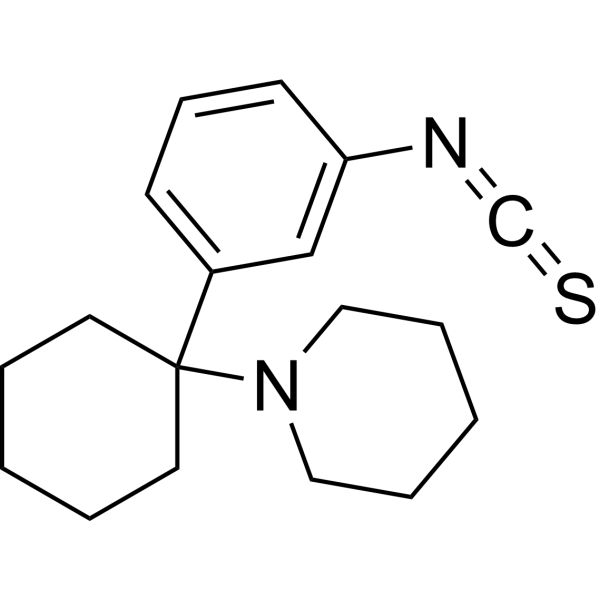
    iGluR Neurological Disease
    Metaphit is a specific PCPantagonist and site-directed acylating agent of the [3H]phencyclidine binding site in rat brain homogenates . Metaphit prevents PCP-induced locomotor behavior through presynaptic mechanisms .
    Metaphit
  • HY-P1438A

    Neuropeptide Y Receptor Neurological Disease
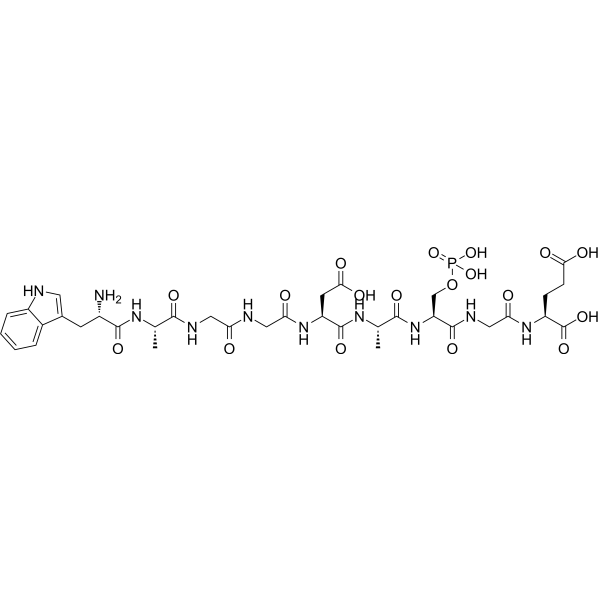
    Neuropeptide S(Rat) TFA is a potent endogenous neuropeptide S receptor (NSPR) agonist (EC50=3.2 nM). Neuropeptide S(Rat) TFA increases locomotor activity and wakefulness in mice. Neuropeptide S(Rat) TFA also reduces anxiety-like behavior in mice.
    Neuropeptide S(Rat) TFA
  • HY-P1437A

    Neuropeptide S Receptor Neurological Disease
    Neuropeptide S(Mouse) TFA is a potent endogenous neuropeptide S receptor (NPSR) agonist (EC50=3 nM). Neuropeptide S(Mouse) TFA induces mobilization of intracellular Ca 2+. Neuropeptide S(Mouse) TFA increases locomotor activity and wakefulness in mice. Neuropeptide S(Mouse) TFA also reduces anxiety-like behavior in mice.
    Neuropeptide S (Mouse) TFA
  • HY-W013150R

    Reference Standards GABA Receptor Neurological Disease
    Alpidem (Standard) is the analytical standard of Alpidem (HY-W013150). This product is intended for research and analytical applications. Alpidem, an anxiolytic agent, is an orally active and brain-penetrant GABAA receptor ligand, binds to α1β2γ2 subunit-containing GABAA receptors (IC50 of 17 nM) over α5β2γ2 subunit-containing GABAA receptors (IC50 of >10 μM). Alpidem modulates calcium-induced mitochondrial permeability transition, induces glutathione depletion and hepatocyte necrosis, potentiates TNF-α toxicity, inhibits marble-burying and locomotor activity, enhances stressed rodent feeding behavior, and exerts anticonvulsant effects. Alpidem can be used for the research of anxiety, anxiety disorders, and convulsions.
    Alpidem (Standard)
  • HY-W013150S

    Isotope-Labeled Compounds GABA Receptor Neurological Disease
    Alpidem-d14 is the deuterium labeled Alpidem (HY-W013150) . Alpidem, an anxiolytic agent, is an orally active and brain-penetrant GABAA receptor ligand, binds to α1β2γ2 subunit-containing GABAA receptors (IC50 of 17 nM) over α5β2γ2 subunit-containing GABAA receptors (IC50 of >10 μM). Alpidem modulates calcium-induced mitochondrial permeability transition, induces glutathione depletion and hepatocyte necrosis, potentiates TNF-α toxicity, inhibits marble-burying and locomotor activity, enhances stressed rodent feeding behavior, and exerts anticonvulsant effects. Alpidem can be used for the research of anxiety, anxiety disorders, and convulsions.
    Alpidem-d14
  • HY-W748758

    NSC 108165-d8; Navan-d8; Navane-d8

    Isotope-Labeled Compounds Dopamine Receptor Histamine Receptor mAChR Adrenergic Receptor Sigma Receptor Others
    (Z)-Thiothixene-d8 (NSC 108165-d8; Navan-d8; Navane-d8) is the deuterium labeled Thiothixene (HY-A0139). Thiothixene is a typical antipsychotic. It selectively binds to dopamine D2 over D1, D3, and D4 receptors (Kis=0.417, 338, 186.2, and 363.1 nM, respectively). Thiothixene also binds to various serotonin (5-HT), histamine H1, α1- and α2-adrenergic, muscarinic acetylcholine, and sigma receptors (Kis=15-5,754 nM) as well as the dopamine, norepinephrine, and serotonin transporters (Kis=3.16-30 μM). In vivo, thiothixene reduces spontaneous and amphetamine-induced locomotor activity in rats. It enhances latent inhibition, as measured by a decreased lick latency in response to light and foot shock stimuli, which is a measure of selective attention in rats.3 Thiothixene also increases competitive behavior in submissive mice, indicating antidepressant-like behavior.
    (Z)-Thiothixene-d8
  • HY-N17853

    Potassium Channel TNF Receptor Interleukin Related Neurological Disease Inflammation/Immunology
    Siaresinolic acid is a compound found in the leaves of Sabicea grisea. Siaresinolic acid shows antinociceptive and anti-inflammatory activity. Siaresinolic acid reduces nociceptive behavior by ATP-dependent potassium channel, inhibits leukocyte influx, plasma leakage, and proinflammatory mediator (TNF-α, IL-1β) production. Siaresinolic acid does not induce cytotoxicity in murine macrophages, alter locomotor activity at high doses. Siaresinolic acid can be used for the research of pleurisy and pain .
    Siaresinolic acid
  • HY-15080

    LY 293606

    iGluR Cardiovascular Disease Neurological Disease
    GYKI 53405 is a non-competitive, orally active AMPA receptor antagonist. GYKI 53405 shows no significant binding affinity for GABAA, GABAB or benzodiazepine receptors. GYKI 53405 increases self-grooming behavior, induces wet dog-like shakes, reduces spontaneous activity, produces anxiolytic-like behavior, reverses the anxiogenic effect induced by mCPP, inhibits locomotor activity, suppresses sound-induced and maximal electroshock-induced seizures, prolongs survival in global cerebral ischemia models, and exhibits sustained anticonvulsant effects at doses below the sedation threshold. GYKI 53405 can be used in research related to absence epilepsy, anxiety disorders and global cerebral ischemia .
    GYKI 53405
  • HY-W680886

    Monoamine Transporter Serotonin Transporter Dopamine Transporter 5-HT Receptor Neurological Disease
    6-APDB is a class of monoamine neurotransmitter releaser and Monoamine Transporter modulator that exerts selective effects on human monoamine transporters and acts as a partial agonist at 5-HT2 family receptors. For NET, 6-APDB has an IC50 of 0.56 μM and a Ki of 18 μM; for SERT, it has an IC50 of 2.3 μM and a Ki of 23 μM; for DAT, it has an IC50 of 33 μM and a Ki of >30 μM, and affinity for rat and mouse TAAR1, with Ki values of 1.0 μM and 0.21 μM, respectively. 6-APDB inhibits norepinephrine and 5-HT reuptake, mediates the release of three types of monoamine neurotransmitters, shows a dose-dependent biphasic locomotor effect in mice, and fully substitutes the discriminative stimulus effect of MDMA. 6-APDB shows no significant cytotoxicity at high concentrations, and possesses empathogenic psychoactivity, potential hallucinogenic effects, and behavioral effects associated with intermittent abuse .
    6-APDB

Inquiry Online

Your information is safe with us. * Required Fields.

Salutation


Country or Region *

Applicant Name *


Organization Name *

Department *


Email Address *


Product Name *

Cat. No.


Requested quantity *

Phone Number *


Remarks

Inquiry Online

Inquiry Information

Product Name:
Cat. No.:
Quantity:
MCE Japan Authorized Agent:

