From 11:00 pm to 12:00 pm EST ( 8:00 pm to 9:00 pm PST ) on January 6th, the website will be under maintenance. We are sorry for the inconvenience. Please arrange your schedule properly.
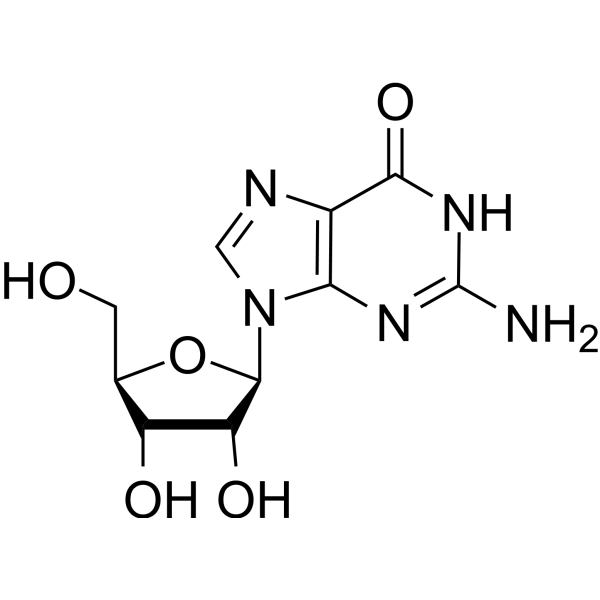
Guanosine (DL-Guanosine) is a purine nucleoside comprising guanine attached to a ribose (ribofuranose) ring via a β-N9-glycosidic bond. Guanosine possesses anti-HSV activity.
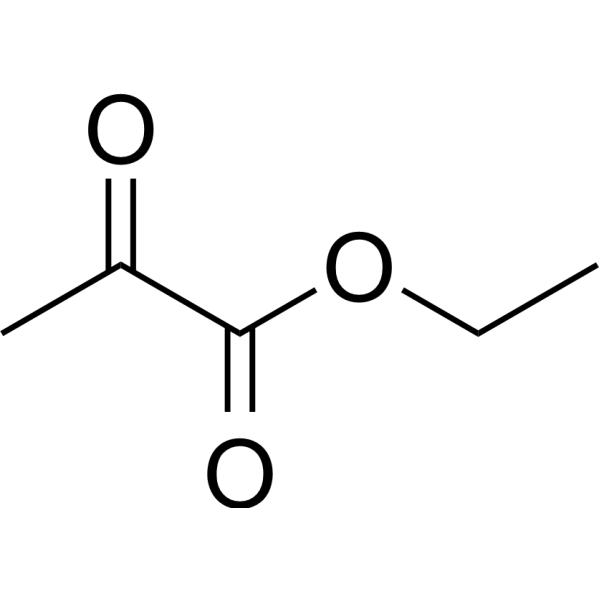
Ethyl pyruvate is a simple derivative of the endogenous metabolite pyruvate. Ethyl pyruvate is an HMGB1 release inhibitor. Ethyl pyruvate can induce apoptosis by autophagy. Ethyl pyruvate has anti-inflammatory, antioxidant and anti-tumor activity. Ethyl pyruvate can be used in the study of neurodegenerative diseases such as Alzheimer's and Parkinson's disease .
N9-Isopropylolomoucine is a mitotic cyclin dependent kinase (CDK) inhibitor. N9-Isopropylolomoucine targets CCNB 1/CDK1 and can be used for cancer research .
Guanosine (Standard) is the analytical standard of Guanosine. This product is intended for research and analytical applications. Guanosine (DL-Guanosine) is a purine nucleoside comprising guanine attached to a ribose (ribofuranose) ring via a β-N9-glycosidic bond. Guanosine possesses anti-HSV activity.
In Vitro: Guanosine can be phosphorylated to become guanosine monophosphate (GMP), cyclic guanosine monophosphate (cGMP), guanosine diphosphate (GDP), and guanosine triphosphate (GTP). These forms play important roles in various biochemical processes such as synthesis of nucleic acids and proteins, photosynthesis, muscle contraction, and intracellular signal transduction (cGMP).
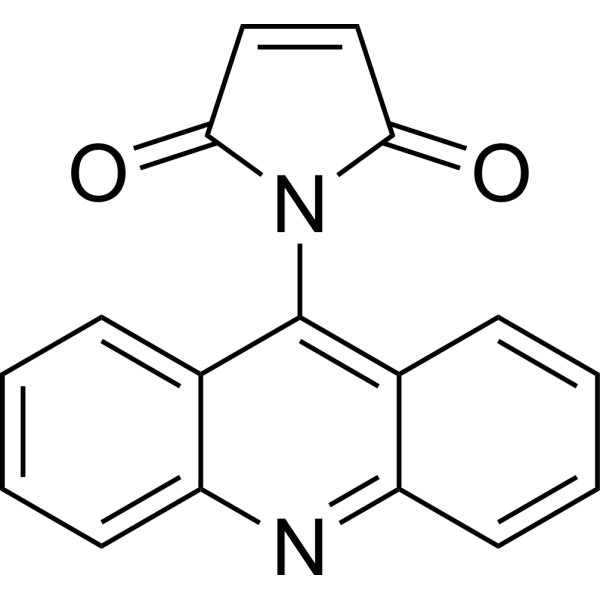
N-(9-Acridinyl)maleimide is a maleimide type fluorescent thiol reagent. N-(9-Acridinyl)maleimide shows no substantial fluorescence but its coupling products with thiol compounds exhibit strong blue fluorescence. N-(9-Acridinyl)maleimide is used for fluorometrical analysis of cysteine and glutathione .
AMS-17 is a potent NLRP3 inhibitor, inhibiting microglia activation in vitro and in vivo. AMS-17 also inhibits cytokines such as caspase-1, TNF-α, IL-1β and inducible nitric oxide synthase (iNOS) in N9 cells. AMS-17 can be used for researching inflammation-associated neurological disorders, such as vascular dementia (VaD) .
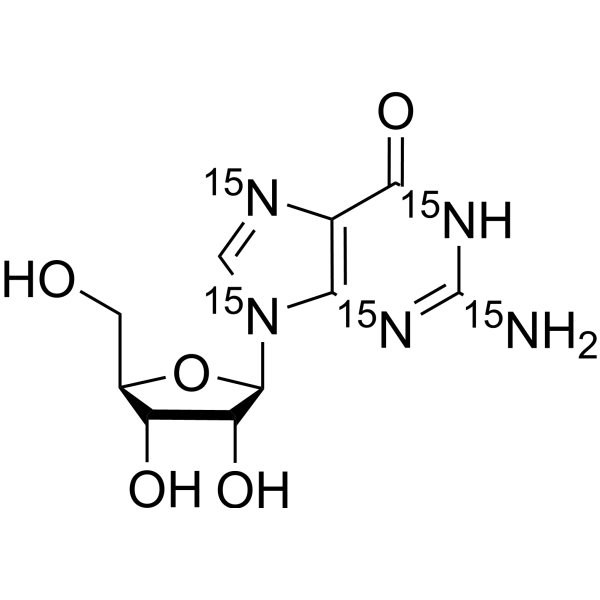
Guanosine- 15N5 is the 15N labeled Guanosine . Guanosine (DL-Guanosine) is a purine nucleoside comprising guanine attached to a ribose (ribofuranose) ring via a β-N9-glycosidic bond. Guanosine possesses anti-HSV activity .
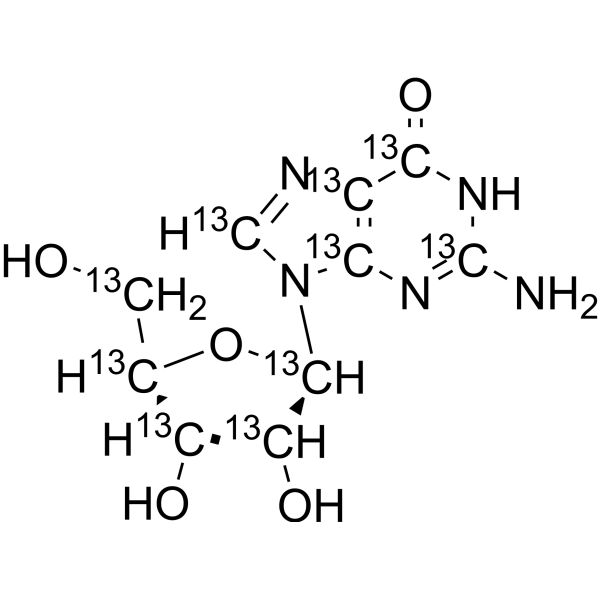
Guanosine- 13C10 is the 13C labeled Guanosine (HY-N0097). Guanosine is a purine nucleoside comprising guanine attached to a ribose (ribofuranose) ring via a β-N9-glycosidic bond. Guanosine possesses anti-HSV activity .
Guanosine-d13 (DL-Guanosine-d13) is a deuterium of Guanosine (HY-N0097). Guanosine (DL-Guanosine) is a purine nucleoside comprising guanine attached to a ribose (ribofuranose) ring via a β-N9-glycosidic bond. Guanosine possesses anti-HSV activity .
Guanosine- 13C10, 15N5 is the 13C and 15N labeled Guanosine (HY-N0097). Guanosine (DL-Guanosine) is a purine nucleoside comprising guanine attached to a ribose (ribofuranose) ring via a β-N9-glycosidic bond. Guanosine possesses anti-HSV activity .
GB2095 is an orally active and selective galectin-3 inhibitor. GB2095 shows superior selectivity for both human (KD = 0.036 μM) and mouse galectin-3 (KD = 0.35 μM) over other galectins (such as h-Gal-1/4N/4C/8N/8C/9N/9C and m-galectin-1). GB2095 inhibits tumor growth in syngeneic mouse models of breast and melanoma cancers. GB2095 can be used for breast and melanoma cancer research .
VIS-410 is an antibody inhibitor targeting the stem region of hemagglutinin (HA). VIS-410 inhibits influenza virus replication by blocking HA-mediated membrane fusion. VIS-410 exhibits broad-spectrum neutralization against influenza A viruses with group 1 and group 2 hemagglutinins, including subtypes such as H1N1, H3N2, H5N1, and H7N9 (H5N1 IC50 = 1.5 μg/mL). VIS-410 is applicable to research related to influenza A virus infection .
7-Methylxanthine-2,4,5,6- 13C4, 1,3- 15N2 (with variable 15N labeling at N9) is the 13C and 15N labeled 7-Methylxanthine . 7-Methylxanthine, a methyl derivative of xanthine, is one of the purine components in urinary calculi .
N4, N9-di-Boc-spermine is a spermine linker containing two a Boc-protected amino groups and two amine groups. The Boc groups can be deprotected under mild acidic conditions to form the free amine. The amino groups are reactive with carboxylic acids, activated NHS esters, carbonyls (ketone, aldehyde) etc. Spermidine is a polyamine that modulates various cellular activities like cellular development and differentiation, stability of DNA, and apoptosis.
N2,9-Diacetylguanine- 13C2, 15N (N-(9-Acetyl-6,9-dihydro-6-oxo-1H-purin-2-yl)acetamide- 13C2, 15N) is the 13C- and 15N-labeled N2,N9-Diacetylguanine (HY-41619).
2'-Deoxycytidine (hydrochloride) (Standard) is an analytical standard for 2'-Deoxycytidine (hydrochloride). This product is intended for research and analytical applications. 2'-Deoxycytidine hydrochloride is composed of the purine nucleoside guanine linked by its N9 nitrogen to the C1 carbon of deoxyribose.
Guanosine-8-d-1 is the deuterium labeled Guanosine. Guanosine (DL-Guanosine) is a purine nucleoside comprising guanine attached to a ribose (ribofuranose) ring via a β-N9-glycosidic bond. Guanosine possesses anti-HSV activ .
10-Butyl Ether Minocycline (BEM), a Minocycline (HY-17412A) derivative, is an MMP-8 and MMP-9 inhibitor with IC50s of 69.4 µM and 47.0 µM, respectively. 10-Butyl Ether Minocycline suppresses LPS (HY-D1056)-induced microglial activation. 10-Butyl Ether Minocycline inhibits VEGF-induced endothelial cell migration and L-Glutamine (HY-N0390)-induced ROS levels. 10-Butyl Ether Minocycline significantly reduces alcohol consumption in the Chronic Intermittent Ethanol (CIE) mouse model of alcohol dependence. 10-Butyl Ether Minocycline can be used for the study of neuroimmune-inflammatory diseases and Alcohol use disorder (AUD) .
PP7 is a potent PB1-PB2 interaction inhibitor with an IC50 of 8.6 μM, and their inhibition against viral polymerase activity (IC50=9.5 μM). PP7 shows antiviral activities against influenza A virus (IAV), including A(H1N1)pdm09 (EC50=1.4 μM), A(H7N9) and A(H9N2) subtypes .
P9R is an antiviral peptide. P9R has broad-spectrum antiviral activities against the coronaviruses (SARS-CoV-2, MERS-CoV and SARS-CoV), A(H1N1)pdm09, A(H7N9) virus, and rhinovirus. P9R directly binds to viruses and inhibits virus-host endosomal acidification. P9R significantly protects mice from A(H1N1)pdm09 infection without generating drug-resistant virus. P9R can be used for pH-dependent respiratory viruses research .
Elaidyl-sulfamide (N-(9E)-9-Octadecen-1-ylsulfamide) is a PPARα agonist. Elaidyl-sulfamide reduces body weight gain and food intake and reduces circulating cholesterol levels and increases both glucose and insulin levels. Elaidyl-sulfamide has the potential for the research of complicated obesity .
Ethyl pyruvate (Standard) is the analytical standard of Ethyl pyruvate. This product is intended for research and analytical applications. Ethyl pyruvate is a simple derivative of the endogenous metabolite pyruvate. Ethyl pyruvate is an HMGB1 release inhibitor. Ethyl pyruvate can induce apoptosis by autophagy. Ethyl pyruvate has anti-inflammatory, antioxidant and anti-tumor activity. Ethyl pyruvate can be used in the study of neurodegenerative diseases such as Alzheimer's and Parkinson's disease .
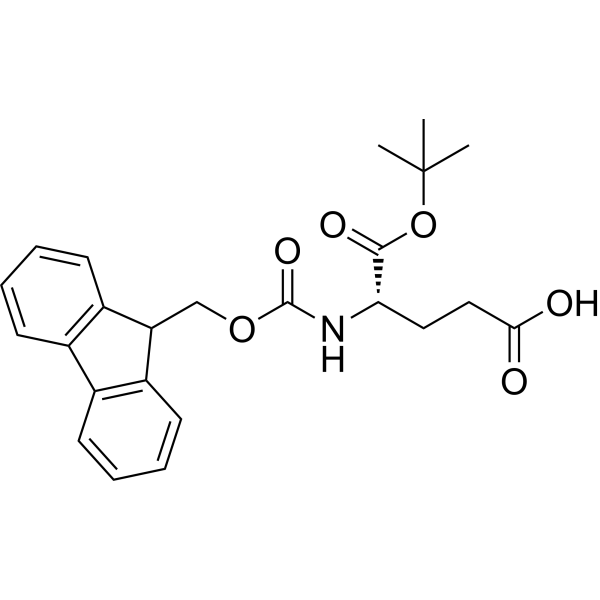
HIV-1 tat Protein (1-9) occurs extracellularly and has a role in the immunosuppression of non-HIV-1-infected T cells in acquired AIDS. HIV-1 tat Protein (1-9) is an inhibitor of DP IV. HIV-1 tat Protein (1-9) can be synthesized by phase peptide synthesis with Fmoc (N-(9-fluorenyl)methoxycarbonyl) technique using the peptide synthesizer 431A. HIV-1 tat Protein (1-9) can be studied in research on HIV-1 .
9-O-Angeloyl-8-methoxythymol (compound 5) is a thymol derivative and cytotoxin, with a IC50 value of 13.1 μg/mL against human myeloid leukemia cells, a IC50 value of 31.8 μg/mL against human lymphoblastic leukemia cells, and a IC50 >40 μg/mL against colon cancer and lymphoma cells.\n9-O-Angeloyl-8-methoxythymol is applicable to leukemia-related research .
N6-Benzoyl-7’-OH-N-trityl morpholino adenine is a purine nucleoside analog. Purine nucleoside analogs have broad antitumor activity targeting indolent lymphoid malignancies. Anticancer mechanisms in this process rely on inhibition of DNA synthesis, induction of apoptosis, etc .
Anti-Flu A (H7N9) HA/Hemagglutinin Antibody (m826) is a humanized monoclonal antibody targeting H7N9. Anti-Flu A (H7N9) HA/Hemagglutinin Antibody (m826) induces antibody-dependent cellular cytotoxicity (ADCC) against cells expressing H7N9 HA. Anti-Flu A (H7N9) HA/Hemagglutinin Antibody (m826) is applicable to studies related to H7N9 avian influenza virus infection .
Aβ aggregation-IN-5 is a brain-penetrant amyloid-β aggregation inhibitor. Aβ aggregation-IN-5 inhibits Aβ aggregation/oligomerization, rescues cells from AB/ROS toxicity and reduces microglial activation/NO production. Aβ aggregation-IN-5 reduces amyloid burden, neuroinflammation, microglial activation in APP/PSEN1 mice. Aβ aggregation-IN-5 can be used for the research of Alzheimer's disease .
MNP2 is a NLRP3-ASC interaction inhibitor. MNP2 selectively binds to the PYD domain of ASC (Ka=149 nM) and blocks ASC-PYM binding (Ka=58 nM), thereby inhibiting the interaction between ASC and NLRP3 and suppressing the formation of the NLRP3 inflammasome. MNP2 inhibits IL-1β release and caspase-1 maturation, and reduces the efflux of potassium and chloride ions. MNP2 prevents mitochondrial damage and reactive oxygen species production, and significantly decreases NLRP3 inflammasome formation in neurodegenerative pathologies induced by β-amyloid, Tau protein and α-synuclein. MNP2 is applicable for the research of neurodegenerative diseases .
PB2-IN-2 is an orally active PB2 inhibitor with RNA-dependent RNA Polymerase (RNP) IC50 = 0.2 nM, LRA (Ligand Receptor Assay) EC50 = 0.8 nM, Cytopathic Effect (CPE) EC50 = 0.1 nM. PB2-IN-2 exhibits broad-spectrum, nanomolar antiviral potency against a panel of influenza A strains (including H1N1pdm09, Lyon/1337/2007/H1N1, Tex12-Like/H3N2, PR/8/34/H1N1, WSN/1933/H1N1, rPR8(H1N1)/H7N9 with EC50 = 1.5, 3.6, 3.7, 13.8, 2.9 and 9.8 nM and all the CC50 values > 2 μM. PB2-IN-2 possesses an excellent pharmacokinetic profile and metabolic stability. PB2-IN-2 can be used for anti-influenza research .
N-(9-Acridinyl)maleimide is a maleimide type fluorescent thiol reagent. N-(9-Acridinyl)maleimide shows no substantial fluorescence but its coupling products with thiol compounds exhibit strong blue fluorescence. N-(9-Acridinyl)maleimide is used for fluorometrical analysis of cysteine and glutathione .
P9R is an antiviral peptide. P9R has broad-spectrum antiviral activities against the coronaviruses (SARS-CoV-2, MERS-CoV and SARS-CoV), A(H1N1)pdm09, A(H7N9) virus, and rhinovirus. P9R directly binds to viruses and inhibits virus-host endosomal acidification. P9R significantly protects mice from A(H1N1)pdm09 infection without generating drug-resistant virus. P9R can be used for pH-dependent respiratory viruses research .
HIV-1 tat Protein (1-9) occurs extracellularly and has a role in the immunosuppression of non-HIV-1-infected T cells in acquired AIDS. HIV-1 tat Protein (1-9) is an inhibitor of DP IV. HIV-1 tat Protein (1-9) can be synthesized by phase peptide synthesis with Fmoc (N-(9-fluorenyl)methoxycarbonyl) technique using the peptide synthesizer 431A. HIV-1 tat Protein (1-9) can be studied in research on HIV-1 .
MNP2 is a NLRP3-ASC interaction inhibitor. MNP2 selectively binds to the PYD domain of ASC (Ka=149 nM) and blocks ASC-PYM binding (Ka=58 nM), thereby inhibiting the interaction between ASC and NLRP3 and suppressing the formation of the NLRP3 inflammasome. MNP2 inhibits IL-1β release and caspase-1 maturation, and reduces the efflux of potassium and chloride ions. MNP2 prevents mitochondrial damage and reactive oxygen species production, and significantly decreases NLRP3 inflammasome formation in neurodegenerative pathologies induced by β-amyloid, Tau protein and α-synuclein. MNP2 is applicable for the research of neurodegenerative diseases .
VIS-410 is an antibody inhibitor targeting the stem region of hemagglutinin (HA). VIS-410 inhibits influenza virus replication by blocking HA-mediated membrane fusion. VIS-410 exhibits broad-spectrum neutralization against influenza A viruses with group 1 and group 2 hemagglutinins, including subtypes such as H1N1, H3N2, H5N1, and H7N9 (H5N1 IC50 = 1.5 μg/mL). VIS-410 is applicable to research related to influenza A virus infection .
Anti-Flu A (H7N9) HA/Hemagglutinin Antibody (m826) is a humanized monoclonal antibody targeting H7N9. Anti-Flu A (H7N9) HA/Hemagglutinin Antibody (m826) induces antibody-dependent cellular cytotoxicity (ADCC) against cells expressing H7N9 HA. Anti-Flu A (H7N9) HA/Hemagglutinin Antibody (m826) is applicable to studies related to H7N9 avian influenza virus infection .
Guanosine (DL-Guanosine) is a purine nucleoside comprising guanine attached to a ribose (ribofuranose) ring via a β-N9-glycosidic bond. Guanosine possesses anti-HSV activity.
Guanosine (Standard) is the analytical standard of Guanosine. This product is intended for research and analytical applications. Guanosine (DL-Guanosine) is a purine nucleoside comprising guanine attached to a ribose (ribofuranose) ring via a β-N9-glycosidic bond. Guanosine possesses anti-HSV activity.
In Vitro: Guanosine can be phosphorylated to become guanosine monophosphate (GMP), cyclic guanosine monophosphate (cGMP), guanosine diphosphate (GDP), and guanosine triphosphate (GTP). These forms play important roles in various biochemical processes such as synthesis of nucleic acids and proteins, photosynthesis, muscle contraction, and intracellular signal transduction (cGMP).
2'-Deoxycytidine (hydrochloride) (Standard) is an analytical standard for 2'-Deoxycytidine (hydrochloride). This product is intended for research and analytical applications. 2'-Deoxycytidine hydrochloride is composed of the purine nucleoside guanine linked by its N9 nitrogen to the C1 carbon of deoxyribose.
9-O-Angeloyl-8-methoxythymol (compound 5) is a thymol derivative and cytotoxin, with a IC50 value of 13.1 μg/mL against human myeloid leukemia cells, a IC50 value of 31.8 μg/mL against human lymphoblastic leukemia cells, and a IC50 >40 μg/mL against colon cancer and lymphoma cells.\n9-O-Angeloyl-8-methoxythymol is applicable to leukemia-related research .
NA/Neuraminidase Protein is a receptor-destroying enzyme that cleaves terminal sialic acids from cellular receptors, potentially facilitating viral invasion of the upper airways by targeting sialic acid moieties on airway epithelial cell mucin. NA plays a pivotal role in viral propagation by catalyzing the removal of terminal sialic acid residues from both viral and cellular glycoconjugates. Moreover, the sialidase activity in late endosome/lysosome traffic appears to enhance virus replication. NA/Neuraminidase Protein, H7N9 (EPI439509, HEK293) is the recombinant Virus-derived NA/Neuraminidase protein, expressed by HEK293 , with tag free. It originates from cell lysates collected after expressing a DNA sequence encoding the Influenza A virus neuraminidase.
NA/Neuraminidase Protein is a receptor-destroying enzyme that cleaves terminal sialic acids from cellular receptors, potentially facilitating viral invasion of the upper airways by targeting sialic acid moieties on airway epithelial cell mucin. NA plays a pivotal role in viral propagation by catalyzing the removal of terminal sialic acid residues from both viral and cellular glycoconjugates. Moreover, the sialidase activity in late endosome/lysosome traffic appears to enhance virus replication. NA/Neuraminidase Protein, H7N9 (EPI439509, HEK293, His) is the recombinant Virus-derived NA/Neuraminidase protein, expressed by HEK293 , with N-His labeled tag.
NA/Neuraminidase Protein is a receptor-destroying enzyme that cleaves terminal sialic acids from cellular receptors, potentially facilitating viral invasion of the upper airways by targeting sialic acid moieties on airway epithelial cell mucin. NA plays a pivotal role in viral propagation by catalyzing the removal of terminal sialic acid residues from both viral and cellular glycoconjugates. Moreover, the sialidase activity in late endosome/lysosome traffic appears to enhance virus replication. NA/Neuraminidase Protein, H7N9 (EPI439487, HEK293, His) is the recombinant Virus-derived NA/Neuraminidase protein, expressed by HEK293 , with N-His labeled tag.
The hemagglutinin (HA) protein attaches viral particles to host cells by binding to sialic acid-containing receptors and induces viral particle internalization through clathrin-dependent endocytosis. HA also promotes an alternative clathrin- and caveolin-independent pathway for some virions. HA/Hemagglutinin Protein, H7N9 (AGI60301, sf9, His) is the recombinant Virus-derived HA/Hemagglutinin protein, expressed by Sf9 insect cells , with C-His labeled tag.
The hemagglutinin (HA) protein attaches viral particles to host cells by binding to sialic acid-containing receptors and induces viral particle internalization through clathrin-dependent endocytosis. HA also promotes an alternative clathrin- and caveolin-independent pathway for some virions. HA/Hemagglutinin Protein, H7N9 (EPI443034, sf9, His) is the recombinant Virus-derived HA/Hemagglutinin protein, expressed by Sf9 insect cells , with C-His labeled tag.
The hemagglutinin (HA) protein attaches viral particles to host cells by binding to sialic acid-containing receptors and induces viral particle internalization through clathrin-dependent endocytosis. HA also promotes an alternative clathrin- and caveolin-independent pathway for some virions. HA/Hemagglutinin Protein, H7N9 (EPI439507, sf9, His) is the recombinant Virus-derived HA/Hemagglutinin protein, expressed by Sf9 insect cells , with C-His labeled tag.
The hemagglutinin (HA) protein attaches viral particles to host cells by binding to sialic acid-containing receptors and induces viral particle internalization through clathrin-dependent endocytosis. HA also promotes an alternative clathrin- and caveolin-independent pathway for some virions. HA/Hemagglutinin Protein, H7N9 (EPI439507, HEK293, His) is the recombinant Virus-derived HA/Hemagglutinin protein, expressed by HEK293 , with C-His labeled tag.
The hemagglutinin (HA) protein attaches viral particles to host cells by binding to sialic acid-containing receptors and induces viral particle internalization through clathrin-dependent endocytosis. HA also promotes an alternative clathrin- and caveolin-independent pathway for some virions. HA/Hemagglutinin Protein, H7N9 (AGI60301, HEK293, His) is the recombinant Virus-derived HA/Hemagglutinin protein, expressed by HEK293 , with C-His labeled tag.
NA/Neuraminidase Protein is a receptor-destroying enzyme that cleaves terminal sialic acids from cellular receptors, potentially facilitating viral invasion of the upper airways by targeting sialic acid moieties on airway epithelial cell mucin. NA plays a pivotal role in viral propagation by catalyzing the removal of terminal sialic acid residues from both viral and cellular glycoconjugates. Moreover, the sialidase activity in late endosome/lysosome traffic appears to enhance virus replication. NA/Neuraminidase Protein, H7N9 (Biotinylated, EPI439509, HEK293, His) is the recombinant Virus-derived NA/Neuraminidase protein, expressed by HEK293 , with N-His labeled tag.
The hemagglutinin HA1 protein is essential for attachment of virions to host cells by binding to sialic acid-containing receptors, inducing virion internalization via clathrin-dependent or clathrin- and caveolin-independent pathways.As a class I viral fusion protein, HA1 determines host range restriction and virulence, mediating fusion between the virion membrane and the endosomal membrane.HA/Hemagglutinin Protein, H1N9 (ABK40634, sf9, His) is the recombinant Virus-derived HA/Hemagglutinin protein, expressed by Sf9 insect cells , with C-His labeled tag.
The hemagglutinin (HA) protein is essential for viral attachment to host cells, binding to sialic acid receptors, and initiating virion internalization through clathrin-dependent or -independent pathways. As a class I viral fusion protein, HA determines host range and virulence, mediating viral penetration into the cytoplasm. Hemagglutinin/HA Protein, H11N9 (ABB87228, HEK293, His) is the recombinant Virus-derived Hemagglutinin/HA protein, expressed by HEK293 , with C-His labeled tag.
Nucleoprotein/NP is critical in the influenza virus life cycle, encapsulating the negative-strand viral RNA to form a ribonucleoprotein (RNP) template. The nuclear localization signal of NP guides RNP into the host cell nucleus through α/β import. Nucleocapsid/NP Protein, H7N9 (R4NE06, sf9, His) is the recombinant Virus-derived Nucleocapsid/NP protein, expressed by Sf9 insect cells , with C-His labeled tag.
The hemagglutinin HA1 protein is essential for attachment of virions to host cells by binding to sialic acid-containing receptors, inducing virion internalization via clathrin-dependent or clathrin- and caveolin-independent pathways.As a class I viral fusion protein, HA1 determines host range restriction and virulence, mediating fusion between the virion membrane and the endosomal membrane.HA/Hemagglutinin Protein, H5N9 (ABR37720, sf9, His) is the recombinant Virus-derived HA/Hemagglutinin protein, expressed by Sf9 insect cells , with C-His labeled tag.
The hemagglutinin HA1 protein is essential for attachment of virions to host cells by binding to sialic acid-containing receptors, inducing virion internalization via clathrin-dependent or clathrin- and caveolin-independent pathways.As a class I viral fusion protein, HA1 determines host range restriction and virulence, mediating fusion between the virion membrane and the endosomal membrane.HA/Hemagglutinin Protein, H10N9 (ABI84469, sf9, His) is the recombinant Virus-derived HA/Hemagglutinin protein, expressed by Sf9 insect cells , with C-His labeled tag.
The hemagglutinin HA1 protein is essential for attachment of virions to host cells by binding to sialic acid-containing receptors, inducing virion internalization via clathrin-dependent or clathrin- and caveolin-independent pathways.As a class I viral fusion protein, HA1 determines host range restriction and virulence, mediating fusion between the virion membrane and the endosomal membrane.HA/Hemagglutinin Protein, H10N9 (ABI84469, HEK293, His) is the recombinant Virus-derived HA/Hemagglutinin protein, expressed by HEK293 , with C-His labeled tag.
The hemagglutinin (HA) protein attaches viral particles to host cells by binding to sialic acid-containing receptors and induces viral particle internalization through clathrin-dependent endocytosis. HA also promotes an alternative clathrin- and caveolin-independent pathway for some virions. HA/Hemagglutinin Protein, H7N9 (EPI440701, sf9, His) is the recombinant Virus-derived HA/Hemagglutinin protein, expressed by Sf9 insect cells , with C-His labeled tag.
The hemagglutinin (HA) protein attaches viral particles to host cells by binding to sialic acid-containing receptors and induces viral particle internalization through clathrin-dependent endocytosis. HA also promotes an alternative clathrin- and caveolin-independent pathway for some virions. HA/Hemagglutinin Protein, H7N9 (EPI440701, HEK293, His) is the recombinant Virus-derived HA/Hemagglutinin protein, expressed by HEK293 , with C-His labeled tag.
The hemagglutinin HA1 protein is essential for attachment of virions to host cells by binding to sialic acid-containing receptors, inducing virion internalization via clathrin-dependent or clathrin- and caveolin-independent pathways.As a class I viral fusion protein, HA1 determines host range restriction and virulence, mediating fusion between the virion membrane and the endosomal membrane.HA1/Hemagglutinin Protein, H1N9 (ABK40634, HEK293, His) is the recombinant Virus-derived HA1/Hemagglutinin protein, expressed by HEK293 , with C-His labeled tag.
Nucleocapsid protein in many coronaviruses is highly conserved, immunogenic, and abundantly expressed during infection. Nucleocapsid/NP Protein, H7N9 (AHZ59787, sf9, His) is the recombinant Virus-derived Nucleocapsid/NP protein, expressed by Sf9 insect cells , with C-His labeled tag.
The hemagglutinin (HA) protein is essential for viral attachment to host cells, binding to sialic acid receptors, and initiating virion internalization through clathrin-dependent or -independent pathways. As a class I viral fusion protein, HA determines host range and virulence, mediating viral penetration into the cytoplasm. Hemagglutinin/HA1 Protein, H11N9 (ABB87228, HEK293, His) is the recombinant Virus-derived Hemagglutinin/HA1 protein, expressed by HEK293 , with C-His labeled tag.
The hemagglutinin (HA) protein attaches viral particles to host cells by binding to sialic acid-containing receptors and induces viral particle internalization through clathrin-dependent endocytosis. HA also promotes an alternative clathrin- and caveolin-independent pathway for some virions. HA/Hemagglutinin Protein, H7N9 (AHA11500, HEK293, His) is the recombinant Virus-derived HA/Hemagglutinin protein, expressed by HEK293 , with C-His labeled tag.
The hemagglutinin (HA) protein attaches viral particles to host cells by binding to sialic acid-containing receptors and induces viral particle internalization through clathrin-dependent endocytosis. HA also promotes an alternative clathrin- and caveolin-independent pathway for some virions. HA/Hemagglutinin Protein, H7N9 (AGJ51953, HEK293, His) is the recombinant Virus-derived HA/Hemagglutinin protein, expressed by HEK293 , with C-His labeled tag.
The hemagglutinin (HA) protein attaches viral particles to host cells by binding to sialic acid-containing receptors and induces viral particle internalization through clathrin-dependent endocytosis. HA also promotes an alternative clathrin- and caveolin-independent pathway for some virions. HA/Hemagglutinin Protein, H7N9 (AGI60301, HA1, HEK293, His) is the recombinant Virus-derived HA/Hemagglutinin protein, expressed by HEK293 , with C-His labeled tag.
The hemagglutinin HA1 protein is essential for attachment of virions to host cells by binding to sialic acid-containing receptors, inducing virion internalization via clathrin-dependent or clathrin- and caveolin-independent pathways.As a class I viral fusion protein, HA1 determines host range restriction and virulence, mediating fusion between the virion membrane and the endosomal membrane.HA1/Hemagglutinin Protein, H5N9 (ABR37720, HEK293, His) is the recombinant Virus-derived HA1/Hemagglutinin protein, expressed by HEK293 , with C-His labeled tag.
The hemagglutinin HA1 protein is essential for attachment of virions to host cells by binding to sialic acid-containing receptors, inducing virion internalization via clathrin-dependent or clathrin- and caveolin-independent pathways.As a class I viral fusion protein, HA1 determines host range restriction and virulence, mediating fusion between the virion membrane and the endosomal membrane.HA1/Hemagglutinin Protein, H10N9 (ABI84469, HEK293, His) is the recombinant Virus-derived HA1/Hemagglutinin protein, expressed by HEK293 , with C-His labeled tag.
The hemagglutinin (HA) protein attaches viral particles to host cells by binding to sialic acid-containing receptors and induces viral particle internalization through clathrin-dependent endocytosis. HA also promotes an alternative clathrin- and caveolin-independent pathway for some virions. HA/Hemagglutinin Protein, H7N9 (EPI440701, HA1, sf9, His) is the recombinant Virus-derived HA/Hemagglutinin protein, expressed by Sf9 insect cells , with C-His labeled tag.
The hemagglutinin (HA) protein attaches viral particles to host cells by binding to sialic acid-containing receptors and induces viral particle internalization through clathrin-dependent endocytosis. HA also promotes an alternative clathrin- and caveolin-independent pathway for some virions. HA/Hemagglutinin Protein, H7N9 (EPI440701, HA1, HEK293, His) is the recombinant Virus-derived HA/Hemagglutinin protein, expressed by HEK293 , with C-His labeled tag.
Matrix protein 1/M1 Protein is pivotal in virus replication, spanning entry, uncoating, assembly, and budding. Binding to ribonucleocapsids inhibits viral transcription, and interaction with NEP aids nuclear export. M1 forms a shell on the inner virion membrane, binding the RNP. During entry, M1 dissociates from the RNP, allowing nuclear transport for transcription. M1 influences virion shape, determining infectivity, with filamentous virions crucial for cell-to-cell spread and spherical virions for aerosol-based transmission. Matrix protein 1/M1 Protein, H7N9 (EPI439506, His) is the recombinant Virus-derived Matrix protein 1/M1 protein, expressed by E. coli , with C-His labeled tag.
IL-10 protein is a major immunoregulatory cytokine with profound anti-inflammatory functions that limits excessive tissue destruction caused by inflammation. Mechanistically, IL10 binds to its heterotetrameric receptors IL10RA and IL10RB, leading to JAK1- and STAT2-mediated phosphorylation of STAT3, which translocates to the nucleus and drives the expression of anti-inflammatory mediators. IL-10 Protein, Human (HEK293) is the recombinant human-derived IL-10 protein, expressed by HEK293 , with tag free.
Guanosine- 15N5 is the 15N labeled Guanosine . Guanosine (DL-Guanosine) is a purine nucleoside comprising guanine attached to a ribose (ribofuranose) ring via a β-N9-glycosidic bond. Guanosine possesses anti-HSV activity .
Guanosine- 13C10 is the 13C labeled Guanosine (HY-N0097). Guanosine is a purine nucleoside comprising guanine attached to a ribose (ribofuranose) ring via a β-N9-glycosidic bond. Guanosine possesses anti-HSV activity .
Guanosine-d13 (DL-Guanosine-d13) is a deuterium of Guanosine (HY-N0097). Guanosine (DL-Guanosine) is a purine nucleoside comprising guanine attached to a ribose (ribofuranose) ring via a β-N9-glycosidic bond. Guanosine possesses anti-HSV activity .
Guanosine- 13C10, 15N5 is the 13C and 15N labeled Guanosine (HY-N0097). Guanosine (DL-Guanosine) is a purine nucleoside comprising guanine attached to a ribose (ribofuranose) ring via a β-N9-glycosidic bond. Guanosine possesses anti-HSV activity .
7-Methylxanthine-2,4,5,6- 13C4, 1,3- 15N2 (with variable 15N labeling at N9) is the 13C and 15N labeled 7-Methylxanthine . 7-Methylxanthine, a methyl derivative of xanthine, is one of the purine components in urinary calculi .
N2,9-Diacetylguanine- 13C2, 15N (N-(9-Acetyl-6,9-dihydro-6-oxo-1H-purin-2-yl)acetamide- 13C2, 15N) is the 13C- and 15N-labeled N2,N9-Diacetylguanine (HY-41619).
Guanosine-8-d-1 is the deuterium labeled Guanosine. Guanosine (DL-Guanosine) is a purine nucleoside comprising guanine attached to a ribose (ribofuranose) ring via a β-N9-glycosidic bond. Guanosine possesses anti-HSV activ .
Guanosine (DL-Guanosine) is a purine nucleoside comprising guanine attached to a ribose (ribofuranose) ring via a β-N9-glycosidic bond. Guanosine possesses anti-HSV activity.
Inquiry Online
Your information is safe with us. * Required Fields.
Western blot analysis of extracts from THP-1(lane 2(20μg), Jurkat (lane 3(20μg) and NIH3T3(lane 4(20μg) using FOXO1A (HY-P80132) Rabbit mAb. Proteins were transferred
to a PVDF membrane and blocked with 5% non-fat milk in TBST for 2 hour at room temperature. The primary antibody (1/1000) and Loading control antibody (Beta Actin, HY-P80438, 1/10000) was
used in 5% non-fat milk in TBST at 4°C overnight. Goat Anti-Mouse/Rabbit IgG-HRP Secondary Antibody (1/10000) was used for 1 hour at room temperature.
Western blot analysis of extracts from THP-1(lane 2(20μg), Jurkat (lane 3(20μg) and NIH3T3(lane 4(20μg) using FOXO1A (HY-P80132) Rabbit mAb. Proteins were transferred
to a PVDF membrane and blocked with 5% non-fat milk in TBST for 2 hour at room temperature. The primary antibody (1/1000) and Loading control antibody (Beta Actin, HY-P80438, 1/10000) was
used in 5% non-fat milk in TBST at 4°C overnight. Goat Anti-Mouse/Rabbit IgG-HRP Secondary Antibody (1/10000) was used for 1 hour at room temperature.
Western blot analysis of extracts from THP-1(lane 2(20μg), Jurkat (lane 3(20μg) and NIH3T3(lane 4(20μg) using FOXO1A (HY-P80132) Rabbit mAb. Proteins were transferred
to a PVDF membrane and blocked with 5% non-fat milk in TBST for 2 hour at room temperature. The primary antibody (1/1000) and Loading control antibody (Beta Actin, HY-P80438, 1/10000) was
used in 5% non-fat milk in TBST at 4°C overnight. Goat Anti-Mouse/Rabbit IgG-HRP Secondary Antibody (1/10000) was used for 1 hour at room temperature.
Western blot analysis of extracts from THP-1(lane 2(20μg), Jurkat (lane 3(20μg) and NIH3T3(lane 4(20μg) using FOXO1A (HY-P80132) Rabbit mAb. Proteins were transferred
to a PVDF membrane and blocked with 5% non-fat milk in TBST for 2 hour at room temperature. The primary antibody (1/1000) and Loading control antibody (Beta Actin, HY-P80438, 1/10000) was
MedchemExpress Validation 03
Western blot analysis of extracts from THP-1(lane 2(20μg), Jurkat (lane 3(20μg) and NIH3T3(lane 4(20μg) using FOXO1A (HY-P80132) Rabbit mAb. Proteins were transferred
MedchemExpress Validation 04
Western blot analysis of extracts from THP-1(lane 2(20μg), Jurkat (lane 3(20μg) and NIH3T3(lane 4(20μg) using FOXO1A (HY-P80132) Rabbit mAb. Proteins were transferred
to a PVDF membrane and blocked with 5% non-fat milk in TBST for 2 hour at room temperature. The primary antibody (1/1000) and Loading control antibody (Beta Actin, HY-P80438, 1/10000) was
used in 5% non-fat milk in TBST at 4°C overnight. Goat Anti-Mouse/Rabbit IgG-HRP Secondary Antibody (1/10000) was used for 1 hour at room temperature.
MedchemExpress Validation
Western blot analysis of extracts from THP-1(lane 2(20μg), Jurkat (lane 3(20μg) and NIH3T3(lane 4(20μg) using FOXO1A (HY-P80132) Rabbit mAb. Proteins were transferred
to a PVDF membrane and blocked with 5% non-fat milk in TBST for 2 hour at room temperature. The primary antibody (1/1000) and Loading control antibody (Beta Actin, HY-P80438, 1/10000) was
used in 5% non-fat milk in TBST at 4°C overnight. Goat Anti-Mouse/Rabbit IgG-HRP Secondary Antibody (1/10000) was used for 1 hour at room temperature.
Western blot analysis of extracts from THP-1(lane 2(20μg), Jurkat (lane 3(20μg) and NIH3T3(lane 4(20μg) using FOXO1A (HY-P80132) Rabbit mAb. Proteins were transferred
to a PVDF membrane and blocked with 5% non-fat milk in TBST for 2 hour at room temperature. The primary antibody (1/1000) and Loading control antibody (Beta Actin, HY-P80438, 1/10000) was
used in 5% non-fat milk in TBST at 4°C overnight. Goat Anti-Mouse/Rabbit IgG-HRP Secondary Antibody (1/10000) was used for 1 hour at room temperature.
MedchemExpress Validation
Western blot analysis of extracts from THP-1(lane 2(20μg), Jurkat (lane 3(20μg) and NIH3T3(lane 4(20μg) using FOXO1A (HY-P80132) Rabbit mAb. Proteins were transferred
to a PVDF membrane and blocked with 5% non-fat milk in TBST for 2 hour at room temperature. The primary antibody (1/1000) and Loading control antibody (Beta Actin, HY-P80438, 1/10000) was
used in 5% non-fat milk in TBST at 4°C overnight. Goat Anti-Mouse/Rabbit IgG-HRP Secondary Antibody (1/10000) was used for 1 hour at room temperature.
MedchemExpress Validation
Western blot analysis of extracts from THP-1(lane 2(20μg), Jurkat (lane 3(20μg) and NIH3T3(lane 4(20μg) using FOXO1A (HY-P80132) Rabbit mAb. Proteins were transferred
to a PVDF membrane and blocked with 5% non-fat milk in TBST for 2 hour at room temperature. The primary antibody (1/1000) and Loading control antibody (Beta Actin, HY-P80438, 1/10000) was
used in 5% non-fat milk in TBST at 4°C overnight. Goat Anti-Mouse/Rabbit IgG-HRP Secondary Antibody (1/10000) was used for 1 hour at room temperature.
MedchemExpress Validation
Western blot analysis of extracts from THP-1(lane 2(20μg), Jurkat (lane 3(20μg) and NIH3T3(lane 4(20μg) using FOXO1A (HY-P80132) Rabbit mAb. Proteins were transferred
to a PVDF membrane and blocked with 5% non-fat milk in TBST for 2 hour at room temperature. The primary antibody (1/1000) and Loading control antibody (Beta Actin, HY-P80438, 1/10000) was
used in 5% non-fat milk in TBST at 4°C overnight. Goat Anti-Mouse/Rabbit IgG-HRP Secondary Antibody (1/10000) was used for 1 hour at room temperature.
MedchemExpress Validation
Western blot analysis of extracts from THP-1(lane 2(20μg), Jurkat (lane 3(20μg) and NIH3T3(lane 4(20μg) using FOXO1A (HY-P80132) Rabbit mAb. Proteins were transferred
to a PVDF membrane and blocked with 5% non-fat milk in TBST for 2 hour at room temperature. The primary antibody (1/1000) and Loading control antibody (Beta Actin, HY-P80438, 1/10000) was
used in 5% non-fat milk in TBST at 4°C overnight. Goat Anti-Mouse/Rabbit IgG-HRP Secondary Antibody (1/10000) was used for 1 hour at room temperature.
MedchemExpress Validation
Western blot analysis of extracts from THP-1(lane 2(20μg), Jurkat (lane 3(20μg) and NIH3T3(lane 4(20μg) using FOXO1A (HY-P80132) Rabbit mAb. Proteins were transferred
to a PVDF membrane and blocked with 5% non-fat milk in TBST for 2 hour at room temperature. The primary antibody (1/1000) and Loading control antibody (Beta Actin, HY-P80438, 1/10000) was
used in 5% non-fat milk in TBST at 4°C overnight. Goat Anti-Mouse/Rabbit IgG-HRP Secondary Antibody (1/10000) was used for 1 hour at room temperature.
MedchemExpress Validation
Western blot analysis of extracts from THP-1(lane 2(20μg), Jurkat (lane 3(20μg) and NIH3T3(lane 4(20μg) using FOXO1A (HY-P80132) Rabbit mAb. Proteins were transferred
to a PVDF membrane and blocked with 5% non-fat milk in TBST for 2 hour at room temperature. The primary antibody (1/1000) and Loading control antibody (Beta Actin, HY-P80438, 1/10000) was
used in 5% non-fat milk in TBST at 4°C overnight. Goat Anti-Mouse/Rabbit IgG-HRP Secondary Antibody (1/10000) was used for 1 hour at room temperature.
MedChemExpress values your privacy and your trust is important to us. We use cookies to enhance your website experience. Some cookies are necessary to run the website.
Privacy and Cookie Policy