52 Results for "

OT

" in MedChemExpress (MCE) Product Catalog:
Products (52)

52 Results for "OT" in MCE Product Catalog:

3
3 Cited Publications
Cat. No.: HY-P3467
CAS No.: 60786-59-6
Research Areas:  

Neurological Disease

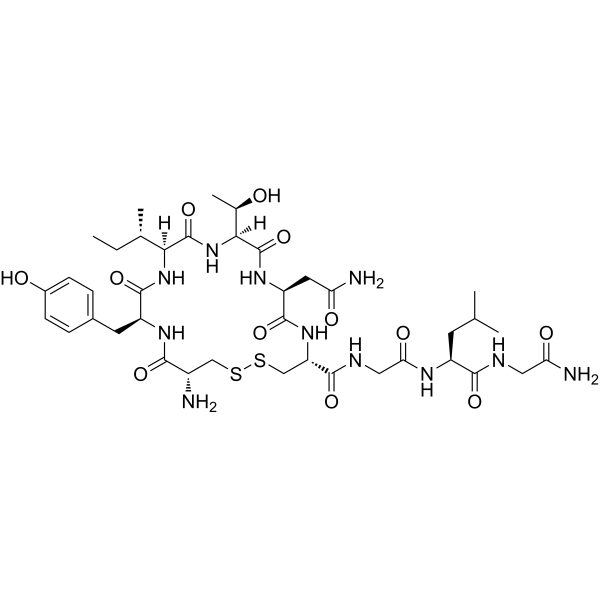
(Thr4,Gly7)-Oxytocin, an Oxytocin analogue, is a specific OT receptor agonist. (Thr4,Gly7)-Oxytocin also excites subicular neurons via activation of TRPV1 channels, and depression of K + channels. .
2
2 Cited Publications
Cat. No.: HY-136241
CAS No.: 1800487-55-1
Purity:  99.87%
Target:  

NAMPT Caspase

Research Areas:  

Cancer

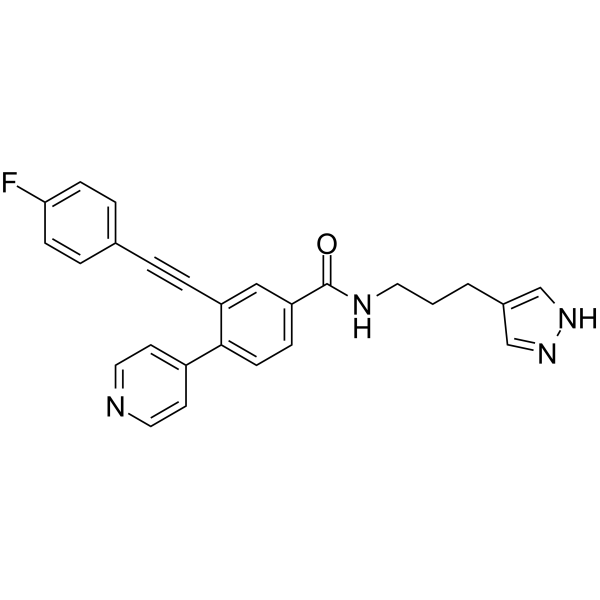
OT-82 is a potent, selective and orally active inhibitor of NAMPT. OT-82 is selectively toxic to cells of hematopoietic origin and?induces cell death in a NAD + dependent manner. OT-82 is a promising antineoplastic agent for the study of hematological malignancies .
2
2 Cited Publications
Cat. No.: HY-17573
CAS No.: 37025-55-1
Target:  

Oxytocin Receptor

Research Areas:  

Neurological Disease Endocrinology

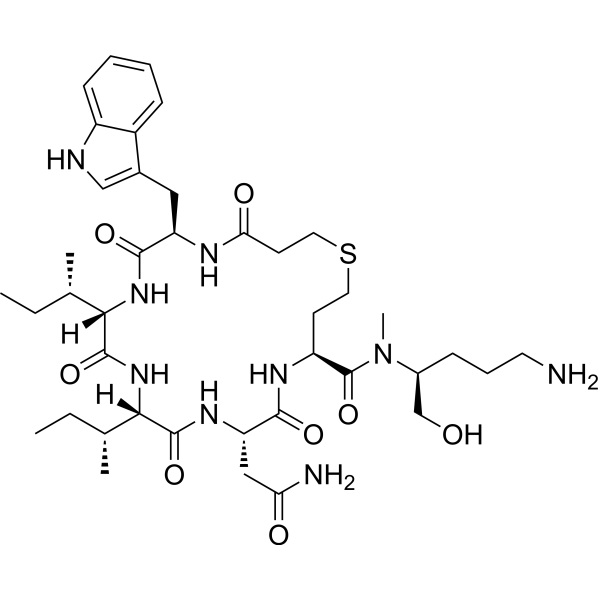
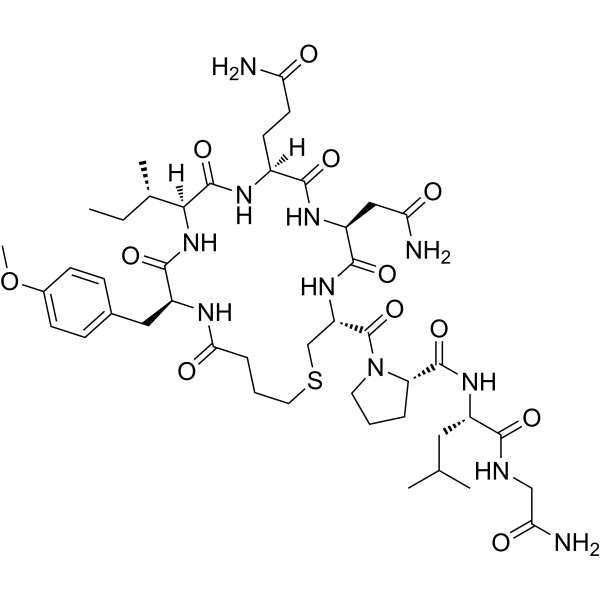
Carbetocin, an oxytocin (OT) analogue, is an oxytocin receptor agonist with a Ki of 7.1 nM. Carbetocin has high affinity to chimeric N-terminus (E1) of the oxytocin receptor (Ki=1.17 μM). Carbetocin has the potential for postpartum hemorrhage research. Carbetocin can crosse the blood-brain barrier and produces antidepressant-like activity via activation of oxytocin receptors in the CNS .
2
2 Cited Publications
Cat. No.: HY-P0004
CAS No.: 50-57-7
Synonyms: Lysine vasopressin; [Lys8]-Vasopressin
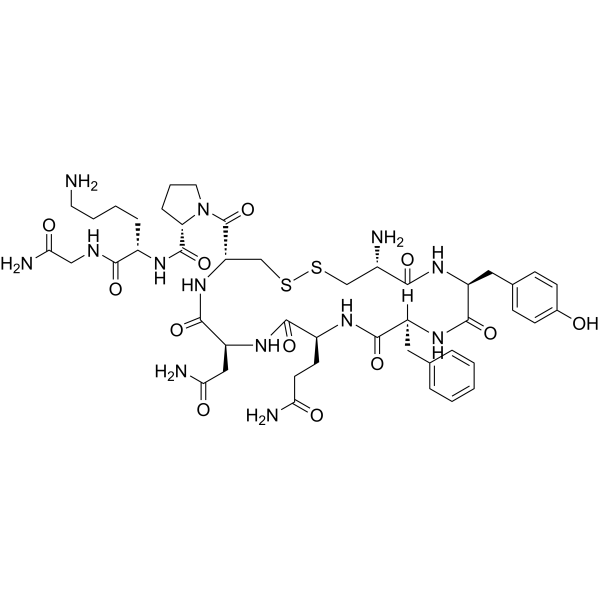
Lysipressin (Lysine vasopressin ; [Lys8]-Vasopressin ) is a neurohypophyseal nonapeptide with dual cardiovascular regulatory activities of peripheral pressor action and central hypotensive action, and it also regulates pain perception in the body. Lysipressin is an Oxytocin Receptor agonist, with a Ki value of 10.2 nM for porcine OT receptor. Lysipressin stimulates contraction of rabbit bladder smooth muscle via V1-vasopressin receptor. The central hypotensive effect of Lysipressin depends on the sympathetic tone pathway. Lysipressin dose-dependently prolongs tail-flick latency in rats, producing a stable central antinociceptive effect. Lysipressin can be used in studies related to cardiovascular regulation, hypertension and pain .
2
2 Cited Publications
Cat. No.: HY-17573A
CAS No.: 1631754-28-3
Target:  

Oxytocin Receptor

Research Areas:  

Neurological Disease Endocrinology

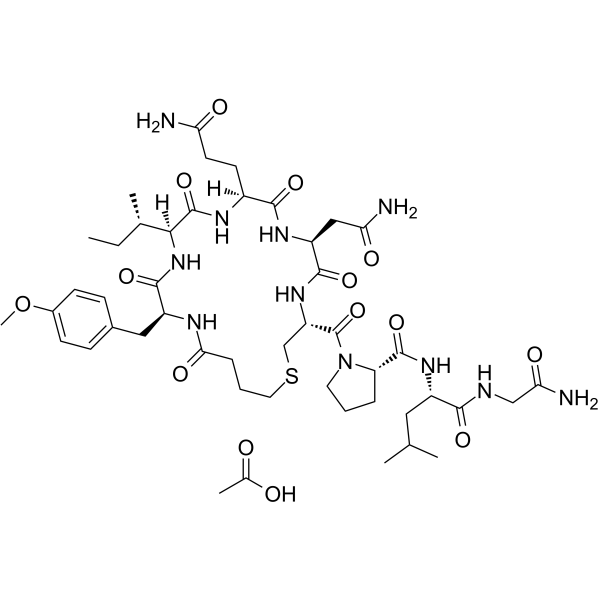
Carbetocin acetate, an oxytocin (OT) analogue, is an oxytocin receptor agonist with a Ki of 7.1 nM. Carbetocin acetate has high affinity to chimeric N-terminus (E1) of the oxytocin receptor (Ki=1.17 μM). Carbetocin acetate has the potential for postpartum hemorrhage research. Carbetocin acetate can crosse the blood-brain barrier and produces antidepressant-like activity via activation of oxytocin receptors in the CNS .
2
2 Cited Publications
Cat. No.: HY-P0004A
CAS No.: 83968-49-4
Synonyms: Lysine vasopressin acetate; [Lys8]-Vasopressin acetate
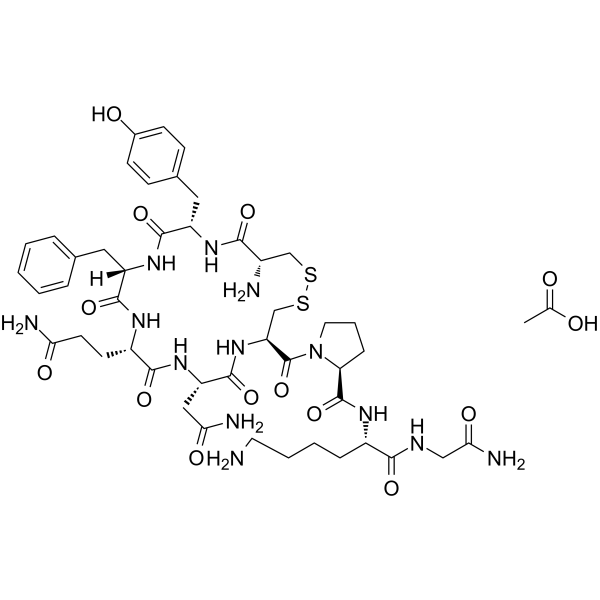
Lysipressin acetate (Lysine vasopressin acetate; [Lys8]-Vasopressin acetate) is a neurohypophyseal nonapeptide with dual cardiovascular regulatory activities of peripheral pressor action and central hypotensive action, and it also regulates pain perception in the body. Lysipressin acetate is an Oxytocin Receptor agonist, with a Ki value of 10.2 nM for porcine OT receptor. Lysipressin acetate stimulates contraction of rabbit bladder smooth muscle via V1-vasopressin receptor. The central hypotensive effect of Lysipressin acetate depends on the sympathetic tone pathway. Lysipressin acetate dose-dependently prolongs tail-flick latency in rats, producing a stable central antinociceptive effect. Lysipressin acetate can be used in studies related to cardiovascular regulation, hypertension and pain .
Cat. No.: HY-124733A
CAS No.: 2245072-21-1
Purity:  98.63%
Target:  

Oxytocin Receptor

Research Areas:  

Neurological Disease

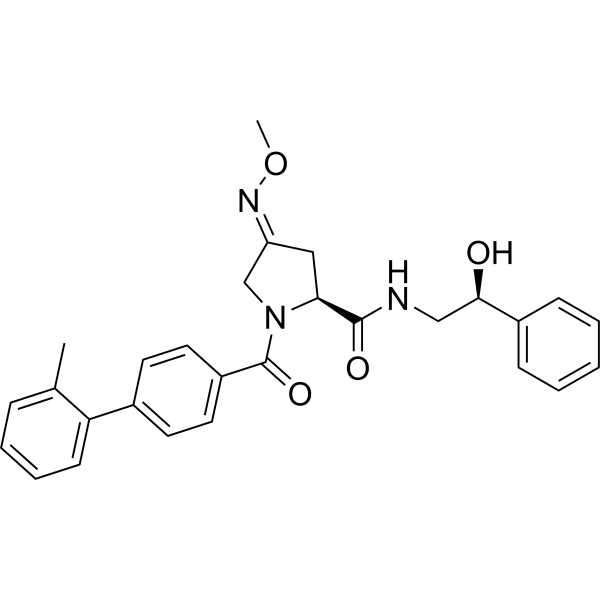
LIT-001 is the first nonpeptide oxytocin receptor (OT-R) agonist (EC50=55 nM; Ki=226 nM). LIT-001 improves social interaction in a mouse model of autism .
Cat. No.: HY-P5411
CAS No.: 148274-88-8
Synonyms: SIITFEKL, OVA (257-264) Variant
Target:  

MHC

Research Areas:  

Others

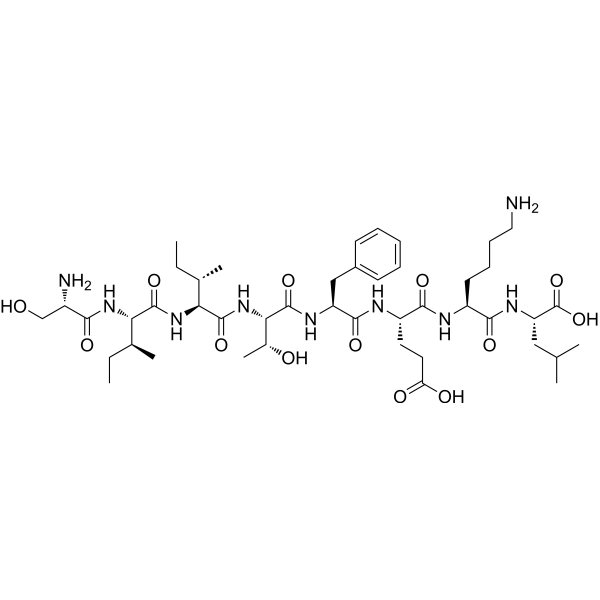
OVA-T4 Peptide (SIITFEKL, OVA (257-264) Variant) is a low-affinity variant of OVA (257-264) (SIINFEKL). OVA-T4 Peptide has similar binding to H-2Kb MHC class I molecules as OVA (257-264), but has a much lower affinity for the OT-I TCR25 .
Cat. No.: HY-108678
CAS No.: 479232-57-0
Purity:  97.7%
TC OT 39 is a synthetic oxytocin analog, as well as a selective agonist of oxytocin receptor (OXTR, EC50=180 nM). TC OT 39 is also an Avprla vasopressin receptor antagonist with an Ki value of 330 nM. TC OT 39 exhibits sedative effects in mouse models .
Cat. No.: HY-P3516
CAS No.: 285571-64-4
Synonyms: FE-200440
Target:  

Oxytocin Receptor

Research Areas:  

Endocrinology

Barusiban (FE-200440) is an oxytocin receptor (OT-R) antagonist (Ki=0.8 nM), inhibits OT-induced contraction. Barusiban can be used in preterm labor (PTL), in vitro fertilisation (IVF) and infertility research .
Cat. No.: HY-P2626
CAS No.: 61370-87-4
Target:  

Opioid Receptor

Research Areas:  

Neurological Disease

[D-Ala2]-Met-Enkephalin, an opioid peptide, is a potent opioid agonist. [D-Ala2]-Met-Enkephalin inhibits ACh-induced and suckling-induced oxytocin (OT) release .
Cat. No.: HY-P10581A
Target:  

MHC

Research Areas:  

Inflammation/Immunology

SIIVFEKL TFA is a variant of the major MHC class I-restricted epitope SIINFEKL. SIIVFEKL TFA is an antigenic peptide, that can stimulate specific T cells in experimental settings to study the competitive interaction between T cells. SIIVFEKL TFA exhibits low affinity for the OT-I T cell receptor (TCR), and can be used for detection of CD8+ T cells .
Cat. No.: HY-P10582A
Target:  

MHC

Research Areas:  

Inflammation/Immunology

SIYNFEKL TFA is a variant of major MHC class I-restricted epitope SIINFEKL. SIYNFEKL TFA is an antigenic peptide, that can stimulate specific T cells in experimental settings to study the competitive interaction between T cell. SIYNFEKL TFA exhibits low affinity for the OT-I T cell receptor (TCR), and can be used for detection of CD8+ T cells .
Cat. No.: HY-15008
CAS No.: 148927-60-0
Target:  

Oxytocin Receptor

Research Areas:  

Endocrinology

L-368,899 is an orally active and selective OT (oxytocin ) receptor antagonist, with IC50s of 8.9 and 26 nM for uterus of rat and human, respectively. L-368,899 can cross the blood-brain barrier (BBB). L-368,899 inhibits oxytocin-stimulated uterine contractions in rats and can be used in study of preterm labor .
Cat. No.: HY-161564
T4/OVA is a conjugate of T4 peptide (thyroxine T4) and ovalbumin. T4/OVA is a altered peptide, which can be used to stimulate OT-I CD8+ T cells .
Cat. No.: HY-15015A
CAS No.: 364071-16-9
Purity:  99.86%
Synonyms: Oxytocin receptor antagonist 2
Target:  

Oxytocin Receptor

Research Areas:  

Endocrinology

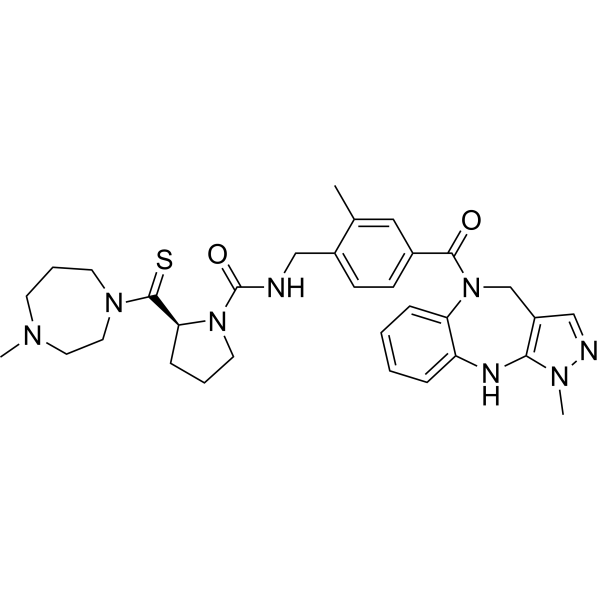
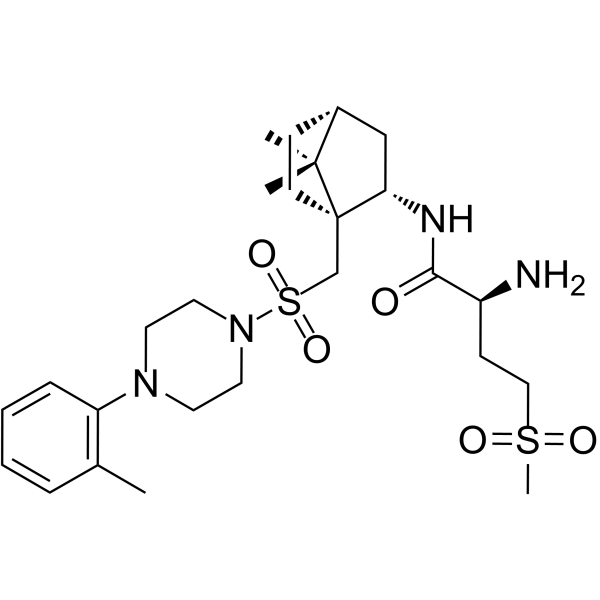
OT-R antagonist 2 is a nonpeptide low molecular weight OT-R antagonist.
Cat. No.: HY-15015
CAS No.: 364071-17-0
Synonyms: Oxytocin receptor antagonist 1
Target:  

Oxytocin Receptor

Research Areas:  

Endocrinology

OT-R antagonist 1 is a new potent and selective nonpeptide low molecular weight OT-R antagonist.
Cat. No.: HY-172814A
CAS No.: 3039925-73-7
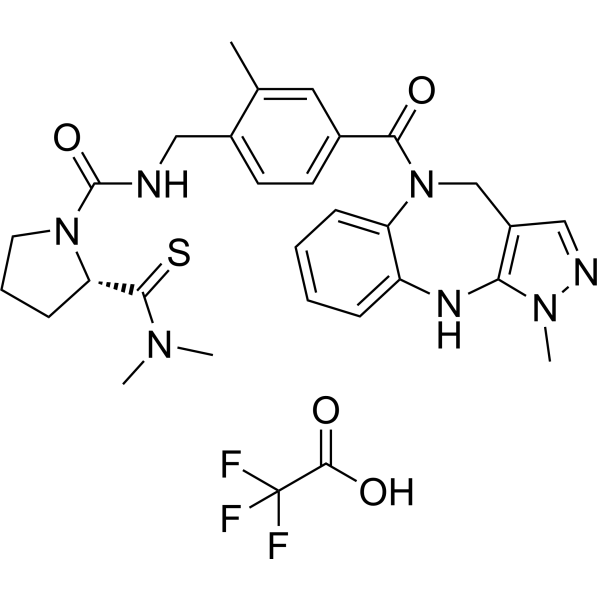
OT-R agonist 1 TFA (compound 5) is an oxytocin receptor agonist with an EC50 of 0.39 nM. OT-R agonist 1 TFA shows V1A antagonist activity with an EC50 of 2432 nM and can be used for study of CNS disorders .
Cat. No.: HY-178327
CAS No.: 3039488-61-1
Target:  

DGK Interleukin Related

Research Areas:  

Inflammation/Immunology Cancer

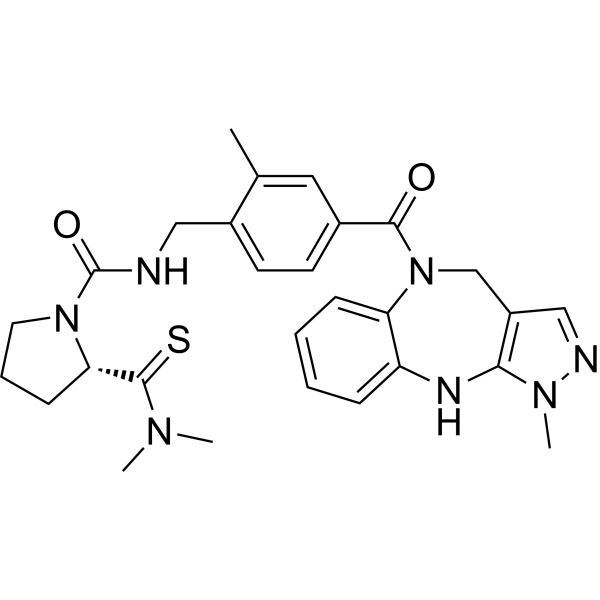
DGKα/ζ-IN-2 is a potent, orally active and selective dual DGKα/ζ inhibitor with IC50 values of 23 nM (DGKα) and 1.2 nM (DGKζ). DGKα/ζ-IN-2 exhibits selectivity over other DGK isoforms, such as DGKβ and DGKγ. DGKα/ζ-IN-2 shows robust and dose-dependent immune activation in the presence of antigen presentation in an OT-1 murine model. DGKα/ζ-IN-2 can be used for antitumor immunity .
Cat. No.: HY-124733
CAS No.: 2245072-20-0
Target:  

Oxytocin Receptor

Research Areas:  

Neurological Disease

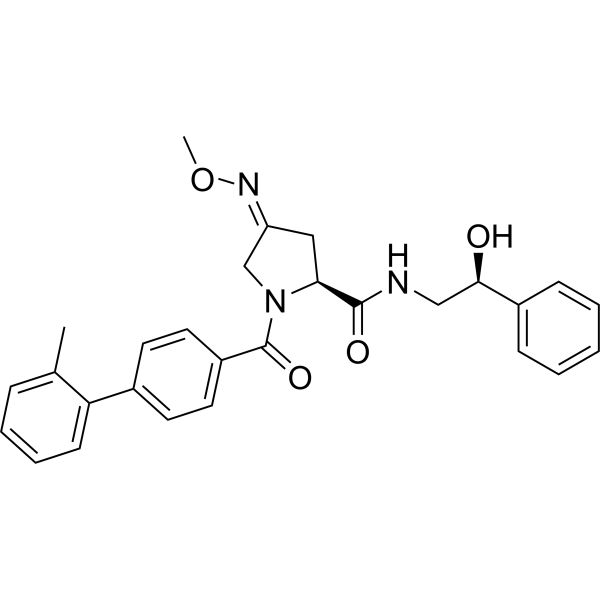
LIT-001 free base is the first nonpeptide oxytocin receptor (OT-R) agonist (EC50=55 nM; Ki=226 nM). LIT-001 free base improves social interaction in a mouse model of autism .