1. Search Result
Search Result
Results for "

P1363

" in MedChemExpress (MCE) Product Catalog:

15

Inhibitors & Agonists

1

Fluorescent Dye

14

Peptides

1

Natural
Products

2

Isotope-Labeled Compounds

Cat. No. Product Name Target Research Areas Chemical Structure
  • HY-P1363B
    β-Amyloid (1-42), human, HFIP-treated
    Maximum Cited Publications
    24 Publications Verification

    Amyloid-β Neurological Disease
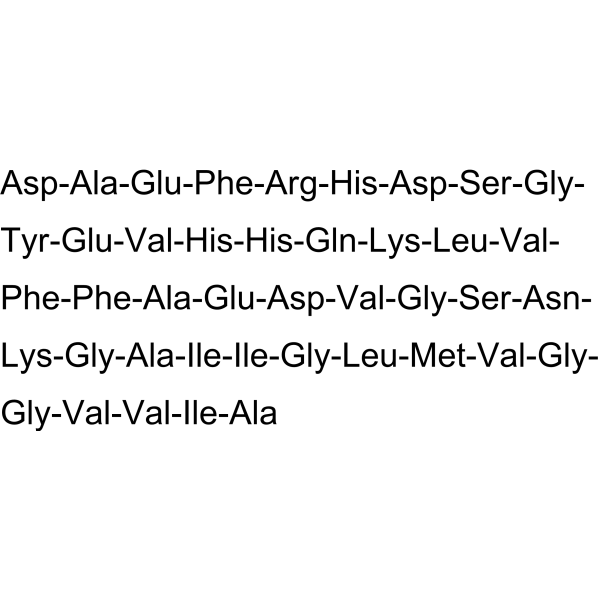
    β-Amyloid (1-42), human, HFIP-treated, a 42-amino acid peptide that has been treated with HFIP from β-Amyloid (1-42), human (HY-P1363A), is a brain-penetrant amyloid protein fragment, which can be used in research on Alzheimer's disease and Down’s syndrome. β-Amyloid (1-42), human, HFIP-treated remaining as a monomer exhibits antioxidant and neuroprotective effects. β-Amyloid (1-42), human, HFIP-treated, after being dissolved in DMSO to form the stock solution, on the one hand, can form soluble oligomers (AβOs) when incubated at 4°C, which have synaptic toxicity and neurotoxicity; on the other hand, it can be incubated at 37°C to form insoluble fibrils, with lower neurotoxicity, and participating in the oxidative damage process. Aβ42 oligomers bind to various neuronal surface receptors (such as PrPc, mGluR5, NMDA receptors, etc.), triggering oxidative stress, calcium homeostasis imbalance, and synaptic toxicity via activating downstream signaling pathways, leading to neuronal dysfunction and death .
    β-Amyloid (1-42), human, HFIP-treated
  • HY-P1363
    β-Amyloid (1-42), human TFA
    Maximum Cited Publications
    24 Publications Verification

    Amyloid β-peptide (1-42) (human) TFA

    Amyloid-β Neurological Disease
    β-Amyloid (1-42) (Amyloid β-peptide (1-42), human TFA, a 42-amino acid peptide that has not been treated with HFIP, is a brain-penetrant amyloid protein fragment, which can be used in research on Alzheimer's disease and Down’s syndrome. β-Amyloid (1-42), human TFA remaining as a monomer exhibits antioxidant and neuroprotective effects. β-Amyloid (1-42), human TFA, after being monomericized by HFIP and dissolved in DMSO to form the stock solution, on the one hand, can form soluble oligomers (AβOs) when incubated at 4 °C, which have synaptic toxicity and neurotoxicity; on the other hand, it can be incubated at 37 °C to form insoluble fibrils, with lower neurotoxicity, and participating in the oxidative damage process. Aβ42 oligomers bind to various neuronal surface receptors (such as PrPc, mGluR5, NMDA receptors, etc.), triggering oxidative stress, calcium homeostasis imbalance, and synaptic toxicity via activating downstream signaling pathways, leading to neuronal dysfunction and death .
    β-Amyloid (1-42), human TFA
  • HY-P1363A
    β-Amyloid (1-42), human
    Maximum Cited Publications
    24 Publications Verification

    Amyloid β-peptide (1-42) (human)

    Amyloid-β Neurological Disease
    β-Amyloid (1-42) (Amyloid β-peptide (1-42)), human, a 42-amino acid peptide that has not been treated with HFIP, is a brain-penetrant amyloid protein fragment, which can be used in research on Alzheimer's disease and Down’s syndrome. β-Amyloid (1-42), human remaining as a monomer exhibits antioxidant and neuroprotective effects. β-Amyloid (1-42), human, after being monomericized by HFIP and dissolved in DMSO to form the stock solution, on the one hand, can form soluble oligomers (AβOs) when incubated at 4 °C, which have synaptic toxicity and neurotoxicity; on the other hand, it can be incubated at 37 °C to form insoluble fibrils, with lower neurotoxicity, and participating in the oxidative damage process. Aβ42 oligomers bind to various neuronal surface receptors (such as PrPc, mGluR5, NMDA receptors, etc.), triggering oxidative stress, calcium homeostasis imbalance, and synaptic toxicity via activating downstream signaling pathways, leading to neuronal dysfunction and death .
    β-Amyloid (1-42), human
  • HY-P1363F3

    5-FAM-Amyloid β-peptide (1-42) (human) Tris

    Amyloid-β Neurological Disease
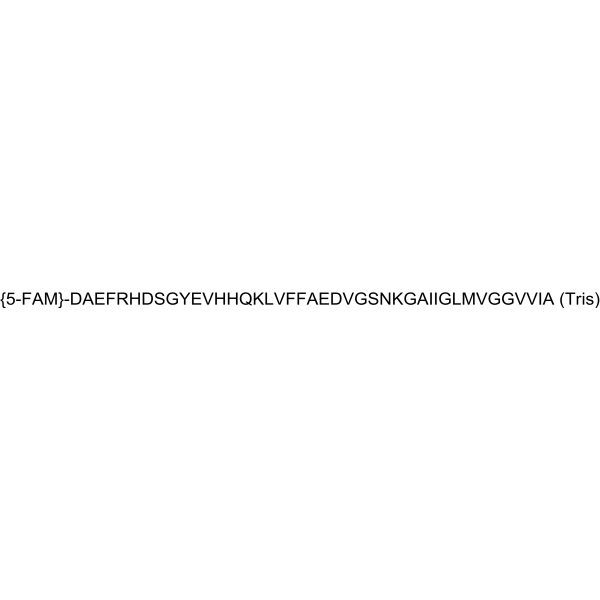
    5-FAM-β-Amyloid (1-42), human (5-FAM-Amyloid β-peptide (1-42) (human) TFA is a5-FAM labeled β-Amyloid (1-42), human TFA (HY-P1363).
    5-FAM-β-Amyloid (1-42), human Tris
  • HY-P1363F1

    Biotin-amyloid β-peptide (1-42) (human) TFA

    Amyloid-β Neurological Disease
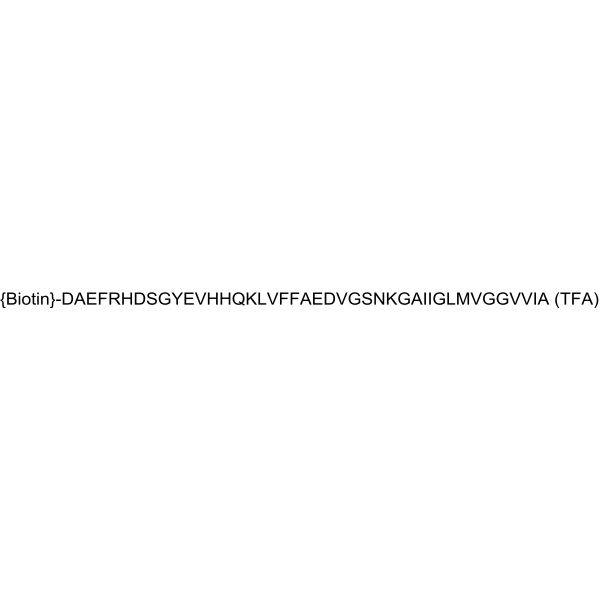
    Biotin-β-Amyloid (1-42), human TFA (Biotin-Amyloid β-Peptide (1-42) (human) TFA) is the botin labeled β-Amyloid (1-42), human TFA (HY-P1363). β-Amyloid (1-42), human TFA is a 42-amino acid peptide which plays a key role in the pathogenesis of Alzheimer disease .
    Biotin-β-Amyloid (1-42), human TFA
  • HY-P1363S

    Amyloid β-peptide-15N (1-42) (human) TFA

    Amyloid-β Neurological Disease
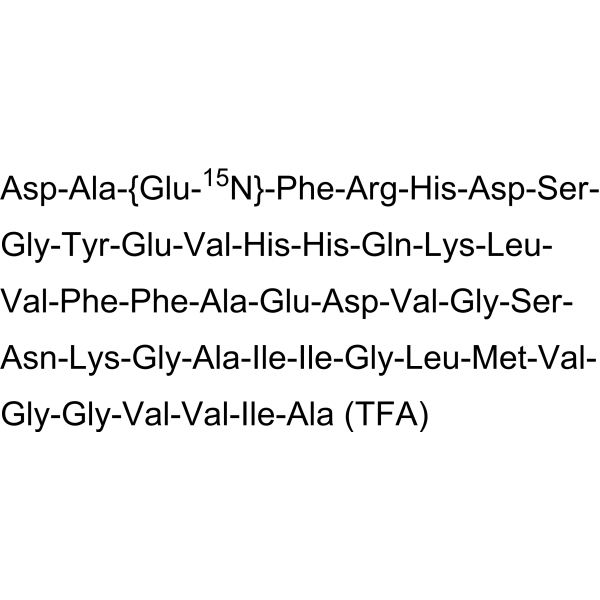
    β-Amyloid- 15N (1-42), human (TFA) is the 15N-labledβ-Amyloid (1-42) (TFA). β-Amyloid (1-42), human TFA (Amyloid β-Peptide (1-42) (human) TFA) is a 42-amino acid peptide which plays a key role in the pathogenesis of Alzheimer disease .
    β-Amyloid-15N (1-42), human TFA
  • HY-P1363S1

    Isotope-Labeled Compounds Amyloid-β Neurological Disease
    β-Amyloid (1-42), human, Ala( 13C3, 15N) TFA is the 13C and 15N-labeled β-Amyloid (1-42), human (HY-P1363A). β-Amyloid (1-42) (Amyloid β-peptide (1-42)), human, a 42-amino acid peptide that has not been treated with HFIP, is a brain-penetrant amyloid protein fragment, which can be used in research on Alzheimer's disease and Down’s syndrome. β-Amyloid (1-42), human remaining as a monomer exhibits antioxidant and neuroprotective effects. β-Amyloid (1-42), human, after being monomericized by HFIP and dissolved in DMSO to form the stock solution, on the one hand, can form soluble oligomers (AβOs) when incubated at 4 °C, which have synaptic toxicity and neurotoxicity; on the other hand, it can be incubated at 37 °C to form insoluble fibrils, with lower neurotoxicity, and participating in the oxidative damage process. Aβ42 oligomers bind to various neuronal surface receptors (such as PrPc, mGluR5, NMDA receptors, etc.), triggering oxidative stress, calcium homeostasis imbalance, and synaptic toxicity via activating downstream signaling pathways, leading to neuronal dysfunction and death .
    β-Amyloid (1-42), human, Ala(13C3,15N) TFA
  • HY-P4867A

    Amyloid-β Neurological Disease
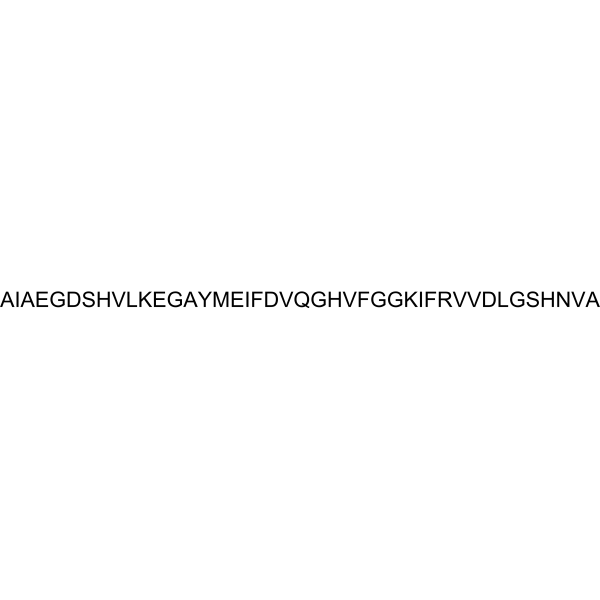
    β Amyloid (1-42) (scrambled) TFA is a negative control of β-Amyloid (1-42), human TFA (HY-P1363) .
    β Amyloid (1-42) (scrambled) TFA
  • HY-P5905

    Citrullinated Aβ (1-42); Citrullinated Aβ42

    Amyloid-β Neurological Disease
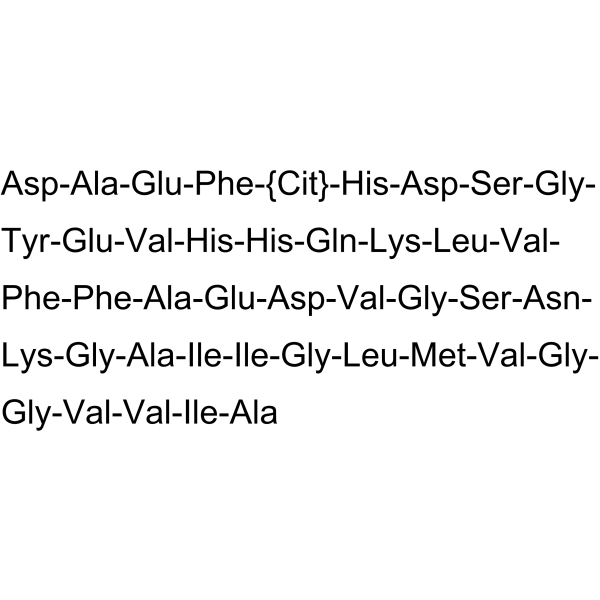
    Citrullinated amyloid-β (1-42) peptide (human) (Citrullinated Aβ (1-42)) is a modified form of β-Amyloid (1-42) (HY-P1363) with a citrullination at the Arg5 site. Compared to the unmodified β-Amyloid (1-42), its formation of soluble low-molecular-weight oligomers is enhanced, the rate of fibril formation is reduced, and like unmodified Aβ42, it forms protofibrils comprised of parallel β-sheets .
    Citrullinated amyloid-β (1-42) peptide (human)
  • HY-P4867

    Amyloid-β Neurological Disease
    β Amyloid (1-42) (scrambled) is a negative control of β-Amyloid (1-42), human (HY-P1363A) .
    β Amyloid (1-42) (scrambled)
  • HY-P4861

    Amyloid-β Others
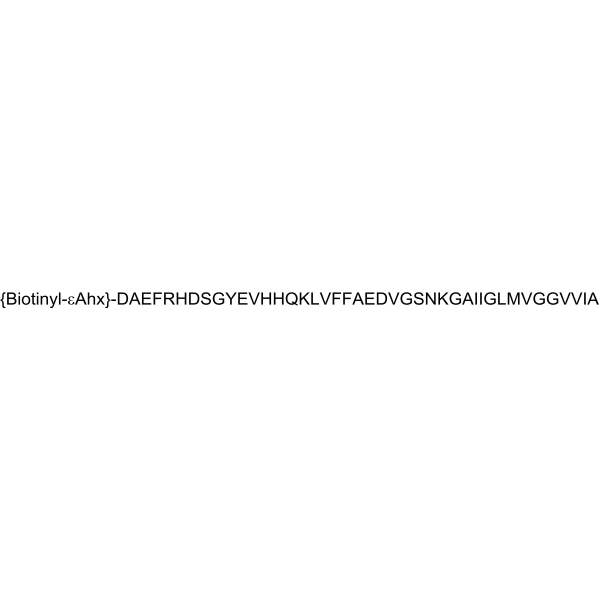
    Biotinyl-Ahx-Amyloid β-Protein (1-42) is abiotinylated β-Amyloid (1-42), human (TFA) (HY-P1363).
    Biotinyl-Ahx-Amyloid β-Protein (1-42)
  • HY-P4585

    Amyloid-β Neurological Disease
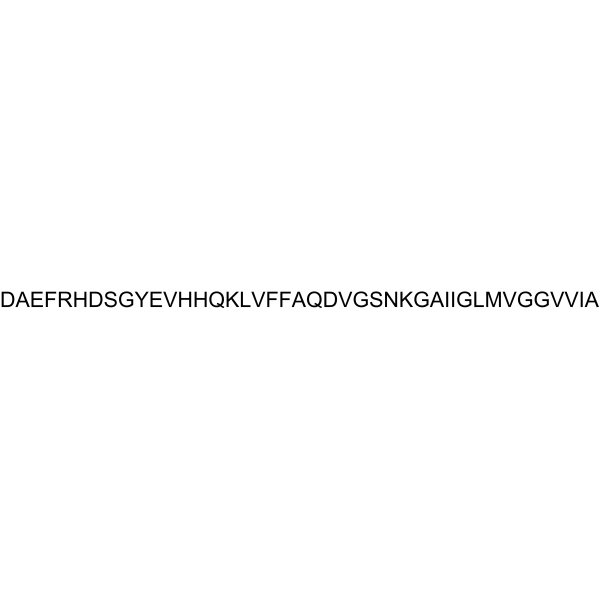
    (Gln22)-Amyloid β-Protein (1-42) is a Dutch mutation (E22Q) form of β-Amyloid (1-42) (HY-P1363). (Gln22)-Amyloid β-Protein (1-42) exhibits enhanced fibrillogenic and pathogenic properties .
    (Gln22)-Amyloid β-Protein (1-42)
  • HY-P3860

    Amyloid-β Neurological Disease
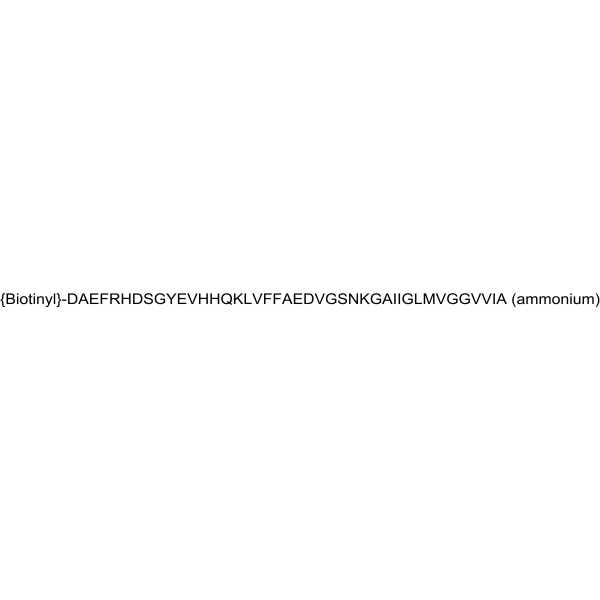
    Biotinyl-Amyloid β-Protein (1-42) ammonium is a biotinylated Amyloid β-Protein (1-42) (HY-P1363). Biotinyl-Amyloid β-Protein (1-42) ammonium can be used for the research of Aβ1-42 converts to Aβ1-40 in brain .
    Biotinyl-Amyloid β-Protein (1-42) ammonium
  • HY-P10823

    Amyloid-β Neurological Disease
    RI-OR2, a retro-inverso peptide, is an amyloid-β (Aβ) oligomerization inhibitor. RI-OR2 binds to immobilized β-Amyloid (1-42) (HY-P1363A) monomers and fibrils, with an apparent Kd of 9-12 μM, and also acted as an inhibitor of Aβ(1-42) fibril extension .
    RI-OR2
  • HY-N7999

    Others Neurological Disease
    Schisandrastemoside A (Compound 3) is a lignan found in the rattan stems of Schisandra chinensis. Schisandrastemoside A shows neuroprotective efect and protects cells against Amyloid-beta 1-42 (HY-P1363A)-induced neurotoxicity. Schisandrastemoside A can be used for the research of Alzheimer's disease .
    Schisandrastemoside A

Inquiry Online

Your information is safe with us. * Required Fields.

Salutation


Country or Region *

Applicant Name *


Organization Name *

Department *


Email Address *


Product Name *

Cat. No.


Requested quantity *

Phone Number *


Remarks

Inquiry Online

Inquiry Information

Product Name:
Cat. No.:
Quantity:
MCE Japan Authorized Agent:

