23 Results for "

PBP3

" in MedChemExpress (MCE) Product Catalog:
Products (23)

23 Results for "PBP3" in MCE Product Catalog:

20
20 Publications Verification
Cat. No.: HY-B0129
CAS No.: 78110-38-0
Synonyms: SQ-26,776
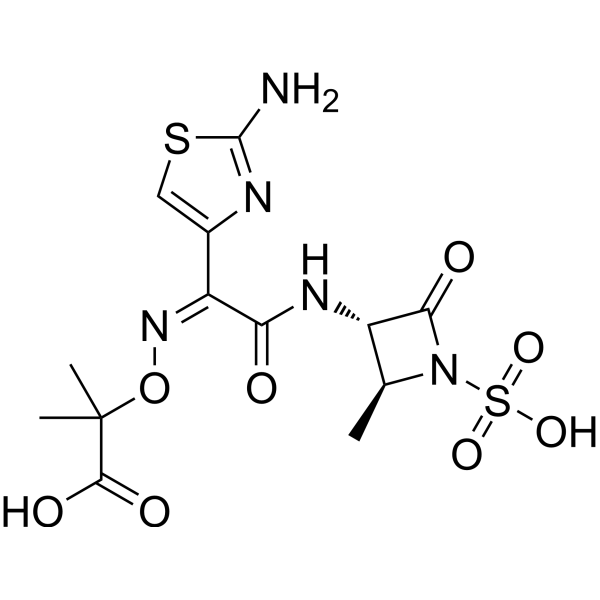
Aztreonam (SQ-26,776) is a synthetic monocyclic beta-lactam antibiotic, which has a very high affinity for penicillin-binding protein 3 (PBP-3).
loading...
    loading...
2
2 Cited Publications
Cat. No.: HY-B0198
CAS No.: 53994-73-3
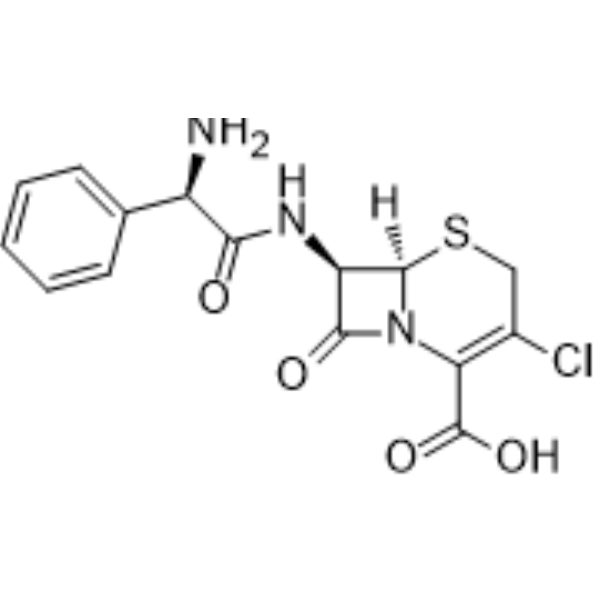
Cefaclor is a well-absorbed orally active cephalosporin antibiotic. Cefaclor can specifically bind to specific for penicillin-binding protein 3 (PBP3). Cefaclor can be used for the research of depression and kinds of infections caused by bacteria, such as respiratory tract infections, bacterial bronchitis, pharyngitis and skin infections [3] .
loading...
    loading...
2
2 Cited Publications
Cat. No.: HY-B0198A
CAS No.: 70356-03-5
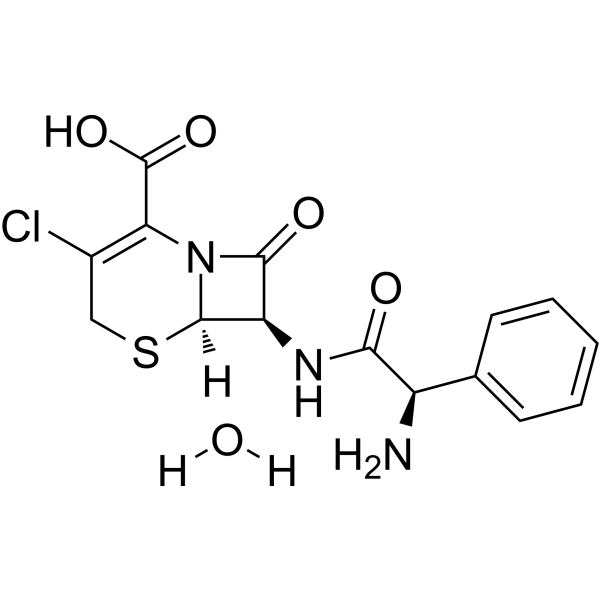
Cefaclor is a well-absorbed orally active cephalosporin antibiotic. Cefaclor can specifically bind to specific for penicillin-binding protein 3 (PBP3). Cefaclor can be used for the research of depression and kinds of infections caused by bacteria, such as respiratory tract infections, bacterial bronchitis, pharyngitis and skin infections [3] .
loading...
    loading...
1
1 Cited Publications
Cat. No.: HY-A0111
CAS No.: 65052-63-3
Synonyms: Ro 15-8074; Deacetoxycefotaxime
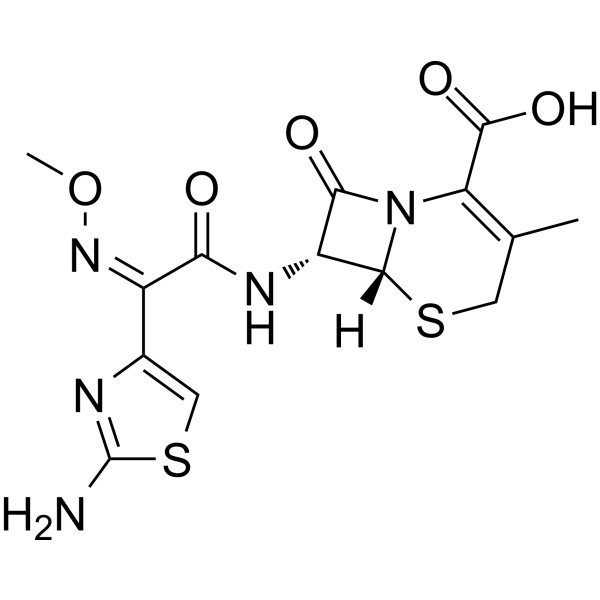
Cefetamet (Ro 15-8074) is a cephalosporin antibiotic and the active metabolite of Cefetamet pivoxil (HY-B1894A). Cefetamet binds to bacterial penicillin-binding protein (PBP) (IC50 for PBP3 in Escherichia coli W3110 is 2.5 μg/mL). Cefetamet has significant activity against Gram-negative bacteria such as Enterobacteriaceae, Neisseria species, and Haemophilus influenzae, as well as Gram-positive bacteria such as Streptococcus. Cefetamet kills and lyses Treponema pallidum. Cefetamet can be used in the research of respiratory tract, urinary tract, ear, nose and throat infections, and syphilis [3] .
loading...
    loading...
Cat. No.: HY-B1325
CAS No.: 64544-07-6
Target:  

Bacterial Antibiotic

Research Areas:  

Infection Inflammation/Immunology

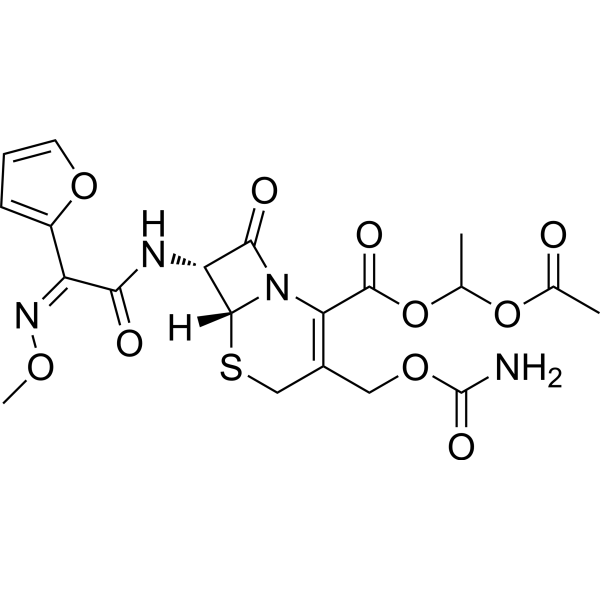
Cefuroxime axetil is an orally effective broad-spectrum β-lactam antibiotic that targets bacterial penicillin-binding proteins (PBPs, such as PBP3 and PBP1). Cefuroxime axetil inhibits cell wall synthesis, leading to bacterial lysis and death, with a minimum inhibitory concentration (MIC) of 0.12-4 mg/L for non-typeable Haemophilus influenzae (NTHi). Cefuroxime axetil is hydrolyzed by esterase to the active ingredient Cefuroxime (HY-B1256A) after oral absorption. Topical administration of Cefuroxime via bioadhesive nanoparticles (BNPs) can prolong the drug's retention time in the middle ear (≥7 days). Cefuroxime axetil can be used in the study of otitis media (especially NTHi infection). Cefuroxime axetil can achieve precise antibacterial effects through oral or topical nano-delivery systems, reducing systemic exposure and the risk of antibiotic resistance [3].
loading...
    loading...
Cat. No.: HY-B0129S
CAS No.: 1127452-94-1
Synonyms: SQ-26,776-d6
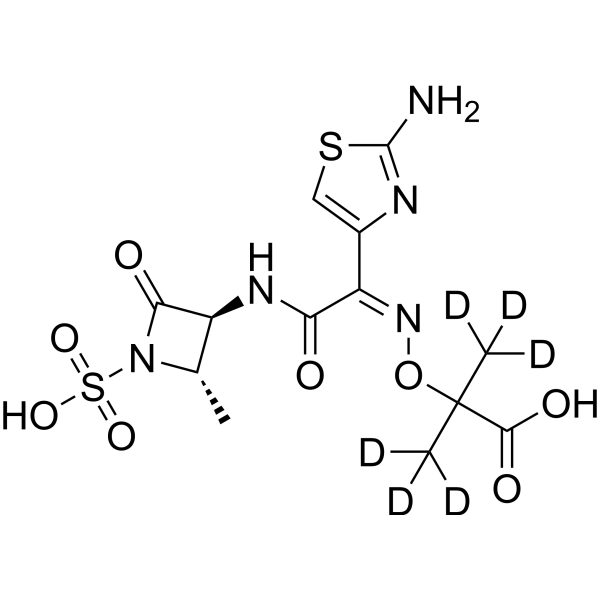
Aztreonam-d6 is deuterium labeled Aztreonam. Aztreonam (SQ-26,776) is a synthetic monocyclic beta-lactam antibiotic, which has a very high affinity for penicillin-binding protein 3 (PBP-3).
loading...
    loading...
Cat. No.: HY-D0184R
CAS No.: 951-77-9
Synonyms: Deoxycytidine (Standard); Cytosine deoxyriboside (Standard); Deoxyribose cytidine (Standard)
Cefaclor (monohydrate) (Standard) is the analytical standard of Cefaclor (monohydrate). This product is intended for research and analytical applications. Cefaclor is a well-absorbed orally active cephalosporin antibiotic. Cefaclor can specifically bind to specific for penicillin-binding protein 3 (PBP3). Cefaclor can be used for the research of depression and kinds of infections caused by bacteria, such as respiratory tract infections, bacterial bronchitis, pharyngitis and skin infections [3] .
loading...
    loading...
Cat. No.: HY-B0129R
CAS No.: 78110-38-0
Synonyms: SQ-26,776 (Standard)
Aztreonam (Standard) is the analytical standard of Aztreonam. This product is intended for research and analytical applications. Aztreonam (SQ-26,776) is a synthetic monocyclic beta-lactam antibiotic, which has a very high affinity for penicillin-binding protein 3 (PBP-3).
loading...
    loading...
Cat. No.: HY-129949
CAS No.: 827611-49-4
Target:  

Antibiotic Bacterial

Research Areas:  

Infection Cancer

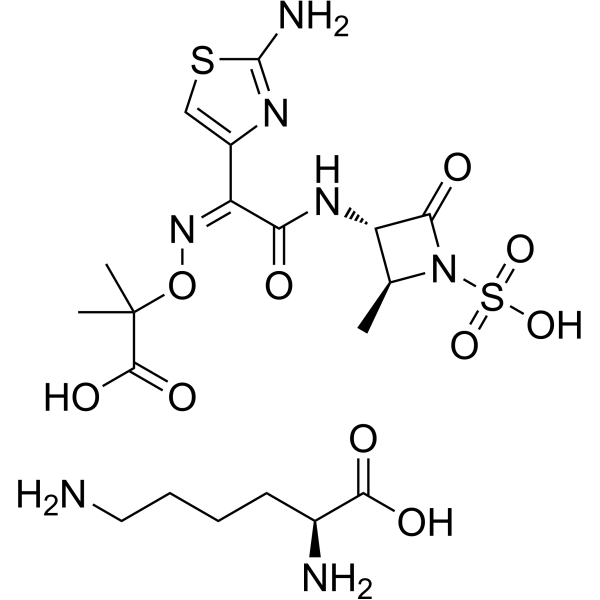
Aztreonam (lysine) is a monocyclic beta-lactam antibiotic, and has a very high affinity for penicillin-binding protein 3 (PBP-3). Aztreonam (lysine) is active against Gram-negative aerobic bacteria .
loading...
    loading...
Cat. No.: HY-106095
CAS No.: 102253-70-3
DQ 2556 is a semi-synthetic cephalosporin antibiotic. DQ-2556 exhibits significant activity against both Gram-positive and Gram-negative bacteria, particularly Gram-positive bacteria and Enterobacteriaceae infections. DQ 2556 exerts its bactericidal effect by interfering with cell division. DQ-2556 has a strong affinity for the penicillin-binding proteins (PBPs) of Escherichia coli: PBP1A/1B (IC₅₀ = 0.57-0.73 μg/mL) and PBP3 (IC₅₀ = 0.088 μg/mL). DQ-2556 demonstrates significant in vivo protective effects. DQ-2556 can be used in the development of injectable cephalosporins .
loading...
    loading...
Cat. No.: HY-W743473
Synonyms: Ro 15-8074-d3; Deacetoxycefotaxime-d3
Cefetamet-d3 (Ro 15-8074-d3; Deacetoxycefotaxime-d3) is the deuterium labeled Cefetamet (HY-A0111). Cefetamet (Ro 15-8074) is a cephalosporin antibiotic and the active metabolite of Cefetamet pivoxil (HY-B1894A). Cefetamet binds to bacterial penicillin-binding protein (PBP) (IC50 for PBP3 in Escherichia coli W3110 is 2.5 μg/mL). Cefetamet has significant activity against Gram-negative bacteria such as Enterobacteriaceae, Neisseria species, and Haemophilus influenzae, as well as Gram-positive bacteria such as Streptococcus. Cefetamet kills and lyses Treponema pallidum. Cefetamet can be used in the research of respiratory tract, urinary tract, ear, nose and throat infections, and syphilis [3] .
loading...
    loading...
Cat. No.: HY-B0198R
CAS No.: 53994-73-3
Cefaclor (Standard) is the analytical standard of Cefaclor. This product is intended for research and analytical applications. Cefaclor is a well-absorbed orally active cephalosporin antibiotic. Cefaclor can specifically bind to specific for penicillin-binding protein 3 (PBP3). Cefaclor can be used for the research kinds of infections caused by bacteria, such as respiratory tract infections, bacterial bronchitis, pharyngitis and skin infections [3].
loading...
    loading...
Cat. No.: HY-B0198AR
CAS No.: 70356-03-5
Cefaclor (monohydrate) (Standard) is the analytical standard of Cefaclor (monohydrate). This product is intended for research and analytical applications. Cefaclor is a well-absorbed orally active cephalosporin antibiotic. Cefaclor can specifically bind to specific for penicillin-binding protein 3 (PBP3). Cefaclor can be used for the research of depression and kinds of infections caused by bacteria, such as respiratory tract infections, bacterial bronchitis, pharyngitis and skin infections [3] .
loading...
    loading...
Cat. No.: HY-A0111A
CAS No.: 65243-25-6
Synonyms: Ro15-8074/001; Deacetoxycefotaxime sodium
Cefetamet (Ro 15-8074) sodium is a cephalosporin antibiotic and the active metabolite of Cefetamet pivoxil (HY-B1894A). Cefetamet sodium binds to bacterial penicillin-binding protein (PBP) (IC50 for PBP3 in Escherichia coli W3110 is 2.5 μg/mL). Cefetamet sodium has significant activity against Gram-negative bacteria such as Enterobacteriaceae, Neisseria species, and Haemophilus influenzae, as well as Gram-positive bacteria such as Streptococcus. Cefetamet sodium kills and lyses Treponema pallidum. Cefetamet sodium can be used in the research of respiratory tract, urinary tract, ear, nose and throat infections, and syphilis [3] .
loading...
    loading...
Cat. No.: HY-A0111B
CAS No.: 724438-16-8
Synonyms: Ro 15-8074 hydrochloride; Deacetoxycefotaxime hydrochloride
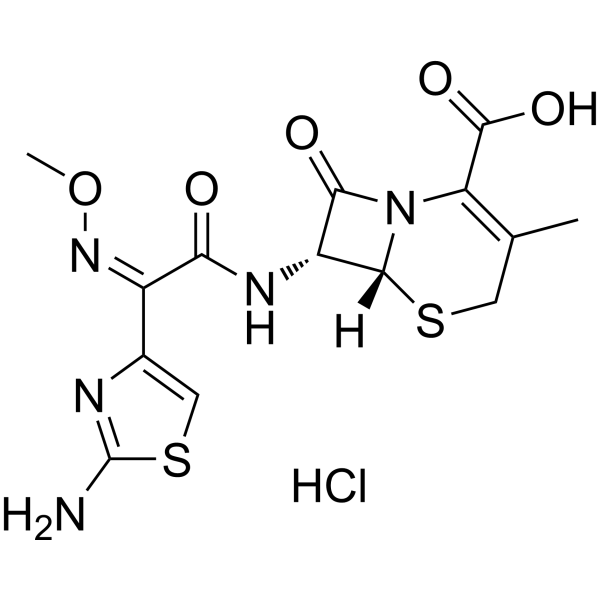
Cefetamet (Ro 15-8074) hydrochloride is a cephalosporin antibiotic and the active metabolite of Cefetamet pivoxil (HY-B1894A). Cefetamet hydrochloride binds to bacterial penicillin-binding protein (PBP) (IC50 for PBP3 in Escherichia coli W3110 is 2.5 μg/mL). Cefetamet hydrochloride has significant activity against Gram-negative bacteria such as Enterobacteriaceae, Neisseria species, and Haemophilus influenzae, as well as Gram-positive bacteria such as Streptococcus. Cefetamet hydrochloride kills and lyses Treponema pallidum. Cefetamet hydrochloride can be used in the research of respiratory tract, urinary tract, ear, nose and throat infections, and syphilis [3] .
loading...
    loading...
Cat. No.: HY-182396
CAS No.: 2408801-88-5
Research Areas:  

Infection

YU253434 is a PBP3 inhibitor with an IC50 of 2.5 μM against Pseudomonas aeruginosa PBP3. YU253434 contains a siderophore domain that facilitates its uptake into the periplasmic space of Gram-negative bacilli. YU253434 exhibits antibacterial activity against multidrug-resistant Gram-negative bacilli. YU253434 can be used in studies of multidrug-resistant Gram-negative bacterial infections .
loading...
    loading...
Cat. No.: HY-A0111R
CAS No.: 65052-63-3
Synonyms: Ro 15-8074 (Standard); Deacetoxycefotaxime (Standard)
Cefetamet (Standard) is the analytical standard of Cefetamet (HY-A0111). This product is intended for research and analytical applications. Cefetamet (Ro 15-8074) is a cephalosporin antibiotic and the active metabolite of Cefetamet pivoxil (HY-B1894A). Cefetamet binds to bacterial penicillin-binding protein (PBP) (IC50 for PBP3 in Escherichia coli W3110 is 2.5 μg/mL). Cefetamet has significant activity against Gram-negative bacteria such as Enterobacteriaceae, Neisseria species, and Haemophilus influenzae, as well as Gram-positive bacteria such as Streptococcus. Cefetamet kills and lyses Treponema pallidum. Cefetamet can be used in the research of respiratory tract, urinary tract, ear, nose and throat infections, and syphilis [3] .
loading...
    loading...
Cat. No.: HY-181715
Research Areas:  

Infection

PBP1b-IN-1 is a penicillin-binding protein inhibitor, with an IC50 of 0.042 μM against PBP1b of Streptococcus pneumoniae and an IC50 of 7.6 μM against PBP3 of Escherichia coli. PBP1b-IN-1 exerts antibacterial activity by targeting penicillin-binding proteins to inhibit bacterial peptidoglycan cross-linking. PBP1b-IN-1 can be used in studies related to bacterial infections .
loading...
    loading...
Cat. No.: HY-B0198S
CAS No.: 1426173-90-1
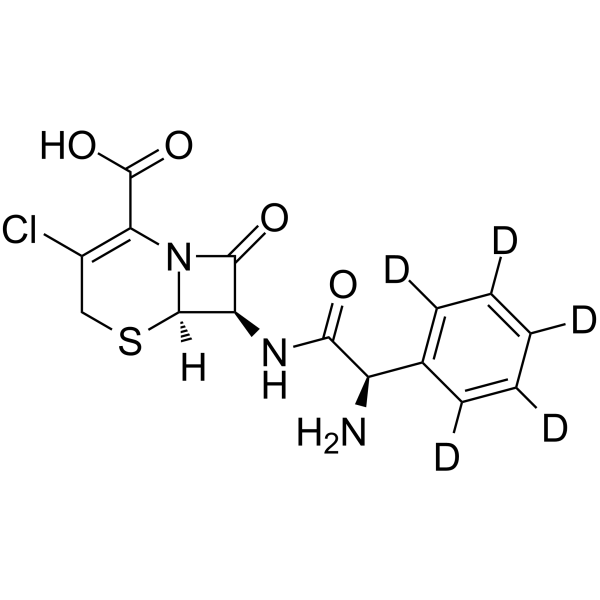
Cefaclor-d5 is the deuterium labeled Cefaclor. Cefaclor is an effective antibiotic agent, and specifically binds to penicillin-binding protein 3 (PBP 3) .
loading...
    loading...
Cat. No.: HY-116519
CAS No.: 126165-78-4
Target:  

Bacterial

Research Areas:  

Infection

LY173013 is an antibacterial agent with a broad spectrum antibacterial activity. LY173013 binds to PBP 3 of E.coli and can be utilized in antibacterial research .
loading...
    loading...

