1. Search Result
Search Result
Results for "

PH 6.5

" in MedChemExpress (MCE) Product Catalog:

21

Inhibitors & Agonists

2

Fluorescent Dyes

2

Biochemical Assay Reagents

1

Peptides

1

Isotope-Labeled Compounds

2

Oligonucleotides

Targets Recommended:
Cat. No. Product Name Target Research Areas Chemical Structure
  • HY-15295
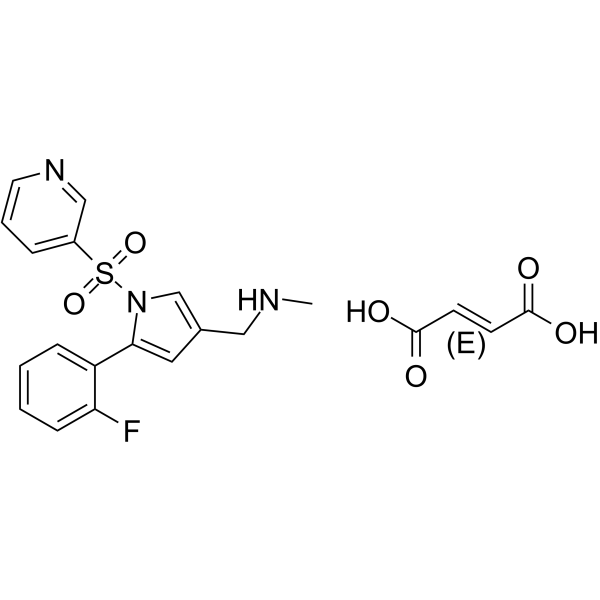
    Vonoprazan Fumarate
    Maximum Cited Publications
    6 Publications Verification

    TAK-438

    Proton Pump Metabolic Disease Cancer
    Vonoprazan Fumarate (TAK-438), a proton pump inhibitor (PPI), is a potent and orally active potassium-competitive acid blocker (P-CAB), with antisecretory activity. Vonoprazan Fumarate inhibits H +,K +-ATPase activity in porcine gastric microsomes with an IC50 of 19 nM at pH 6.5. Vonoprazan Fumarate is developed for the research of acid-related diseases, such as gastroesophageal reflux disease and peptic ulcer disease .
    Vonoprazan Fumarate
  • HY-100007
    Vonoprazan
    Maximum Cited Publications
    6 Publications Verification

    TAK-438 free base

    Proton Pump Bacterial Endocrinology Cancer
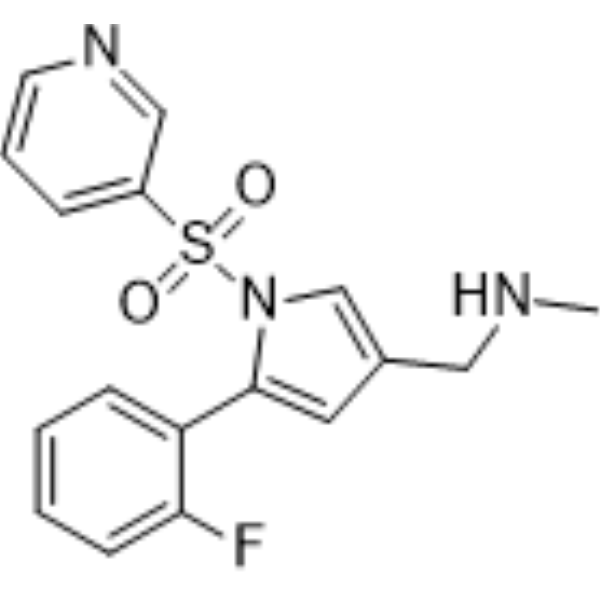
    Vonoprazan (TAK-438 free base), a proton pump inhibitor (PPI), is a potent and orally active potassium-competitive acid blocker (P-CAB), with antisecretory activity. Vonoprazan inhibits H +,K +-ATPase activity in porcine gastric microsomes with an IC50 of 19 nM at pH 6.5. Vonoprazan is developed for the research of acid-related diseases, such as gastroesophageal reflux disease and peptic ulcer disease. Vonoprazan can be used for eradication of Helicobacter pylori .
    Vonoprazan
  • HY-B1610M

    Biochemical Assay Reagents Others
    Sodium Citrate Buffer, 0.5M, pH 6.5 is a commonly used buffer composed of citric acid and sodium citrate. Sodium Citrate Buffer, 0.5M, pH 6.5 is widely used in molecular biology, immunohistochemistry (IHC), and biochemistry .
    Sodium Citrate Buffer, 0.5M, pH 6.5
  • HY-100007A
    Vonoprazan hydrochloride
    Maximum Cited Publications
    6 Publications Verification

    TAK-438 hydrochloride

    Proton Pump Bacterial Infection Endocrinology Cancer
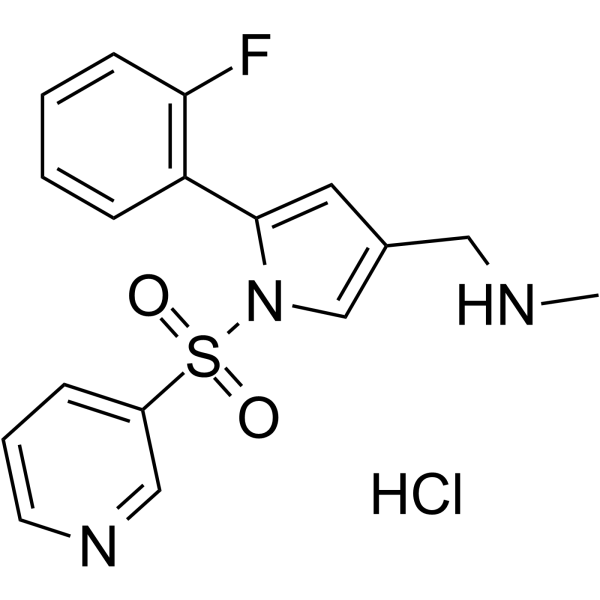
    Vonoprazan hydrochloride, a proton pump inhibitor (PPI), is a potent and orally active potassium-competitive acid blocker (P-CAB), with antisecretory activity. Vonoprazan hydrochloride inhibits H +,K +-ATPase activity in porcine gastric microsomes with an IC50 of 19 nM at pH 6.5. Vonoprazan hydrochloride is developed for the research of acid-related diseases, such as gastroesophageal reflux disease and peptic ulcer disease. Vonoprazan hydrochloride can be used for eradication of Helicobacter pylori .
    Vonoprazan hydrochloride
  • HY-W440995

    Liposome Cancer
    DOPE-PEG2000-Mal is a phospholipid polyPEG which can be used to prepare liposomes or nanoparticles. It is also reactive with thiol at pH 6.5 tp 7.5 to form a stable thioether bond.
    DOPE-PEG2000-Mal
  • HY-W193844

    ZINC13684400

    GPR65 Inflammation/Immunology
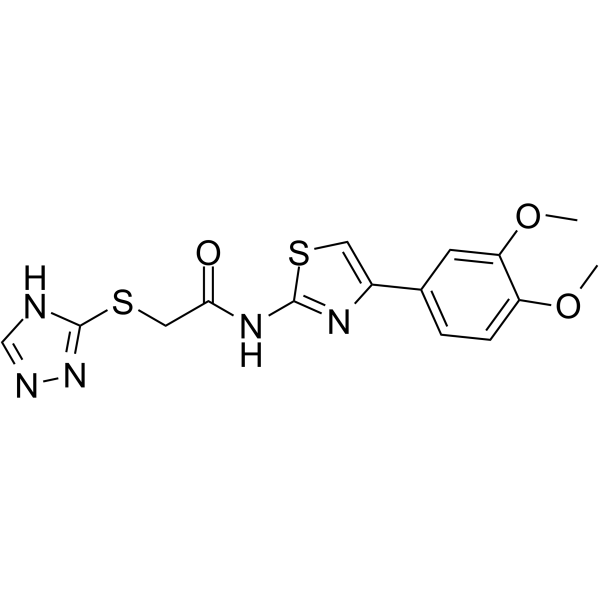
    MLS001006105 (ZINC13684400) is a GPR65 allosteric agonist. MLS001006105 displays GPR65 allosteric agonist activity at pH 8.40 but not at lower pH .
    MLS001006105
  • HY-Y0332L

    Potassium PHosPHate monobasic, meets analytical specification of PH. Eur., NF, E340

    Biochemical Assay Reagents NF-κB Others
    Potassium dihydrogen phosphate (Potassium phosphate monobasic), meeting the analytical specifications of Ph. Eur., NF, E340, is a reagent with buffering capacity, used for preparing biological buffers. Potassium dihydrogen phosphate downregulates the expression of IκBα in the cytoplasm, increases the expression of p-P65 in the cytoplasm, and upregulates the expression of P65 in the nucleus, thereby activating the NF-κB pathway. Potassium dihydrogen phosphate promotes the proliferation of human periodontal ligament stem cells in the logarithmic growth phase. Potassium dihydrogen phosphate upregulates the expression of odontogenic/osteogenic markers (OCN, DSP/DSPP, OSX, RUNX2, ALP) in human periodontal ligament stem cells and enhances the mineralization capacity of these cells. Potassium dihydrogen phosphate can be used in the research of periodontal diseases .
    Potassium dihydrogen phosphate, meets analytical specification of Ph. Eur., NF, E340
  • HY-15295R

    TAK-438 (Standard)

    Proton Pump Reference Standards Metabolic Disease Cancer
    Vonoprazan (Fumarate) (Standard) is the analytical standard of Vonoprazan (Fumarate). This product is intended for research and analytical applications. Vonoprazan Fumarate (TAK-438), a proton pump inhibitor (PPI), is a potent and orally active potassium-competitive acid blocker (P-CAB), with antisecretory activity. Vonoprazan Fumarate inhibits H+,K+-ATPase activity in porcine gastric microsomes with an IC50 of 19 nM at pH 6.5. Vonoprazan Fumarate is developed for the research of acid-related diseases, such as gastroesophageal reflux disease and peptic ulcer disease .
    Vonoprazan Fumarate (Standard)
  • HY-159743

    Toll-like Receptor (TLR) Inflammation/Immunology
    M101 is a vaccine adjuvant. Its main component is highly purified immunologically active substances with a pH value ranging from 4.0 to 6.5. This adjuvant is safe, non-toxic and metabolizable, and can effectively induce immune responses in the body. It has strong immune effects on both T-cell-dependent and T-cell-independent antigens. This adjuvant is applicable to various veterinary vaccines and is recommended for use in porcine circovirus.
    M101
  • HY-W144703

    9-Aminoheptadecane

    Biochemical Assay Reagents Others
    Heptadecan-9-amine (9-Aminoheptadecane) is PEG linker containing a maleimide and TFP ester end group. Maleimide groups are reactive with thiols between pH 6.5 and 7.5. The TFP ester can react with primary amine groups and is also less susceptible to undergo hydrolysis compared to NHS ester. The hydrophilic PEG chains increase the water solubility of a compound in aqueous media. Longer PEG chains have improved water solubility relative to shorter PEG chains.
    Heptadecan-9-amine
  • HY-Z3421S

    Isotope-Labeled Compounds Others
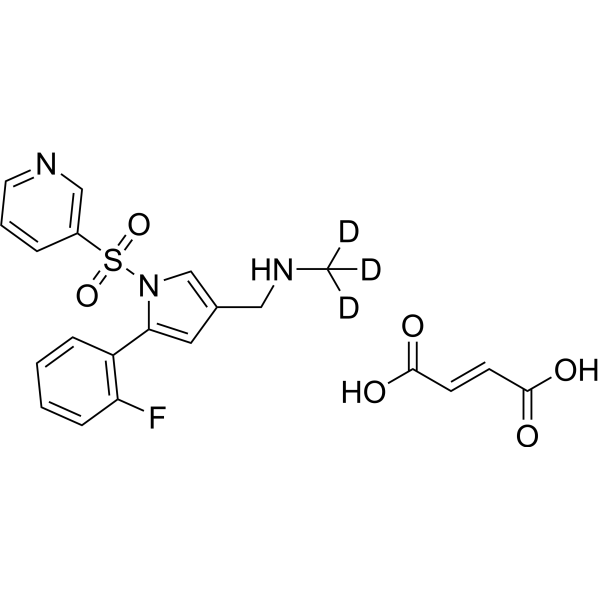
    Vonoprazan-d3 fumarate is the deuterium labeled Vonoprazan fumarate (HY-15295). Vonoprazan Fumarate (TAK-438), a proton pump inhibitor (PPI), is a potent and orally active potassium-competitive acid blocker (P-CAB), with antisecretory activity. Vonoprazan Fumarate inhibits H+,K+-ATPase activity in porcine gastric microsomes with an IC50 of 19 nM at pH 6.5. Vonoprazan Fumarate is developed for the research of acid-related diseases, such as gastroesophageal reflux disease and peptic ulcer disease .
    Vonoprazan-d3 fumarate
  • HY-100007R

    TAK-438 (Standard)

    Reference Standards Proton Pump Bacterial Endocrinology
    Vonoprazan (Standard) is the analytical standard of Vonoprazan. This product is intended for research and analytical applications. Vonoprazan (TAK-438 free base), a proton pump inhibitor (PPI), is a potent and orally active potassium-competitive acid blocker (P-CAB), with antisecretory activity. Vonoprazan inhibits H +,K +-ATPase activity in porcine gastric microsomes with an IC50 of 19 nM at pH 6.5. Vonoprazan is developed for the research of acid-related diseases, such as gastroesophageal reflux disease and peptic ulcer disease. Vonoprazan can be used for eradication of Helicobacter pylori .
    Vonoprazan (Standard)
  • HY-160764

    Drug Derivative Others
    N6-Carboxymethyl-ATP is the alkylation product of ATP with iodoacetic acid at pH 6.5, where alkylation of ATP with iodoacetic acid at pH 6.5 yielded 1-carboxymethyl-ATP which, after alkaline rearrangement gave N6-carboxymethyl-ATP .
    N6-Carboxymethyl-ATP
  • HY-P5172

    Sodium Channel Neurological Disease
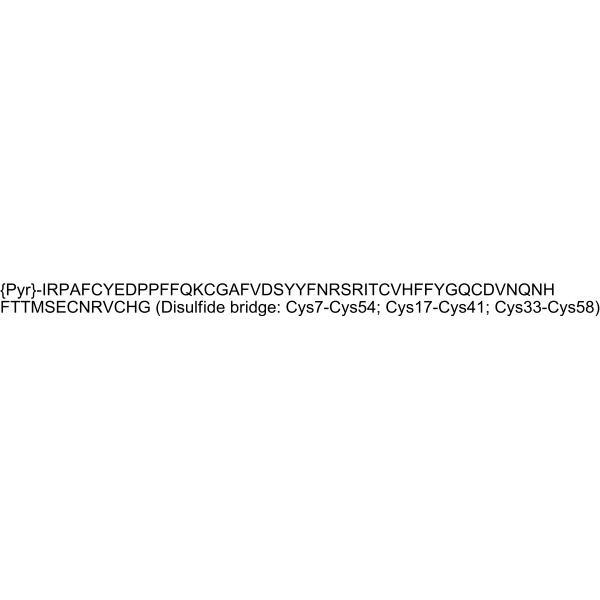
    MitTx-alpha is a subunit of MitTx. MitTx is a potent, persistent, and selective agonist for acid-sensing ion channels (ASICs). MitTx is highly selective for the ASIC1 subtype at neutral pH; under more acidic conditions (pH<6.5), MitTx massively potentiates (>100-fold) proton-evoked activation of ASIC2a channels .
    MitTx-alpha
  • HY-120742

    Indoleamine 2,3-Dioxygenase (IDO) Cancer
    MMG-0358 is a potent IDO1 inhibitor. MMG-0358 shows IC50 values of 2 nM in a cellular assay on mIDO1, 80 nM in a cellular assay on hIDO1, 330 nM in an enzymatic assay on hIDO1 at pH 6.5, and 71 nM in an enzymatic assay on hIDO1 at pH 7.4 .
    MMG-0358
  • HY-W800679

    Biochemical Assay Reagents Others
    Mal-Cyclohexyl-PEG3-Biotin is a PEG linker containing a maleimide moiety and a biotin group. Maleimides react specifically with sulfhydryl groups to form a stable thioether linkage when the pH is between 6.5 and 7.5. The biotinylation can react with amine molecules in the presence of activator EDC or HATU. PEG attached to the biotin gives an extended spacer arm that permits the biotin to reach into the binding pocket of the protein. The PEG moiety also increases solubility of Biotin-PEG conjugates considerably.
    Mal-Cyclohexyl-PEG3-Biotin
  • HY-113621B

    Fluorescent Dye MMP Cancer
    Ageladine A dihydrochloride is an inhibitor of matrix metalloproteinase (MMP) isolated from the marine sponge Agelas nakamurai, possessing anti-angiogenic activity. Ageladine A dihydrochloride not only inhibits MMP-2 but also MMP-1, MMP-8, MMP-9, MMP-12, and MMP-13, with IC50 values of 4.65 μM, 2.79 μM, 907.12 nM, 1.83 μM, 767.57 nM, and 1.09 μM, respectively. Additionally, Ageladine A dihydrochloride is a pH-sensitive membrane-permeable dye that emits fluorescence in the blue-green range upon UV excitation, featuring a maximum absorption peak at 370 nm. Furthermore, Ageladine A dihydrochloride serves as a reliable and stable fluorescent pH sensor for detecting changes in intracellular pH values .
    Ageladine A dihydrochloride
  • HY-159093

    Drug Derivative Cancer
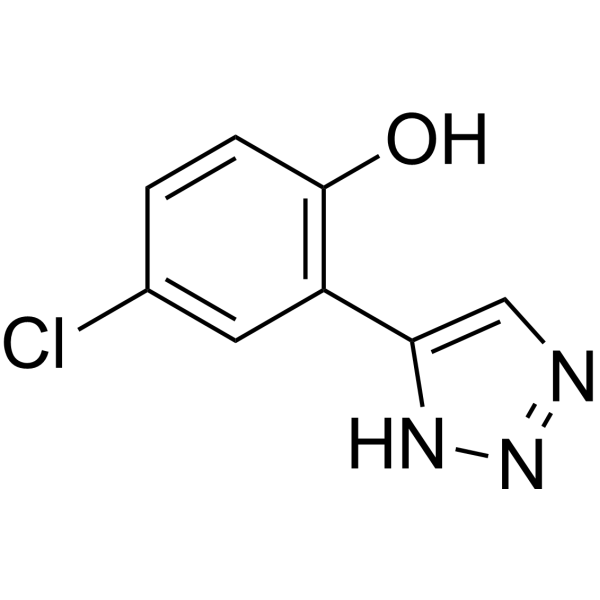
    Antitumor agent-178 (compound 4 h) is a potent and selective GSCs inhibitor. Antitumor agent-178 has the potential for the research of cancer .
    Antitumor agent-178
  • HY-D2763

    Fluorescent Dye Others
    BP Fluor 532 maleimide is a photostable, bright yellow-fluorescent dye with pH insensitive emission from pH 4 to pH 10. The excitation of BP Fluor 532 is ideally suited for the frequency-doubled Nd:YAG laser line. BP Fluor 532 dye can be conjugated to a variety of antibodies, peptides, proteins, tracers, and amplification substrates, and is often used for the generation of stable signals in imaging and flow cytometry. Maleimide is the most popular sulfhydryl-reactive group for conjugating the dye to a thiol group on a protein, oligonucleotide thiophosphate, or low molecular weight ligand. The maleimide group specifically and efficiently reacts with reduced thiols (sulfhydryl groups, –SH) at pH 6.5 to 7.5 to form a stable thioether bond. The resulting conjugates exhibit brighter fluorescence and greater photostability than the conjugates of many other spectrally similar fluorophores.
    BP Fluor 532 maleimide
  • HY-D3167

    Fluorescent Dye HDAC Cancer
    HDAC-IN-101 (compound H6M) is a HDAC1 inhibitor and NTR/pH-activated fluorescent inducer, with an IC50 of 65 nM against human HDAC1. HDAC-IN-101 blocks cancer cell proliferation by inhibiting HDAC1. HDAC-IN-101 is reduced by overexpressed nitroreductase to generate H6AQ, a product that emits fluorescence under low pH conditions. HDAC-IN-101 is applicable for cancer-related research .
    HDAC-IN-101
  • HY-P2863A

    Endogenous Metabolite Metabolic Disease
    Deoxyribonuclease II, Bovine (EC 3.1.22.1) hydrolyzes deoxyribonucleotide linkages in native and denatured DNA yielding products with 3'-phosphates. In vitro, its optimum pH range is 4.5-5.0. Deoxyribonuclease II, Bovine (EC 3.1.22.1) also acts upon p-nitrophenyl-phosphodiesters at pH 5.6-5.9.
    Deoxyribonuclease II, Bovine

Inquiry Online

Your information is safe with us. * Required Fields.

Salutation


Country or Region *

Applicant Name *


Organization Name *

Department *


Email Address *


Product Name *

Cat. No.


Requested quantity *

Phone Number *


Remarks

Inquiry Online

Inquiry Information

Product Name:
Cat. No.:
Quantity:
MCE Japan Authorized Agent:

