

26 Results for "

RRMS

" in MedChemExpress (MCE) Product Catalog:
Products (26)

26 Results for "RRMS" in MCE Product Catalog:

15
15 Publications Verification
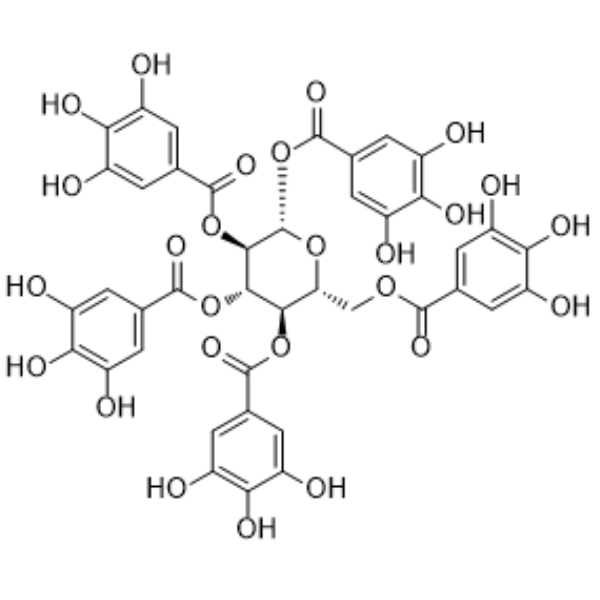
Cat. No.: HY-N0527
CAS No.: 14937-32-7
Synonyms: Penta-O-galloyl-β-D-glucose; 1,2,3,4,6-Pentagalloyl glucose
Pentagalloylglucose (Penta-O-galloyl-β-D-glucose) is an orally active gallic tannin compound and an inducer of apoptosis and autophagy. Pentagalloglucose induces cell apoptosis and autophagy through the GSK3β/β-catenin pathway. Pentagalloylglucose inhibits UBE2T-mediated p53 ubiquitination, upregulates p53, downregulates RRM1/RRM2 in pancreatic cancer organoids. Pentagalloglucose has antioxidant, anti mutagenic, anti-inflammatory, anticonvulsant, cardioprotective, anti allergic, cholesterol lowering, and anti-tumor activities .
10
10 Cited Publications
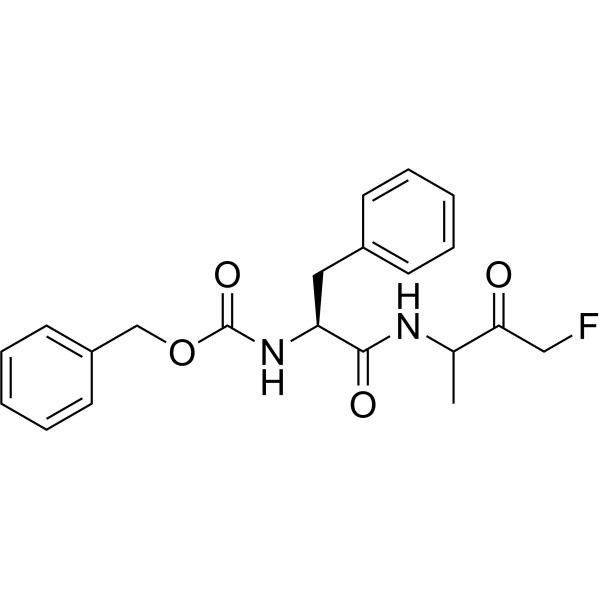
Cat. No.: HY-P0109A
CAS No.: 197855-65-5
Synonyms: (1S)-Z-FA-FMK
Research Areas:  

Infection Cancer

Z-FA-FMK ((1S)-Z-FA-FMK) is a potent Cathepsin B and L inhibitor. Z-FA-FMK blocks the induction of DEVDase activity, DNA fragmentation, and externalization of phosphatidylserine by selective synthetic retinoid-related molecules (RRMs). Z-FA-FMK inhibits apoptosis. Z-FA-FMK inhibits caspase activity and selectively inhibits recombinant effector caspases 2, -3, -6, and -7. Z-FA-FMK is a viral inhibitor. Z-FA-FMK inhibits reovirus replication in a susceptible host .
3
3 Cited Publications
Cat. No.: HY-108831A
CAS No.: 189261-10-7
Purity:  98.72%
Synonyms: AN100226; BG00002
Natalizumab (Anti-CD49d) (AN100226; BG00002) Solution is a humanized monoclonal IgG4 antibody inhibitor that selectively targets α4 integrin (CD49d), blocking the interaction of integrins such as α4β1 (VLA-4) with vascular cell adhesion molecule VCAM-1, intercellular adhesion molecule ICAM-1, and fibronectin by competitively binding to the α4 subunit. Natalizumab solution inhibits the adhesion, retention, and transendothelial migration of immune cells (such as CD4 + T cells), reducing the infiltration of inflammatory cells into the central nervous system or lesion sites, thereby exerting anti-inflammatory and immunomodulatory activity. Natalizumab (Anti-CD49d) solution is used in the study of relapsing-remitting multiple sclerosis (RRMS) and is also applied in the research of autoimmune or inflammation-related diseases such as Crohn's disease, B-cell lymphoma, and non-infectious uveitis. Natalizumab (Anti-CD49d) can also prevent lymphocytes from entering the central nervous system, thus preventing acute demyelinating relapses .
3
3 Cited Publications
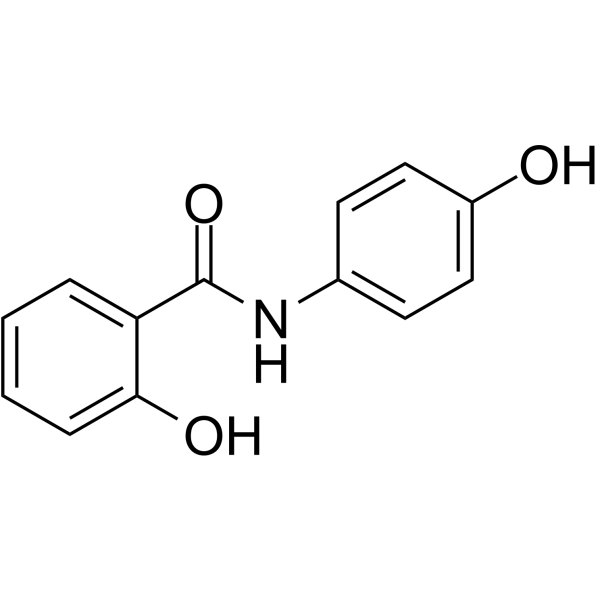
Cat. No.: HY-B2116
CAS No.: 526-18-1
Synonyms: Oxaphenamide; 4'-Hydroxysalicylanilide
Research Areas:  

Infection Cancer

Osalmid is a ribonucleotide reductase small subunit M2 (RRM2) targeting compound; suppresses ribonucleotide reductase activity with an IC50 of 8.23 μM.
3
3 Cited Publications
Cat. No.: HY-108831
CAS No.: 189261-10-7
Purity:  99.10%
Natalizumab (AN100226; BG00002) is a humanized monoclonal IgG4 antibody inhibitor that selectively targets α4 integrin (CD49d). It blocks the interaction of integrins such as α4β1 (VLA-4) with vascular cell adhesion molecule VCAM-1, intercellular adhesion molecule ICAM-1, and fibronectin by competitively binding to the α4 subunit. Natalizumab inhibits the adhesion, retention, and transendothelial migration of immune cells (such as CD4 + T cells), reducing the infiltration of inflammatory cells into the central nervous system or lesion sites, thus exerting anti-inflammatory and immunomodulatory activity. Natalizumab is used in the study of relapsing-remitting multiple sclerosis (RRMS) and also has applications in the study of autoimmune or inflammation-related diseases such as Crohn's disease, B-cell lymphoma, and non-infectious uveitis. Natalizumab can also prevent lymphocytes from entering the central nervous system, thereby preventing acute demyelinating relapses .
2
2 Cited Publications
Cat. No.: HY-13010
CAS No.: 248281-84-7
Purity:  99.46%
Synonyms: ABR-215062
Target:  

NF-κB Apoptosis

Research Areas:  

Inflammation/Immunology

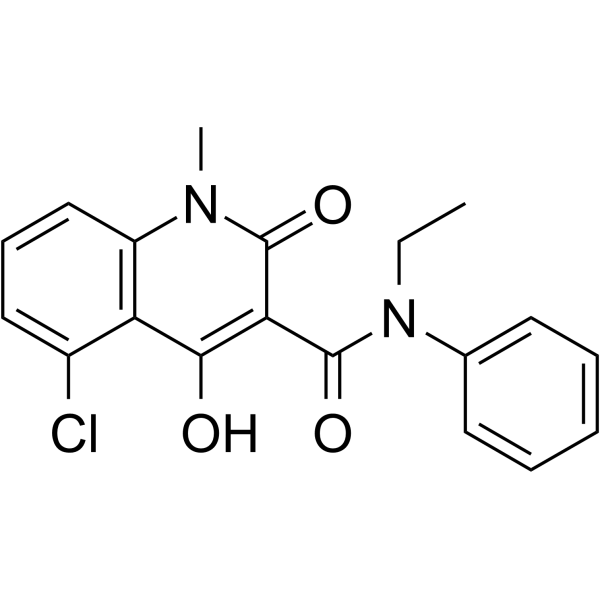
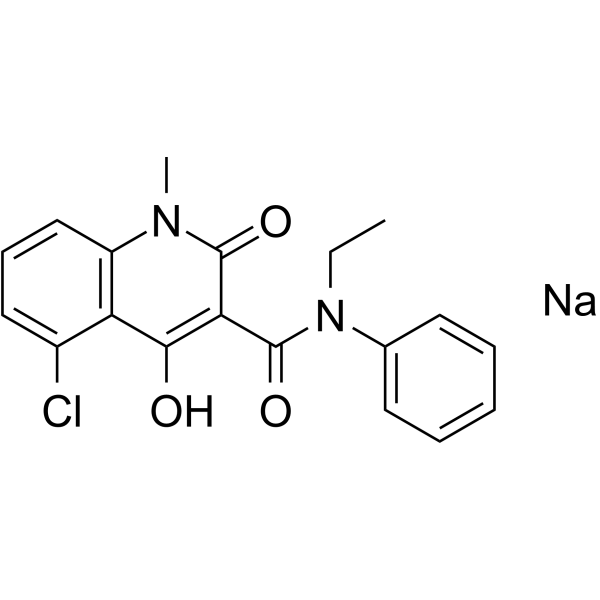
Laquinimod (ABR-215062), an orally available carboxamide derivative, is a potent immunomodulator which prevents neurodegeneration and inflammation in the central nervous system. Laquinimod reduces astrocytic NF-κB activation to protect from Cuprizone-induced demyelination. Laquinimod has the potential for relapsing remitting (RR) and chronic progressive (CP) forms of multiple sclerosis (MS; RRMS or CPMS) as well as neurodegenerative diseases research .
1
1 Cited Publications
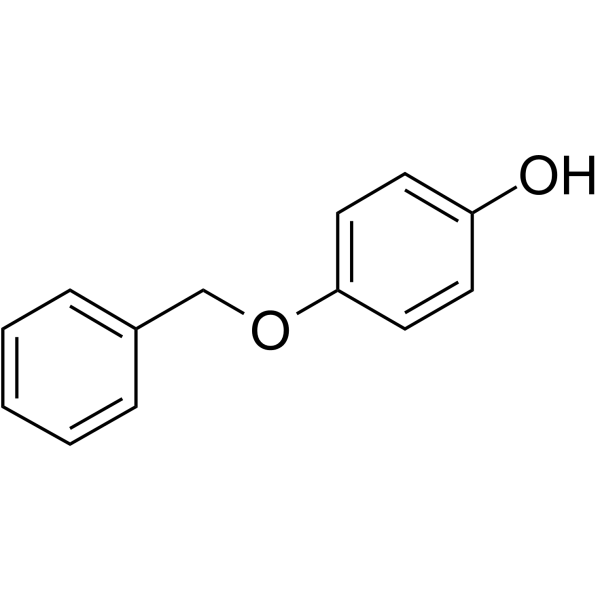
Cat. No.: HY-30272
CAS No.: 103-16-2
Target:  

Hapten

Research Areas:  

Cancer

Monobenzone is a potent skin depigmenting agent. Monobenzone induces depigmentation and exhibits good potential for vitiligo research. Monobenzone is a potent inhibitor of RNR (Ribonucleotide reductase) enzyme activity by targeting RRM2 (a regulatory small subunit M2 of RNR) protein, and thus has significant anti-leukemia efficacy in vitro and in vivo. Monobenzone inhibits acute myeloid leukemia (AML) cells proliferation and DNA synthesis, induces cell cycle arrest, and Apoptosis .
Cat. No.: HY-P5960
Synonyms: PTBP1 α3-helix derived peptide P6 TFA
Target:  

DNA/RNA Synthesis

Research Areas:  

Cancer

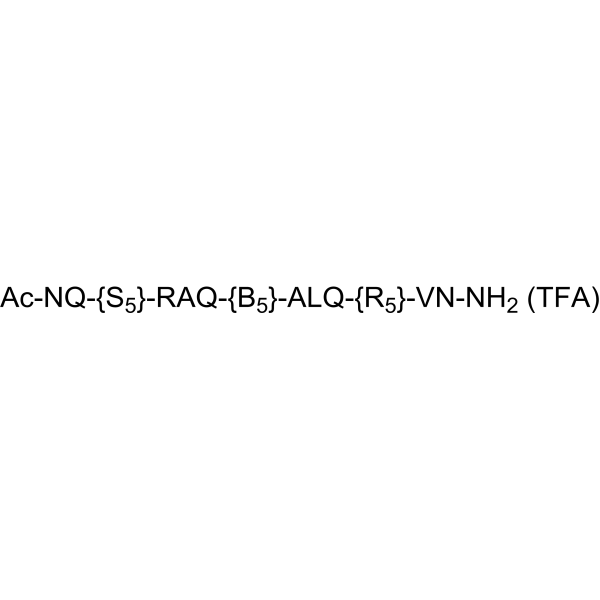
PTBP1-RNA-binding inhibitor (PTBP1 α3-helix derived peptide) P6 TFA is a cell-permeable PTBP1 inhibitor. PTBP1-RNA-binding inhibitor P6 TFA binds to the α3 helix binding site of the PTBP1 RRM1 domain, and disrupts the synergistic RNA-binding effect of the RRM1 and RRM2 domains of PTBP1. PTBP1-RNA-binding inhibitor P6 (TFA) regulates the regulatory pattern of PTBP1-related alternative splicing events, and thus exhibits anticancer potential .
Cat. No.: HY-112358
CAS No.: 222036-17-1
Purity:  99.04%
Target:  

CDK

Research Areas:  

Neurological Disease Cancer

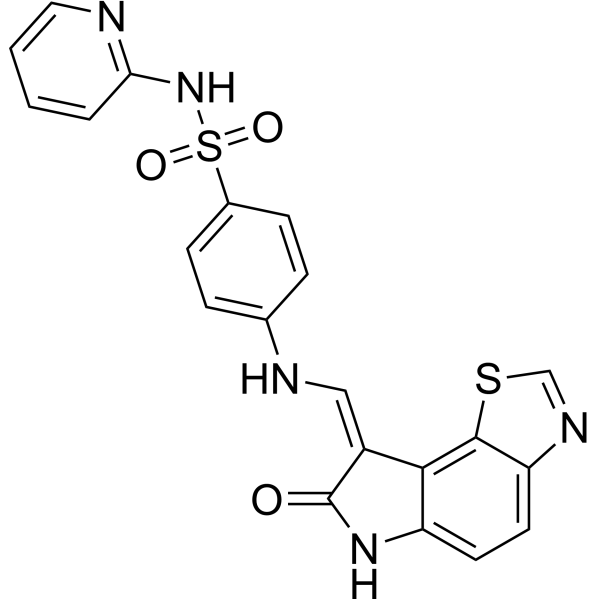
GW8510 is a potent cyclin-dependent kinase-2 (CDK2) inhibitor. GW8510 is also a ribonucleotide reductase M2 (RRM2) inhibitor. GW8510 exhibits neuroprotective and anticancer activities .
Cat. No.: HY-153898
CAS No.: 1332175-56-0
Purity:  99.10%
Target:  

Amyloid-β

Research Areas:  

Neurological Disease

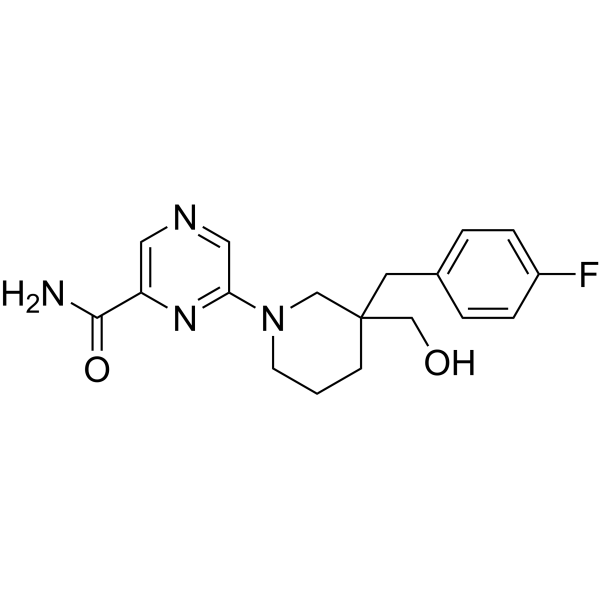
rTRD01 is an orally active, specific TDP-43 binder that targets the RRM1 and RRM2 domains of TDP-43. rTRD01 partially disrupts the interaction between TDP-43 and c9orf72 repeat RNA, but does not affect the binding of TDP-43 to canonical binding sequences. rTRD01 exhibits significant neuroprotective effects in zebrafish models, improves motor function and protects against paraquat (a widely used herbicide)-induced neurodegeneration, with no teratogenicity at high concentrations. rTRD01 is not a general antioxidant and cannot counteract Rotenone (HY-B1756)-induced neuronal death. rTRD01 can be used to study amyotrophic lateral sclerosis and other TDP-43 proteinopathies .
Cat. No.: HY-153736
CAS No.: 90379-42-3
Purity:  98.40%
Target:  

DNA/RNA Synthesis

Research Areas:  

Cancer

NSC 194308, a U2AF2-RNA complexes enhancer, increases association of the U2AF1-U2AF2-SF1-splice site RNA complex by binding a site between the U2AF2 RNA recognition motifs (RRM1 and RRM2). NSC 194308 inhibits pre-mRNA splicing by stalling spliceosome assembly at the point where U2AF helps recruit U2 snRNP to the branchpoint. NSC 194308 enhances the binding of pre-mRNA to U2AF2, selectively triggering cell death in leukemia cell lines containing spliceosome mutations .
Cat. No.: HY-RS12286
Research Areas:  

Others

RRM2 Human Pre-designed siRNA Set A contains three designed siRNAs for RRM2 gene (Human), as well as a negative control, a positive control, and a FAM-labeled negative control.

Cat. No.: HY-N0527R
CAS No.: 14937-32-7
Synonyms: Penta-O-galloyl-β-D-glucose (Standard); 1,2,3,4,6-Pentagalloyl glucose (Standard)
Pentagalloylglucose (Standard) is the analytical standard of Pentagalloylglucose. This product is intended for research and analytical applications. Pentagalloylglucose (Penta-O-galloyl-β-D-glucose) is an orally active gallic tannin compound and an inducer of apoptosis and autophagy. Pentagalloglucose induces cell apoptosis and autophagy through the GSK3β/β-catenin pathway. Pentagalloylglucose inhibits UBE2T-mediated p53 ubiquitination, upregulates p53, downregulates RRM1/RRM2 in pancreatic cancer organoids. Pentagalloglucose has antioxidant, anti mutagenic, anti-inflammatory, anticonvulsant, cardioprotective, anti allergic, cholesterol lowering, and anti-tumor activities .
Cat. No.: HY-181846
CAS No.: 1065567-62-5
Target:  

DNA/RNA Synthesis

Research Areas:  

Neurological Disease

nTRD22 is an RNA-binding allosteric modulator targeting TDP-43. nTRD22 binds to the N-terminal domain of TDP-43, thereby allosterically regulating the RNA-binding domain of TDP-43 and reducing its RNA-binding ability. nTRD22 decreases the TDP-43 protein level in primary motor neurons. nTRD22 alleviates motor dysfunction in amyotrophic lateral sclerosis models. nTRD22 is applicable to related research on amyotrophic lateral sclerosis .
Cat. No.: HY-RS12285
Research Areas:  

Others

RRM1 Human Pre-designed siRNA Set A contains three designed siRNAs for RRM1 gene (Human), as well as a negative control, a positive control, and a FAM-labeled negative control.

Cat. No.: HY-RS23051
Research Areas:  

Others

Rrm2 Rat Pre-designed siRNA Set A contains three designed siRNAs for Rrm2 gene (Rat), as well as a negative control, a positive control, and a FAM-labeled negative control.

Cat. No.: HY-RS12287
Research Areas:  

Others

RRM2B Human Pre-designed siRNA Set A contains three designed siRNAs for RRM2B gene (Human), as well as a negative control, a positive control, and a FAM-labeled negative control.

Cat. No.: HY-RS21746
Research Areas:  

Others

Rrm2b Mouse Pre-designed siRNA Set A contains three designed siRNAs for Rrm2b gene (Mouse), as well as a negative control, a positive control, and a FAM-labeled negative control.

Cat. No.: HY-P11231
CAS No.: 2780353-11-7
Synonyms: FUS(364-369)-TAT
Target:  

Peptides

Research Areas:  

Cancer

β4-TAT is a kind of β-sheet peptide foldamer. β4-TAT is composed of two parts: the β4 sequence (derived from the β-sheet fragment of the RRM domain of fused in sarcoma (FUS)) and the TAT sequence (a nuclear localization signal peptide that helps the entire peptide penetrate the nuclear membrane). β4-TAT influences FUS aggregation by targeting its RNA recognition motifs (RRM). β4-TAT effectively induces FUS aggregation within cells, leading to the death of cancer cells. β4-TAT can be used for the study of FUS .
Cat. No.: HY-W062904
CAS No.: 248282-07-7
Synonyms: ABR-215062 sodium
Laquinimod (ABR-215062) sodium, an orally available carboxamide derivative, is a potent immunomodulator which prevents neurodegeneration and inflammation in the central nervous system. Laquinimod sodium reduces astrocytic NF-κB activation to protect from Cuprizone-induced demyelination. Laquinimod sodium has the potential for relapsing remitting (RR) and chronic progressive (CP) forms of multiple sclerosis (MS; RRMS or CPMS) as well as neurodegenerative diseases research .

