1. Search Result
Search Result
Results for "

T2DM mice

" in MedChemExpress (MCE) Product Catalog:

10

Inhibitors & Agonists

1

Peptides

2

Natural
Products

Cat. No. Product Name Target Research Areas Chemical Structure
  • HY-13687
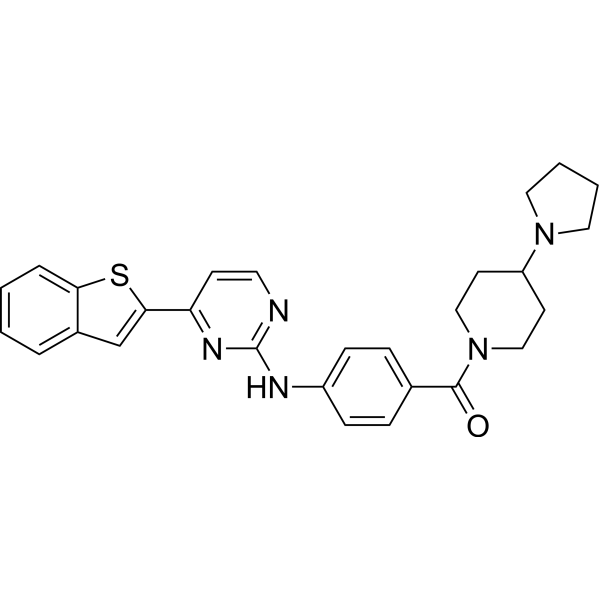
    IKK 16
    25+ Cited Publications

    IKK LRRK2 P-glycoprotein PKD NF-κB TNF Receptor Interleukin Related Cardiovascular Disease Inflammation/Immunology
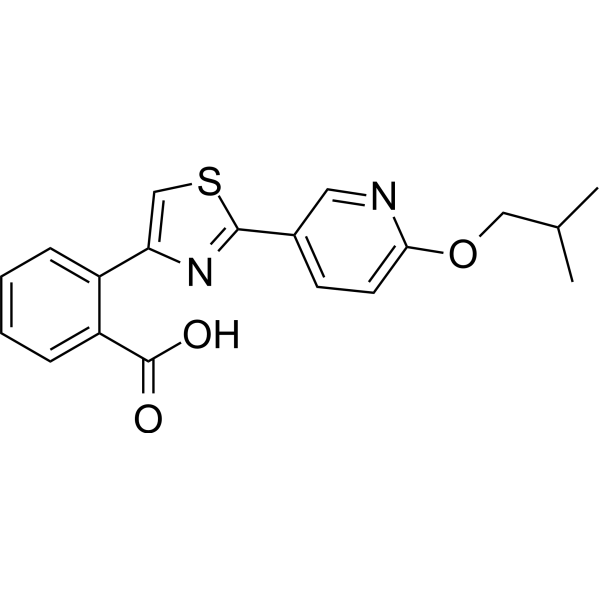
    IKK 16 is an orally active IKK inhibitor. IKK 16 shows IC50s of 40 nM, 70 nM, 200 nM, and 50 nM for IKK2, IKK complex, IKK1, and LRRK 2, respectively. IKK 16 is also a pan-PKD inhibitor, inhibiting PKD1, PKD2, and PKD3 with IC50s of 153.9, 115, and 99.7 nM, respectively. IKK 16 is also an ABCB1 inhibitor, interfering with the binding of ABCB1 to its substrates. IKK 16 protects against LPS (HY-D1056)-induced multiple organ dysfunction by reducing the acute inflammatory response induced by endotoxin exposure. IKK 16 can restore renal function and alleviate fibrosis in acute kidney injury. IKK 16 attenuates cardiac dysfunction associated with polymicrobial sepsis in mice with type 2 diabetes mellitus (T2DM) by inhibiting the NF-κB pathway .
    IKK 16
  • HY-13687A
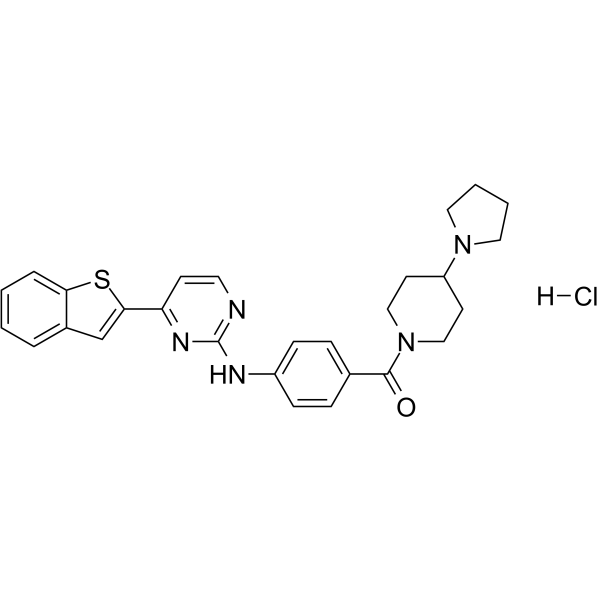
    IKK 16 hydrochloride
    25+ Cited Publications

    IKK LRRK2 P-glycoprotein PKD NF-κB TNF Receptor Interleukin Related Cardiovascular Disease Inflammation/Immunology
    IKK 16 hydrochloride is an orally active IKK inhibitor. IKK 16 hydrochloride shows IC50s of 40 nM, 70 nM, 200 nM, and 50 nM for IKK2, IKK complex, IKK1, and LRRK 2, respectively. IKK 16 hydrochloride is also a pan-PKD inhibitor, inhibiting PKD1, PKD2, and PKD3 with IC50s of 153.9, 115, and 99.7 nM, respectively. IKK 16 hydrochloride is also an ABCB1 inhibitor, interfering with the binding of ABCB1 to its substrates. IKK 16 hydrochloride protects against LPS (HY-D1056)-induced multiple organ dysfunction by reducing the acute inflammatory response induced by endotoxin exposure. IKK 16 hydrochloride can restore renal function and alleviate fibrosis in acute kidney injury. IKK 16 hydrochloride attenuates cardiac dysfunction associated with polymicrobial sepsis in mice with type 2 diabetes mellitus (T2DM) by inhibiting the NF-κB pathway .
    IKK 16 hydrochloride
  • HY-P10302A

    GLP Receptor Metabolic Disease Inflammation/Immunology
    GLP-1R/GIPR agonist-1 sodium is a dual GLP-1/GIP receptor agonist, with an EC50 of 0.57 nM for GLP-1R and an EC50 of 0.75 nM for GIPR. GLP-1R/GIPR agonist-1 sodium reduces food intake, inhibits weight gain, repairs islet damage, improves glucose tolerance, regulates serum lipid and liver enzyme levels, ameliorates hepatic vacuolization, reduces hepatic fat accumulation, delays the progression of hepatic fibrosis, and exhibits long-lasting hypoglycemic activity. GLP-1R/GIPR agonist-1 sodium can be used in research related to type 2 diabetes, obesity, and non-alcoholic steatohepatitis .
    GLP-1R/GIPR agonist-1 (soduim)
  • HY-155157

    Endogenous Metabolite Cardiovascular Disease
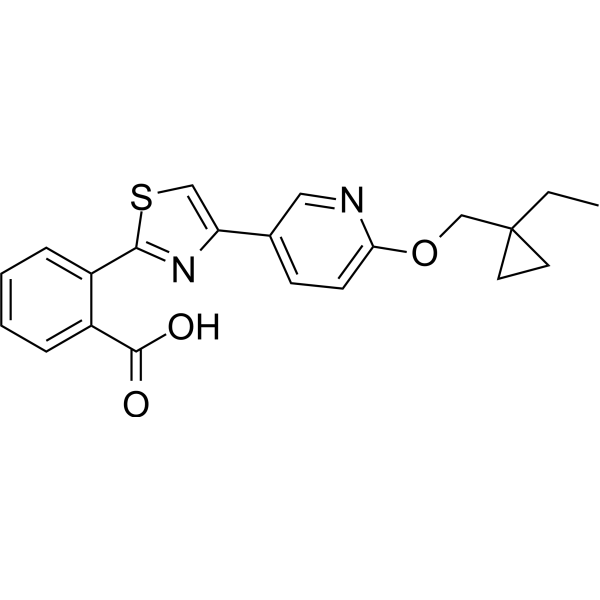
    PF-07247685 is a BCKDC kinase (BDK) inhibitor (EC50=2.2 nM). PF-07247685 stabilizes the interaction between BDK and BCKDH core subunit E2 and prevents phosphorylation of E1. While BDK mediates branched-chain ketoacid dehydrogenase (BCKDH) phosphorylation, and inhibition of BCKDH is involved in controlling the rate-limiting step of branched-chain amino acid (BCAA) degradation. Impaired BCAA catabolism has been associated with several diseases, particularly cardiometabolic diseases, including heart failure (HF), type 2 diabetes mellitus (T2DM), non-alcoholic fatty liver disease (NAFLD), and obesity. PF-07247685 improved cardiometabolic endpoints and improves glucose tolerance in mice .
    PF-07247685
  • HY-153798

    GLP Receptor Metabolic Disease
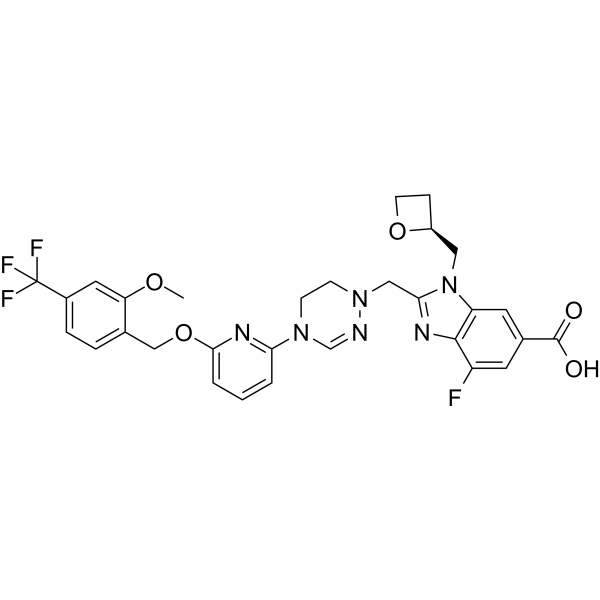
    GLP-1 receptor agonist 10 (compound 42) is an agonist of GLP Receptor. GLP-1 receptor agonist 10 inhibits food intake and reduces glucose excursion in mice. GLP-1 receptor agonist 10 can be used in the study of type 2 diabetes (T2DM) and obesity .
    GLP-1 receptor agonist 10
  • HY-155156

    Endogenous Metabolite Cardiovascular Disease
    PF-07238025 is a BCKDC kinase (BDK) inhibitor (EC50=19 nM). PF-07238025 stabilizes the interaction between BDK and BCKDH core subunit E2 and prevents phosphorylation of E1. While BDK mediates branched-chain ketoacid dehydrogenase (BCKDH) phosphorylation, and inhibition of BCKDH is involved in controlling the rate-limiting step of branched-chain amino acid (BCAA) degradation. Impaired BCAA catabolism has been associated with several diseases, particularly cardiometabolic diseases, including heart failure (HF), type 2 diabetes mellitus (T2DM), non-alcoholic fatty liver disease (NAFLD), and obesity. PF-07238025 improved cardiometabolic endpoints and improves glucose tolerance in mice .
    PF-07238025
  • HY-13687R

    IKK LRRK2 Reference Standards P-glycoprotein PKD NF-κB TNF Receptor Interleukin Related Inflammation/Immunology
    IKK 16 (Standard) is the analytical standard of IKK 16. This product is intended for research and analytical applications. IKK 16 hydrochloride is an orally active IKK inhibitor. IKK 16 hydrochloride shows IC50s of 40 nM, 70 nM, 200 nM, and 50 nM for IKK2, IKK complex, IKK1, and LRRK 2, respectively. IKK 16 hydrochloride is also a pan-PKD inhibitor, inhibiting PKD1, PKD2, and PKD3 with IC50s of 153.9, 115, and 99.7 nM, respectively. IKK 16 hydrochloride is also an ABCB1 inhibitor, interfering with the binding of ABCB1 to its substrates. IKK 16 hydrochloride protects against LPS (HY-D1056)-induced multiple organ dysfunction by reducing the acute inflammatory response induced by endotoxin exposure. IKK 16 hydrochloride can restore renal function and alleviate fibrosis in acute kidney injury. IKK 16 hydrochloride attenuates cardiac dysfunction associated with polymicrobial sepsis in mice with type 2 diabetes mellitus (T2DM) by inhibiting the NF-κB pathway.
    IKK 16 (Standard)
  • HY-123765

    Acyltransferase Metabolic Disease
    JTT-553 is a DGAT1 inhibitor (IC50: 2.38 nM). JTT-553 reduces plasma concentrations of glucose, insulin, non-esterified fatty acids (NEFA), total cholesterol (TC), and hepatic triglycerides (TG). JTT-553 improves insulin-dependent glucose uptake and glucose intolerance in adipose tissue of DIO mice. JTT-553 reduces TNF-α mRNA levels and increases GLUT4 mRNA levels in adipose tissue of KK-Ay mice. JTT-553 improves adipose tissue insulin resistance and systemic glucose metabolism by reducing body weight. JTT-553 can be used in the study of obesity and type 2 diabetes mellitus (T2DM) .
    JTT-553
  • HY-178383

    Glycosidase Metabolic Disease
    α-Glucosidase-IN-98 is a potent orally active α-Glucosidase inhibitor with an IC50 of 18.1 μM. α-Glucosidase-IN-98 reversibly binds with α-Glucosidase via hydrogen bonds, electrostatic interactions and hydrophobic effects, which induces significant conformational alterations in the secondary structure of α-Glucosidase. α-Glucosidase-IN-98 decreases postprandial hyperglycemia in Starch (HY-B2225B)/Sucrose (HY-B1779)-challenged mice. α-Glucosidase-IN-98 can be used for type 2 diabetes mellitus (T2DM) research .
    α-Glucosidase-IN-98
  • HY-181091

    Glycosidase Metabolic Disease
    α-Glucosidase-IN-109 is an orally active α-glucosidase inhibitor with an IC50 of 0.0136 μM. α-Glucosidase-IN-109 modulates carbohydrate and lipid metabolism, reduces fasting blood glucose levels, alleviates weight loss, and exhibits protective effects on liver and kidney function. α-Glucosidase-IN-109 can be used in research related to type 2 diabetes .
    α-Glucosidase-IN-109

Inquiry Online

Your information is safe with us. * Required Fields.

Salutation


Country or Region *

Applicant Name *


Organization Name *

Department *


Email Address *


Product Name *

Cat. No.


Requested quantity *

Phone Number *


Remarks

Inquiry Online

Inquiry Information

Product Name:
Cat. No.:
Quantity:
MCE Japan Authorized Agent:

