13 Results for "

VEGF-VEGFR

" in MedChemExpress (MCE) Product Catalog:
Products (13)

13 Results for "VEGF-VEGFR" in MCE Product Catalog:

37
37 Cited Publications
Cat. No.: HY-N0135
CAS No.: 568-72-9
Synonyms: Dan Shen ketone
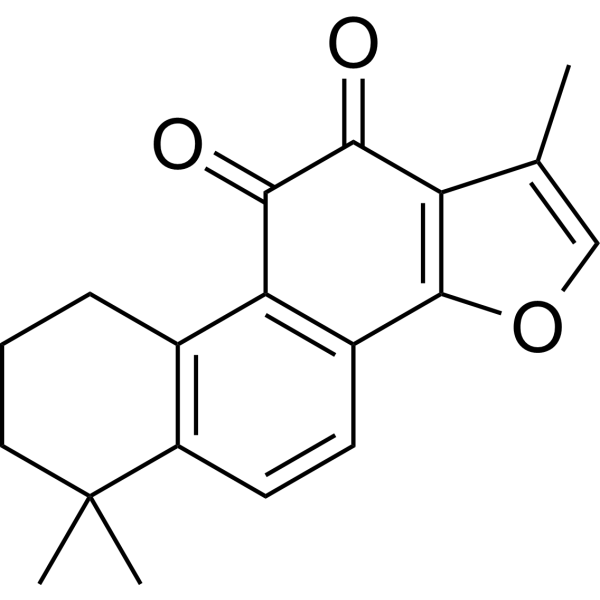
Tanshinone IIA (Tan IIA) is one of the main compositions in the root of Salvia miltiorrhiza Bunge. Tanshinone IIA may suppress angiogenesis by targeting the protein kinase domains of VEGF/VEGFR2.
loading...
    loading...
8
8 Cited Publications
Cat. No.: HY-110066
CAS No.: 39025-23-5
Purity:  99.30%
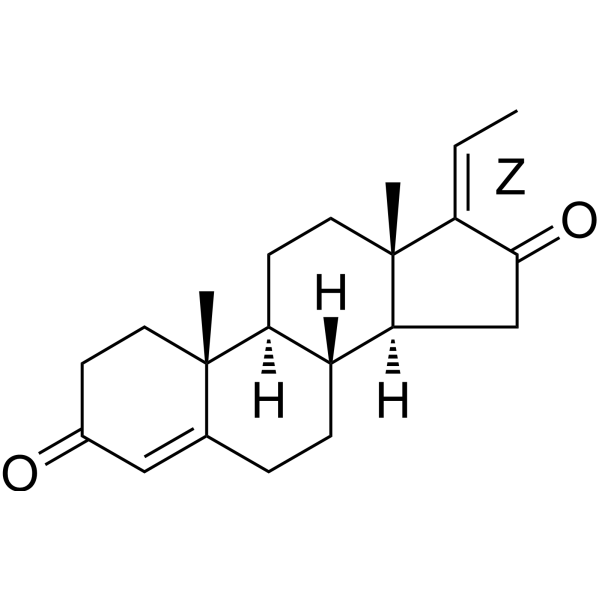
(Z)-Guggulsterone, a constituent of Indian Ayurvedic medicinal plant Commiphora mukul, inhibits the growth of human prostate cancer cells by causing apoptosis. (Z)-Guggulsterone inhibits angiogenesis by suppressing the VEGF–VEGF-R2–Akt signaling axis . (Z)-Guggulsterone is also a potent FXR antagonist. (Z)-Guggulsterone reduces ACE2 expression and SARS-CoV-2 infection .
loading...
    loading...
Cat. No.: HY-P990961
CAS No.: 2850355-87-0
Synonyms: IMM-2510; SYN-2510
Palverafusp alfa (IMM-2510; SYN-2510) is a PD-L1/VEGF-targeting IgG1κ type humanized antibody. Palverafusp alfa blocks PD-1/PD-L1 binding, relieves immune suppression, mediates PD-L1-directed antibody-dependent cellular cytotoxicity (ADCC). Palverafusp alfa blocks VEGF/VEGFR binding, inhibits angiogenic signaling, relieves VEGF-induced immune suppression. Palverafusp alfa reduces endothelial cell proliferation, enhances ADCC and antibody-dependent cellular phagocytosis (ADCP), inhibits tumor growth, reverses T cell immune suppression. Palverafusp alfa exhibits immune stimulatory, antiangiogenic, and anti-tumor activity in the tumor microenvironment. Palverafusp alfa can be used for the research of cancer, such as solid tumors, non-small cell lung cancer .
loading...
    loading...
Cat. No.: HY-148877
CAS No.: 908112-37-8
Purity:  98.86%
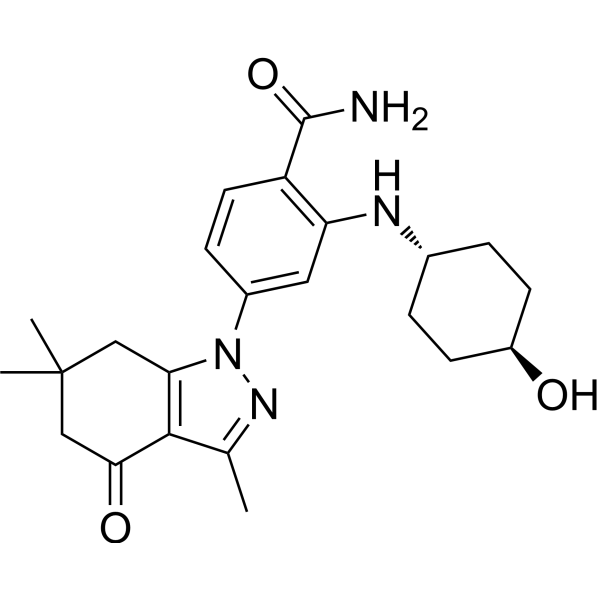
AT-533 is a potent Hsp90 and HSV inhibitor. AT-533 suppresses tumor growth and angiogenesis by blocking the HIF-1α/VEGF/VEGFR-2 signaling pathway. AT-533 also inhibits the activation of the downstream pathways, including Akt/mTOR/p70S6K, Erk1/2 and FAK. AT-533 inhibits the tube formation, cell migration, and invasion of human umbilical vein endothelial cells (HUVECs) .
loading...
    loading...
Cat. No.: HY-N7177
CAS No.: 18887-18-8
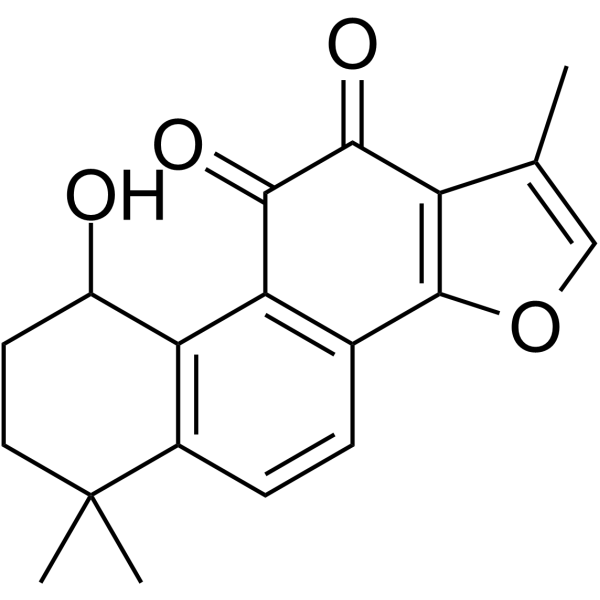
Hydroxytanshinone IIA is a hydroxylated metabolite of Tanshinone IIA. Tanshinone IIA may suppress angiogenesis by targeting the protein kinase domains of VEGF/VEGFR2 .
loading...
    loading...
Cat. No.: HY-N2666
CAS No.: 132185-83-2
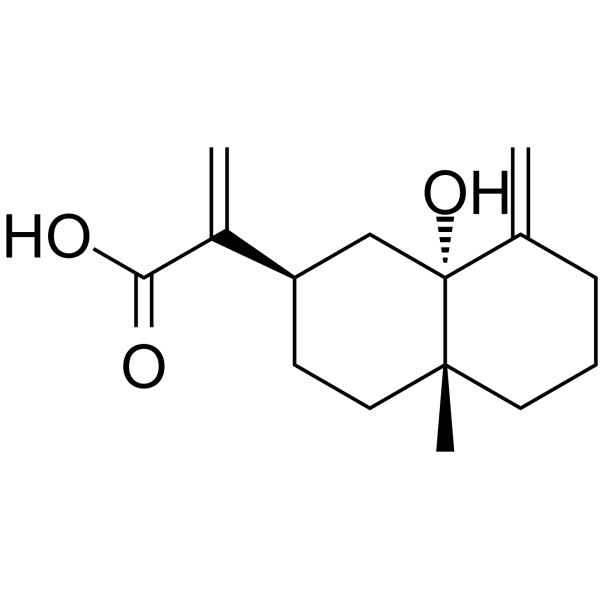
5α-Hydroxycostic acid, a eudesmane-type sesquiterpene, is isolated from the herb Laggera alata. 5α-Hydroxycostic acid inhibits angiogenesis and suppresses breast cancer cell migration through regulating VEGF/VEGFR2 and Ang2/Tie2 pathways .
loading...
    loading...
Cat. No.: HY-P991739

Target:  

VEGFR PD-1/PD-L1

Research Areas:  

Cancer

RC148 is a humanized IgG1 bispecific antibody targeting VEGF and PD-1. RC148 blocks PD-1-PD-L1 and VEGF-VEGFR interactions, triggers VEGF-dependent enhanced PD-1 binding, enables VEGF crosslinking, and inhibits PD-1-mediated immunosuppression. RC148 can be used for the research of metastatic gastric/gastroesophageal junction adenocarcinoma, non-small cell lung cancer, and metastatic breast cancer .
loading...
    loading...
Cat. No.: HY-N0135R
CAS No.: 568-72-9
Synonyms: Dan Shen ketone (Standard)
Tanshinone IIA (Standard) is the analytical standard of Tanshinone IIA. This product is intended for research and analytical applications. Tanshinone IIA (Tan IIA) is one of the main compositions in the root of Salvia miltiorrhiza Bunge. Tanshinone IIA may suppress angiogenesis by targeting the protein kinase domains of VEGF/VEGFR2.
loading...
    loading...
Cat. No.: HY-110066R
CAS No.: 39025-23-5
(Z)-Guggulsterone (Standard) is the analytical standard of (Z)-Guggulsterone. This product is intended for research and analytical applications. (Z)-Guggulsterone, a constituent of Indian Ayurvedic medicinal plant Commiphora mukul, inhibits the growth of human prostate cancer cells by causing apoptosis. (Z)-Guggulsterone inhibits angiogenesis by suppressing the VEGFVEGF-R2–Akt signaling axis . (Z)-Guggulsterone is also a potent FXR antagonist. (Z)-Guggulsterone reduces ACE2 expression and SARS-CoV-2 infection .
loading...
    loading...
Cat. No.: HY-P11198
Research Areas:  

Cancer

AC-P19M is an anticancer peptide. AC-P19M induces apoptosis by disrupting the cell membrane of cancer cells. AC-P19M reverses epithelial-mesenchymal transition (EMT). AC-P19M shows anti-angiogenic activity through the inhibition of VEGF-VEGFR2/ERK/Akt signaling. AC-P19M can be used for lung cancer research .
loading...
    loading...
Cat. No.: HY-117991
CAS No.: 1804982-31-7
Target:  

VEGFR

Research Areas:  

Cancer

DW10075 is a highly selective and orally active VEGFR inhibitor targeting the VEGF/VEGFR pathway. DW10075 selectively inhibits VEGFR-1, VEGFR-2, and VEGFR-3, but has no effect on FGFR and PDGFR. DW10075 inhibits VEGF-induced HUVEC proliferation, migration, and tube formation. And DW10075 inhibits angiogenesis in both the rat aortic ring model and the chick chorionic membrane model. DW10075 also exhibits antiproliferative activity against human cancer cell lines, with IC50s of 2.2 μM and 22.2 μM against U87-MG human glioblastoma cells and A375 melanoma cells, respectively. In the nude mouse U87-MG xenograft tumor model, DW10075 (po) significantly inhibits tumor growth and reduces the expression of CD31 and Ki67 in tumor tissues.
loading...
    loading...
Cat. No.: HY-185208
Research Areas:  

Cancer

Bevacizumab vedotin is an antibody-drug conjugate (ADC). Bevacizumab vedotin blocks the VEGF/VEGFR pathway to exert anti-angiogenic effects. Bevacizumab vedotin exhibits anti-proliferative effects on cancer cells, promotes cancer cell apoptosis (Apoptosis), induces cancer cell cycle arrest, and possesses anti-migratory activity against breast cancer cells. Bevacizumab vedotin can be used in research related to glioma, hepatocellular carcinoma, and breast cancer .
loading...
    loading...
Cat. No.: HY-117733
CAS No.: 176050-48-9
Zerumin A is an anti-angiogenic agent that acts on multiple molecular targets related to angiogenesis (including kdr/VEGFR2, angpt1, angpt2, tie1, and tie2). Zerumin A specifically inhibits the proliferation and migration of human umbilical vein endothelial cells (HUVECs) by regulating the VEGF-VEGFR and ANGPT-TIE signaling pathways, and dose-dependently inhibits angiogenesis (10-20 μM significantly inhibits zebrafish embryo angiogenesis). Zerumin A can be used in the research of cancer and angiogenesis-related inflammatory diseases. Zerumin A can be naturally extracted from the 95% ethanol extract of the fruits, seeds, and pericarp of Alpinia caerulea (R.Br.) Bentham (a plant of the Alpinia genus in the Zingiberaceae family) .
loading...
    loading...
  • 1

