14 Results for "

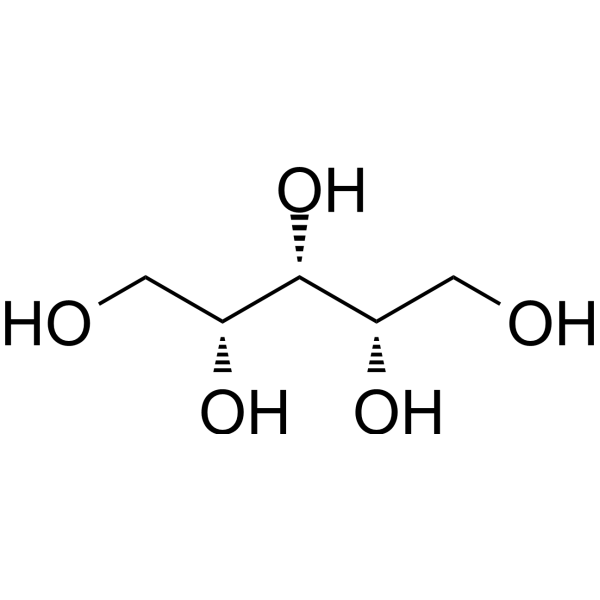
Xylitol

" in MedChemExpress (MCE) Product Catalog:
Products (14)

14 Results for "Xylitol" in MCE Product Catalog:

Cat. No.: HY-N0538
CAS No.: 87-99-0
Synonyms: Xylite
Xylitol can be classified as a polyol and sugar alcohol, exhibiting inhibitory activity on cancer cell proliferation. It induces autophagy (Autophagy) and cell death in A549 cells by activating the autophagy signaling pathway, as evidenced by the increased expression of LC3-II and Atg5-Atg12 upon Xylitol treatment. Additionally, Xylitol inhibits acetaldehyde production by Candida species, thereby reducing their carcinogenic potential. In vivo, Xylitol induces alterations in the gut microbiota of mice, which may enhance cholesterol accumulation and upregulate hepatic ChREBP, while also slowing tumor growth in the B16F10 melanoma C57BL/6 mouse model .
loading...
    loading...
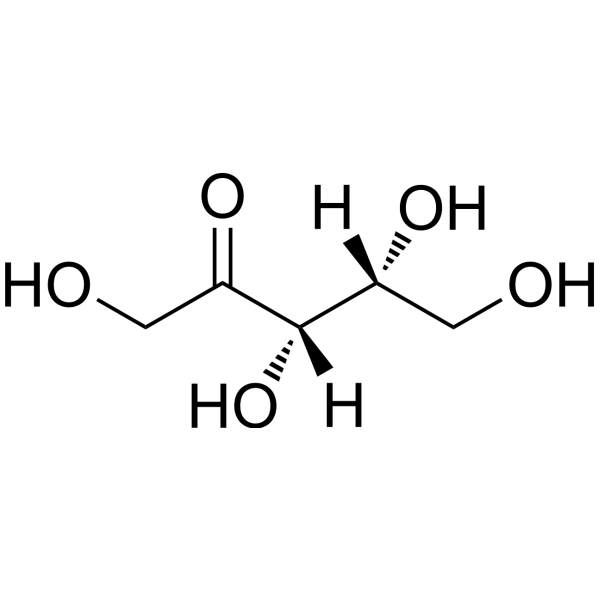
Cat. No.: HY-W010256
CAS No.: 551-84-8
D-Xylulose is a toxic pentose. D-Xylulose does not induce pentitol production in cells. D-Xylulose can induce ATP and intracellular Pi depletion through the accumulation of Sedoheptulose 7-P .
loading...
    loading...
Cat. No.: HY-N0538R
CAS No.: 87-99-0
Synonyms: Xylite (Standard)
Xylitol (Standard) is the analytical standard of Xylitol. This product is intended for research and analytical applications. Xylitol can be classified as polyols and sugar alcohols.
loading...
    loading...
Cat. No.: HY-P2866A
CAS No.: 9012-33-3
Synonyms: NAG, Porcine kidney
Target:  

Glycosidase

Research Areas:  

Others

β-N-Acetylhexosaminidase, Porcine kidney is a glycosidase with transglycosylation activity, used to generate health-beneficial human milk oligosaccharides, and it effectively interacts with low molecular weight sugar alcohols (such as glycerol, erythritol, and xylitol). The enzyme exhibits optimal activity at pH 5 and 40 °C, and shows high thermal stability (up to 55°C) when bound to the cell wall. β-N-Acetylhexosaminidase holds promise for applications in the biotransformation of Chitin (HY-126389) and research in the food health sector .
loading...
    loading...
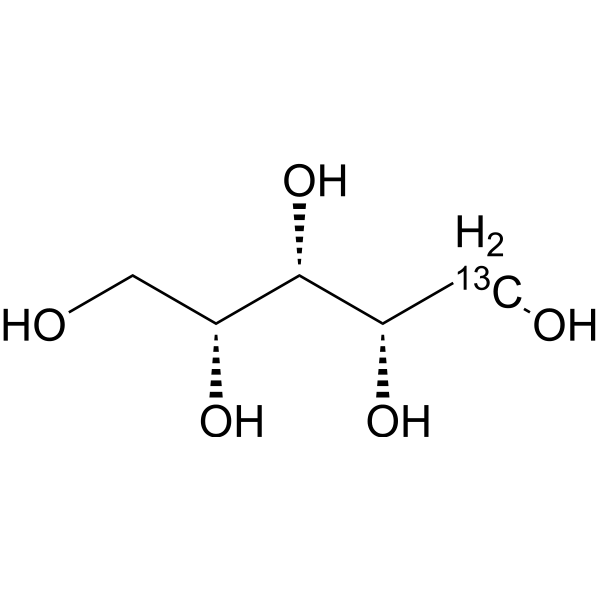
Cat. No.: HY-N0538S2
Synonyms: Xylite-5-13C
Xylitol-5- 13C is the 13C labeled Xylit .
loading...
    loading...
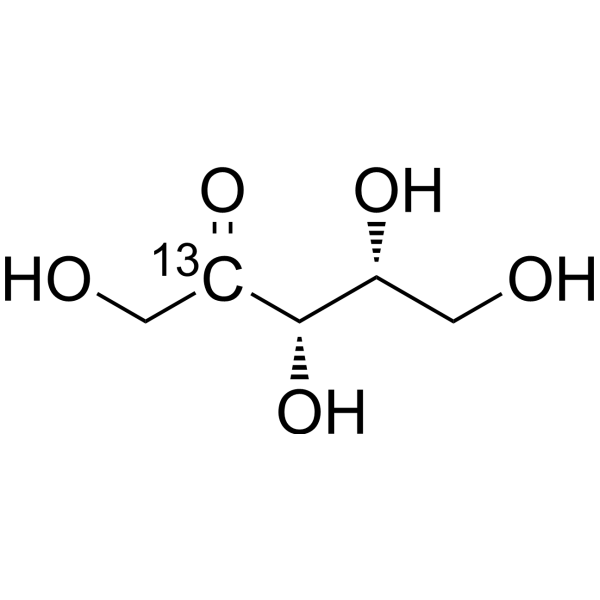
Cat. No.: HY-W010256S1
CAS No.: 131771-47-6
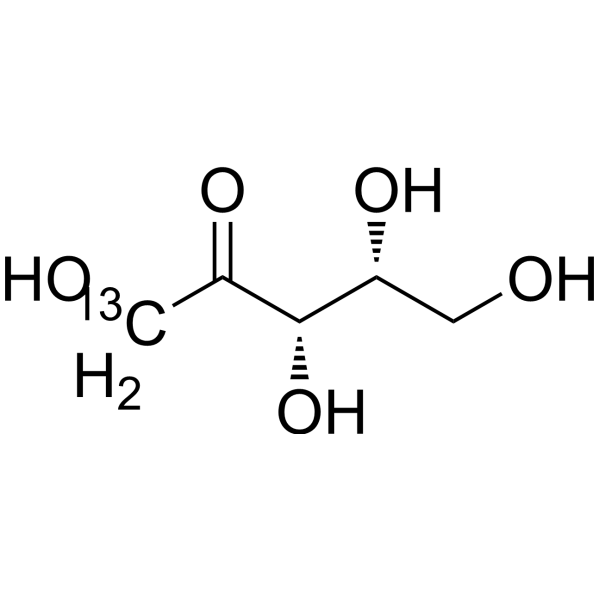
D-Xylulose-2- 13C is the 13C-labeled D-Xylulose (HY-W010256). D-Xylulose is a toxic pentose. D-Xylulose does not induce pentitol production in cells. D-Xylulose can induce ATP and intracellular Pi depletion through the accumulation of Sedoheptulose 7-P .
loading...
    loading...
Cat. No.: HY-W010256S
CAS No.: 131771-46-5
D-Xylulose-1- 13C is the 13C-labeled D-Xylulose (HY-W010256). D-Xylulose is a toxic pentose. D-Xylulose does not induce pentitol production in cells. D-Xylulose can induce ATP and intracellular Pi depletion through the accumulation of Sedoheptulose 7-P .
loading...
    loading...
Cat. No.: HY-W007174A
CAS No.: 53448-53-6
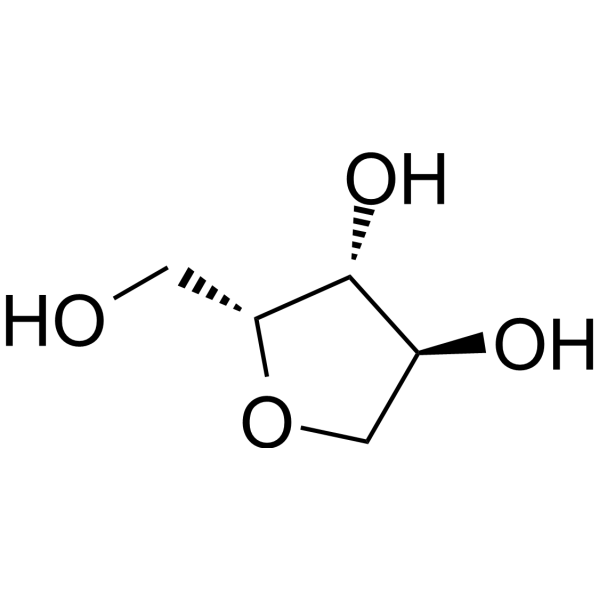
1,4-Anhydro-D-xylitol is a compound belonging to the class of sugar alcohols. It is derived from xylitol, a natural sweetener found in many fruits and vegetables. 1,4-Anhydro-D-xylitol is commonly used as a low-calorie sweetener and excipient in the food and pharmaceutical industries, and as a filler or binder in pharmaceutical formulations. It has also been investigated for its potential use in the development of biodegradable plastics and other sustainable materials.
loading...
    loading...
Cat. No.: HY-N0538S
Synonyms: Xylite-1-13C
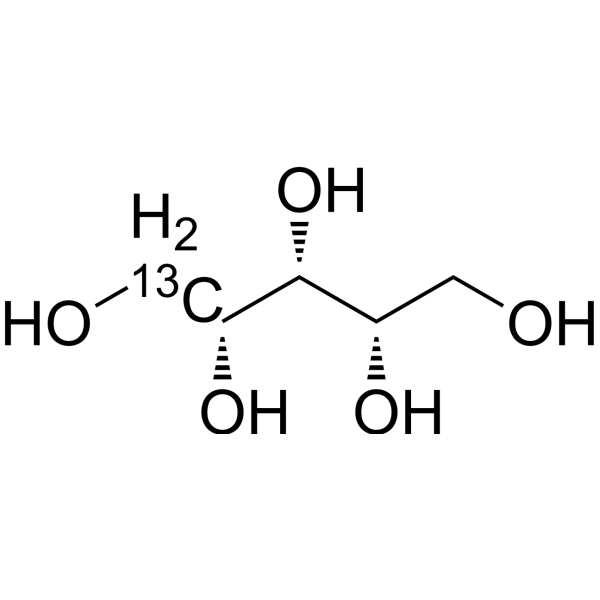
Xylitol-1- 13C is the 13C labeled Xylit .
loading...
    loading...
Cat. No.: HY-N0538S1
Synonyms: Xylite-2-13C
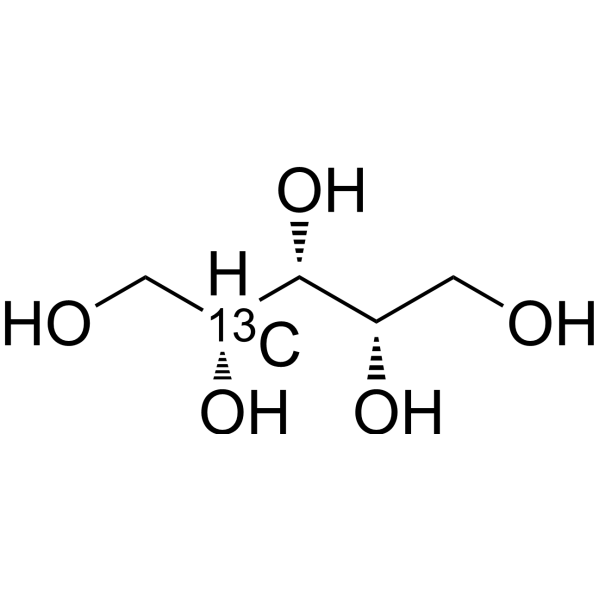
Xylitol-2- 13C is the 13C labeled Xylit .
loading...
    loading...
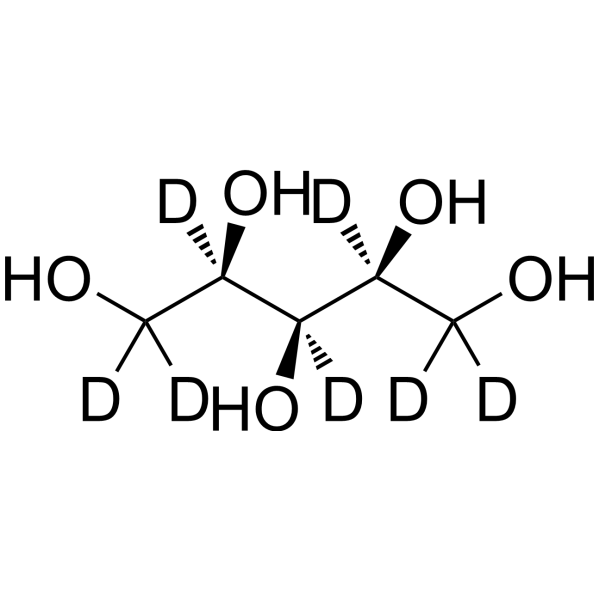
Cat. No.: HY-N0538S4
Synonyms: Xylite-d7
Xylitol-d7 is the deuterium labeled Xylit .
loading...
    loading...
Cat. No.: HY-W768347
Synonyms: Xylite-13C5
Xylitol- 13C5 (Xylite- 13C5) is the 13C-labeled Xylitol (HY-N0538). Xylitol can be classified as a polyol and sugar alcohol, exhibiting inhibitory activity on cancer cell proliferation. It induces autophagy (Autophagy) and cell death in A549 cells by activating the autophagy signaling pathway, as evidenced by the increased expression of LC3-II and Atg5-Atg12 upon Xylitol treatment. Additionally, Xylitol inhibits acetaldehyde production by Candida species, thereby reducing their carcinogenic potential. In vivo, Xylitol induces alterations in the gut microbiota of mice, which may enhance cholesterol accumulation and upregulate hepatic ChREBP, while also slowing tumor growth in the B16F10 melanoma C57BL/6 mouse model .
loading...
    loading...
Cat. No.: HY-W010256S3
D-Xylulose- 13C5 is the 13C-labeled D-Xylulose (HY-W010256). D-Xylulose is a toxic pentose. D-Xylulose does not induce pentitol production in cells. D-Xylulose can induce ATP and intracellular Pi depletion through the accumulation of Sedoheptulose 7-P .
loading...
    loading...
Cat. No.: HY-W007174
CAS No.: 491-19-0
Research Areas:  

Infection

Xylitan is a derivative of Xylitol (HY-N0538). Xylitan derivatives exhibit in vitro anti-Trypanosoma cruzi activity. Xylitan can be used for the research of Chagas disease .
loading...
    loading...
  • 1

