



551-84-8
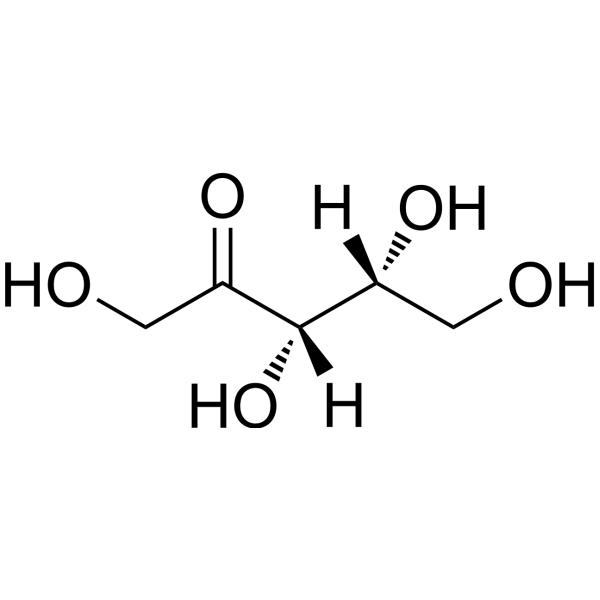
551-84-8
Chemical Structure
D-Xylulose
- CAS No.: 551-84-8
- Formula:C5H10O5
- Molecular Weight:150.13
IUPAC Name: (3S,4R)-1,3,4,5-tetrahydroxypentan-2-one
InChIKey: ZAQJHHRNXZUBTE-WUJLRWPWSA-N
SMILES: OCC([C@H]([C@@H](CO)O)O)=O
Biological Activity:
D-Xylulose is a toxic pentose. D-Xylulose does not induce pentitol production in cells. D-Xylulose can induce ATP and intracellular Pi depletion through the accumulation of Sedoheptulose 7-P[1][2].
The product specifications provided below refer solely to the active content of D-Xylulose.
| Cat. No. | Product Name | Purity | Description | Pricing | |||||||||||||||||||
|---|---|---|---|---|---|---|---|---|---|---|---|---|---|---|---|---|---|---|---|---|---|---|---|
|
|
D-Xylulose | 99.0% | D-Xylulose is a toxic pentose. D-Xylulose does not induce pentitol production in cells. D-Xylulose can induce ATP and intracellular Pi depletion through the accumulation of Sedoheptulose 7-P. The product specifications provided below refer solely to the active content of D-Xylulose. |
||||||||||||||||||||
|
loading...
/
|
|||||||||||||||||||||||
|
|
D-Xylulose-1-13C | 99.22% | D-Xylulose-1-13C is the 13C-labeled D-Xylulose (HY-W010256). D-Xylulose is a toxic pentose. D-Xylulose does not induce pentitol production in cells. D-Xylulose can induce ATP and intracellular Pi depletion through the accumulation of Sedoheptulose 7-P. The product specifications provided below refer solely to the active content of D-Xylulose-1-13C. |
||||||||||||||||||||
|
loading...
/
|
|||||||||||||||||||||||
|
|
D-Xylulose-13C5 | 98.83% | D-Xylulose-13C5 is the 13C-labeled D-Xylulose (HY-W010256). D-Xylulose is a toxic pentose. D-Xylulose does not induce pentitol production in cells. D-Xylulose can induce ATP and intracellular Pi depletion through the accumulation of Sedoheptulose 7-P. The product specifications provided below refer solely to the active content of D-Xylulose-13C5. |
||||||||||||||||||||
|
loading...
/
|
|||||||||||||||||||||||
|
|
D-Xylulose-2-13C | 99.5% | D-Xylulose-2-13C is the 13C-labeled D-Xylulose (HY-W010256). D-Xylulose is a toxic pentose. D-Xylulose does not induce pentitol production in cells. D-Xylulose can induce ATP and intracellular Pi depletion through the accumulation of Sedoheptulose 7-P. The product specifications provided below refer solely to the active content of D-Xylulose-2-13C. |
||||||||||||||||||||
|
loading...
/
|
|||||||||||||||||||||||
Structural Analogs
-
Similarity Score 1.00
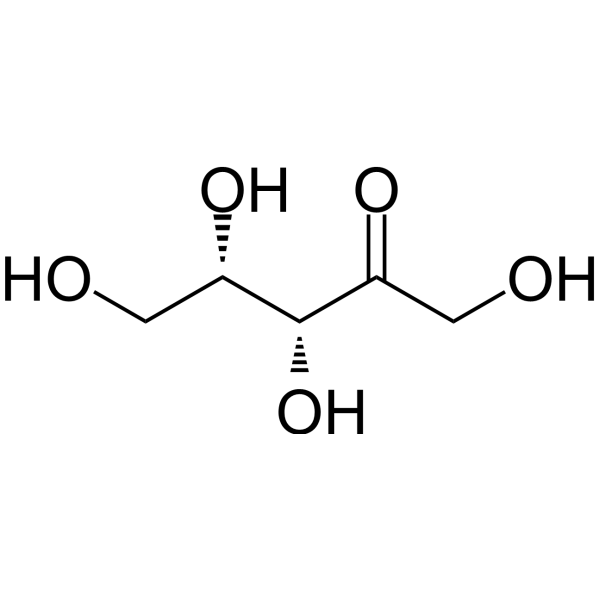 HY-113317L-Xylulose
-
Similarity Score 1.00
 HY-121305D-Ribulose (1 M in water)
-
Similarity Score 1.00
 HY-121305BL-Ribulose (solution)
-
Similarity Score 0.91
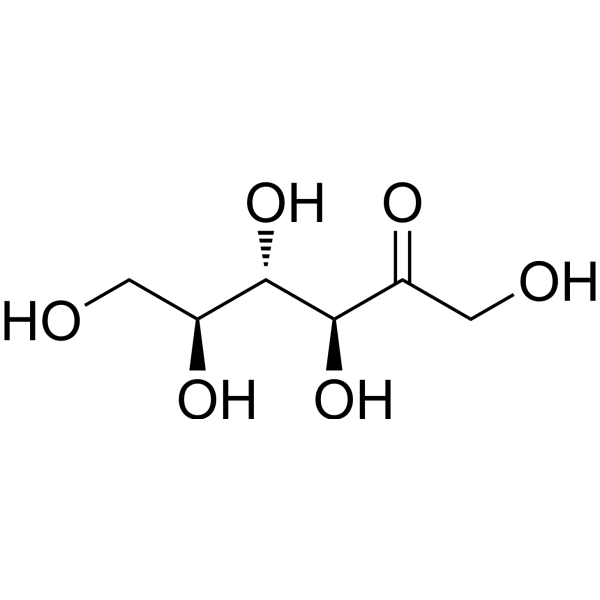 HY-130687L-Psicose
-
Similarity Score 0.91
 HY-42680ATagatose
-
Similarity Score 0.91
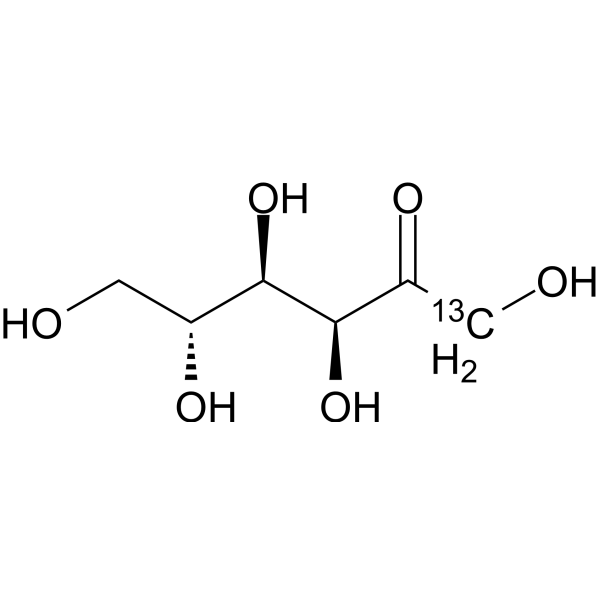 HY-N7092S1D-Fructose-13C
-
Similarity Score 0.91
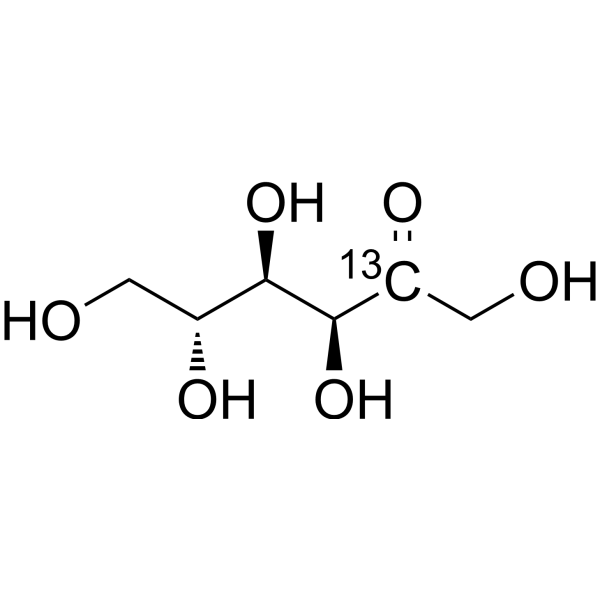 HY-N7092S2D-Fructose-13C-1
-
Similarity Score 0.91
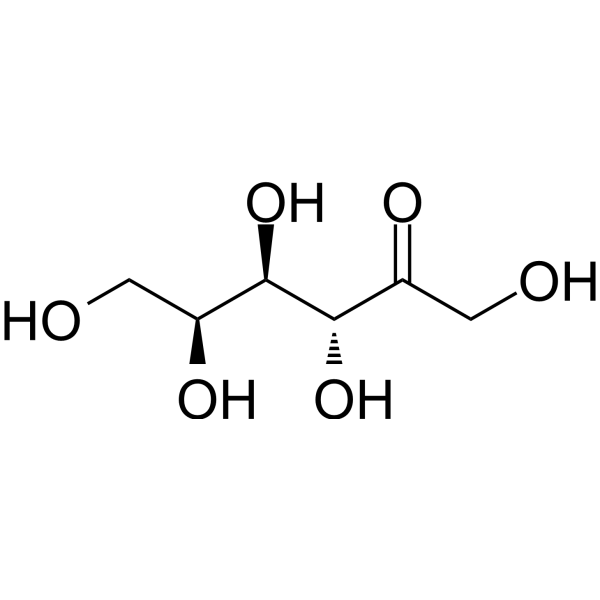 HY-W145570L-Tagatose
-

Explore the MedChemAI to find more analogs


References
- [1]. Huck JH, et al. Evaluation of pentitol metabolism in mammalian tissues provides new insight into disorders of human sugar metabolism. Molecular genetics and metabolism. 2004 Jul;82(3):231-7. [Content Brief]
- [2]. Vincent MF, et al. D-xylulose-induced depletion of ATP and Pi in isolated rat hepatocytes. FASEB journal : official publication of the Federation of American Societies for Experimental Biology. 1989 May;3(7):1855-61. [Content Brief]



