



D-Ribulose (1 M in water)

Based on 1 Customer Validation
D-Ribulose (1 M in water) is a pentose sugar, a key intermediate in the Calvin cycle, and a substrate for pentose isomerase and ribulokinase. D-Ribulose (1 M in water) can be enzymatically converted to D-arabinose by pentose isomerase; it undergoes a two-step oxidation by cells of Acetobacter suboxydans. D-Ribulose (1 M in water) can be used in metabolism-related research.
商品は「研究用試薬」です。人や動物の医療用・臨床診断用・食品用の製品ではありません。
研究用途以外に使用した場合、当社は一切の責任を負いかねます。
- 純度 : 98.0%
- CAS 番号: 488-84-6
- 分子式: C5H10O5
- 分子量:150.13
-
保管条件:
Solution, -20°C, 2 years


To place orders, for customer services and technical support, please contact: MedChemExpress USA
Tel: 609-228-6898 E-mail: [email protected] [email protected]


-
 生物活性
生物活性
-
化学情報
- 純度とドキュメンテーション
- 参考文献
-
 Help & FAQs


-
HY-126854
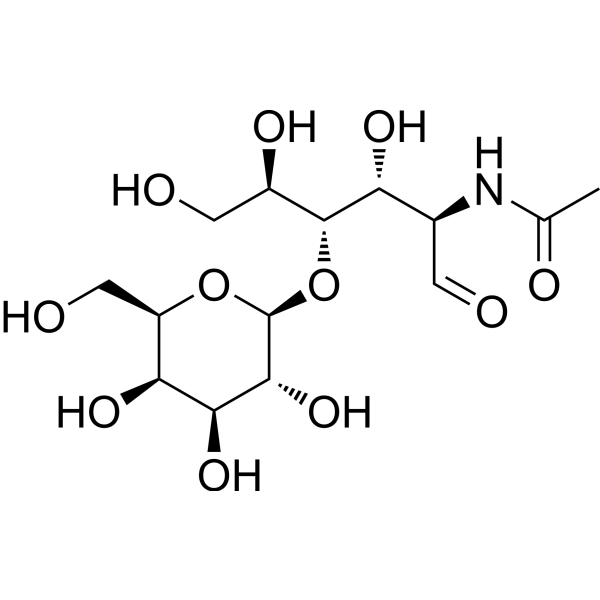
N-AcetyllactosamineNitrogen Disaccharide -
HY-N5102
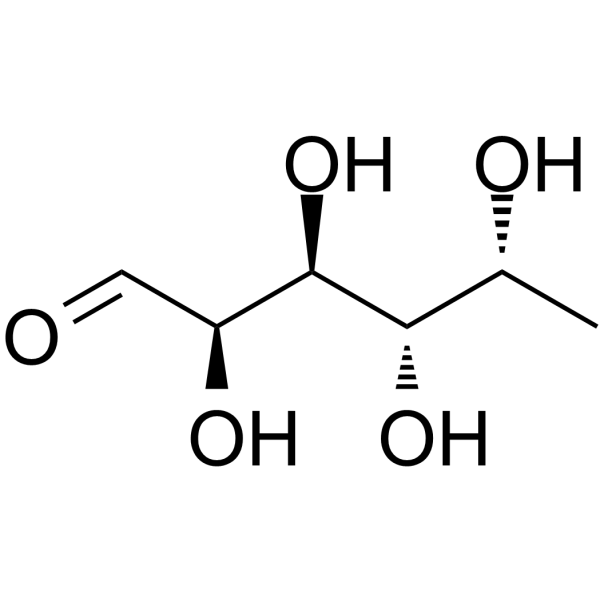
D-(+)-FucoseL-arabinose Analogue -

HY-N8326
MaltononaoseLinear Oligosaccharides -

HY-126854R
N-Acetyllactosamine (Standard)Nitrogen Disaccharide -

HY-N5102R
D-(+)-Fucose (Standard)L-arabinose Analogue -
HY-N6833
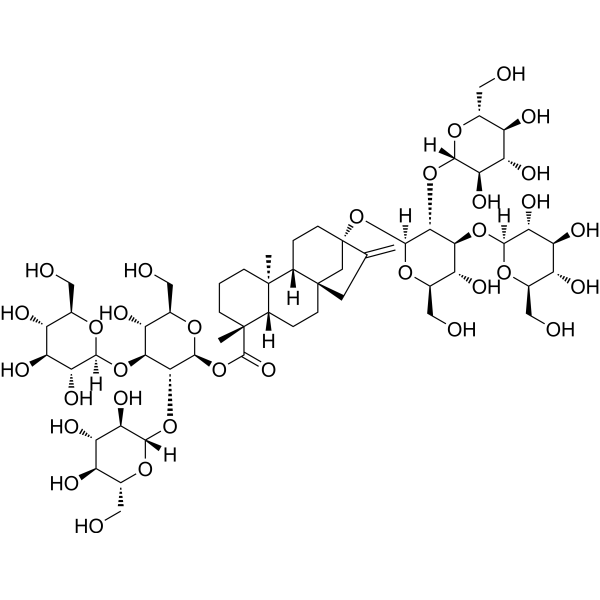
Rebaudioside MSweetener -
HY-131940
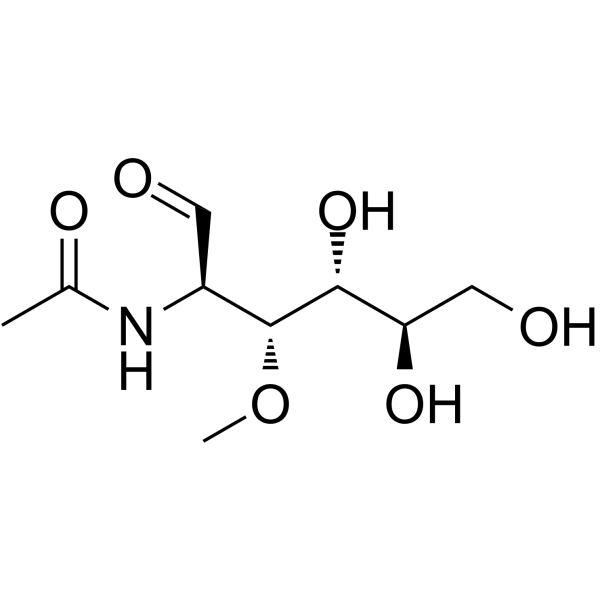
3-O-Methyl-N-acetyl-D-glucosamineN-acetylglucosamine Kinase Inhibitor -

HY-N6833R
Rebaudioside M (Standard)Sweetener -
HY-D0195S
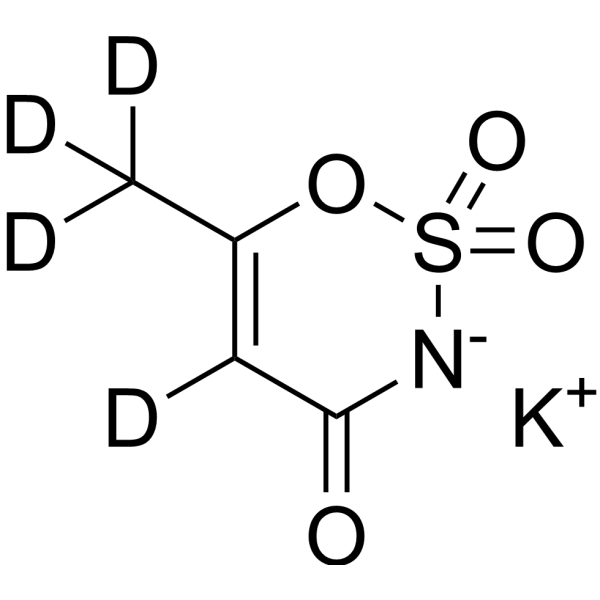
Acesulfame-d4 potassiumStable Isotope -

HY-128103
Glucagon receptor antagonist-7GCGR Antagonist -

HY-118914
Glucagon receptor antagonist inactive controlGlucagon receptor antagonist inactive control -

HY-109092A
rel-LicogliflozinSGLT Inhibitor


生物活性
製品説明
IC50 & Target
|
Human Endogenous Metabolite |
体外実験
D-Ribulose (1 M in water) is unstable under weakly alkaline pH conditions (8.3 and 9.8) at 37°C and converts into non-ketopentose products[1].
D-Ribulose (1 M in water) can be fermented by the domesticated Escherichia coli strain Ba15, and its CO2 production rate is slower than that of D-arabinose fermentation; the pentose isomerase derived from the domesticated Escherichia coli strain Ba15 catalyzes the reversible isomerization between D-ribulose and D-arabinose[1].
D-Ribulose (1 M in water) is oxidized by washed cells of Gluconobacter suboxydans via a two-stage constitutive pathway, with a carbonyl-containing intermediate accumulating[2].
MedChemExpress (MCE) has not independently confirmed the accuracy of these methods. They are for reference only.


化学情報
-
CAS 番号 488-84-6
-
性状 Liquid
-
分子量 150.13
-
分子式 C5H10O5
-
Color Colorless to light yellow
-
SMILES
OC[C@@H](O)[C@@H](O)C(CO)=O
-
輸送条件
Room temperature in continental US; may vary elsewhere.
-
保管条件
Solution, -20°C, 2 years


純度とドキュメンテーション
-
データシート (267 KB)
-
SDS (394 KB)
- English - EN (394 KB)
- Français - FR (394 KB)
- Deutsch - DE (394 KB)
- Norwegian - NO (394 KB)
- Español - ES (394 KB)
- Swedish - SV (394 KB)
- Italian - IT (394 KB)
- Korean - KR (394 KB)
- Portuguese - PT (394 KB)
-
取扱説明書 (2659 KB)
参考文献

Calculators
濃度 (開始) × 体積 (開始) = 濃度 (終了) × 体積 (終了)


D-Ribulose (1 M in water) 関連分類
HY-121305 関連分類
 Powered by Bioz