8 Results for "

antral

" in MedChemExpress (MCE) Product Catalog:
Products (8)

8 Results for "antral" in MCE Product Catalog:

1
1 Cited Publications
Cat. No.: HY-N2026
CAS No.: 94-13-3
Synonyms: Propyl parahydroxybenzoate; Propyl 4-hydroxybenzoate
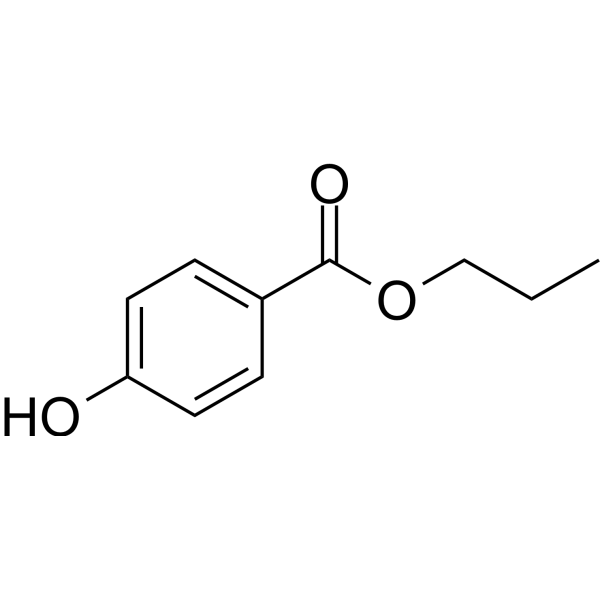
Propylparaben (Propyl parahydroxybenzoate) is an antibacterial preservative that can be produced by plants and bacteria. Propylparaben is an orally active weak estrogen receptor agonist. Propylparaben regulates the PI3K-AKT and JNK signaling pathways, and induces oxidative stress. Propylparaben is commonly used in cosmetics, pharmaceuticals and foods, and can be used in studies related to ovarian aging and myocardial ischemia-reperfusion injury .
loading...
    loading...
1
1 Cited Publications
Cat. No.: HY-N2026A
CAS No.: 35285-69-9
Synonyms: Propyl parahydroxybenzoate sodium; Propyl 4-hydroxybenzoate sodium
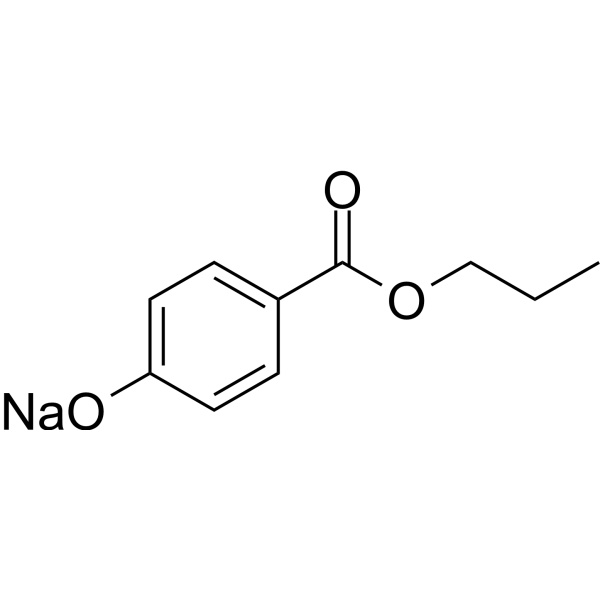
Propylparaben (Propyl parahydroxybenzoate) sodium is an antibacterial preservative that can be produced by plants and bacteria. Propylparaben sodium is an orally active weak estrogen receptor agonist. Propylparaben sodium regulates the PI3K-AKT and JNK signaling pathways, and induces oxidative stress. Propylparaben sodium is commonly used in cosmetics, pharmaceuticals and foods, and can be used in studies related to ovarian aging and myocardial ischemia-reperfusion injury .
loading...
    loading...
Cat. No.: HY-P0221C
CAS No.: 129405-61-4
Target:  

PACAP Receptor

Research Areas:  

Metabolic Disease

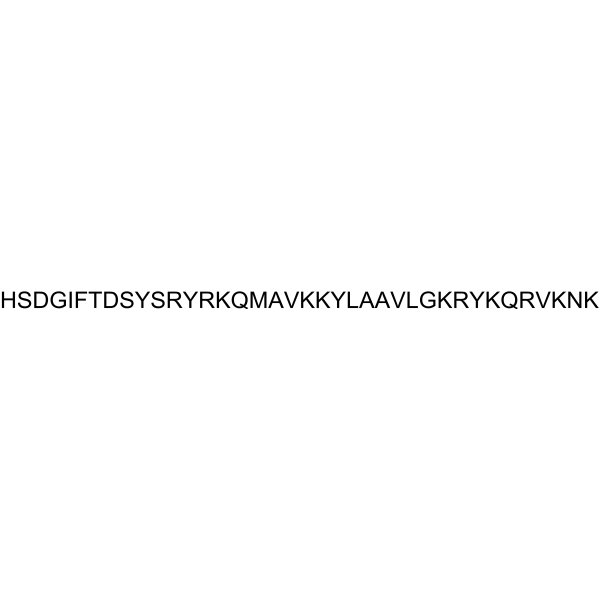
PACAP (1-38) free acid is a desamido-PACAP (1-38), human, ovine, rat (HY-P0221). PACAP (1-38) free acid can activate the human PAC1 receptor. PACAP (1-38) free acid induces cyclic AMP (cAMP) generation in both NS-1 neuroendocrine cells and non-neuroendocrine HEK293 cells .
loading...
    loading...
Cat. No.: HY-U00121A
CAS No.: 268548-31-8
Target:  

5-HT Receptor

Research Areas:  

Metabolic Disease

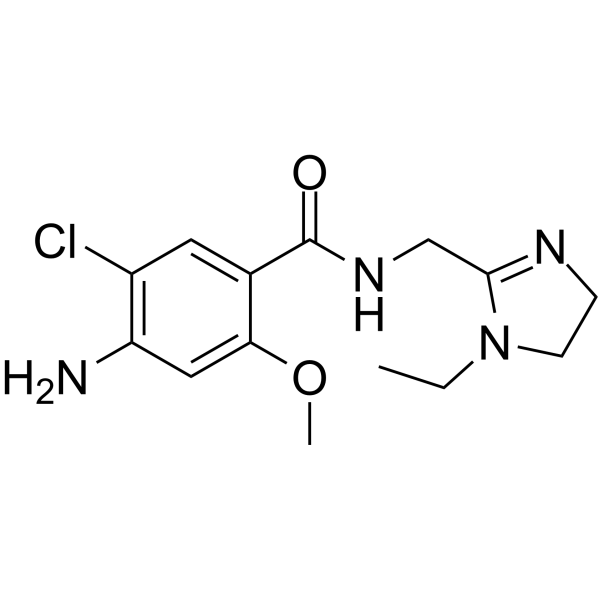
Lintopride hydrochloride, a benzamide, is a potent 5HT-4 antagonist with moderate 5HT-3 antagonist properties. Lintopride hydrochloride increases gastric emptying, stimulates antral and duodenal motility and accelerates intestinal transit in animal. Lintopride hydrochloride significantly increases the lower oesophageal sphincter (LOS) basal tone .
loading...
    loading...
Cat. No.: HY-P0221B
Target:  

PACAP Receptor

Research Areas:  

Endocrinology

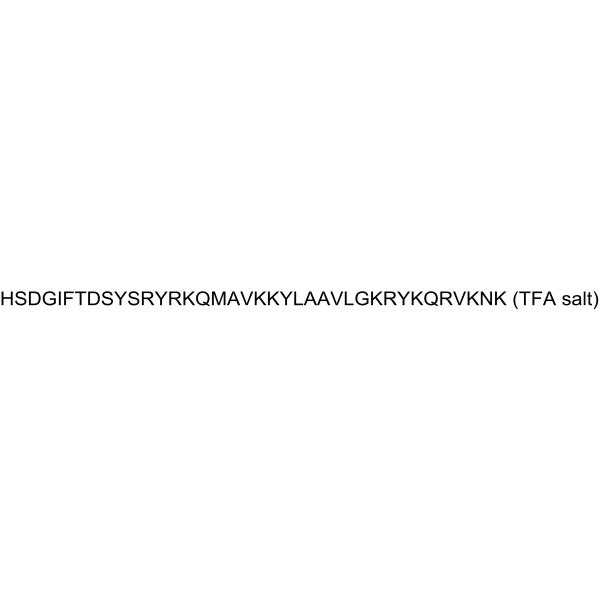
PACAP (1-38) free acid TFA is an endogenous neuropeptide. PACAP (1-38) free acid TFA potently stimulates antral motility and somatostatin secretion, inhibits the secretion of gastrin and stimulates the release of vasoactive intestinal polypeptide, gastrin releasing peptide and substance P. PACAP (1-38) free acid TFA also enhances N-methyl-D-aspartate receptor function and expression of brain-derived neurotrophic factor through RACK1 .
loading...
    loading...
Cat. No.: HY-U00121
CAS No.: 107429-63-0
Target:  

5-HT Receptor

Research Areas:  

Metabolic Disease

Lintopride, a benzamide, is a potent 5HT-4 antagonist with moderate 5HT-3 antagonist properties. Lintopride increases gastric emptying, stimulates antral and duodenal motility and accelerates intestinal transit in animal. Lintopride significantly increases the lower oesophageal sphincter (LOS) basal tone .
loading...
    loading...
Cat. No.: HY-16729A
CAS No.: 1221416-42-7
Synonyms: YKP10811 hydrochloride
Target:  

5-HT Receptor

Research Areas:  

Inflammation/Immunology

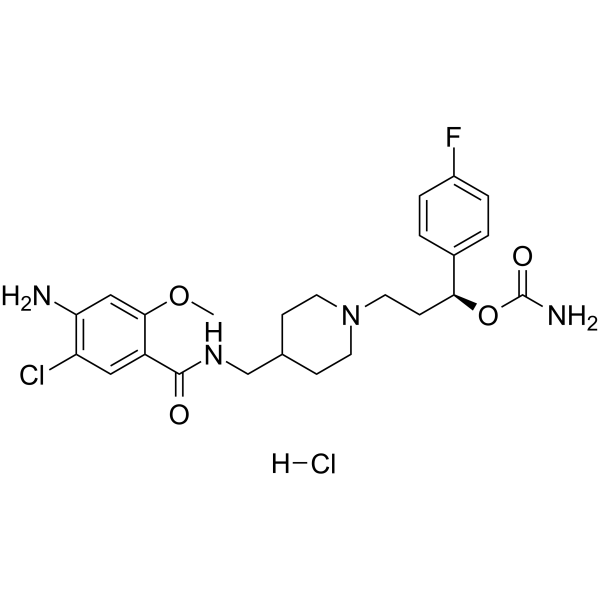
Relenopride (YKP10811) hydrochloride is a specific and selective 5-HT4 receptor agonist (Ki=4.96 nM). Relenopride hydrochloride has 120-fold and 6-fold lower affinity, respectively, for 5-HT2A (Ki=600 nM) and 5-HT2B receptors (Ki=31 nM) than for 5-HT4. Relenopride hydrochloride increases gastrointestinal (GI) motility .
loading...
    loading...
Cat. No.: HY-113451R
CAS No.: 73141-46-5
Propylparaben (sodium) (Standard) is the analytical standard of Propylparaben (sodium). This product is intended for research and analytical applications. Propylparaben sodium (Propyl parahydroxybenzoate) is an antimicrobial preservative which can be produced naturally by plants and bacteria. Propylparaben sodium is prevalently used in cosmetics, pharmaceuticals, and foods. Propylparaben sodium disrupts antral follicle growth and steroidogenic function by altering the cell-cycle, apoptosis, and steroidogenesis pathways. Propylparaben sodium also decreases sperm number and motile activity in rats .
loading...
    loading...

