7 Results for "

aplastic anemia

" in MedChemExpress (MCE) Product Catalog:
Products (7)

7 Results for "aplastic anemia" in MCE Product Catalog:

3
3 Cited Publications
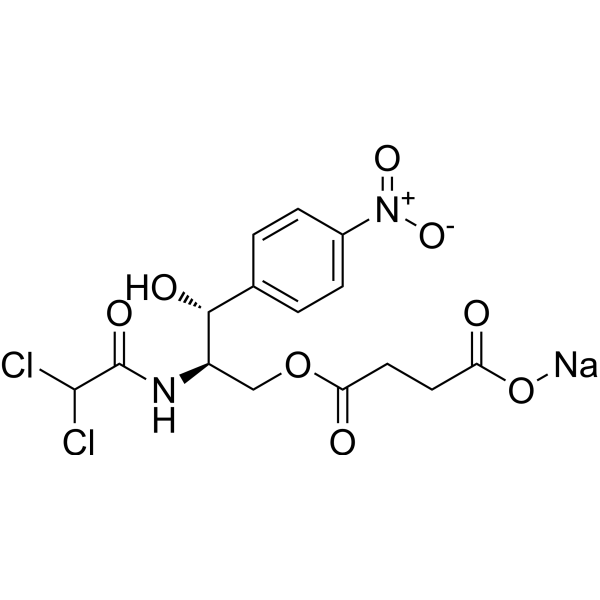
Cat. No.: HY-N7114A
CAS No.: 982-57-0
Chloramphenicol succinate sodium is a prodrug of Chloramphenicol (HY-B0239), acting as a P2Y14R inhibitor with an IC50 of 1.585 nM. Chloramphenicol succinate sodium serves as a competitive substrate and inhibitor of succinate dehydrogenase (SDH), which may account for its toxicity. Chloramphenicol succinate sodium exerts a significant inhibitory effect on colitis. Chloramphenicol succinate sodium can be used in research related to myelosuppression, gray baby syndrome, aplastic anemia, bacterial meningitis and inflammatory bowel disease .
loading...
    loading...
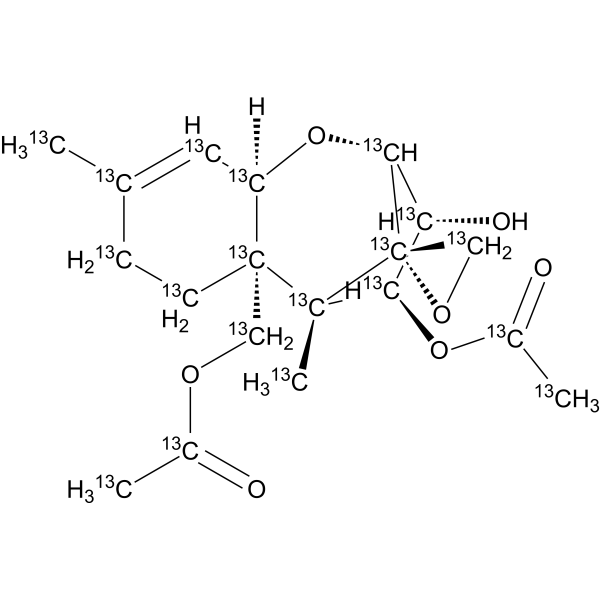
Cat. No.: HY-N6692S
Diacetoxyscirpenol- 13C19 is 13C labeled Diacetoxyscirpenol (HY-N6692). Diacetoxyscirpenol (DAS) is a trichothecene mycotoxin, a secondary metabolite product of fungi. Diacetoxyscirpenol (DAS) consumption induces haematological disorders (neutropenia, aplastic anemia) in human and animals .
loading...
    loading...
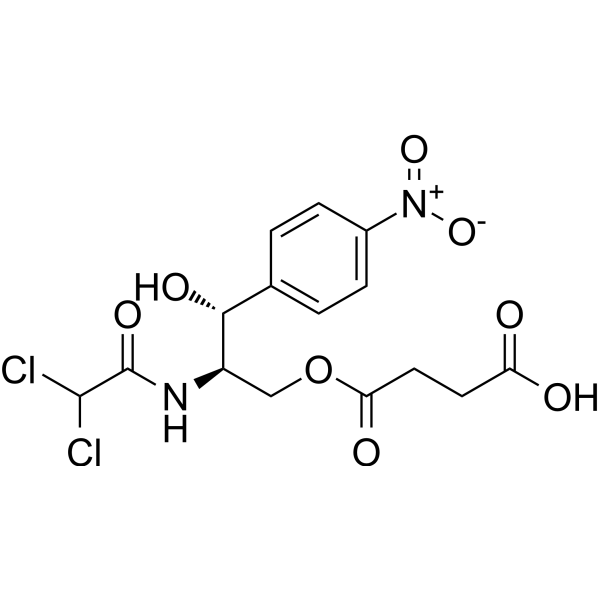
Cat. No.: HY-N7114
CAS No.: 3544-94-3
Chloramphenicol succinate is a prodrug of Chloramphenicol (HY-B0239), acting as a P2Y14R inhibitor with an IC50 of 1.585 nM. Chloramphenicol succinate serves as a competitive substrate and inhibitor of succinate dehydrogenase (SDH), which may account for its toxicity. Chloramphenicol succinate exerts a significant inhibitory effect on colitis. Chloramphenicol succinate can be used in research related to myelosuppression, gray baby syndrome, aplastic anemia, bacterial meningitis and inflammatory bowel disease .
loading...
    loading...
Cat. No.: HY-172803
CAS No.: 2723569-00-2
Target:  

Ferroptosis ERK MEK p38 MAPK

Research Areas:  

Inflammation/Immunology

Ferroptosis inducer-7 is an orally active and selective ferroptosis inducer via inositol 1,4,5-trisphosphate receptor (IP3R)/calcium release-activated calcium channel protein (ORAI). Ferroptosis inducer-7 exhibits a notable effect in alleviating anemia symptoms, suppressing bone marrow CTLs activation, and improving hematopoietic function in immune-mediated bone marrow failure. Ferroptosis inducer-7 can be studied in research for aplastic anemia .
loading...
    loading...
Cat. No.: HY-133944
CAS No.: 473-42-7
Synonyms: Nisulfazole; p-Nitrosulfathiazole
Nitrosulfathiazole (Nisulfazole; p-Nitrosulfathiazole) is a sulfonamide antibacterial agent and also a key chemical intermediate for the hematotoxicity of Chloramphenicol (HY-B0239). Nitrosulfathiazole induces DNA helix instability, strand breakage and aplastic anemia. Nitrosulfathiazole can be used in research related to bacterial infections and aplastic anemia .
loading...
    loading...
Cat. No.: HY-N7114AR
CAS No.: 982-57-0
Chloramphenicol succinate sodium (Standard) is the analytical standard of Chloramphenicol succinate sodium. This product is intended for research and analytical applications. Chloramphenicol succinate sodium is a prodrug of Chloramphenicol (HY-B0239), acting as a P2Y14R inhibitor with an IC50 of 1.585 nM. Chloramphenicol succinate sodium serves as a competitive substrate and inhibitor of succinate dehydrogenase (SDH), which may account for its toxicity. Chloramphenicol succinate sodium exerts a significant inhibitory effect on colitis. Chloramphenicol succinate sodium can be used in research related to myelosuppression, gray baby syndrome, aplastic anemia, bacterial meningitis and inflammatory bowel disease .
loading...
    loading...
Cat. No.: HY-L171
4,329 compounds

Hematopathy, also known as hematopoietic system diseases, are a class of diseases that hematopoietic system has abnormal changes. Common hematopathy include: aplastic anemia, myeloproliferative diseases, thalassemia, leukemia, lymphoma, myeloma and hemophilia, etc. In recent years, treatments for hematopathy have been developed. In particular, the treatment of malignant hematopathy developed from chemotherapy, radiotherapy, bone marrow development to immunotherapy, induced differentiation therapy, cell therapy, gene therapy and hematopoietic stem cell transplantation. Although these therapies have greatly improved the survival rate of patients, there are still problems such as low cure rate and easy recurrence in the treatment of hematopathy. Therefore, it is of great significance to actively search for new hematopathy therapeutic drugs.

MCE designs a unique collection of 4,329 anti-hematopathy small molecules, which is an effective tool for development and research of anti-hematopathy compounds.

