4 Results for "

bacterial leaf spot

" in MedChemExpress (MCE) Product Catalog:
Products (4)

4 Results for "bacterial leaf spot" in MCE Product Catalog:

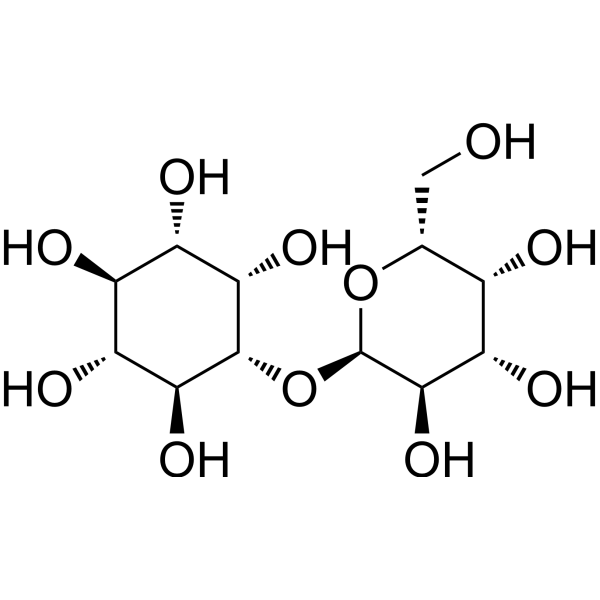
Cat. No.: HY-N9497
CAS No.: 3687-64-7
Category:  

Natural Products

Target:  

Galectin Fungal

Galactinol is a disaccharide carbohydrate serving as a galactosyl donor, which belongs to the raffinose family oligosaccharide pathway and acts as an important osmoprotectant. Galactinol not only induces disease resistance in plants against fungal and bacterial pathogens, but also significantly enhances plant tolerance to abiotic stresses such as drought, high salinity, low temperature and oxidative damage. In addition, Galactinol has the ability to scavenge hydroxyl radicals, can act as a signaling component for root colonization-induced systemic resistance, and is positively correlated with seed longevity in various crops, making it a potential biomarker for evaluating seed vigor. Therefore, Galactinol can be used in the research of various plant diseases including fungal leaf spot, bacterial angular leaf spot, gray mold and soft rot .
loading...
    loading...
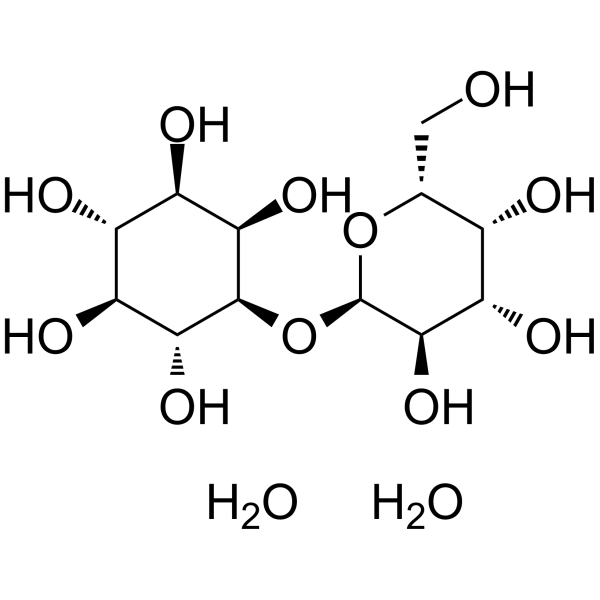
Cat. No.: HY-135258
CAS No.: 1217474-91-3
Purity:  ≥98.0%
Target:  

Galectin Fungal

Research Areas:  

Others

Galactinol dihydrate is a disaccharide carbohydrate serving as a galactosyl donor, which belongs to the raffinose family oligosaccharide pathway and acts as an important osmoprotectant. Galactinol dihydrate not only induces disease resistance in plants against fungal and bacterial pathogens, but also significantly enhances plant tolerance to abiotic stresses such as drought, high salinity, low temperature and oxidative damage. In addition, Galactinol dihydrate has the ability to scavenge hydroxyl radicals, can act as a signaling component for root colonization-induced systemic resistance, and is positively correlated with seed longevity in various crops, making it a potential biomarker for evaluating seed vigor. Therefore, Galactinol dihydrate can be used in the research of various plant diseases including fungal leaf spot, bacterial angular leaf spot, gray mold and soft rot .
loading...
    loading...
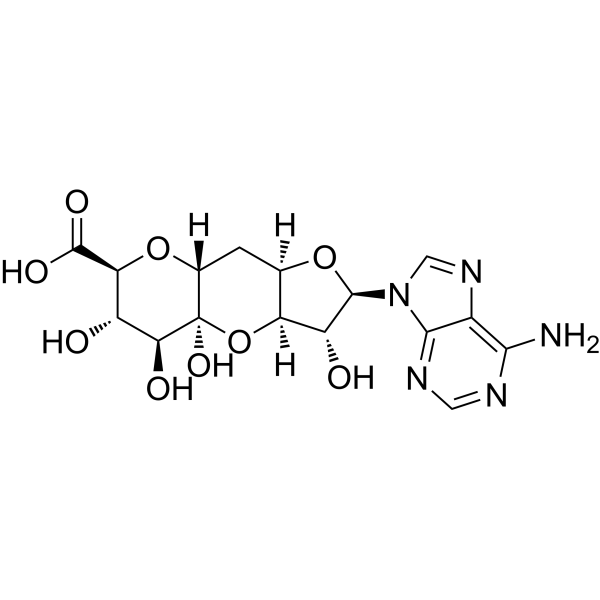
Cat. No.: HY-N12498
CAS No.: 123970-01-4
Aureonuclemycin can be isolated from Staphylococcus aureus to obtain its biosynthetic gene cluster. Aureonuclemycin exists in two forms: Type A and Type B. Aureonuclemycin A is a nucleoside antibiotic that is structurally similar to herbicides and contains adenine. Aureonuclemycin B contains 5′-deoxyadenosine and exhibits antibacterial activity. Aureonuclemycin can be used in the research of bacterial leaf blight in rice, citrus canker, and bacterial leaf spot in rice. .
loading...
    loading...
Cat. No.: HY-176997
CAS No.: 3031881-21-4
Target:  

PDHK Bacterial

Research Areas:  

Infection

PDHc-E2-IN-1 (Compound 9) is a Pyruvate Dehydrogenase Complex E2 (PDHc-E2) inhbibitor. with an IC50 of 2.52 μM. PDHc-E2-IN-1 shows strong antibacterial activity and can be used in the research of bacterial spot disease and bacterial leaf blight in rice .
loading...
    loading...

