4 Results for "

bacterial wilt

" in MedChemExpress (MCE) Product Catalog:
Products (4)

4 Results for "bacterial wilt" in MCE Product Catalog:

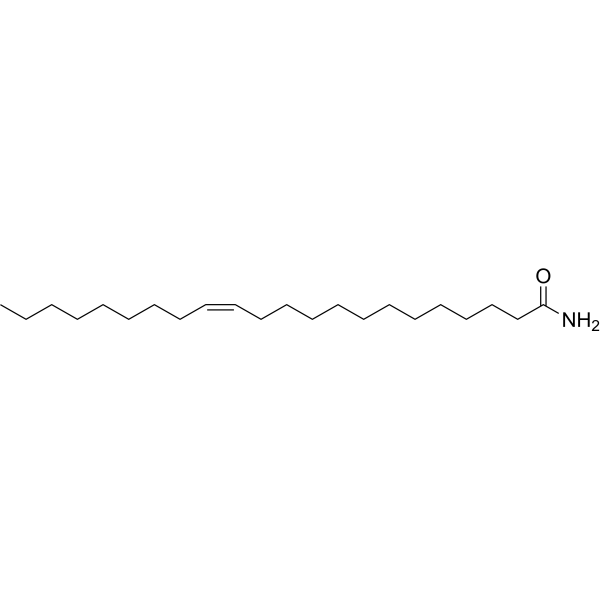
Cat. No.: HY-W009123
CAS No.: 112-84-5
Synonyms: cis-13-Docosenamide
Erucamide is an orally active, blood-brain barrier-permeable TMEM19 ligand and T3SS inhibitor. Erucamide exerts retinal neuroprotective effects in mouse models of retinal degeneration. Erucamide attenuates depression- and anxiety-like behaviors in mice.\n\nErucamide binds to the conserved hydrophobic pocket in HrcC, disrupts its outer membrane localization, and blocks T3SS-mediated effector protein secretion in Gram-negative pathogenic bacteria. Erucamide enhances the antimicrobial immunity of plants against pathogenic bacteria. Erucamide can be used in research related to retinitis pigmentosa, anxiety and depression, bacterial wilt, and bacterial blight .
loading...
    loading...
Cat. No.: HY-W130115
CAS No.: 19932-84-4
Synonyms: 6-Chlorobenzo[d]oxazol-2(3H)-one
Target:  

Fungal

Research Areas:  

Infection

6-Chloro-2-benzoxazolinone (6-Chlorobenzo[d]oxazol-2 (3H)-one) is a derivative of DIMBOA (HY-N7432) and an antibacterial agent. The minimum inhibitory concentration (MIC) of 6-Chloro-2-benzoxazolinone against Ralstonia solanacearum is 100 mg/L, and its minimum bactericidal concentration (MBC) is 500 mg/L. 6-Chloro-2-benzoxazolinone reduces biofilm formation and inhibits swarming motility of *Ralstonia solanacearum*. It can be used for the research of bacterial wilt .
loading...
    loading...
Cat. No.: HY-N13756
CAS No.: 23753-57-3
Deoxymikanolide is an orally active antibacterial agent that inhibits catalase (CAT), peroxidase (POD), and superoxide dismutase (SOD) activities. Deoxymikanolide increases glycan metabolism, phosphorus metabolism, electric conductivity, intrabacterial reactive oxygen species (ROS) levels, and malondialdehyde (MDA) levels, causes cell shrinkage, cytoplasmic damage, and cell disruption in Ralstonia solanacearum. Deoxymikanolide inhibits Acetic acid-induced writhing in mice. Deoxymikanolide can be used for the research of bacterial wilt .
loading...
    loading...
Cat. No.: HY-183541
CAS No.: 56857-64-8
Target:  

Bacterial

Research Areas:  

Infection

Phytuberol is an antibacterial agent and unsaturated sesquiterpene alcohol. As a phytoalexin, phytuberol participates in plant defense responses by inhibiting the growth of pathogenic fungi (e.g., Phytophthora infestans, Helminthosporium spp.). Its accumulation increases significantly in potato tuber slices treated with Ethephon (HY-W131845) and fungal elicitors, and correlates with tissue browning and disease resistance responses. Hytuberol can be used in studies related to bacterial wilt, tobacco wildfire disease, potato late blight, and potato-fungus interactions .
loading...
    loading...

