
8 Results for "

bifidobacteria

" in MedChemExpress (MCE) Product Catalog:
Products (8)

8 Results for "bifidobacteria" in MCE Product Catalog:

4
4 Cited Publications
Cat. No.: HY-N7075
CAS No.: 9005-80-5
Inulin is an orally active prebiotic targeting the intestinal microbiota, selectively promoting the proliferation and activity of beneficial bacteria such as bifidobacteria and lactic acid bacteria, and playing a role in regulating the intestinal microecology. The functions of Inulin include: Fermentation by probiotics in the colon to produce short-chain fatty acids (such as butyrate and propionate), lowering the intestinal pH and inhibiting the overgrowth of harmful bacteria; Enhancing the intestinal barrier function and reducing endotoxin translocation; Directly scavenging free radicals (such as superoxide free radicals, hydroxyl free radicals) and activating antioxidant enzymes (SOD, CAT) to reduce oxidative stress. Inulin can also be used in the study of intestinal diseases (constipation, IBD), metabolic syndrome (diabetes, obesity) and liver damage by regulating glucose and lipid metabolism (such as reducing triglycerides, improving insulin sensitivity) and immune response (enhancing NK cell activity, inhibiting inflammatory factors)[1][2][3][4].
loading...
    loading...
1
1 Cited Publications
Cat. No.: HY-B1172
CAS No.: 4618-18-2
Synonyms: 4-O-β-D-Galactopyranosyl-D-fructose
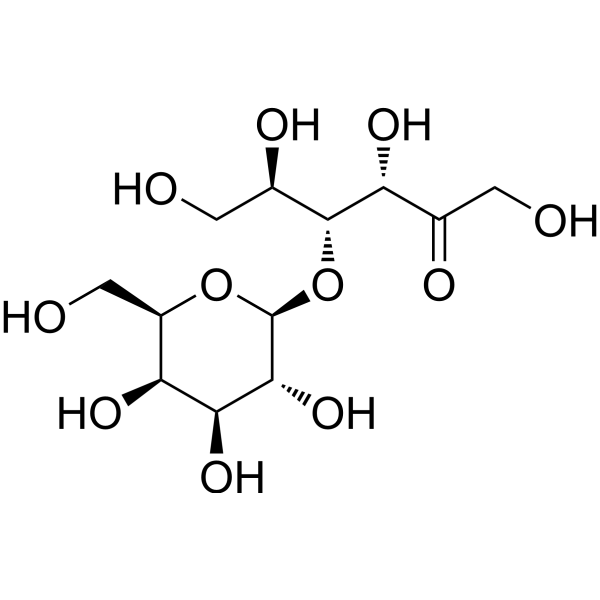
Lactulose is an orally active galactose-fructose disaccharide. Lactulose suppresses upregulation of TNF-α and IL-6. Lactulose decreases the degree of DNA damage. Lactulose exhibits many of the properties of other oligosaccharides, including increasing the numbers of Bifidobacteria in feces. Lactulose restores the structure and composition of the intestinal microbiota, mitigates inflammation, and suppresses inflammatory tumorigenesis in mice with colitis-associated cancer. Lactulose can be used in the research of constipation .
loading...
    loading...
1
1 Cited Publications
Cat. No.: HY-N10521
CAS No.: 35890-39-2
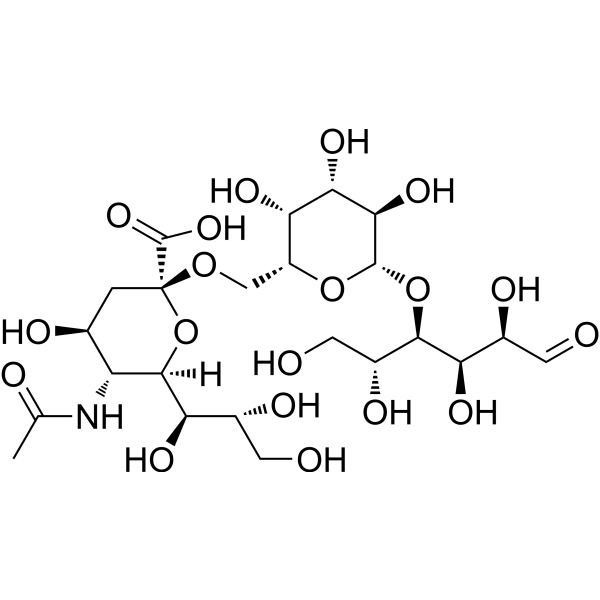
6'-Sialyllactose promotes the growth of beneficial bacteria (such as Bifidobacterium and lactobacillus) and inhibits the proliferation of harmful bacteria. 6'-Sialyllactose exhibits anti-inflammatory and anti-angiogenic activities. 6'-Sialyllactose promotes the muscle health .
loading...
    loading...
Cat. No.: HY-N2579
CAS No.: 470-69-9
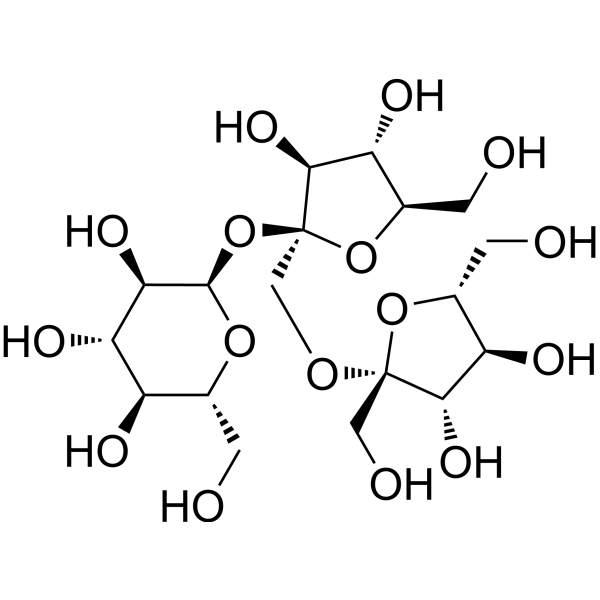
1-Kestose, the smallest fructooligosaccharide component, which efficiently stimulates Faecalibacterium prausnitzii as well as Bifidobacteria.
loading...
    loading...
Cat. No.: HY-W250120
CAS No.: 37220-17-0
Konjac glucomannan (Viscosity≥15000mPa.s) is an orally active acetylated (1-4)-β-D-glucomannan with multiple biological activities including anti-diabetic, anti-obesity, anti-inflammatory effects, as well as film-forming and gelling properties. Konjac glucomannan (Viscosity≥15000mPa.s) forms a defensive coating on the intestinal surface, reducing levels of blood glucose, cholesterol, triglycerides and blood pressure; it is specifically degraded by colonic β-mannanase produced by human colonic bacteria. Konjac glucomannan (Viscosity≥15000mPa.s) can be used as a food additive, dietary supplement and excipient for oral colon-targeted drug delivery systems. Konjac glucomannan (Viscosity≥15000mPa.s) is applicable to research related to various diseases such as type 2 diabetes, obesity, atopic dermatitis and metabolic syndrome, as well as research in fields including biotechnology, pharmaceuticals and tissue engineering .
loading...
    loading...
Cat. No.: HY-P2858
CAS No.: 9025-43-8
Target:  

Glycosidase

Research Areas:  

Metabolic Disease

β-Mannosidase is a lysosomal exo‑acting enzyme. β-Mannosidase catalyzes hydrolysis of β‑1,4‑linked mannosides, non‑reducing terminal mannoses in N‑glycoproteins, and Man‑β‑1,4‑GlcNAc linkages to release mannose. β-Mannosidase contributes to glycoprotein catabolism and supports Bifidobacteria colonization via N‑glycan depolymerization. β-Mannosidase can be used for the research of β-mannosidosis and β-mannosidase deficiency .
loading...
    loading...
Cat. No.: HY-N2579R
CAS No.: 470-69-9
1-Kestose (Standard) is the analytical standard of 1-Kestose. This product is intended for research and analytical applications. 1-Kestose, the smallest fructooligosaccharide component, which efficiently stimulates Faecalibacterium prausnitzii as well as Bifidobacteria.
loading...
    loading...
Cat. No.: HY-N16477
CAS No.: 88167-26-4
Ciceritol is a dietary fiber component/prebiotic targeting α-galactosidic linkage oligosaccharides. Ciceritol selectively promotes proliferation of beneficial bacteria like Bifidobacteria. Ciceritol is promising for research of gut microbiota-related diseases (e.g., irritable bowel syndrome, metabolic syndrome) .
loading...
    loading...

