1. Search Result
Search Result
Results for "

broadleaf weed

" in MedChemExpress (MCE) Product Catalog:

24

Inhibitors & Agonists

3

Isotope-Labeled Compounds

3

Click Chemistry

Cat. No. Product Name Target Research Areas Chemical Structure
  • HY-B2050

    Environmental Pollutants Herbicide Microtubule/Tubulin Others
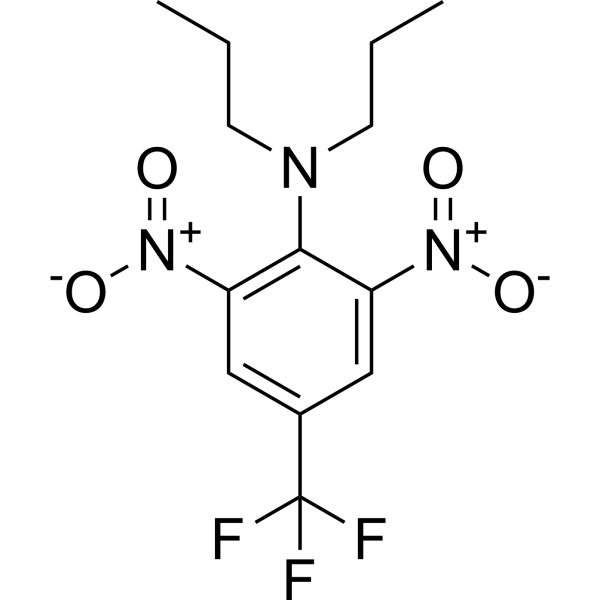
    Trifluralin is a selective, preemergence, soil-applied herbicide providing control of many important annual grass and broadleaf weed species. Trifluralin prevents weed growth by inhibiting root development through the interruption of mitosis. Trifluralin binds to tubulin and results in the failure of spindle apparatus and cell plate formation. Trifluralin inhibits radicle development on roots. Trifluralin inhibits cell mitosis. Trifluralin is considered to be neurotoxic and haematotoxic .
    Trifluralin
  • HY-136426

    Environmental Pollutants Reactive Oxygen Species (ROS) Herbicide Others
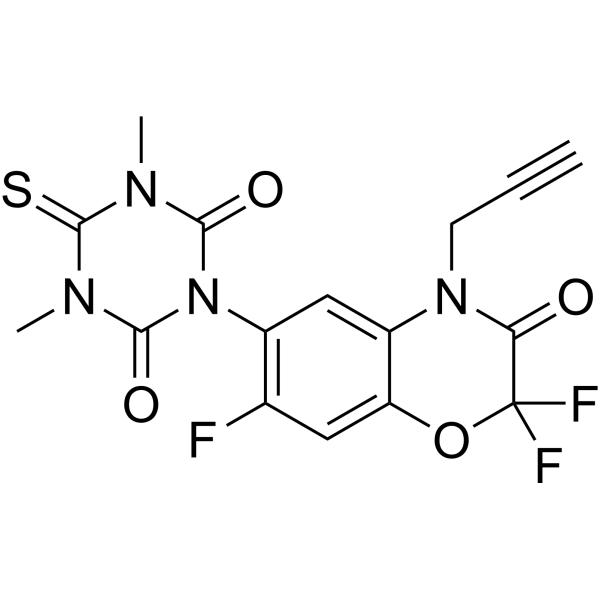
    Trifludimoxazin is a click chemistry reagent, a protoporphyrinogen oxidase (PPO) inhibitor and herbicide. Trifludimoxazin inhibits PPO, accumulates reactive oxygen species, damages cell membranes, and thereby causes weed death. Trifludimoxazin exhibits high-efficiency activity in controlling broadleaf weeds and grassy weeds .
    Trifludimoxazin
  • HY-136375

    Environmental Pollutants Herbicide Others
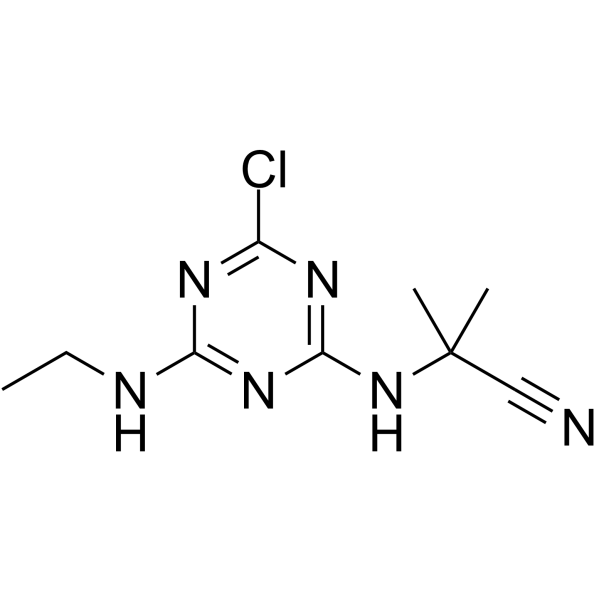
    Cyanazine, a triazine herbicide cyanazine, is used to control a variety of grass weeds and broadleaf weed. Cyanazine is proved non-genotoxic .
    Cyanazine
  • HY-W014793

    Herbicide Others
    Metamitron is a triazone herbicide that can be used for pre- and post-emergence weed control of broadleaf weeds and grasses in sugar beet .
    Metamitron
  • HY-135745

    Environmental Pollutants Herbicide Others
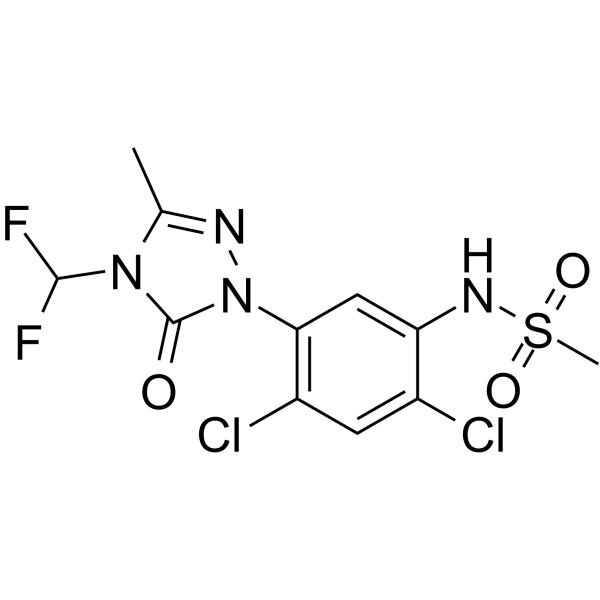
    Sulfentrazone is a phenyl triazolinone herbicide used for control of certain broadleaf and grass weed species. Sulfentrazone inhibits protoporphyrinogen oxidase, resulting in the disruption of lipid cell membranes .
    Sulfentrazone
  • HY-168496

    Herbicide Phytohormone Others
    Herbicidal agent 8 (Compound 9w) targets the auxin indole-3-acetic acid (IAA, IC50=4.389 μM), disrupting the physiological activities of plant cells and eventually causing plant death. Herbicidal agent 8 exhibits herbicidal activity against broadleaf weeds and grass weeds .
    Herbicidal agent 8
  • HY-136375S

    Isotope-Labeled Compounds Others
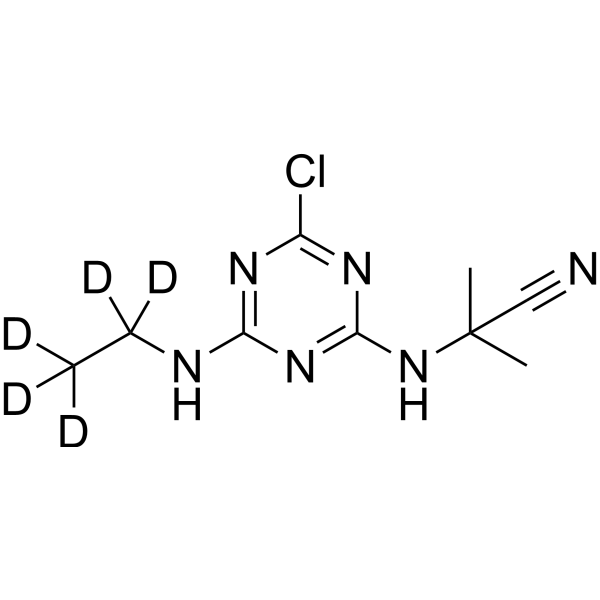
    Cyanazine-d5 is deuterium labeled Cyanazine. Cyanazine, a triazine herbicide cyanazine, is used to control a variety of grass weeds and broadleaf weed. Cyanazine is proved non-genotoxic .
    Cyanazine-d5
  • HY-136375R

    Herbicide Reference Standards Others
    Cyanazine (Standard) is the analytical standard of Cyanazine. This product is intended for research and analytical applications. Cyanazine, a triazine herbicide cyanazine, is used to control a variety of grass weeds and broadleaf weed. Cyanazine is proved non-genotoxic .
    Cyanazine (Standard)
  • HY-135745R

    Herbicide Reference Standards Others
    Sulfentrazone (Standard) is the analytical standard of Sulfentrazone. This product is intended for research and analytical applications. Sulfentrazone is a phenyl triazolinone herbicide used for control of certain broadleaf and grass weed species. Sulfentrazone inhibits protoporphyrinogen oxidase, resulting in the disruption of lipid cell membranes .
    Sulfentrazone (Standard)
  • HY-B2050S

    Isotope-Labeled Compounds Microtubule/Tubulin Others
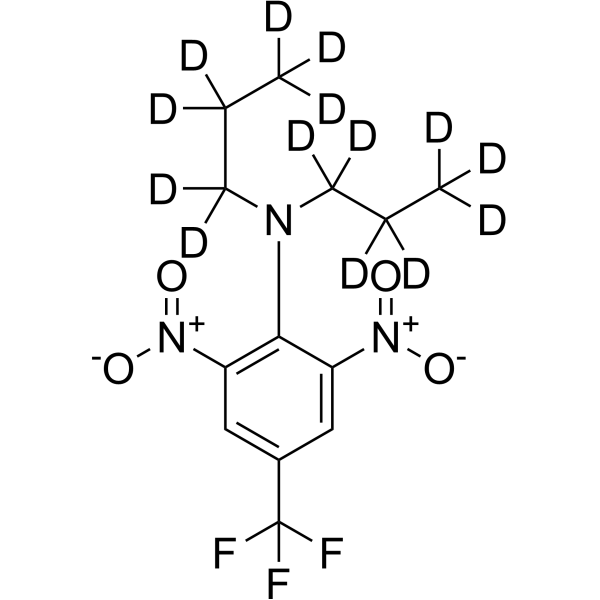
    Trifluralin-d14 is the deuterium labeled Trifluralin. Trifluralin is a selective, preemergence, soil-applied herbicide providing control of many important annual grass and broadleaf weed species. Trifluralin prevents weed growth by inhibiting root development through the interruption of mitosis. Trifluralin binds to tubulin and results in the failure of spindle apparatus and cell plate formation. Trifluralin inhibits radicle development on roots. Trifluralin inhibits cell mitosis. Trifluralin is considered to be neurotoxic and haematotoxic .
    Trifluralin-d14
  • HY-B2050R

    Reference Standards Microtubule/Tubulin Herbicide Others
    Trifluralin (Standard) is the analytical standard of Trifluralin. This product is intended for research and analytical applications. Trifluralin is a selective, preemergence, soil-applied herbicide providing control of many important annual grass and broadleaf weed species. Trifluralin prevents weed growth by inhibiting root development through the interruption of mitosis. Trifluralin binds to tubulin and results in the failure of spindle apparatus and cell plate formation. Trifluralin inhibits radicle development on roots. Trifluralin inhibits cell mitosis. Trifluralin is considered to be neurotoxic and haematotoxic .
    Trifluralin (Standard)
  • HY-W040286

    Herbicide Endogenous Metabolite
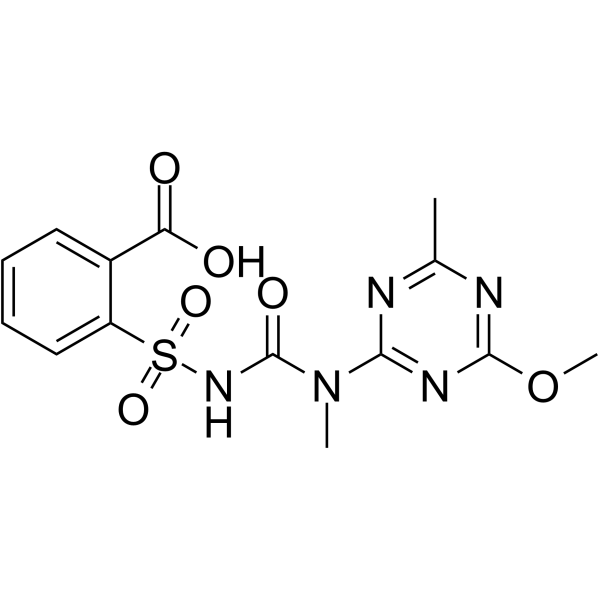
    Cinosulfuron is a selective herbicide with excellent inhibitory activity against a variety of broadleaf weeds and is widely used in crop fields to protect the growth of crops. Cinosulfuron can effectively manage weed problems by inhibiting specific enzyme activity. Cinosulfuron is used in agriculture to increase crop yield and quality and ensure efficient use of farmland.
    Cinosulfuron
  • HY-W874850

    Herbicide
    Fluorodifen is a selective herbicide with the activity of inhibiting weed growth. Fluorodifen can effectively control the growth of various annual and perennial broadleaf weeds and some grass weeds, and is widely used in the field management of various crops. By acting on the photosynthesis of plants and the regulation of their growth hormones, Fluorodifen ensures the healthy growth and harvest of crops.
    Fluorodifen
  • HY-W008484

    Environmental Pollutants Herbicide Infection
    Aminopyralid is a synthetic auxin herbicide. Aminopyralid provides foliar and soil residual weed control, and also increases forage yield in bahiagrass pastures. When present as a soil residue, Aminopyralid causes phytotoxicity, reduced plant height, decreased flower number and fruit yield loss in rotated vegetable crops. Aminopyralid is registered for the control of annual and perennial broadleaf weeds in pastures, permanent grasslands and non-cropped areas .
    Aminopyralid
  • HY-173026

    Herbicide Others
    Herbicidal agent 7 (Compound 15c) is the inhibitor for protoporphyrinogen IX oxidase (PPO). Herbicidal agent 7 blocks the plant pigment synthesis, exhibiting herbicidal activity against broadleaf weeds (such as Z. elegans and A. theophrasti) and grass weeds (such as S. glauca and E. crusgalli) .
    Herbicidal agent 7
  • HY-136357

    Herbicide Others
    Tribenuron, a slow acting sulfonylurea herbicide, controls broadleaf weed .
    Tribenuron
  • HY-W755614

    Isotope-Labeled Compounds Herbicide Others
    Bromoxynil- 13C6 is the 13C-labeled Bromoxynil (HY-69161). Bromoxynil is a selective herbicide with weed-inhibiting activity. Bromoxynil is effective in controlling broadleaf weeds and is widely used in field management of crops such as wheat and barley. Bromoxynil achieves its weed-killing effect by interfering with plant photosynthesis and water absorption.
    Bromoxynil-13C6
  • HY-W714178

    Herbicide Others
    Aziprotryne is a post-emergence selective herbicide active against broadleaf weeds. When tank-mixed with Alachlor (HY-B2014), Aziprotryne provides longer-term weed control in field-grown cabbage plots .
    Aziprotryne
  • HY-W014793R

    Herbicide Reference Standards Others
    Metamitron (Standard) is the analytical standard of Metamitron (HY-W014793). This product is intended for research and analytical applications. Metamitron is a triazone herbicide that can be used for pre- and post-emergence weed control of broadleaf weeds and grasses in sugar beet .
    Metamitron (Standard)
  • HY-W040279

    Herbicide Acetolactate Synthase (ALS) Others
    Prosulfuron is a fluorinated sulfonylurea herbicide with a reported acute oral LD50 of 546 mg/kg in female rats. Prosulfuron acts by inhibiting acetolactate synthase (ALS) to block the biosynthesis of branched-chain amino acids (valine, leucine and isoleucine) in plants, thereby suppressing weed growth. Prosulfuron may disrupt the soil microbial community balance in alkaline soils with minimal chemical degradation. Prosulfuron has low toxicity to humans and mammals, and can be used for the research of broadleaf weed control in maize and sweet corn .
    Prosulfuron
  • HY-182897

    Herbicide Others
    PPO-IN-25 (Compound B2) is a PPO inhibitor and Herbicide, with a Ki value of 9.50 nM against NtPPO. PPO-IN-25 exhibits control efficacy against broadleaf weeds and shows broad-spectrum herbicidal activity. PPO-IN-25 can be used in studies related to weed damage .
    PPO-IN-25
  • HY-W040286R

    Endogenous Metabolite Reference Standards
    Cinosulfuron (Standard) is the analytical standard of Cinosulfuron. This product is intended for research and analytical applications. Cinosulfuron is a selective herbicide with excellent inhibitory activity against a variety of broadleaf weeds and is widely used in crop fields to protect the growth of crops. Cinosulfuron can effectively manage weed problems by inhibiting specific enzyme activity. Cinosulfuron is used in agriculture to increase crop yield and quality and ensure efficient use of farmland.
    Cinosulfuron (Standard)
  • HY-W874850R

    Endogenous Metabolite Reference Standards
    Fluorodifen (Standard) is the analytical standard of Fluorodifen. This product is intended for research and analytical applications. Fluorodifen is a selective herbicide with the activity of inhibiting weed growth. Fluorodifen can effectively control the growth of various annual and perennial broadleaf weeds and some grass weeds, and is widely used in the field management of various crops. By acting on the photosynthesis of plants and the regulation of their growth hormones, Fluorodifen ensures the healthy growth and harvest of crops.
    Fluorodifen (Standard)
  • HY-167959

    Herbicide Infection
    MCPA-isooctyl is a selective conductive phenoxycarboxylate herbicide and an alternative to 2,4-D Butyl ester (HY-B0867). MCPA-isooctyl effectively controls broadleaf weeds in various crop fields via post-emergence foliar or soil treatment. MCPA-isooctyl is absorbed by the roots, stems and leaves of plants; it is easily metabolized and detoxified in gramineous crops, but difficult to metabolize in dicotyledonous weeds, causing stem and leaf distortion, root deformation, and eventually weed death. When formulated into chitosan nanoparticles, MCPA-isooctyl still significantly inhibits the growth of weeds in wheat fields, and reduces their chlorophyll content and biomass at low doses .
    MCPA-isooctyl

Inquiry Online

Your information is safe with us. * Required Fields.

Salutation


Country or Region *

Applicant Name *


Organization Name *

Department *


Email Address *


Product Name *

Cat. No.


Requested quantity *

Phone Number *


Remarks

Inquiry Online

Inquiry Information

Product Name:
Cat. No.:
Quantity:
MCE Japan Authorized Agent:

