13 Results for "

cell+nucleus

" in MedChemExpress (MCE) Product Catalog:
Products (13)

13 Results for "cell+nucleus" in MCE Product Catalog:

3
3 Cited Publications
Cat. No.: HY-B0883
CAS No.: 1811-28-5
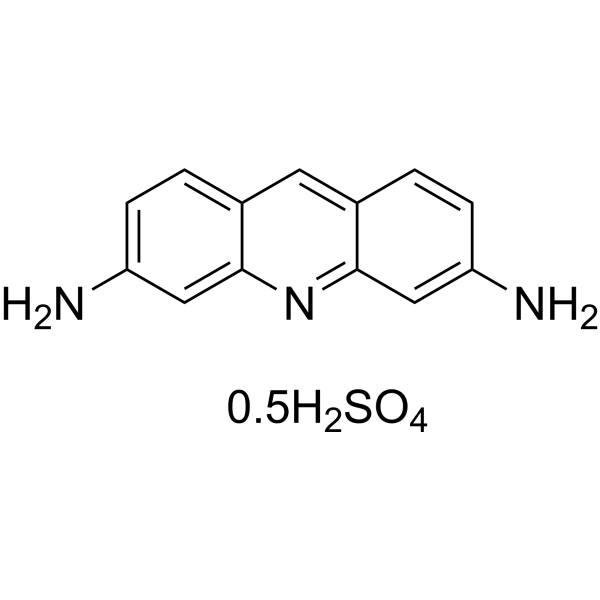
3,6-Diaminoacridine hemisulfate is a multifunctional acridine compound. 3,6-Diaminoacridine hemisulfate is an acridine dye and also a DNA inserter. 3,6-Diaminoacridine hemisulfate is a potent broad-spectrum antibacterial agent. Its mechanism is to insert into bacterial DNA, interfering with replication and transcription, leading to bacterial lysis. 3,6-Diaminoacridine hemisulfate is a Kir3.2 potassium channel blocker and can be used to study the neurological phenotype of Down syndrome. 3,6-Diaminoacridine hemisulfate can penetrate the stratum corneum of the skin and accumulate in the cell nucleus. Long-term exposure may induce skin cancer or other malignant tumors .
loading...
    loading...
1
1 Cited Publications
Cat. No.: HY-D0367
CAS No.: 4193-55-9
Synonyms: Calcofluor White M2R
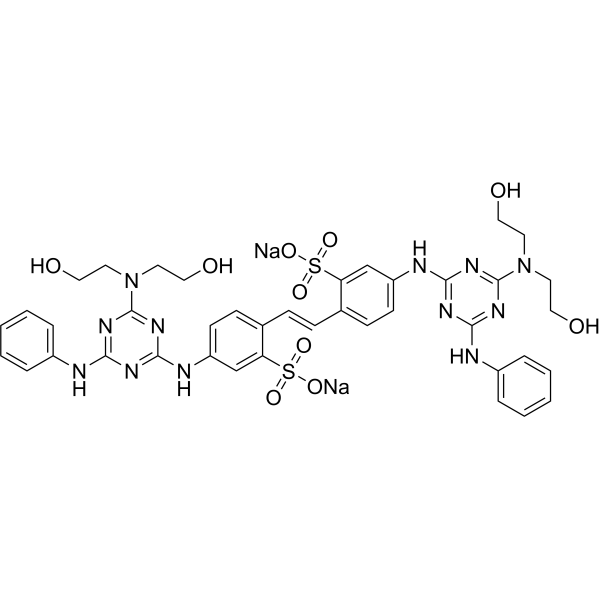
Fluorescent brightener 28 is a fluorescent whitening agent commonly used in the padding process of the textile industry. Fluorescent brightener 28 is capable of staining polysaccharides such as cellulose, and when the plasma membrane ruptures, it also weakly stains the cytoplasm and strongly stains the cell nucleus. Additionally, Fluorescent brightener 28 can be utilized to detect intracellular chitin in living cells. Fluorescent Brightener 28 also is a visible light emitting diode (LED)-light sensitive photoinitiator for free radical photopolymerizations .
loading...
    loading...
1
1 Cited Publications
Cat. No.: HY-W750459
CAS No.: 4404-43-7
Target:  

Fluorescent Dye

Research Areas:  

Others

Fluorescent brightener 28 (Technical Grade) is a fluorescent whitening agent commonly used in the padding process of the textile industry. Fluorescent brightener 28 is capable of staining polysaccharides such as cellulose, and when the plasma membrane ruptures, it also weakly stains the cytoplasm and strongly stains the cell nucleus. Additionally, Fluorescent brightener 28 can be utilized to detect intracellular chitin in living cells. Fluorescent Brightener 28 also is a visible light emitting diode (LED)-light sensitive photoinitiator for free radical photopolymerizations .
loading...
    loading...
Cat. No.: HY-W010514
CAS No.: 1460-57-7
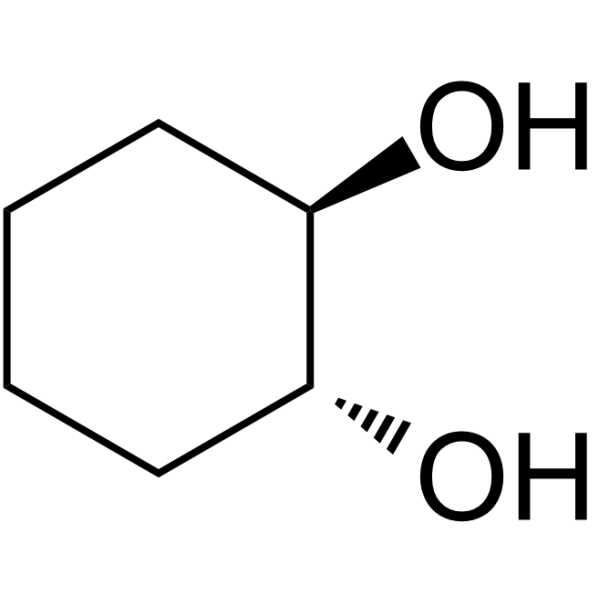
trans-Cyclohexane-1,2-diol (TCHD) is a transient dilator of the nuclear pore complex (NPC). By interacting with the hydrophobic core (FG nucleoporin) of the NPC, trans-Cyclohexane-1,2-diol can disrupt the NPC structure and reversibly increase the permeability of the nuclear pore, allowing macromolecules larger than 40 kDa (such as plasmid DNA) to enter the cell nucleus by passive diffusion, thereby enhancing the nuclear import efficiency of non-viral vectors. trans-Cyclohexane-1,2-diol can improve the efficiency of in vitro electrotransfection or lipid-mediated gene transfection, especially significantly increasing gene expression in differentiated airway epithelial cells .
loading...
    loading...
Cat. No.: HY-P0310
CAS No.: 163815-24-5
Target:  

Peptides

Research Areas:  

Infection

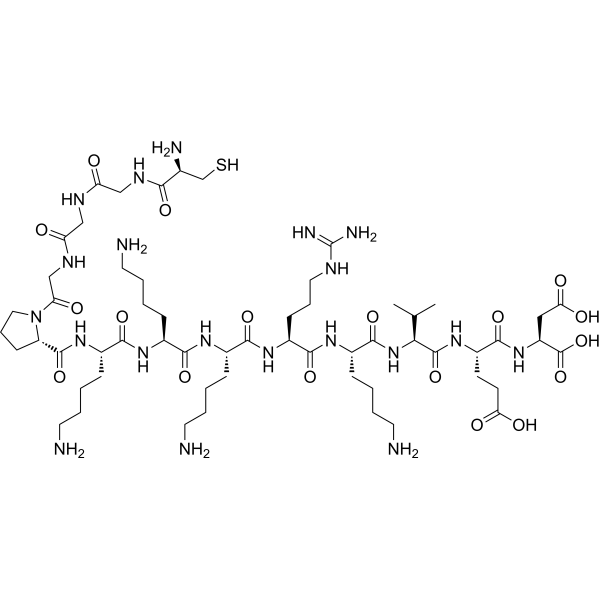
SV40 large T antigen NLS is from Large T antigen residue 47 to 55, enables protein import into cell nucleus.
loading...
    loading...
Cat. No.: HY-P1877A
Target:  

Peptides

Research Areas:  

Cancer

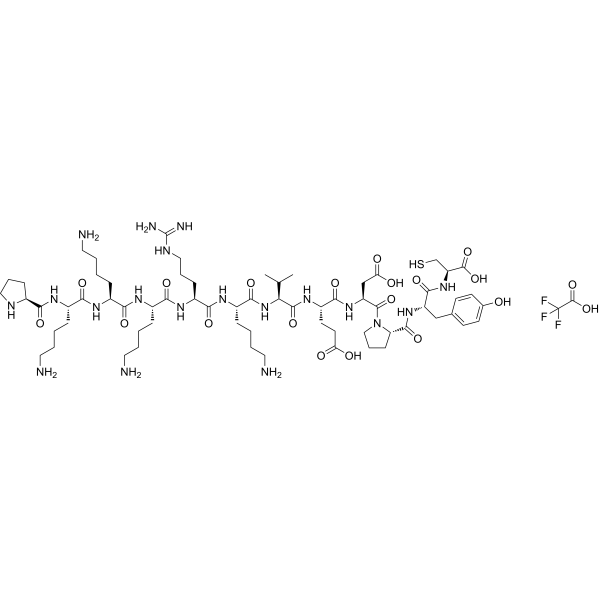
SV40 T-Ag-derived NLS peptide TFA is a nuclear localization signal DNA tagged to this peptide efficiently translocates into the cell nucleus .
loading...
    loading...
Cat. No.: HY-P1877
CAS No.: 105425-98-7
Target:  

Peptides

Research Areas:  

Cancer

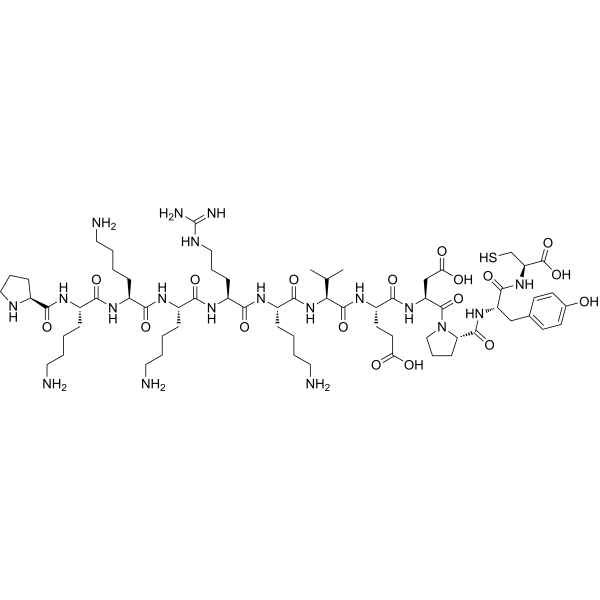
SV40 T-Ag-derived NLS peptide is a nuclear localization signal DNA tagged to this peptide efficiently translocates into the cell nucleus .
loading...
    loading...
Cat. No.: HY-170814
Target:  

G-quadruplex

Research Areas:  

Cancer

G-quadruplex ligand 3 (Compound 16) is a G-quadruplex ligand with anticancer effects that chelate iron. G-quadruplex ligand 3 stabilizes G-quadruplexes in human leukemia Jurkat cells. G-quadruplex ligand 3 localizes in the cell nucleus, serving as a fluorescent nuclear tracer for the labile iron pool .
loading...
    loading...
Cat. No.: HY-N14734
CAS No.: 158181-47-6
Disorazol A1 is an tubulin inhibitor with antifungal activity. Disorazol A1 functions by inhibiting tubulin polymerization, interfering with microtubule formation, blocking mitosis, thus arresting the cell cycle at the G2/M phase and inducing apoptosis. Disorazol A1 also exhibits an inhibitory effect against L929 mouse fibroblasts with an IC50 value of 3 pM. Disorazol A1 causes the accumulation of p53 protein in the cell nucleus. Disorazol A1 is promising for research of cancers .
loading...
    loading...
Cat. No.: HY-E71018
Research Areas:  

Metabolic Disease

S-Acetyl-coenzyme A synthetase, Baker's yeast (S. cerevisiae) (EC 6.2.1.1), catalyzes the production of acetyl-CoA and participates in the acetylation of histones in the cell nucleus.
loading...
    loading...
Cat. No.: HY-D3405
CAS No.: 173357-16-9
BO-TAP-3 is an orange fluorescent carbocyanine monomer dye, and it is also a cell impermeable nucleic acid staining agent. When there is no nucleic acid present, BO-TAP-3 shows a non-fluorescent state. However, when it binds to double-stranded DNA, it exhibits multiple fluorescence enhancement effects. BO-TAP-3 can be used for cell nucleus and cytoplasm imaging, bacterial and sperm labeling, and can also be applied in nucleic acid detection and amplification research. It can also be used as a temperature sensor (Ex/Em = 564/600 nM).
loading...
    loading...
Cat. No.: HY-W197393
CAS No.: 553-30-0
Proflavine sulfate is a multifunctional acridine compound. 3,6-Diaminoacridine sulfate is an acridine dye and also a DNA inserter. Proflavine sulfate is a potent broad-spectrum antibacterial agent, and its mechanism is to insert into bacterial DNA, interfering with replication and transcription, causing bacterial lysis. 3,6-Diaminoacridine sulfate is a Kir3.2 potassium channel blocker and can be used to study the neurological phenotype of Down syndrome. 3,6-Diaminoacridine sulfate can penetrate the stratum corneum of the skin and accumulate in the cell nucleus and long-term exposure may induce skin cancer or other malignant tumors .
loading...
    loading...
Cat. No.: HY-W010514R
CAS No.: 1460-57-7
trans-Cyclohexane-1,2-diol (Standard) is the analytical standard of trans-Cyclohexane-1,2-diol (HY-W010514). This product is intended for research and analytical applications. trans-Cyclohexane-1,2-diol (TCHD) is a transient dilator of the nuclear pore complex (NPC). By interacting with the hydrophobic core (FG nucleoporin) of the NPC, trans-Cyclohexane-1,2-diol can disrupt the NPC structure and reversibly increase the permeability of the nuclear pore, allowing macromolecules larger than 40 kDa (such as plasmid DNA) to enter the cell nucleus by passive diffusion, thereby enhancing the nuclear import efficiency of non-viral vectors. trans-Cyclohexane-1,2-diol can improve the efficiency of in vitro electrotransfection or lipid-mediated gene transfection, especially significantly increasing gene expression in differentiated airway epithelial cells .
loading...
    loading...
  • 1

