10005 Results for "

chemical modification

" in MedChemExpress (MCE) Product Catalog:
Products (10005)

10005 Results for "chemical modification" in MCE Product Catalog:

3
3 Cited Publications
Cat. No.: HY-RI04602A
Target:  

MicroRNA

Research Areas:  

Others

MicroRNA Antagomir Negative Control is a chemically-modified oligonucleotide (2 phosphorothioates at the 5' end, 4 phosphorothioates at the 3' end, 1 cholesterol group at the 3' end, and full-length nucleotide 2'-methoxy modification), and can be used as a negative control. The sequence of MicroRNA Antagomir Negative Control is derived from cel-mir-239b. It has minimal sequence identity with miRNAs in human, mouse, and rat.
loading...
    loading...
3
3 Cited Publications
Cat. No.: HY-RI00449A
Target:  

MicroRNA

Research Areas:  

Cancer

hsa-miR-21-5p antagomirs are chemically-modified oligonucleotides that hybridize with mature miRNAs. The miRNA antagomirs have 2 phosphorothioates at the 5' end, 4 phosphorothioates at the 3' end, 1 cholesterol group at the 3' end, and full-length nucleotide 2'-methoxy modification. The miRNA antagomirs strongly compete with mature miRNAs to prevent the complementary pairing of miRNAs and their target genes, thereby inhibiting miRNAs from functioning. Stability of miRNA antagomirs appears to be significantly higher than miRNA inhibitors, they exhibits enhanced cellular uptake, stability and regulatory activity in vivo.
loading...
    loading...
2
2 Cited Publications
Cat. No.: HY-Y1168
CAS No.: 3945-69-5
Synonyms: 4-(4,6-Dimethoxy-1,3,5-triazin-2-yl)-4-methylmorpholinium chloride
DMTMM (4-(4,6-dimethoxy-1,3,5-triazine-2-yl)-4-methylmorpholinium chloride) is a coupling agent. DMTMM can activate carboxyl groups and promote the formation of amide bonds. DMTMM plays an important role in promoting the chemical modification of biomacromolecules such as polysaccharides and proteins. DMTMM can be used for research of tissue engineering, breast cancer, corneal regeneration, and biomaterials .
loading...
    loading...
Cat. No.: HY-Y1422D
CAS No.: 9001-62-1
Research Areas:  

Others

Lipase,Candida antarctica (Immobilized) is an immobilized lipase isolated from Candida antarctica fraction B. Lipase,Candida antarctica (Immobilized) features high stability and selectivity. Lipase,Candida antarctica (Immobilized) is widely used in fields such as chemical synthesis, food oil modification, and biodiesel production .
loading...
    loading...
Cat. No.: HY-P3581
CAS No.: 1801959-12-5
Target:  

Potassium Channel

Research Areas:  

Neurological Disease

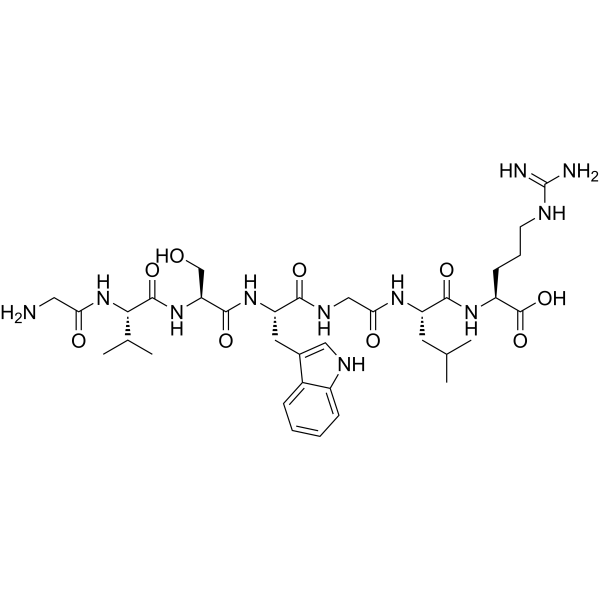
PE 22-28 is a TREK-1 inhibitor with IC50 value of 0.12 nM. PE 22-28 also is a 7 amino-acid peptide that is used as a core sequence for preparing analogs by chemical modifications and also by substitution of amino-acids. PE 22-28 can be used for the research of depression .
loading...
    loading...
Cat. No.: HY-140651
Purity:  ≥93.0%
Research Areas:  

Cancer

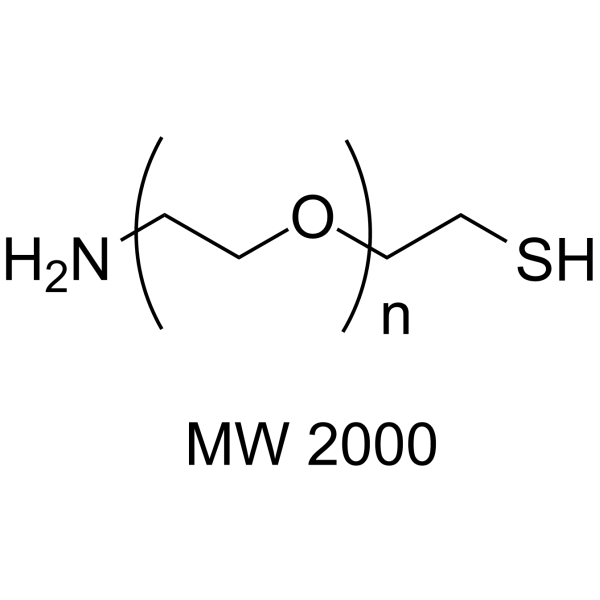
Amine-PEG2000-thiol is a conjugate containing amino, PEG and thiol groups, used for drug delivery, material modification and chemical synthesis.
loading...
    loading...
Cat. No.: HY-107783
CAS No.: 185332-92-7
Research Areas:  

Others

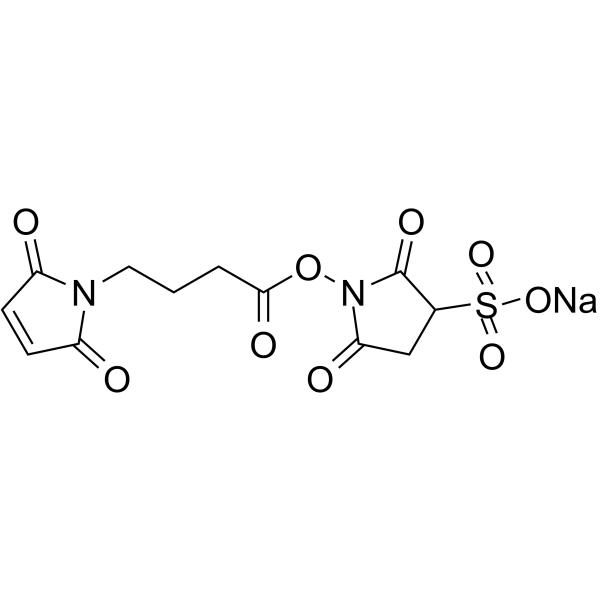
Sulfo-GMBS is a crosslinker widely used in chemical modification and coupling reactions of proteins and peptides. Among amine-thiol crosslinkers, Sulfo-GMBS generates the largest number of crosslinks and covers most of the crosslinks identified by AMAS and GMBS .
loading...
    loading...
Cat. No.: HY-W012184
CAS No.: 59016-56-7
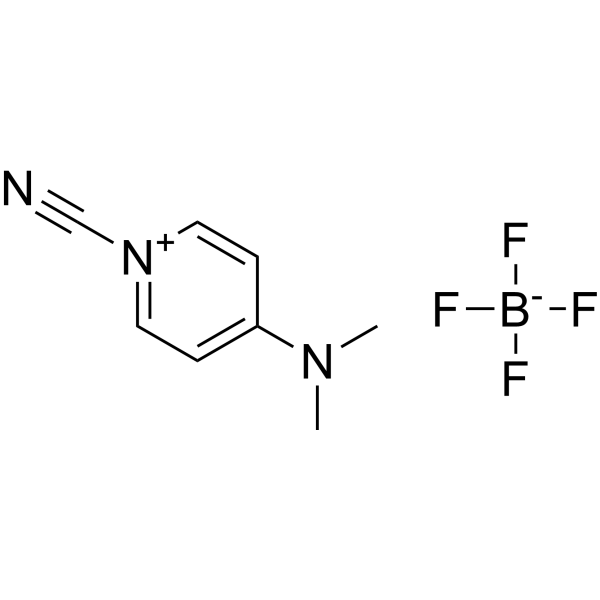
CDAP is an organic cyanylating reagent that can be used for preparation of solid phase affinity reagents, modification of protein thiols and nucleotide delivery. CDAP also activates polysaccharides with a variety of chemical properties. CDAP can be used to prepare conjugate vaccines and other immune reagents .
loading...
    loading...
Cat. No.: HY-RI00144
Target:  

MicroRNA

Research Areas:  

Cancer

hsa-miR-1246 inhibitors are chemically-modified oligonucleotides that hybridize with mature miRNAs. The miRNA inhibitors have full-length nucleotide 2'-methoxy modification. The miRNA inhibitors strongly compete with mature miRNAs to prevent the complementary pairing of miRNAs and their target genes, thereby inhibiting miRNAs from functioning.
loading...
    loading...
Inactive ASO (in vivo) sodium
0 Images
CCTATAGGACTATCCAGGAA
Cat. No.: HY-153734
Purity:  92.18%
Inactive ASO (in vivo) sodium is an inactive Antisense Oligonucleotide. ASO is a class of oligonucleotide molecules, usually composed of 20-30 bases, used to interfere with or regulate gene expression. Inactive ASO (in vivo) sodium is not targeted in the rodent genome and can be used as a negative control for Tofersen. Inactive ASO (in vivo) sodium contains thiophosphate skeleton modification and MOE modification. Cytosine in Inactive ASO (in vivo) is 5' methylcytosine. See References for the location of chemical modifications
loading...
    loading...
Cat. No.: HY-W686605
CAS No.: 54907-61-8
Iodoacetic anhydride is a bioactive compound with enzyme inhibitory properties. Iodoacetic anhydride can participate in protein modification and is widely used in biochemical research and compound development. Iodoacetic anhydride is also used to synthesize various bioactive molecules, showing its diversity as a chemical reagent.
loading...
    loading...
Cat. No.: HY-RI00057
Target:  

MicroRNA

Research Areas:  

Cancer

hsa-miR-107 inhibitors are chemically-modified oligonucleotides that hybridize with mature miRNAs. The miRNA inhibitors have full-length nucleotide 2'-methoxy modification. The miRNA inhibitors strongly compete with mature miRNAs to prevent the complementary pairing of miRNAs and their target genes, thereby inhibiting miRNAs from functioning.
loading...
    loading...
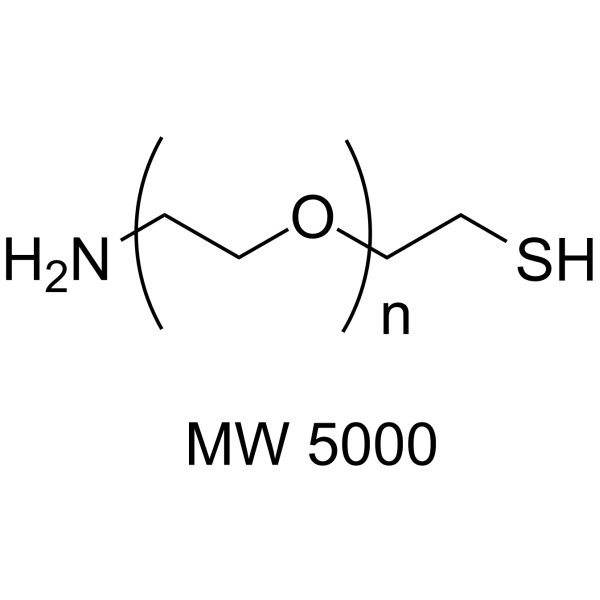
Cat. No.: HY-140653
Research Areas:  

Cancer

Amine-PEG5000-thiol is a conjugate containing amino, PEG and thiol groups, used for drug delivery, material modification and chemical synthesis.
loading...
    loading...
Cat. No.: HY-176960
CAS No.: 141895-16-1
Research Areas:  

Others

3-Amino-2-hydroxypropyl dihydrogen phosphate is a chemical modification complex of the DNA phosphate backbone, which can be used to study the interaction between HIV integrase (IN) and DNA .
loading...
    loading...
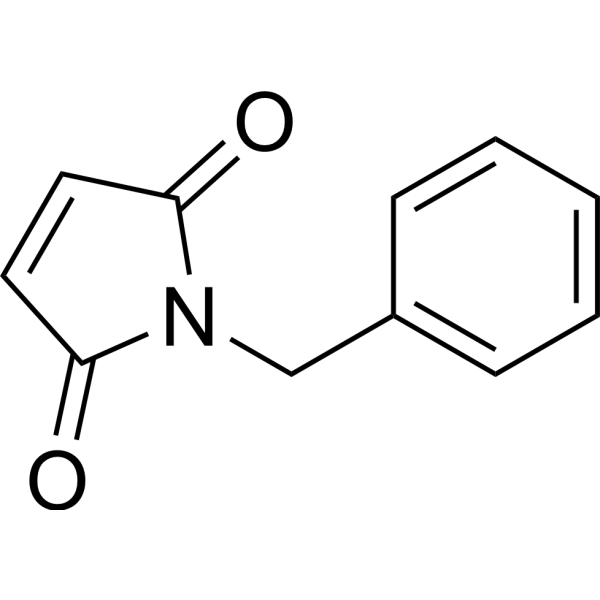
Cat. No.: HY-W001851
CAS No.: 1631-26-1
Synonyms: N-Benzylmaleimide
1-Benzylpyrrole-2,5-dione (N-Benzylmaleimide) is a heterocyclic compound containing a maleimide ring and a benzyl group. 1-Benzylpyrrole-2,5-dione can be used as a key reactant for the green chemical modification of cellulose nanocrystals (CNC).
loading...
    loading...
Cat. No.: HY-RI00161
Target:  

MicroRNA

Research Areas:  

Cancer

hsa-miR-1257 inhibitors are chemically-modified oligonucleotides that hybridize with mature miRNAs. The miRNA inhibitors have full-length nucleotide 2'-methoxy modification. The miRNA inhibitors strongly compete with mature miRNAs to prevent the complementary pairing of miRNAs and their target genes, thereby inhibiting miRNAs from functioning.
loading...
    loading...
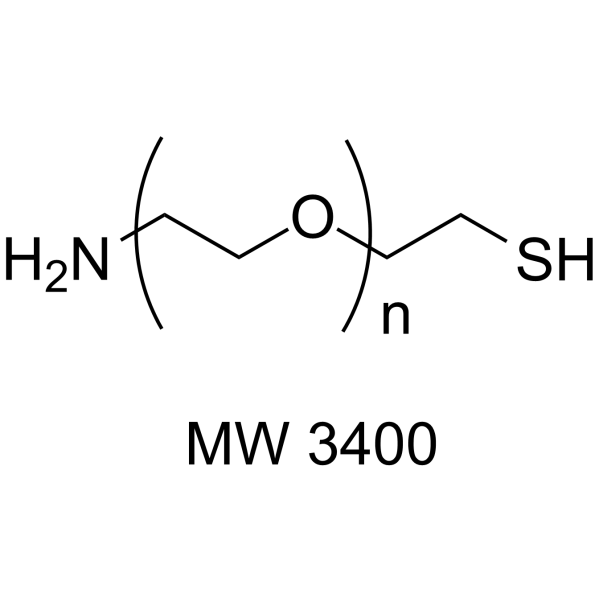
Cat. No.: HY-140652
Research Areas:  

Cancer

Amine-PEG3400-thiol is a conjugate containing amino, PEG and thiol groups, used for drug delivery, material modification and chemical synthesis.
loading...
    loading...
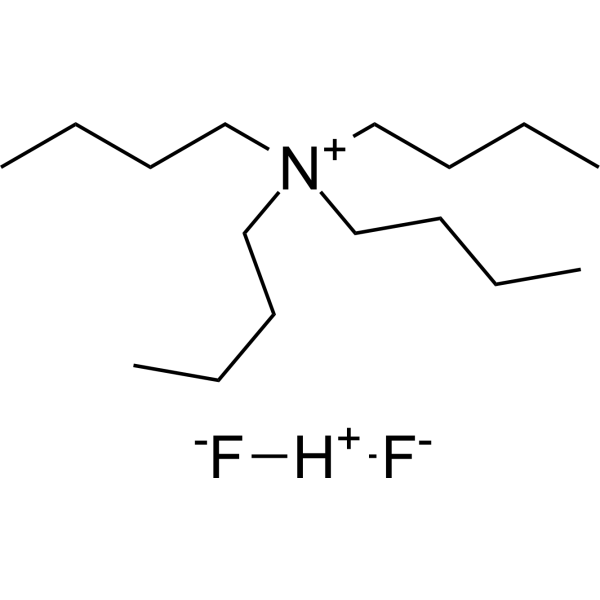
Cat. No.: HY-W036734
CAS No.: 23868-34-0
Tetrabutylammonium (hydrogen difluoride) is a quaternary ammonium salt containing fluoride ions. It is a highly active and effective reagent, often used in organic synthesis reactions, especially for the modification of organic molecules with fluorine atoms. Tetrabutylammonium (hydrogen difluoride) is also used as a catalyst for various chemical reactions such as esterification and transesterification. Additionally, it is used in the production of specialty chemicals such as surfactants and detergents.
loading...
    loading...
Cat. No.: HY-D2854E
FITC-PEG10000-CL is a fluorescent dye composed of FITC (HY-66019), PEG and chlorine (-Cl). The chlorine group is an electrophilic active group that can be used for nucleophilic substitution reactions and facilitate subsequent chemical modification (Ex/Em = 488/525 nm).
loading...
    loading...
Cat. No.: HY-D2854B
FITC-PEG2000-CL is a fluorescent dye composed of FITC (HY-66019), PEG and chlorine (-Cl). The chlorine group is an electrophilic active group that can be used for nucleophilic substitution reactions and facilitate subsequent chemical modification (Ex/Em=488/525 nm).
loading...
    loading...

