8 Results for "

citronellol

" in MedChemExpress (MCE) Product Catalog:
Products (8)

8 Results for "citronellol" in MCE Product Catalog:

2
2 Cited Publications
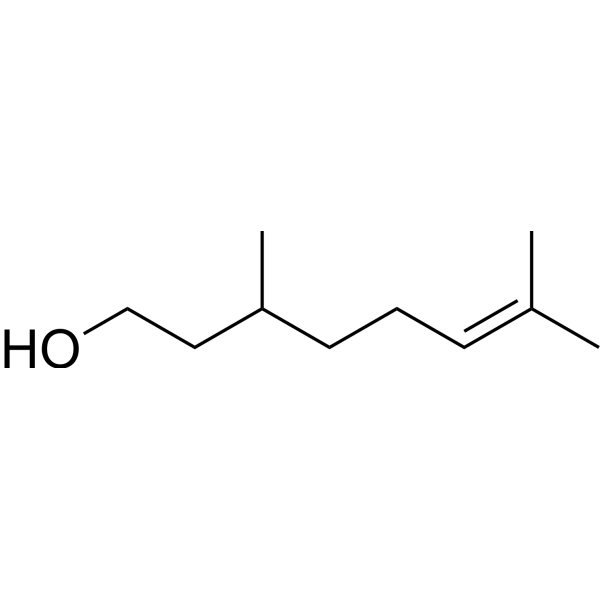
Cat. No.: HY-W010201
CAS No.: 106-22-9
Synonyms: (±)-citronellol; (±)-β-citronellol
Citronellol ((±)-Citronellol) is an orally active inducer of apoptosis. Citronellol can prevent oxidative stress, mitochondrial dysfunction, and apoptosis in the SH-SY5Y cell Parkinson's disease model induced by 6-OHDA by regulating the ROS-NO, MAPK/ERK, and PI3K/Akt signaling pathways. Citronellol can induce necroptosis in human lung cancer cells through the TNF-α pathway and accumulation of ROS. Citronellol can reduce the levels of LC-3 and p62 to regulate the autophagy pathway, inhibit oxidative stress and neuroinflammation, and thus have neuroprotective effects on Parkinson's rats. Citronellol exhibits anti-fungal activity against Trichophyton rubrum by inhibiting ergosterol synthesis .
loading...
    loading...
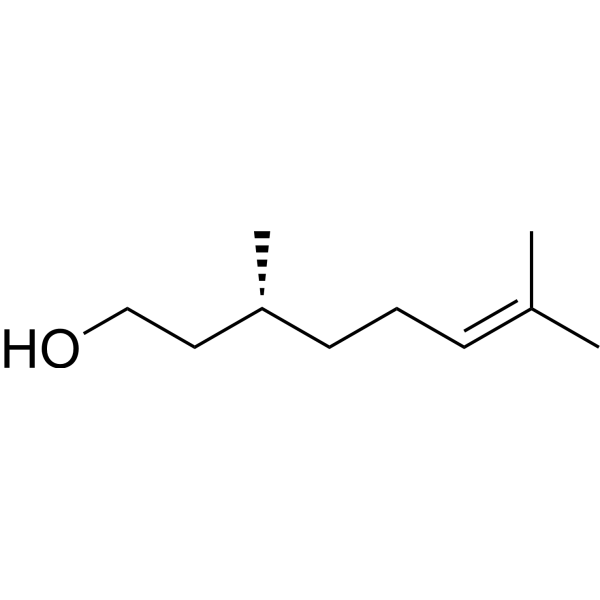
Cat. No.: HY-124257
CAS No.: 1117-61-9
Purity:  99.78%
Synonyms: D-citronellol; (R)-(+)-β-citronellol
(R)-Citronellol (D-Citronellol) is an alcoholic monoterpene found in geranium essential oil. (R)-Citronellol inhibits degranulation of mast cells and does not affect caffeine bitterness perception. (R)-Citronellol can be used in decorative cosmetics, toiletries as well as in non-cosmetic products .
loading...
    loading...
Cat. No.: HY-W015515
CAS No.: 7540-51-4
Synonyms: (S)-3,7-Dimethyloct-6-en-1-ol
L-Citronellol ((S)-3,7-Dimethyloct-6-en-1-ol) is a natural product with anti-allergic and neuroprotective effects. L-Citronellol inhibits mast cell activation and the release of inflammatory factors by inhibiting the ERK pathway. L-Citronellol inhibits BACE1/PSEN1 and AChE, reduces TNF-α expression and lipid peroxidation, demonstrating the potential of multi-target anti-Alzheimer's disease (AD) .
loading...
    loading...
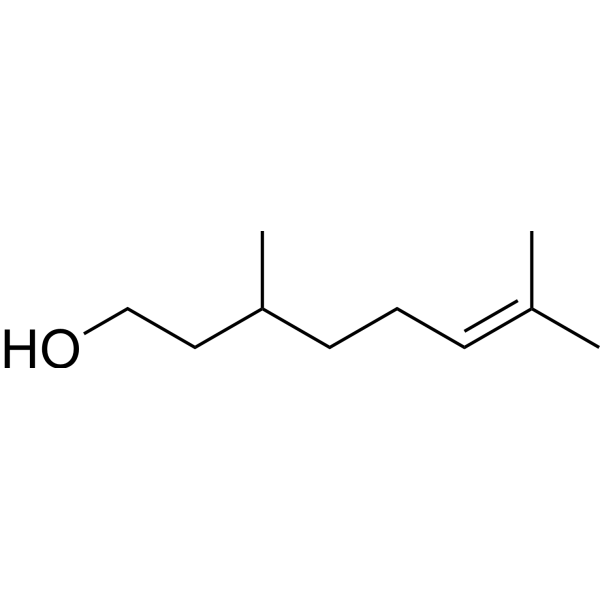
Cat. No.: HY-W010201R
CAS No.: 106-22-9
Synonyms: (±)-citronellol (Standard); (±)-β-citronellol (Standard)
Citronellol (Standard) is the analytical standard of Citronellol. Citronellol (Standard) is an orally active inducer of apoptosis. Citronellol (Standard) can prevent oxidative stress, mitochondrial dysfunction, and apoptosis in the SH-SY5Y cell Parkinson's disease model induced by 6-OHDA by regulating the ROS-NO, MAPK/ERK, and PI3K/Akt signaling pathways. Citronellol (Standard) can induce necroptosis in human lung cancer cells through the TNF-α pathway and accumulation of ROS. Citronellol (Standard) can reduce the levels of LC-3 and p62 to regulate the autophagy pathway, inhibit oxidative stress and neuroinflammation, and thus have neuroprotective effects on Parkinson's rats. Citronellol (Standard) exhibits anti-fungal activity against Trichophyton rubrum by inhibiting ergosterol synthesis .
loading...
    loading...
Cat. No.: HY-W015515R
CAS No.: 7540-51-4
Synonyms: (S)-3,7-Dimethyloct-6-en-1-ol (Standard)
L-Citronellol ((S)-3,7-Dimethyloct-6-en-1-ol) is an analytical standard for L-Citronellol (HY-W015515). This product is intended for research and analytical applications. L-Citronellol is a natural product with anti-allergic and neuroprotective effects. L-Citronellol inhibits mast cell activation and the release of inflammatory factors by inhibiting the ERK pathway. L-Citronellol inhibits BACE1/PSEN1 and AChE, reduces TNF-α expression and lipid peroxidation, demonstrating the potential of multi-target anti-Alzheimer's disease (AD).
loading...
    loading...
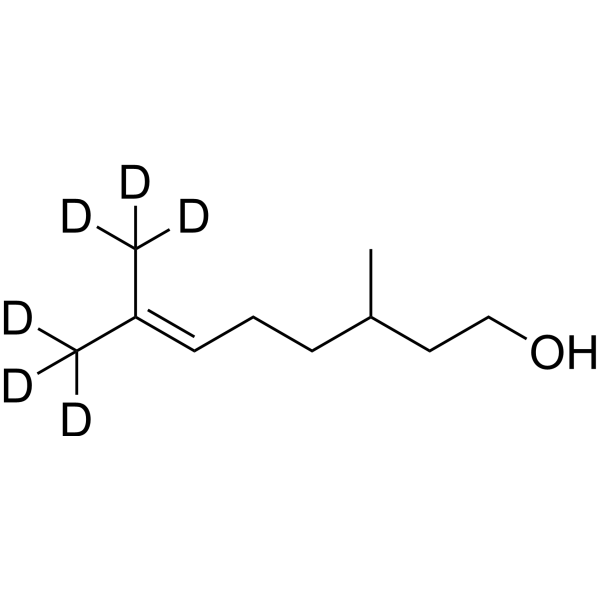
Cat. No.: HY-W010201S
CAS No.: 220687-53-6
Synonyms: (±)-citronellol-d6; (±)-β-citronellol-d6
Citronellol-d6 is deuterated labeled Citronellol (HY-W010201). Citronellol ((±)-Citronellol) is an orally active inducer of apoptosis. Citronellol can prevent oxidative stress, mitochondrial dysfunction, and apoptosis in the SH-SY5Y cell Parkinson's disease model induced by 6-OHDA by regulating the ROS-NO, MAPK/ERK, and PI3K/Akt signaling pathways. Citronellol can induce necroptosis in human lung cancer cells through the TNF-α pathway and accumulation of ROS. Citronellol can reduce the levels of LC-3 and p62 to regulate the autophagy pathway, inhibit oxidative stress and neuroinflammation, and thus have neuroprotective effects on Parkinson's rats. Citronellol exhibits anti-fungal activity against Trichophyton rubrum by inhibiting ergosterol synthesis .
loading...
    loading...
Cat. No.: HY-W010201S1
Synonyms: (±)-citronelloll-d3; (±)-β-citronelloll-d3
Citronellol-d3 ( (±)-Citronelloll-d3) is the deuterium labeled Citronellol (HY-W010201). Citronellol ((±)-Citronellol) is an orally active inducer of apoptosis. Citronellol can prevent oxidative stress, mitochondrial dysfunction, and apoptosis in the SH-SY5Y cell Parkinson's disease model induced by 6-OHDA by regulating the ROS-NO, MAPK/ERK, and PI3K/Akt signaling pathways. Citronellol can induce necroptosis in human lung cancer cells through the TNF-α pathway and accumulation of ROS. Citronellol can reduce the levels of LC-3 and p62 to regulate the autophagy pathway, inhibit oxidative stress and neuroinflammation, and thus have neuroprotective effects on Parkinson's rats. Citronellol exhibits anti-fungal activity against Trichophyton rubrum by inhibiting ergosterol synthesis .
loading...
    loading...
Cat. No.: HY-N18680
CAS No.: 84082-61-1
Category:  

Extract

Target:  

Others

Melissa officinalis extract is rich in various bioactive compounds, such as citronellol, geraniol, glycosides, caffeic acid derivatives, flavonoids, and triterpenoids. Melissa officinalis extract can be used in research on conditions such as nervous tension, anxiety, insomnia, and menstrual disorders.
loading...
    loading...

