9 Results for "

clonal formation

" in MedChemExpress (MCE) Product Catalog:
Products (9)

9 Results for "clonal formation" in MCE Product Catalog:

1
1 Cited Publications
Cat. No.: HY-144448
CAS No.: 2872588-02-6
Purity:  98.27%
Target:  

FAK Apoptosis

Research Areas:  

Cancer

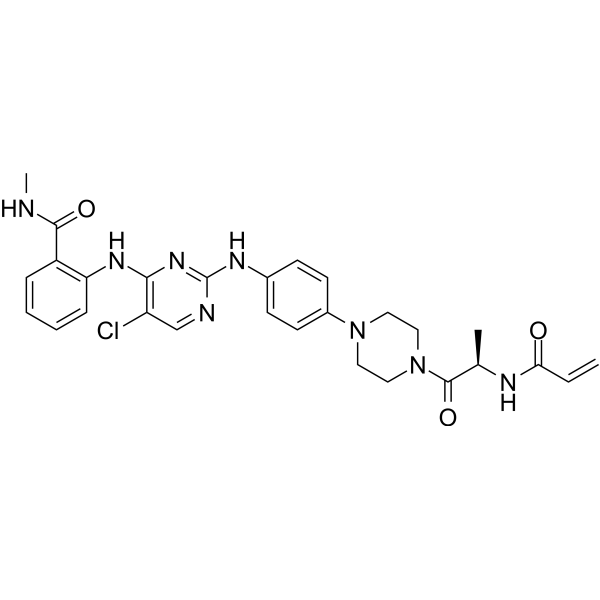
FAK-IN-2 is a potent and orally active focal adhesion kinase (FAK) inhibitor, with anticancer activity (FAK IC50= 35 nM). FAK-IN-2 covalently inhibits the autophosphorylation of FAK in a dose-dependent manner, and inhibits the clone formation and migration of tumor cells, inducing apoptosis .
loading...
    loading...
Cat. No.: HY-162934
CAS No.: 364621-46-5
Research Areas:  

Cancer

TFCP2L1-IN-1 is a specific small molecule targeting TFCP2L1’s active domain with anti-cancer activity. TFCP2L1-IN-1 synergizes with Sorafenib (HY-10201) to induce Apoptosis and reduces cell proliferation, invasion, metastasis, clonal formation and sphere-forming capacity in hepatocellular carcinoma cells .
loading...
    loading...
Cat. No.: HY-N6576
CAS No.: 465-90-7
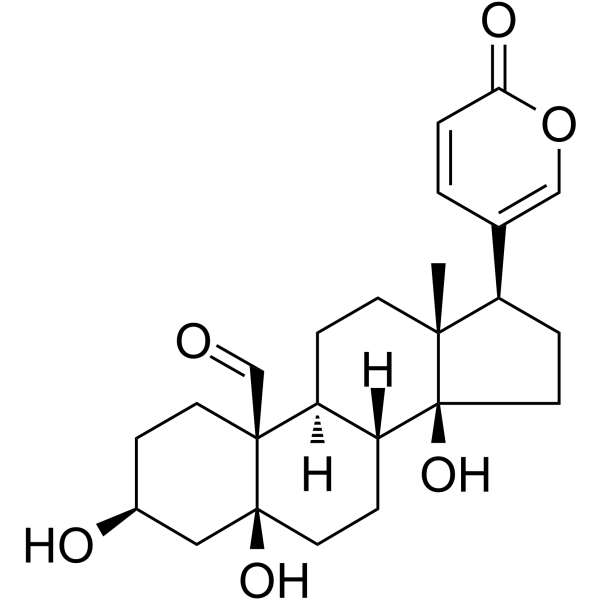
Hellebrigenin is an inhibitor that selectively targets the MAPK signaling pathway (ERK, p38, JNK) and XIAP, and can inhibit Akt expression and phosphorylation. Hellebrigenin can activate endogenous apoptosis pathways (such as mitochondrial membrane potential disruption, Caspase family activation, PARP cleavage), downregulate anti-apoptotic proteins (Bcl-2, Bcl-xL) and upregulate pro-apoptotic proteins (Bax, Bak). Hellebrigenin can also induce DNA double-strand breaks to activate the ATM pathway. Hellebrigenin can inhibit tumor cell proliferation and clone formation, and is mainly used in the study of oral squamous cell carcinoma, liver cancer and other cancers .
loading...
    loading...
Cat. No.: HY-19210
CAS No.: 157659-79-5
Target:  

Endothelin Receptor

Research Areas:  

Cardiovascular Disease

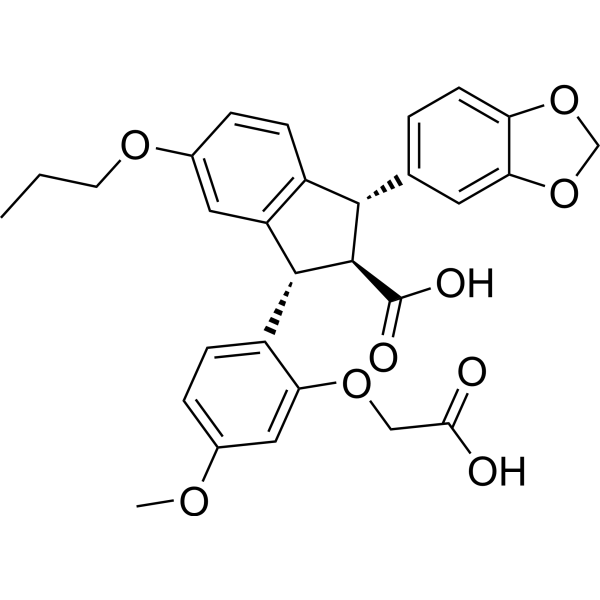
SB-209670 is an extremely potent and highly specific non-peptide, subnanomolar endothelin (ET) receptor antagonist. SB 209670 selectively inhibits binding of 125I-labeled ET-1 to cloned human ET receptor subtypes ETA and ETB (Ki=0.2 and 18 nM, respectively). SB 209670 produces a dose-dependent reduction in blood pressure in hypertensive rats, protects from ischemia-induced neuronal degeneration in a gerbil stroke model, and attenuates neointima formation following rat carotid artery balloon angioplasty .
loading...
    loading...
Cat. No.: HY-176703
CAS No.: 2961035-60-7
Target:  

Deubiquitinase

Research Areas:  

Cancer

USP1-IN-12 (compound 4) is a potent and orally activeUSP1 inhibitor with an IC50 value of 0.00366 µM. USP1-IN-12 inhibits cell clone formation .
loading...
    loading...
Cat. No.: HY-162601
D-01 is a dual-targeting inhibitor of HIF-1α and EZH2 (IC50: 4.86 μM and 0.99 μM respectively). D-01 inhibits the expression of H3K27me3 protein. D-01 inhibits the migration, clone and the invasion of A549 cells, and also inhibits tube formation of HUVECs. D-01 can be used for research of lung cancer .
loading...
    loading...
Cat. No.: HY-109113
CAS No.: 236095-26-4
Synonyms: GPX-150
Target:  

Topoisomerase

Research Areas:  

Cancer

Camsirubicin (GPX-150) is a non-cardiotoxic Doxorubicin (HY-15142) analog that selectively targets topoisomerase IIβ. Camsirubicin reduces cell viability and clone formation of MDA-MB-468 breast cancer cells. Camsirubicin increases the exposure of CALR and HSP90 on the cell surface. Camsirubicin can be used for the study of breast cancer .
loading...
    loading...
Cat. No.: HY-N18294
CAS No.: 137196-25-9
(R,R)-Polysphorin is a neolignan antimalarial agent that is isolated from the dried leaves and stems of Rhaphidophora decursiva. (R,R)-Polysphorin inhibits the growth of chloroquine-sensitive and chloroquine-resistant Plasmodium falciparum clones in vitro by mediating free radical damage to key cellular components via conjugated double bonds. (R,R)-Polysphorin also exhibits cytotoxicity against human oral epidermoid carcinoma cells .
loading...
    loading...
Cat. No.: HY-179103
Research Areas:  

Cancer

PLK4-IN-5 (compound 5f) is a PLK4 (IC50 = 0.8 nM) inhibitor. PLK4-IN-5 can inhibit MCF-7 cell clone formation, induce cell cycle arrest (S/G2 phase), and apoptosis. PLK4-IN-5 has anti proliferative activity against MCF-7 cells (IC50 = 0.48 μM). PLK4-IN-5 can be used in the research of cancer such as breast cancer .
loading...
    loading...

