1. Search Result
Search Result
Results for "

cutaneous allergies

" in MedChemExpress (MCE) Product Catalog:

7

Inhibitors & Agonists

3

Natural
Products

Cat. No. Product Name Target Research Areas Chemical Structure
  • HY-N6871
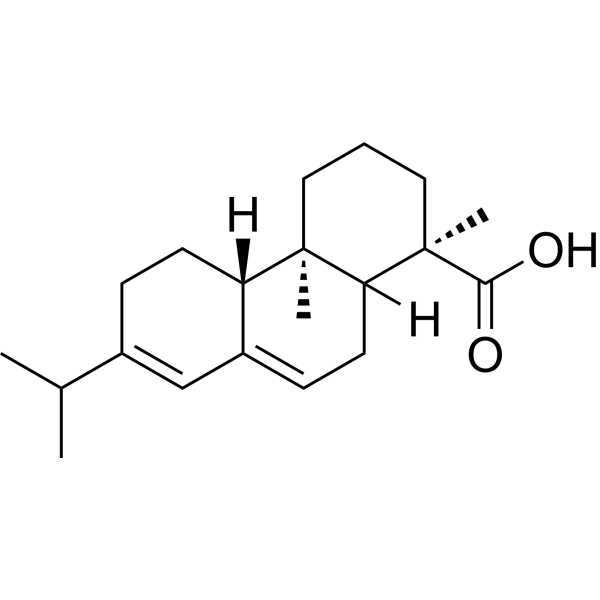
    Abietic acid
    3 Publications Verification

    Bacterial IKK Ferroptosis Infection Metabolic Disease Inflammation/Immunology Cancer
    Abietic acid, an orally active diterpene isolated from Colophony, displays significant anti-proliferative, anti-inflammatory, anti-obesity effect, bacteriostatic, cell cycle arresting and pro-apoptotic activities. Abietic acid inhibits lipoxygenase activity for allergy. Abietic acid enhances cell migration and tube formation in HUVECs. Abietic acid induces significant angiogenic potential, which is associated with upregulation of extracellular signal-regulated kinase (ERK) and p38 expression. Abietic acid attenuates sepsis-induced lung injury by inhibiting nuclear factor kappa-light-chain-enhancer of activated B cells (NF-κB) pathway to inhibit M1 macrophage polarization. Abietic acid exhibits a positive effect against liver injury by attenuating inflammation and ferroptosis. Abietic acid shows accelerated wound closure in a mouse model of cutaneous wounds. Abietic acid significantly reduces the proliferation and growth of NSCLC cells by IKKβ inhibition.Additionally, Abietic acid ameliorates psoriasis-like inflammation and modulates gut microbiota in mice. Abietic acid is promising for research in non-small-cell lung cancer (NSCLC), liver injury-related deseases and psoriasis .
    Abietic acid
  • HY-B1568A

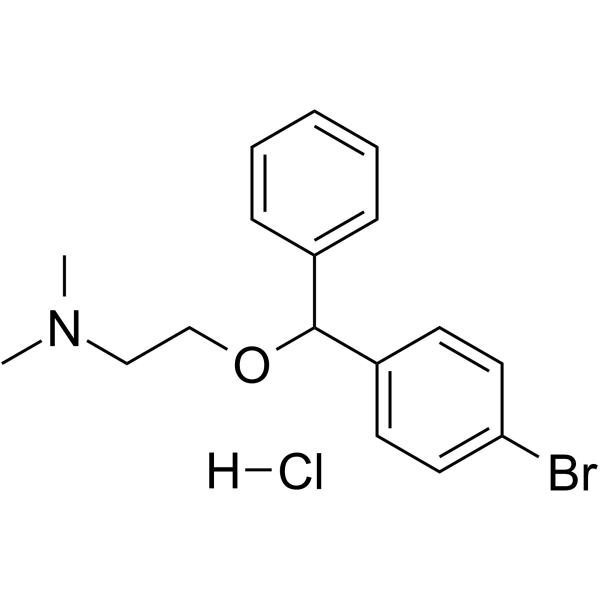
    Ambodryl hydrochloride

    Histamine Receptor Bacterial Infection Inflammation/Immunology
    Bromodiphenhydramine hydrochloride is a potent antihistamine with antimicrobial property. Bromodiphenhydramine hydrochloride inhibits a large number of Gram negative and Gram positive bacteria. Bromodiphenhydramine hydrochloride can be used for cutaneous allergies research .
    Bromodiphenhydramine hydrochloride
  • HY-N4267

    Calcium Channel Platelet-activating Factor Receptor (PAFR) UGT Leukotriene Receptor TNF Receptor PGE synthase Interleukin Related Cardiovascular Disease Infection Inflammation/Immunology
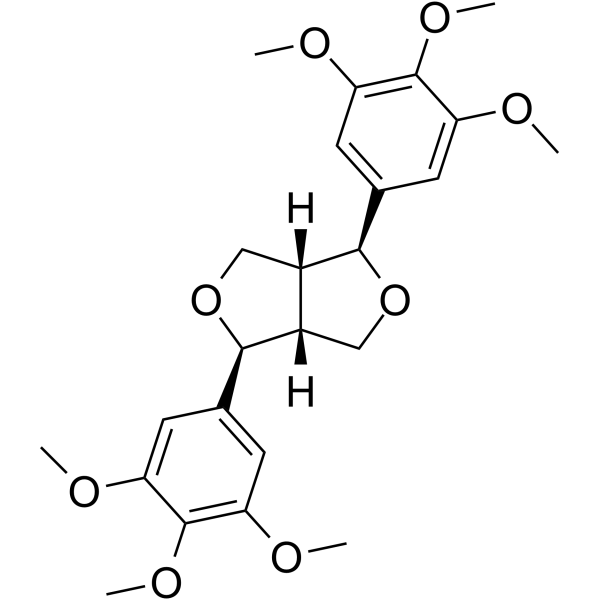
    Yangambin is a PAF receptor antagonist and UGT1A1/UGT1A3 inhibitor, with an IC50 of 29.7 μM and a Ki of 17.1 μM against human UGT1A1, and an IC50 of 56.5 μM and a Ki of 66.8 μM against human UGT1A3. Yangambin blocks PAF-mediated responses, inhibits LTB4-mediated neutrophil infiltration, and suppresses inflammatory events and anaphylactic contraction. Yangambin acts as a central nervous system inhibitor to reduce spontaneous activity, and also exhibits analgesic, anticonvulsant, antileishmanial, vasodilatory and hypotensive effects. Yangambin blocks voltage-gated Ca 2+ channels, reduces the production of NO, TNF-α, IL-6 and PGE2 in cells, increases the production of IL-10, and exerts a protective effect against cardiovascular injury. Yangambin can be used in research related to allergies, cutaneous leishmaniasis, central nervous system diseases and cardiovascular diseases .
    Yangambin
  • HY-B1568

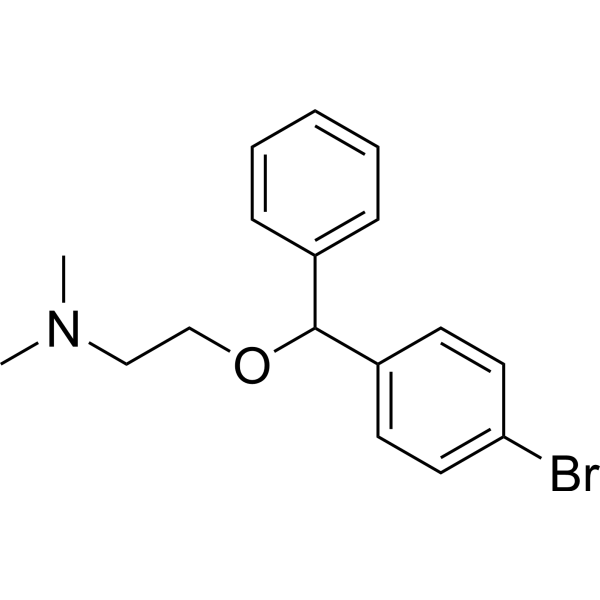
    Ambodryl

    Histamine Receptor Bacterial Infection Inflammation/Immunology
    Bromodiphenhydramine (Ambodryl) is a potent antihistamine with antimicrobial property. Bromodiphenhydramine inhibits a large number of Gram negative and Gram positive bacteria. Bromodiphenhydramine can be used for cutaneous allergies research .
    Bromodiphenhydramine
  • HY-B1568AR

    Ambodryl hydrochloride (Standard)

    Reference Standards Histamine Receptor Bacterial Infection Inflammation/Immunology
    Bromodiphenhydramine (hydrochloride) (Standard) is the analytical standard of Bromodiphenhydramine (hydrochloride). This product is intended for research and analytical applications. Bromodiphenhydramine hydrochloride is a potent antihistamine with antimicrobial property. Bromodiphenhydramine hydrochloride inhibits a large number of Gram negative and Gram positive bacteria. Bromodiphenhydramine hydrochloride can be used for cutaneous allergies research .
    Bromodiphenhydramine hydrochloride (Standard)
  • HY-163061

    Histamine Receptor Inflammation/Immunology
    Quinotolast is an orally active antiallergic agent. Quinotolast inhibits histamine release from rat peritoneal cells. Quinotolast inhibits cutaneous cromoglycate in guinea pig model. Quinotolast has inhibitory effect on histamine and peptide leukotrienes release from guinea pig lung fragments and mouse cultured mast cells. Quinotolast can be studied in allergy-related research .
    Quinotolast
  • HY-N19243

    Histamine Receptor Inflammation/Immunology
    6-O-Senesioyl plenolin is a sesquiterpene lactone found in Centipeda minima with antiallergic activity. 6-O-Senesioyl plenolin inhibits histamine release from mast cells (IC50 = 18 μM) and suppresses pigment exudation in passive cutaneous anaphylaxis tests. 6-O-Senesioyl plenolin can be used in research related to allergy .
    6-O-Senesioyl plenolin

Inquiry Online

Your information is safe with us. * Required Fields.

Salutation


Country or Region *

Applicant Name *


Organization Name *

Department *


Email Address *


Product Name *

Cat. No.


Requested quantity *

Phone Number *


Remarks

Inquiry Online

Inquiry Information

Product Name:
Cat. No.:
Quantity:
MCE Japan Authorized Agent:

