




1. Search Result
Search Result
Results for "

decarboxylation

" in MedChemExpress (MCE) Product Catalog:

36

Inhibitors & Agonists

3

Biochemical Assay Reagents

3

Peptides

4

Natural
Products

2

Isotope-Labeled Compounds

Cat. No. Product Name Target Research Areas Chemical Structure
  • HY-W327449

    Cytochrome P450 Cardiovascular Disease Metabolic Disease
    Feruloylputrescine is an oral active phenolamide found in citrus plants and formed through the decarboxylation of L-Arginine. Feruloylputrescine inhibits monooxygenase (cntA) and reductase (cntB) and trimethylamine production. Feruloylputrescine can be used for cardiovascular diseases research .
    Feruloylputrescine
  • HY-W019599

    L-PCPA

    5-HT Receptor Tryptophan Hydroxylase Neurological Disease
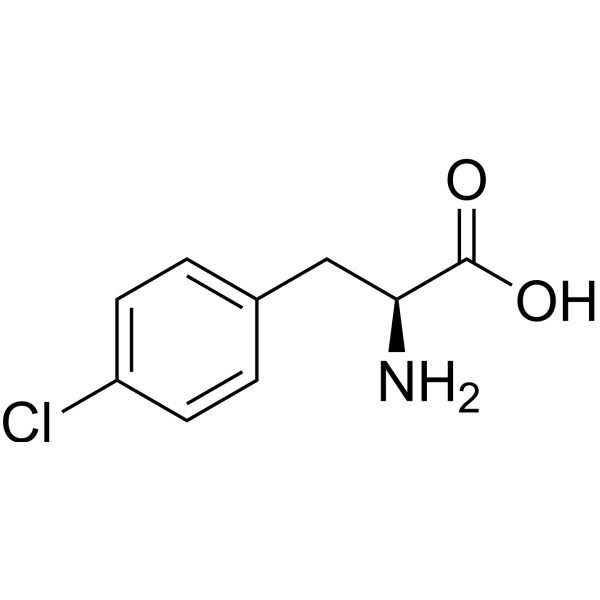
    4-Chloro-L-phenylalanine (L-PCPA) is a tryptophan hydroxylase inhibitor targeting TPH1 and TPH2, with the activity of blocking serotonin biosynthesis. 4-Chloro-L-phenylalanine reduces the levels of serotonin and its metabolites in the brain without impairing the survival of serotonergic neurons. 4-Chloro-L-phenylalanine enhances anhedonic, depression-like and anxiety-like behaviors in mice with depleted noradrenergic and dopaminergic neurons. 4-Chloro-L-phenylalanine acts as a decarboxylation substrate for aromatic L-amino acid decarboxylase from Bacillus atrophaeus. 4-Chloro-L-phenylalanine can be used in studies related to Parkinson's disease .
    4-Chloro-L-phenylalanine
  • HY-114118S1

    Isotope-Labeled Compounds GLP Receptor Insulin Receptor α-synuclein Apoptosis p38 MAPK Autophagy Bcl-2 Family Neurological Disease Metabolic Disease Cancer
    Semaglutide-d8 tetraTFA is the deuterium labeled Semaglutide (HY-114118). Semaglutide is a long-acting, selective, competitive GLP-1R agonist that can penetrate the blood-brain barrier. After activating GLP-1R, Semaglutide promotes insulin secretion, inhibits gastric emptying and appetite, and at the same time enhances autophagy, inhibits oxidative stress and apoptosis. Semaglutide also regulates mitochondrial function and lipid metabolism (such as reducing de novo lipogenesis in the liver). Semaglutide has activities such as lowering blood sugar, reducing weight, neuroprotection (such as improving motor function in Parkinson's disease models, reducing α-synuclein aggregation) and improving hepatic steatosis. Semaglutide can be used for the study of neurodegenerative diseases and liver diseases such as type 2 diabetes, obesity, Parkinson's disease, metabolic associated fatty liver disease (MASLD), and cancer .
    Semaglutide-d8 tetraTFA
  • HY-114118S

    Isotope-Labeled Compounds GLP Receptor Insulin Receptor α-synuclein Apoptosis p38 MAPK Autophagy Bcl-2 Family Neurological Disease Metabolic Disease Cancer
    Semaglutide-d8 is the deuterium labeled Semaglutide (HY-114118). Semaglutide is a long-acting, selective, competitive GLP-1R agonist that can penetrate the blood-brain barrier. After activating GLP-1R, Semaglutide promotes insulin secretion, inhibits gastric emptying and appetite, and at the same time enhances autophagy, inhibits oxidative stress and apoptosis. Semaglutide also regulates mitochondrial function and lipid metabolism (such as reducing de novo lipogenesis in the liver). Semaglutide has activities such as lowering blood sugar, reducing weight, neuroprotection (such as improving motor function in Parkinson's disease models, reducing α-synuclein aggregation) and improving hepatic steatosis. Semaglutide can be used for the study of neurodegenerative diseases and liver diseases such as type 2 diabetes, obesity, Parkinson's disease, metabolic associated fatty liver disease (MASLD), and cancer .
    Semaglutide-d8
  • HY-112747

    LPI; PE (soy)

    Phospholipase Infection
    Soy PE (LPI) is the most abundant phospholipid in prokaryotes and the second most abundant found in the membrane of mammalian, plant, and yeast cells, comprising approximately 25% of total mammalian phospholipids. In the brain, phosphatidylethanolamine comprises almost half of the total phospholipids. It is synthesized mainly through the cytidine diphosphate-ethanolamine and phosphatidylserine decarboxylation pathways, which occur in the endoplasmic reticulum (ER) and mitochondrial membranes, respectively. It is a precursor in the synthesis of phosphatidylcholine and arachidonoyl ethanolamide and is a source of ethanolamine used in various cellular functions. In E.coli, phosphatidylethanolamine deficiency prevents proper assembly of lactose permease, suggesting a role as a lipid chaperone. It is a cofactor in the propagation of prions in vitro and can convert recombinant mammalian proteins into infectious molecules even in the absence of RNA. This product contains phosphatidylethanolamine molecular species with variable fatty acyl chain lengths at the sn-1 and sn-2 positions .
    Soy PE
  • HY-W016042

    Drug Intermediate Others
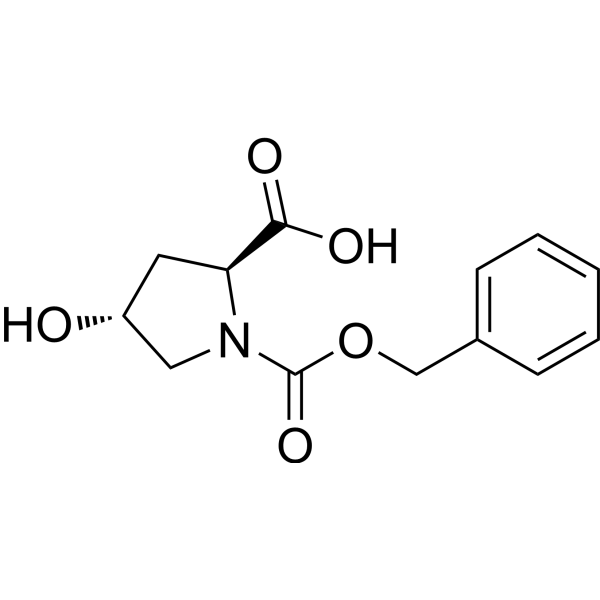
    N-Cbz-Hydroxy-L-proline is a chiral N-Cbz-protected amino acid derivative. N-Cbz-Hydroxy-L-proline is commonly used in the synthesis of polypeptides and pharmaceutical intermediates. N-Cbz-Hydroxy-L-proline undergoes decarboxylation under AlCl3/HFIP conditions .
    N-Cbz-Hydroxy-L-proline
  • HY-E70518

    Bacterial Infection
    Oxalate decarboxylase, Microorganism (EC 4.1.1.2), a stress-response enzyme in certain soil bacteria, is a Mn-dependent enzyme in the cupin superfamily and is found in fungi and soil bacteria. Oxalate decarboxylase catalyzes the decarboxylation of the oxalate mono-anion in the soil bacterium Bacillus subtilis. Enzymatic activity of OxDC is strongly pH dependent, with a maximum at around pH 4.0 .
    Oxalate decarboxylase, Microorganism
  • HY-B1713A

    DL-(±)-Ornithine hydrochloride

    Endogenous Metabolite Metabolic Disease
    DL-Ornithine (DL-(±)-Ornithine) hydrochloride is an amino acid and also a urea cycle promoter. DL-Ornithine hydrochloride has the characteristics of low metabolic rate and rapid excretion, and only the L-enantiomer undergoes decarboxylation. In mice inoculated with L-1210 leukemia cells, DL-Ornithine hydrochloride is excreted in urine in its original form, and its conversion to carbon dioxide within 24 h is negligible. DL-Ornithine hydrochloride is mainly used in the urea cycle to eliminate excess nitrogen in the body and protect the kidneys .
    DL-Ornithine hydrochloride
  • HY-P2891

    PoxB

    Biochemical Assay Reagents Others
    Pyruvate Oxidase, Microorganisms (PoxB) is a peripheral membrane enzyme, isolated from microorganisms. Pyruvate oxidase catalyzes the oxidative decarboxylation of pyruvate to acetyl phosphate, carbon dioxide and water. Pyruvate oxidase is an important enzyme in bacterial metabolism and is often used in biochemical research .
    Pyruvate Oxidase, Microorganisms
  • HY-CE02028

    Glutaconyl-coenzyme A

    Endogenous Metabolite Metabolic Disease
    Glutaconyl-CoA (Glutaconyl-coenzyme A) is a key metabolic intermediate in the mitochondrial catabolic pathways of lysine, hydroxylysine and tryptophan. Glutaconyl-CoA competitively inhibits wild-type glutaryl-CoA dehydrogenase (GCDH) with a Ki value of 1.1 µM. Glutaconyl-CoA is generated via the oxidative decarboxylation of glutaryl-CoA catalyzed by GCDH, and is subsequently further metabolized. Glutaconyl-CoA can be used in the research of type I glutaric aciduria .
    Glutaconyl-CoA
  • HY-111177

    Ethylphenacemide; M 551

    Drug Metabolite Neurological Disease
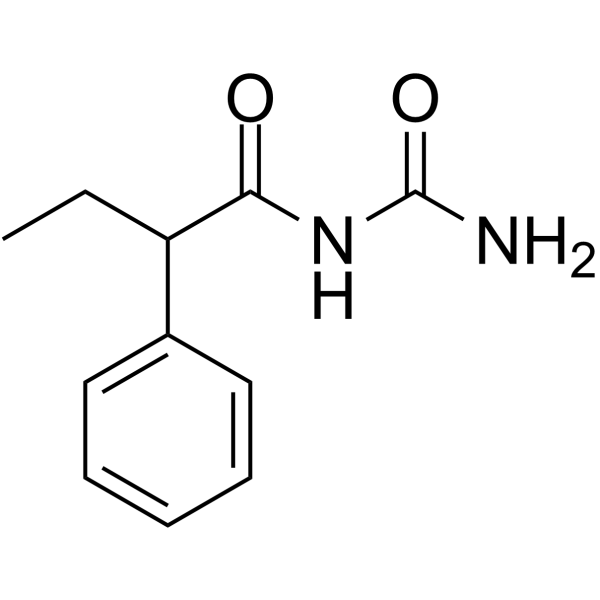
    Pheneturide (Ethylphenacemide, M 551), a decarboxylation product of Phenobarbital, can be used to prevent psychomotor seizures .
    Pheneturide
  • HY-P2796

    PDC

    Biochemical Assay Reagents Metabolic Disease
    Pyruvate decarboxylase (PDC) is an enzyme that catalyses the decarboxylation of pyruvic acid to acetaldehyde. Pyruvate decarboxylase catalyses the non-oxidative conversion of pyruvate (or other 2-oxo acids) to acetaldehyde and CO2 .
    Pyruvate decarboxylase
  • HY-P2993

    ICDH; IDH

    Isocitrate Dehydrogenase (IDH) Metabolic Disease Cancer
    Isocitrate dehydrogenase, Porcine heart (ICDH) is a citric acid or tricarboxylic acid cycle enzyme, is often used in biochemical studies. Isocitrate dehydrogenase catalyzes the oxidative decarboxylation of isocitrate to α-ketoglutarate and reduces NAD(P) + to NAD(P)H, it plays important roles in cellular metabolism .
    Isocitrate dehydrogenase, Porcine heart
  • HY-P2825

    TDC; TyrDC

    Endogenous Metabolite Others
    Tyrosine decarboxylase, Microorganism (TDC) is a tyrosine decarboxylase produced by microorganisms. Tyrosine decarboxylase is a PLP-dependent enzyme that catalyzes the decarboxylation of L-tyrosine, L-phenylalanine, and L-dopa to produce tyramine, 2-phenethylamine, and dopamine, respectively. Tyrosine decarboxylase mediates acid stress resistance, maintains intracellular pH homeostasis, and generates proton motive force .
    Tyrosine decarboxylase, Microorganism
  • HY-19094

    Angiotensin Receptor Cardiovascular Disease
    DuP-532 is an angiotensin type 1 receptor antagonist with potential activity in the suppression of hypertension and heart failure. DuP-532 can react with a range of aryl and heteroaryl halides to form perfluoroalkyl(hetero)arenes in moderate to high yields. Computational studies of DuP-532 suggest that coordination of a second phenyl ring ligand may lower the energy barrier for decarboxylation of perfluorocarboxylates, thereby promoting the perfluoroalkylation reaction .
    DuP-532
  • HY-P2837

    Endogenous Metabolite Metabolic Disease
    Oxaloacetate decarboxylase catalyzes the irreversible decarboxylation of oxaloacetate to pyruvate and COIC2. Oxaloacetate decarboxylase is a member of the sodium ion transport decarboxylase (NaT-DC) enzyme family. Oxaloacetate decarboxylase converts the chemical energy of the decarboxylation reaction into an electrochemical gradient of Na + ions across the membrane .
    Oxaloacetate decarboxylase
  • HY-P3175

    6-Phosphogluconate dehydrogenase

    Biochemical Assay Reagents Metabolic Disease
    Phosphogluconate dehydrogenase (NADP, decarboxylating) (6-Phosphogluconate dehydrogenase) is an oxidative carboxylase that catalyses the oxidative decarboxylation of 6-phosphogluconate to ribulose 5-phosphate in the context of the oxidative part of the pentose phosphate pathway .
    Phosphogluconate dehydrogenase (NADP, decarboxylating)
  • HY-W327449R

    Cytochrome P450 Reference Standards Cardiovascular Disease Metabolic Disease
    Feruloylputrescine is an oral active phenolamide found in citrus plants and formed through the decarboxylation of L-Arginine. Feruloylputrescine inhibits monooxygenase (cntA) and reductase (cntB) and trimethylamine production. Feruloylputrescine can be used for cardiovascular diseases research .
    Feruloylputrescine (Standard)
  • HY-W002114

    Bacterial Infection
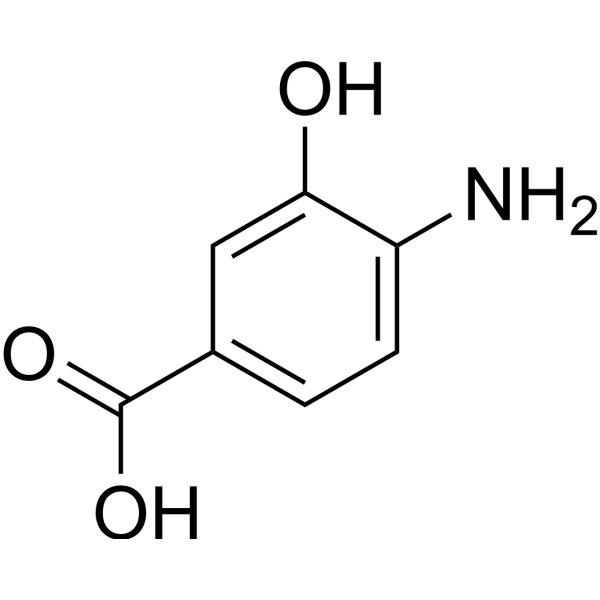
    4-Amino-3-hydroxybenzoic acid is an aromatic substrate degradable by Bordetella sp. strain 10d. 4-Amino-3-hydroxybenzoic acid can serve as a carbon source, nitrogen source and energy source for the growth of Bordetella sp. strain 10d. 4-Amino-3-hydroxybenzoic acid acts as a substrate for 2-amino-5-carboxymuconate-6-semialdehyde deaminase and 4-amino-3-hydroxybenzoate 2,3-dioxygenase .
    4-Amino-3-hydroxybenzoic acid
  • HY-111177R

    Ethylphenacemide (Standard); M 551 (Standard)

    Drug Metabolite Reference Standards Neurological Disease
    Pheneturide (Standard) is the analytical standard of Pheneturide. This product is intended for research and analytical applications. Pheneturide (Ethylphenacemide, M 551), a decarboxylation product of Phenobarbital, can be used to prevent psychomotor seizures .
    Pheneturide (Standard)
  • HY-130431

    Parasite Infection
    Vinclozolin M2 is an active metabolite of vinclozolin. It is formed from vinclozolin by successive esterase activity and decarboxylation of vinclozolin in C. elegans and by decarboxylation in human liver microsomes. Vinclozolin M2 is an antagonist of the mineralocorticoid receptor (IC50=1,400 nM) and androgen receptor (IC50=0.17 nM) in reporter assays using MCF-7 cells.
    Vinclozolin M2
  • HY-172532

    N-Acetylagmatine acetate

    Drug Derivative Neurological Disease
    Acetylagmatine (N-Acetylagmatine) acetate is a product formed by agmatine N-acetyltransferase (AgmNAT) catalyzing the reaction of acetyl-CoA and Agmatine (HY-101238). Agmatine is the product of arginine decarboxylation. Agmatine is a neurotransmitter and neuromodulator in mammalian brain .
    Acetylagmatine acetate
  • HY-E70570

    GABA Receptor Metabolic Disease
    Glutamate decarboxylase is an enzyme that catalyzes the decarboxylation of glutamate to gamma-aminobutyric acid (GABA) and carbon dioxide (CO2). Many gut microbes can metabolize glutamate via their Glutamate decarboxylase in a pyridoxal-5′-phosphate (PLP) dependent manner .
    Glutamate decarboxylase
  • HY-P2993A

    ICDH, Microorganism; IDH, Microorganism

    Isocitrate Dehydrogenase (IDH) Metabolic Disease
    Isocitrate dehydrogenase, Microorganism (IDH) (EC 1.1.1.42) is a citric acid or tricarboxylic acid cycle enzyme, is often used in biochemical studies. Isocitrate dehydrogenase catalyzes the oxidative decarboxylation of isocitrate to α-ketoglutarate and reduces NAD(P) + to NAD(P)H, it plays important roles in cellular metabolism .
    Isocitrate dehydrogenase, Microorganism
  • HY-P2891A

    PoxB, Aerococcus viridans

    Endogenous Metabolite Others
    Pyruvate oxidase, Aerococcus viridans (PoxB) is a thiamine pyrophosphate-dependent oxidase that catalyzes the oxidative decarboxylation of pyruvate to produce acetyl phosphate, carbon dioxide, and water. Pyruvate oxidase, Aerococcus viridans is an important enzyme in bacterial metabolism and can enhance ATP production. Additionally, Pyruvate oxidase, Aerococcus viridans can be used for the determination of aspartate aminotransferase and alanine aminotransferase activities .
    Pyruvate oxidase, Aerococcus viridans
  • HY-P2993B

    Isocitrate Dehydrogenase (IDH) Others
    Isocitrate dehydrogenase (NAD+) , Bacteria (EC 1.1.1.41) is an enzyme that catalyzes the oxidative decarboxylation of Isocitrate, producing alpha-ketoglutarate (α-ketoglutarate) and CO2. This is a two-step process, which involves oxidation of Isocitrate (a secondary alcohol) to oxalosuccinate (a ketone) , followed by the decarboxylation of the carboxyl group beta to the ketone, forming alpha-ketoglutarate.
    Isocitrate dehydrogenase (NAD+), Bacteria
  • HY-E70965

    Isocitrate Dehydrogenase (IDH) Metabolic Disease
    Isocitric Dehydrogenase (NADP), Porcine (EC 1.1.1.42) is an enzyme that catalyzes the oxidative decarboxylation of Isocitrate, producing alpha-ketoglutarate (α-ketoglutarate) and CO2.
    Isocitric Dehydrogenase (NADP), Porcine
  • HY-P2993C

    Isocitrate Dehydrogenase (IDH) Metabolic Disease
    Isocitrate Dehydrogenase (NADP+) , Bacteria (EC 1.1.1.42) is an enzyme that catalyzes the oxidative decarboxylation of isocitrate, producing alpha-ketoglutarate (α-ketoglutarate) and CO2.
    Isocitrate Dehydrogenase (NADP+), Bacteria
  • HY-P2993D

    Isocitrate Dehydrogenase (IDH) Metabolic Disease
    Isocitrate Dehydrogenase (NADP+) , Yeast (EC 1.1.1.42) is an enzyme that catalyzes the oxidative decarboxylation of isocitrate, producing alpha-ketoglutarate (α-ketoglutarate) and CO2.
    Isocitrate Dehydrogenase (NADP+), Yeast
  • HY-P2993E

    Isocitrate Dehydrogenase (IDH) Metabolic Disease
    Isocitrate dehydrogenase, Bacillus subtilis (EC 1.1.1.42) is an enzyme that catalyzes the oxidative decarboxylation of isocitrate, producing alpha-ketoglutarate (α-ketoglutarate) and CO2.
    Isocitrate dehydrogenase, Bacillus subtilis
  • HY-E71346

    Biochemical Assay Reagents Others
    γ-Resorcylate decarboxylase (EC 4.1.1.103) is involved in the degradation of γ-Resorcylate. It contains a zinc ion and a water molecule at the active site. The reaction is reversible, but equilibrium greatly favors the decarboxylation reaction.
    γ-Resorcylate decarboxylase
  • HY-182727

    Monoamine Oxidase Drug Metabolite Metabolic Disease
    MDL 72392 is a selective irreversible monoamine oxidase A (MAO-A) inhibitor. MDL 72392 inhibits MAO-A. MDL 72392 is formed by decarboxylation of the bioprecursor amino acid MDL 72394 via aromatic L-amino acid decarboxylase. MDL 72392 can be used in melatonin biosynthesis research .
    MDL 72392
  • HY-N18050

    Endogenous Metabolite Bacterial Infection
    Petrobactin is a photoreactive siderophore. Petrobactin can be produced by the oil-degrading marine bacterium Marinobacter hydrocarbonoclasticus. Petrobactin can be synthesized by Bacillus anthracis str. Sterne under conditions of iron starvation. Petrobactin readily undergoes a light-mediated decarboxylation reaction when bound to Fe(III) .
    Petrobactin
  • HY-178711

    Others Metabolic Disease
    18-Oxooctadecanoic acid is a long-chain fatty acid derivative. 18-Oxooctadecanoic acid is exclusively oxidized by P450BM-3 to the corresponding α,ω-dicarboxylic acid (1,18-octadecanedioic acid) without undergoing decarboxylation to form one-carbon-shorter olefins. 18-Oxooctadecanoic acid can be used for the study of metabolic pathways of aldehyde-containing long-chain fatty acids .
    18-Oxooctadecanoic acid
  • HY-180668

    Nucleoside Antimetabolite/Analog Metabolic Disease
    2-Oxo-4-hydroxy-4-carboxy-5-ureidoimidazoline is a product of the hydrolysis of 5-hydroxyisourate. 2-Oxo-4-hydroxy-4-carboxy-5-ureidoimidazoline undergoes stereoselective decarboxylation by the action of 2-Oxo-4-hydroxy-4-carboxy-5-ureidoimidazoline decarboxylase to give CO2 and (S)-allantoin .
    2-Oxo-4-hydroxy-4-carboxy-5-ureidoimidazoline
  • HY-185306

    PP 745

    Herbicide Phosphatase β-glucuronidase Metabolic Disease
    Morfamquat dichloride (PP 745) is a bipyridine herbicide. Acute poisoning by Morfamquat dichloride strongly stimulates the reticuloendothelial system, causes lysosomal membrane damage and enzyme leakage, and interferes with the function of hepatocyte Golgi apparatus and related glucose metabolic pathways. Morfamquat dichloride significantly increases the activities of acid phosphatase and β-glucuronidase, exerting toxic effects on mice, while pre-administration of vitamin E alleviates such toxicity .
    Morfamquat dichloride

Inquiry Online

Your information is safe with us. * Required Fields.

Salutation


Country or Region *

Applicant Name *


Organization Name *

Department *


Email Address *


Product Name *

Cat. No.


Requested quantity *

Phone Number *


Remarks

Inquiry Online

Inquiry Information

Product Name:
Cat. No.:
Quantity:
MCE Japan Authorized Agent:

