269 Results for "

discovery

" in MedChemExpress (MCE) Product Catalog:
Products (269)

269 Results for "discovery" in MCE Product Catalog:

6
6 Publications Verification
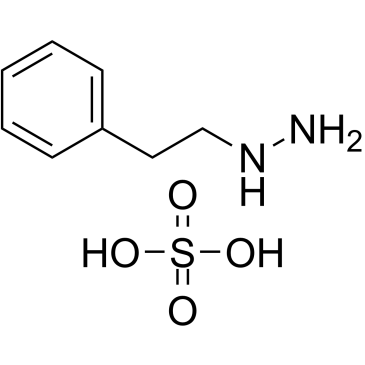
Cat. No.: HY-B1018A
CAS No.: 156-51-4
Phenelzine sulfate, an antidepressant agent, is an irreversible and orally active monoamine oxidase (MAO-A and MAO-B) inhibitor. Phenelzine sulfate inhibits GABA transaminase and primary amine oxidase (PrAO), and sequester reactive aldehydes. Phenelzine sulfate also inhibits LSD1 (Ki: 5.6 μM) and suppresses oxidative stress and lipogenesis. Phenelzine sulfate elevates neurotransmitters (serotonin, norepinephrine, dopamine). Phenelzine sulfate is studied in neurological, metabolic and cancer diseases for depression and anxiety disorders, stroke, spinal cord injury, traumatic brain injury, multiple sclerosis, Parkinson’s disease, Alzheimer’s disease, inflammatory pain, obesity and prostate cancer .
1
1 Cited Publications
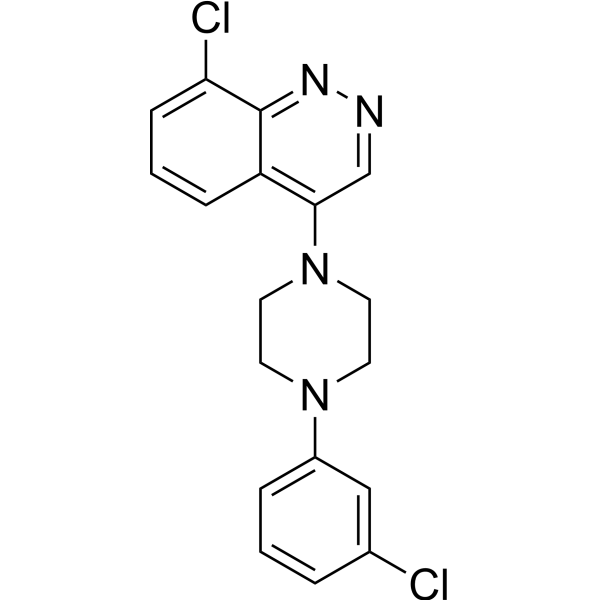
Cat. No.: HY-124757
CAS No.: 932359-76-7
Purity:  99.87%
Target:  

Proteasome Mitosis

Research Areas:  

Cancer

FiVe1 is a vimentin (VIM) inhibitor. FiVe1 binds to the rod domain of VIM, causing metaphase VIM disassembly and hyperphosphorylation at Ser56, ultimately leading to mitotic catastrophe, multinucleation, and loss of stemness. FiVe1 has anticancer activity against soft tissue sarcomas. FiVe1 increases the sensitivity of ovarian cancer to Cisplatin (HY-17394). FiVe1 can be used for researches of mesenchymal cancers (including breast cancer and soft tissue sarcoma) and ovarian cancers .
1
1 Cited Publications
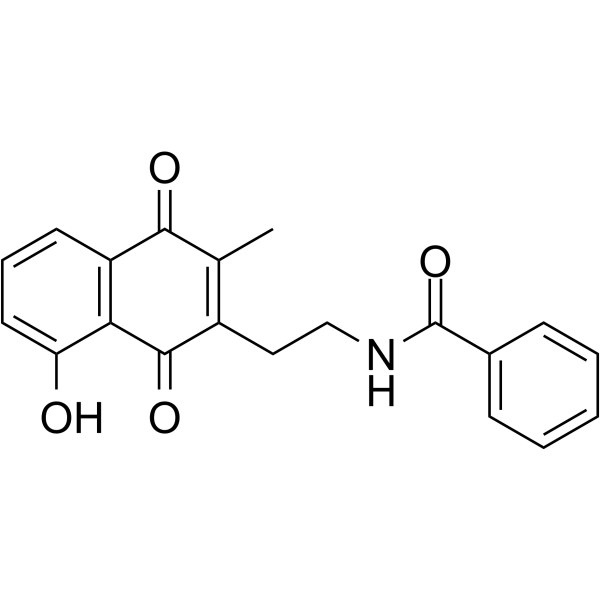
Cat. No.: HY-149007
CAS No.: 2503096-50-0
Purity:  98.30%
Target:  

STAT Apoptosis

Research Areas:  

Cancer

STAT3-IN-11 (7a) is a selective STAT3 inhibitor that inhibits the phosphorylation of STAT3 at site pTyr705. STAT3-IN-11 inhibits the phosphorylation of downstream genes (Survivin and Mcl-1) without affecting its upstream tyrosine kinases (Src and JAK2) levels and p-STAT1 expression. STAT3-IN-11 can induce cancer cell apoptosis, which is potential for the discovery of effective STAT3 inhibitors and antitumor agents against cancers .
Cat. No.: HY-175510
CAS No.: 3114105-24-4
Target:  

TREM receptor

Research Areas:  

Neurological Disease

TREM2 agonist-5 is the microglial lipid-sensing receptor (TREM2) agonist with a Kd of 71.36 μM. TREM2 agonist-5 is a racemic structural analog of the TREM2 agonist VG-3927 and exhibits superior microglial phagocytosis and activates TREM2 signaling in HEK293-hTREM2/DAP12 cells. TREM2 agonist-5 displays a superior in vitro pharmacokinetic profile to VG-3927. TREM2 agonist-5 can used for the study of Alzheimer’s disease .
Cat. No.: HY-177554
CAS No.: 2724919-69-9
Research Areas:  

Cancer

KB05yne is a site-selective, alkyne-functionalized electrophilic "probe" fragment probe designed for covalent ligand discovery, with preferential reactivity toward specific cysteine residues in proteins. KB05yne strongly labels wild-type target proteins (e.g., CDKN2AIP, HPCAL1) but does not label their cysteine-to-alanine mutants, confirming site-specific cysteine reactivity. KB05yne can be used for the discovery and optimization of site-specific covalent ligands, and is applicable to proteins with diverse structures and functions, especially in studies targeting cysteine residues in cancer-related or difficult-to-purify proteins .
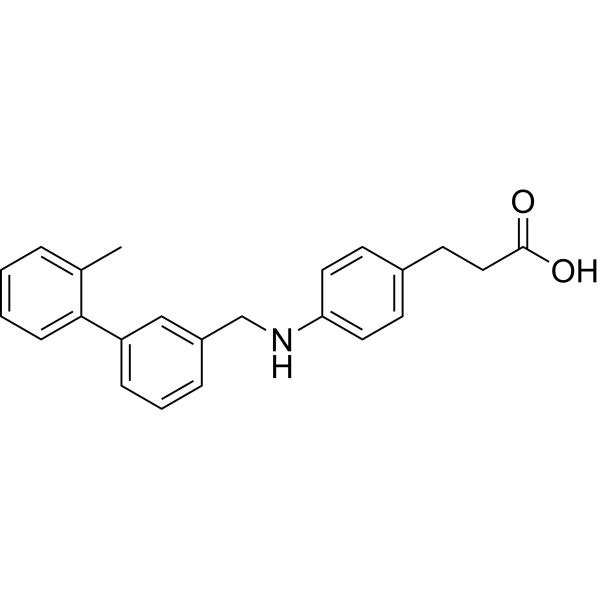
Cat. No.: HY-123297
CAS No.: 1236109-67-3
Purity:  99.90%
Research Areas:  

Metabolic Disease

TUG-469 is a selective free fatty acid receptor 1 (FFA1/GPR40) agonist with an EC50 value of 19 nM. TUG-469 is >200-fold selective for FFA1 over FFA4. TUG-469 significantly improves glucose tolerance in pre-diabetic mice. TUG-469 can be used for the research of diabetes .
Cat. No.: HY-158991
CAS No.: 3054995-92-2
Purity:  98.06%
Target:  

CFTR

Research Areas:  

Inflammation/Immunology

I1421 is an activator of the cystic fibrosis transmembrane conductance regulator (CFTR) with an EC50 of 64 nM for WT CFTR currents. I1421 also allosterically activates multiple mutants causing cystic fibrosis (CF) with good in vivo potency, with an oral bioavailability of 60% in mice corresponding to a half-life of 75 min. I1421 synergizes with Elexacaftor (HY-111772) to enhance CFTR currents .
Cat. No.: HY-D2415
CAS No.: 2411845-57-1
BODIPY-FL staurosporine (Compound 8a) is a fluorescence probe based on staurosporine, exhibiting high specificity towards tyrosine kinases (TK) and tyrosine kinase-like (TKL) family kinases. BODIPY-FL staurosporine has the potential to develop binding assays for kinases that are not recommended for use with Kinase Tracer 236, such as PIM3, CDC42BPG, MAP2K7, TXK, and SIK3. BODIPY-FL staurosporine can be a powerful tool for analyzing kinase selectivity in kinase drug discovery .
Cat. No.: HY-W800659
CAS No.: 29248-48-4
Target:  

ADC Linkers

Research Areas:  

Others

Boc-Gly-Gly-NHS ester can be used to selectively attach small molecules to specific amino acid residues on proteins, creating conjugates that can be used for a variety of applications in drug discovery and diagnostic assays.
Cat. No.: HY-158059
Purity:  99.60%
Target:  

Hedgehog

Research Areas:  

Cancer

DS-1-38 is an EYA1 antagonist that blocks Sonic Hedgehog (SHH) signaling. EYA1 is a haloacid dehalogenase phosphatase and transcription factor that regulates tumorigenesis and proliferation in SHH medulloblastoma (SHH-MB) .
Cat. No.: HY-124081
CAS No.: 107743-37-3
Purity:  ≥99.0%
Target:  

Apoptosis

Research Areas:  

Metabolic Disease

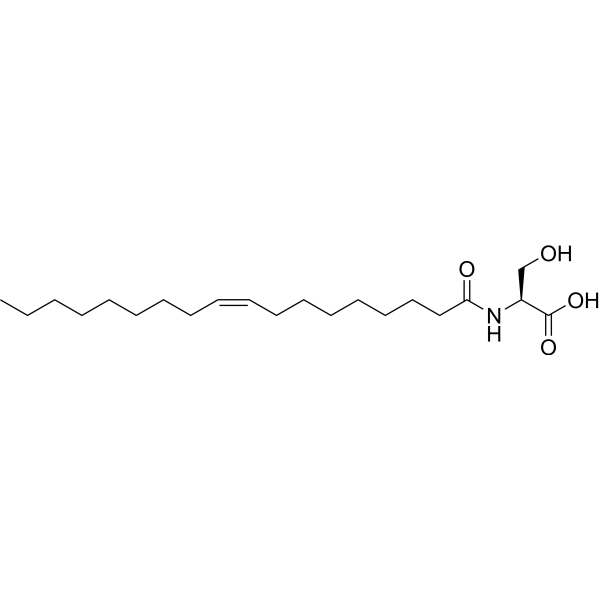
N-Oleoyl-L-Serine is an endogenous amide of long-chain fatty acids with ethanolamine (N-acyl amides). N-Oleoyl-L-Serine is a lipid regulator of bone remodeling and stimulates osteoclast apoptosis. N-Oleoyl-L-Serine can be used for antiosteoporotic drug discovery development .
Cat. No.: HY-13952
CAS No.: 852821-06-8
Purity:  99.72%
Research Areas:  

Others

TP-808 is a key enone intermediate for the discovery and manufacture of Tetracycline (HY-A0107) analogs and synthetic tetracyclines including eravacycline .
Cat. No.: HY-W190956
CAS No.: 2172820-12-9
Target:  

Others

Research Areas:  

Cancer

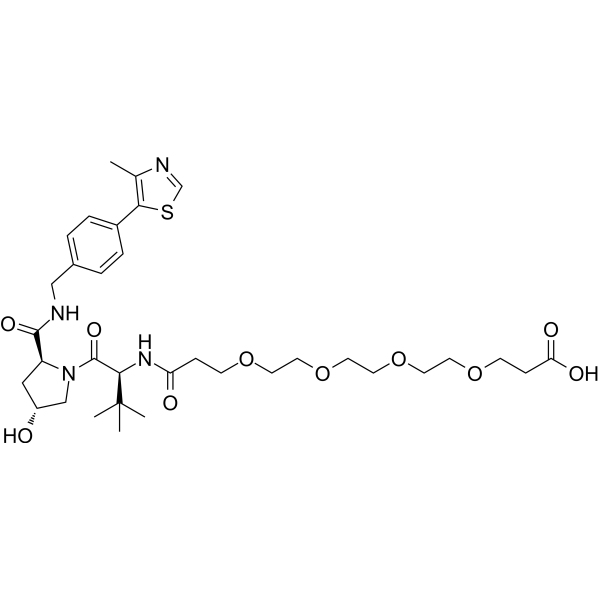
(S,R,S)-AHPC-PEG4-acid is a synthetic PROTAC ligand that binds the E3 ligase ligand to the PEG4 arm, thereby enhancing PROTAC drug research and discovery .
Cat. No.: HY-W103317
CAS No.: 271-95-4
Synonyms: Indoxazene
Target:  

Drug Intermediate

Research Areas:  

Neurological Disease

1,2-Benzisoxazole (Indoxazene) is a potential substrate of rabbit liver aldehyde oxidase. 1,2-Benzisoxazole was used in the discovery and development of zonisamide (HY-B0124) for the study of epilepsy and Parkinson's disease .
Cat. No.: HY-175845
CAS No.: 2787582-78-7
Research Areas:  

Cancer

Scr-IN-2 is an effective c-Scr inhibitor with an IC50 of 302 nM. Scr-IN-2 exhibits nanomolar-level anti-breast cancer activity. Scr-IN-2 increases the level of ROS in cells, induces mitochondrial damage, G1 phase arrest, and apoptosis. Scr-IN-2 can be used in the research of breast cancer .
Cat. No.: HY-W612372
CAS No.: 7612-88-6
Synonyms: Fluorosulfonylbenzyl bromide
4-(Bromomethyl)benzenesulfonyl fluoride (Fluorosulfonylbenzyl bromide) is an important chemical reagent with good biological activity. 4-(Bromomethyl)benzenesulfonyl fluoride can be used to prepare various bioactive molecules, especially in the process of compound discovery and synthesis, showing excellent reactivity. 4-(Bromomethyl)benzenesulfonyl fluoride is often used in the development of new biological agents, promoting the research progress of organic chemistry and biochemistry.
Cat. No.: HY-115527
CAS No.: 902891-37-6
Target:  

SHP2

Research Areas:  

Cancer

SHP244 is a conformational inhibitor targeting the "latch allosteric site" (site 2) of the SHP2 protein with an IC50 value for SHP2 WT of 60 μM. SHP244 has no significant effect on the level of p-ERK alone. SHP244 combined with RMC-4550 (HY-116009) ("tunnel site" site 1 inhibitor) can reduce p-ERK and inhibit the rebound of p-ERK, thereby reducing drug resistance. SHP244 can be used to study drug resistance in FGFR-driven cancers .
Cat. No.: HY-153756
CAS No.: 749212-56-4
Purity:  ≥95.0%
Target:  

Prion Protein

Research Areas:  

Infection

GFP16 is a low affinity antiprion compound. GFP16 can be used for research of antiprion drug discovery .
Cat. No.: HY-178949
Research Areas:  

Infection

MRSA antibiotic 3 (Compound C8) is a small-molecule antibiotic active against Methicillin (HY-121544)-resistant Staphylococcus aureus (MRSA), showing a MIC of 0.5 μg/mL against the standard S. aureus strain (ATCC 29213). MRSA antibiotic 3 potently inhibits the ATPase activity of S. aureus DNA gyrase with an IC50 of 0.32 μM. MRSA antibiotic 3 exhibits strong inhibitory activity against five clinical MRSA isolates, with MIC values ranging from 0.5 to 1 μg/mL. MRSA antibiotic 3 demonstrates negligible cytotoxicity at effective antibacterial concentrations and causes no hemolysis in erythrocytes even at extremely high concentrations. MRSA antibiotic 3 shows significant protective effects in both Galleria mellonella infection and murine sepsis models .
Cat. No.: HY-178441
PKM2-IN-11 is a PKM2 inhibitor (IC50 = 0.363 μM). PKM2-IN-11 has dual mechanisms involving pyruvate kinase M2 (PKM2) inhibition and microtubule stabilization. PKM2-IN-11 can decrease PKM2 protein levels in MCF-7 cells. PKM2-IN-11 can slightly reduce reactive oxygen species (ROS) levels and significantly increase early apoptotic cells. PKM2-IN-11 induces G2/M phase arrest. PKM2-IN-11 can be used for the study of breast cancer .

