




26 Results for "

expression of recombinant proteins

" in MedChemExpress (MCE) Product Catalog:
Products (26)

26 Results for "expression of recombinant proteins" in MCE Product Catalog:

65
65 Publications Verification
Cat. No.: HY-K2014

MCE PEI Transfection Reagent is designed based on 25 kDa PEI. It has high-efficiency, low-toxicity, strong-stability, and is suitable for many cell types, such as HEK-293、HEK-293T、CHO-K1、COS-1、COS-7、NIH/3T3、Sf9、HepG2 and HeLa et, even some hard-to-transfect cells. It can also be applied to large-scale recombinant protein expression and virus production. The 1 mL is defined as the base specification. All larger sizes correspond to incremental volumes of this base.

loading...
    loading...
9
9 Cited Publications
Cat. No.: HY-P3160
CAS No.: 86088-83-7
Fibronectin, a glycoprotein present in blood as well as in cells, is a biomarker of tissue injury. Fibronectin binds to membrane-spanning receptor proteins called integrins. Fibronectin also binds to other extracellular matrix proteins such as collagen, fibrin, and heparan sulfate proteoglycans .
This product is a human Fibronectin obtained by recombinant expression in a rice expression system.
loading...
    loading...
8
8 Cited Publications
Cat. No.: HY-P1068A
CAS No.: 9001-63-2
Target:  

Bacterial

Research Areas:  

Infection

Recombinant human lysozyme (plant expression) is a conserved anti-bacterial protein that causes bacterial lysis and death by hydrolyzing bacterial cell wall peptidoglycan (PG). Recombinant human lysozyme (plant expression) can be used to study bacterial infections .
loading...
    loading...
5
5 Cited Publications
Cat. No.: HY-P3152
CAS No.: 9013-20-1
Streptavidin is a ~60 kDa homotetramer. Streptavidin binds four molecules of biotin with the highest affinity. The binding affinity of biotin to streptavidin is one of the highest reported for a non-covalent interaction to date, with a KD ~0.01 pM . Streptavidin has an immunosuppressive role .
This product is a Streptavidin protein recombinantly expressed in an E. coli expression system.
loading...
    loading...
5
5 Cited Publications
Cat. No.: HY-P1956
CAS No.: 70024-90-7
Synonyms: Human serum albumin
HSA Protein (Human serum albumin) is the most abundant protein in plasma and is a major determinant of plasma oncotic pressure. HSA Protein exhibits antioxidant, anticoagulant, anti-inflammatory, anti-platelet aggregation activities as well as colloid osmotic action. HSA Protein can block the inhibitory effect of GML on human T cells, providing protective function for T cells. HSA Protein is also associated with cardiovascular diseases and can partially prevent the LPS (HY-D1056) induced oxidative stress, as well as the upregulation of NF-κB, NF-κB, and peroxynitrite (ONOO ?) in the vascular wall, contributing to the reduction of blood pressure .
This product is recombinant HSA Protein expressed in a microbial expression system.
loading...
    loading...
1
1 Cited Publications
Cat. No.: HY-P1956A
CAS No.: 70024-90-7
Synonyms: Human serum albumin (Cell culture grade, Endotoxin<0.125 EU/mg)
HSA Protein (Cell culture grade, Endotoxin<0.125 EU/mg) (Human serum albumin (Cell culture grade, Endotoxin<0.125 EU/mg)) is the most abundant protein in plasma and is a major determinant of plasma oncotic pressure. HSA Protein (Cell culture grade, Endotoxin<0.125 EU/mg) exhibits antioxidant, anticoagulant, anti-inflammatory, anti-platelet aggregation activities as well as colloid osmotic action. HSA Protein (Cell culture grade, Endotoxin<0.125 EU/mg) can block the inhibitory effect of GML on human T cells, providing protective function for T cells. HSA Protein (Cell culture grade, Endotoxin<0.125 EU/mg) is also associated with cardiovascular diseases and can partially prevent the LPS (HY-D1056) induced oxidative stress, as well as the upregulation of NF-κB, iNOS, and peroxynitrite (ONOO ?) in the vascular wall, contributing to the reduction of blood pressure. HSA Protein (Cell culture grade, Endotoxin<0.125 EU/mg) can be used for in vitro cell culture .
This product is human serum albumin recombinantly expressed in an Escherichia coli expression system.
loading...
    loading...
Cat. No.: HY-NP008
CAS No.: 9045-23-2
β-Lactoglobulin, a major whey protein, is a small globular protein from the lipocalin family. β-Lactoglobulin is an important source of the essential and branched-chain amino acids (leucine, isoleucine, and valine). β-Lactoglobulin shows antioxidant properties, because it contains two disulfide bonds and one free thiol group. β-Lactoglobulin is a ligand transport agent. β-Lactoglobulin is one of the major allergens in milk and can be utilized in the research for developing safe hypoallergenic dairy products .
loading...
    loading...
Cat. No.: HY-P11146
CAS No.: 175483-64-4
Synonyms: Sakacin P inducer peptide
Target:  

Bacterial

Research Areas:  

Infection

SppIP (Sakacin P inducer peptide) is a peptide consisting of 19 amino acids . SppIP is an essential inducer for sakacin P production . SppIP can induce the expression of PRRSV GP5 and SARS-CoV-2 spike protein in recombinant Lactobacillus plantarum. SppIP can activate the transcription of the sakacin P promoter to drive the expression of downstream heterologous capsid proteins, increasing the proportion of PCV2d capsid proteins displayed on the cell surface of Lactobacillus plantarum. SppIP can be used in studies related to sakacin P induction .
loading...
    loading...
Cat. No.: HY-E70528
CAS No.: 2178107-79-2
Research Areas:  

Others

HRV-3C protease fuses with GST is a recombinant protease fused with HRV-3C protease and GST, which recognizes the LEVLFQGP polypeptide sequence. HRV-3C protease fuses with GST precisely cleaves between glutamine and glycine-proline residues to remove fusion tags from target proteins. HRV-3C protease fuses with GST exhibits cleavage activity both in vitro in silkworm fat body lysates and in vivo in silkworm larval fat bodies, and achieves functional expression in E. coli and silkworm-baculovirus expression systems. HRV-3C protease fuses with GST can be applied to recombinant protein-related research .
loading...
    loading...
Cat. No.: HY-122653A
Purity:  98.02%
Target:  

PROTACs

Research Areas:  

Cancer

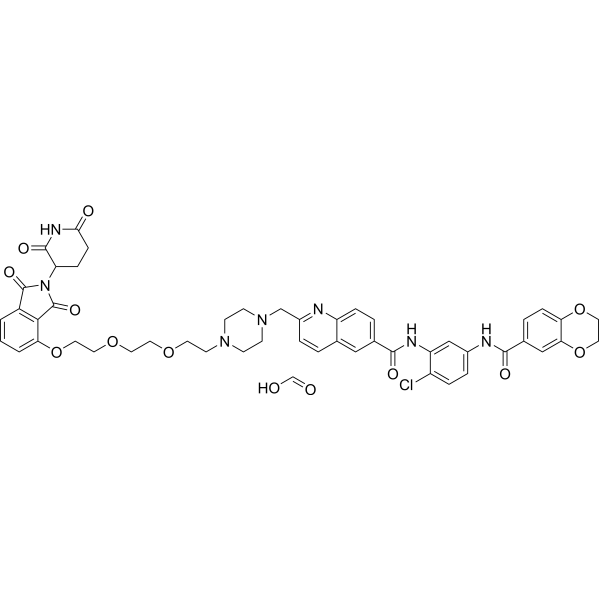
CCT367766 formic is a potent and the third generation heterobifunctional and Cereblon-based pirin targeting protein degradation probe (PDP, or PROTAC), depletes pirin protein expression at low concentration. CCT367766 formic exhibits a moderate affinity for the CRBN-DDB1 complex with an IC50 value of 490 nM. CCT367766 formic reveals a good affinity for the recombinant pirin and CRBN with Kd values of 55 nM and 120 nM, respectively. CCT367766 formic provides a potential chemical tool to study a largely unexplored protein .
loading...
    loading...
Cat. No.: HY-E70830
Target:  

DYRK

Research Areas:  

Cancer

Homeodomain interacting protein kinase 2 (HIPK2) is an evolutionary conserved serine/threonine kinase that regulates gene expression by phosphorylation of transcription factors and accessory components of the transcription machinery. HIPK2 is activated in response to DNA-damaging agents or morphogenic signals. HIPK2 Recombinant Human Active Protein Kinase is a recombinant HIPK2 protein that can be used to study HIPK2-related functions .
loading...
    loading...
Cat. No.: HY-E70658
Target:  

CDK

Research Areas:  

Cancer

CDK12 R722C/CycK Recombinant Human Active Protein Kinase is a cyclin-dependent kinase and regulates the expression of genes involved in DNA repair and is required for the maintenance of genomic stability .
loading...
    loading...
Cat. No.: HY-E70786
Target:  

Akt

Research Areas:  

Cancer

AKT is the oncogenic protein kinase that regulates essential cellular functions such as migration, proliferation, differentiation, apoptosis, and metabolism. Mammalian cells are characterized by the expression of three different Akt isoforms, Akt1, Akt2, and Akt3. AKT1 E17K is a mutant of AKT1. AKT1 E17K Recombinant Human Active Protein Kinase is obtained by expressing AKT1 E17K proteins .
loading...
    loading...
Cat. No.: HY-E70684
Target:  

CDK

Research Areas:  

Neurological Disease Cancer

CDK5 can be mapped to chromosome 7q36 and its expression is upregulated by the transcription factors Fos and CREB through the MEK/ERK pathway and by δFosB. CDK5 plays a vital role in the central nervous system but has functions in other cell types. CDK5 has recently been implicated in diseases, including the development and progression of cancer and neurodegenerative diseases. CDK5/p25NCK Recombinant Human Active Protein Kinase is an ortholog of CDK5 .
loading...
    loading...
Cat. No.: HY-E70685
Target:  

CDK

Research Areas:  

Neurological Disease Cancer

CDK5 can be mapped to chromosome 7q36 and its expression is upregulated by the transcription factors Fos and CREB through the MEK/ERK pathway and by δFosB. CDK5 plays a vital role in the central nervous system but has functions in other cell types. CDK5 has recently been implicated in diseases, including the development and progression of cancer and neurodegenerative diseases. CDK5/p35NCK Recombinant Human Active Protein Kinase is an ortholog of CDK5 .
loading...
    loading...
Cat. No.: HY-E70727
Target:  

Haspin Kinase

Research Areas:  

Cancer

GSG2 Recombinant Human Active Protein Kinase is essential for proper chromosome congression during mitosis. The mRNA expression level of GSG2 in breast cancer tissues is much higher than that in adjacent normal tissues .
loading...
    loading...
Cat. No.: HY-E70790
Target:  

Akt

Research Areas:  

Cancer

AKT is the oncogenic protein kinase that regulates essential cellular functions such as migration, proliferation, differentiation, apoptosis, and metabolism. Mammalian cells are characterized by the expression of three different Akt isoforms, Akt1, Akt2, and Akt3. Biotin-AKT1 Recombinant Human Active Protein Kinase is obtained by expressing AKT1 proteins and is biotinylated .
loading...
    loading...
Cat. No.: HY-E70791
Target:  

Akt

Research Areas:  

Cancer

AKT is the oncogenic protein kinase that regulates essential cellular functions such as migration, proliferation, differentiation, apoptosis, and metabolism. Mammalian cells are characterized by the expression of three different Akt isoforms, Akt1, Akt2, and Akt3. Biotin-AKT2 Recombinant Human Active Protein Kinase is obtained by expressing AKT2 proteins and is biotinylated .
loading...
    loading...
Cat. No.: HY-E70721
Target:  

FGFR

Research Areas:  

Cancer

FGFR4 is a transcriptional target of the PAX3-FOXO1 fusion gene. FGFR4 expression is significantly higher in rhabdomyosarcoma. FGFR3 K650E is a mutant of FGFR3 that may be present in rhabdomyosarcoma. FGFR4 N535K Recombinant Human Active Protein Kinase is a recombinant FGFR4 N535K protein that can be used to study FGFR4 N535K-related functions .
loading...
    loading...
Cat. No.: HY-E70722
Target:  

FGFR

Research Areas:  

Cancer

FGFR4 is a transcriptional target of the PAX3-FOXO1 fusion gene. FGFR4 expression is significantly higher in rhabdomyosarcoma. FGFR4 V550E is a mutant of FGFR3 that may be present in rhabdomyosarcoma. FGFR4 V550E Recombinant Human Active Protein Kinase is a recombinant FGFR4 V550E protein that can be used to study FGFR4 V550EK-related functions .
loading...
    loading...

