
22 Results for "

glomerular filtration rate

" in MedChemExpress (MCE) Product Catalog:
Products (22)

22 Results for "glomerular filtration rate" in MCE Product Catalog:

6
6 Publications Verification
Cat. No.: HY-B0504
CAS No.: 60-27-5
Synonyms: NSC13123
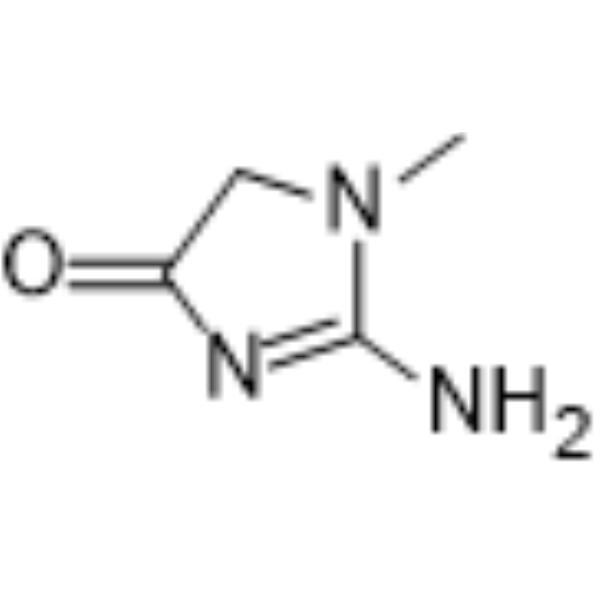
Creatinine (NSC13123) is an orally active, blood-brain barrier-permeable modulator of GABAA and NMDA receptors, with activities of antioxidation and metabolic regulation. Creatinine is generated via non-enzymatic conversion of creatine and phosphocreatine in muscle. Creatinine serum levels correlate with muscle mass, glomerular filtration rate, and extrarenal clearance, serving as an evaluation biomarker for renal function, muscle mass, and clinical outcomes, and used for perioperative renal risk assessment. In addition, Creatinine can induce specific Cryptococcus species to produce creatinine deiminase and act as their nitrogen source, while it can be secreted via renal tubules. Creatinine is widely used in research related to various diseases such as neurodegenerative diseases, psychiatric disorders, acute kidney injury, chronic kidney disease, and renal failure .
loading...
    loading...
5
5 Cited Publications
Cat. No.: HY-B0594
CAS No.: 66108-95-0
Target:  

Autophagy Mitophagy

Research Areas:  

Cancer

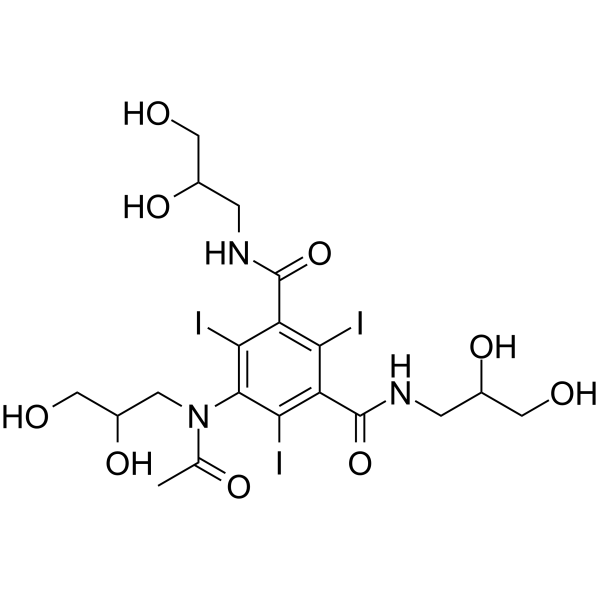
Iohexol is a non-ionic, water-soluble contrast agent used as a reference marker for the determination of glomerular filtration rate (GFR) at the level of renal function. Iohexol can be used for contrast in myelography, computerized tomography (cisternography, ventriculography) and MicroCT imaging .
loading...
    loading...
5
5 Cited Publications
Cat. No.: HY-B0504S
CAS No.: 143827-20-7
Synonyms: NSC13123-d3
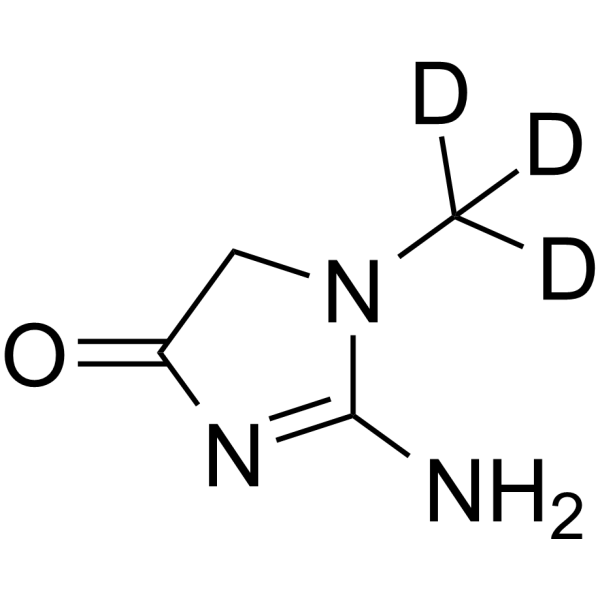
Creatinine-d3 is a deuterium labeled Creatinine. Creatinine (NSC13123) is an orally active, blood-brain barrier-permeable modulator of GABAA and NMDA receptors, with activities of antioxidation and metabolic regulation. Creatinine is generated via non-enzymatic conversion of creatine and phosphocreatine in muscle. Creatinine serum levels correlate with muscle mass, glomerular filtration rate, and extrarenal clearance, serving as an evaluation biomarker for renal function, muscle mass, and clinical outcomes, and used for perioperative renal risk assessment. In addition, Creatinine can induce specific Cryptococcus species to produce creatinine deiminase and act as their nitrogen source, while it can be secreted via renal tubules. Creatinine is widely used in research related to various diseases such as neurodegenerative diseases, psychiatric disorders, acute kidney injury, chronic kidney disease, and renal failure .
loading...
    loading...
Cat. No.: HY-P99901
CAS No.: 2382896-07-1
Synonyms: VIS649

Target:  

SARS-CoV

Research Areas:  

Inflammation/Immunology Cancer

Sibeprenlimab (VIS649) is a humanized IgG2 monoclonal antibody which inhibits a proliferation-inducing ligand (APRIL). Sibeprenlimab suppresses pathogenic immunoglobulins (IgA and IgM), while preserving antibody responses to mRNA-based vaccines against SARS-COV-2. Sibeprenlimab reduces urinary protein-to-creatinine ratio (UPCR) and glomerular filtration rate (GFR). Sibeprenlimab is promising for the research of IgA nephropathy (IgAN) .
loading...
    loading...
Cat. No.: HY-B0504S2
Synonyms: NSC13123-d5
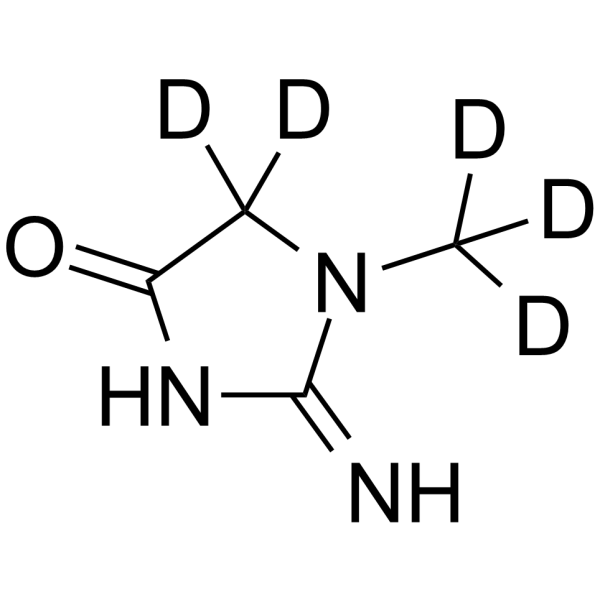
Creatinine-d5 is the deuterium labeled Creatinine. Creatinine (NSC13123) is an orally active, blood-brain barrier-permeable modulator of GABAA and NMDA receptors, with activities of antioxidation and metabolic regulation. Creatinine is generated via non-enzymatic conversion of creatine and phosphocreatine in muscle. Creatinine serum levels correlate with muscle mass, glomerular filtration rate, and extrarenal clearance, serving as an evaluation biomarker for renal function, muscle mass, and clinical outcomes, and used for perioperative renal risk assessment. In addition, Creatinine can induce specific Cryptococcus species to produce creatinine deiminase and act as their nitrogen source, while it can be secreted via renal tubules. Creatinine is widely used in research related to various diseases such as neurodegenerative diseases, psychiatric disorders, acute kidney injury, chronic kidney disease, and renal failure .
loading...
    loading...
Cat. No.: HY-W042301
CAS No.: 14293-44-8
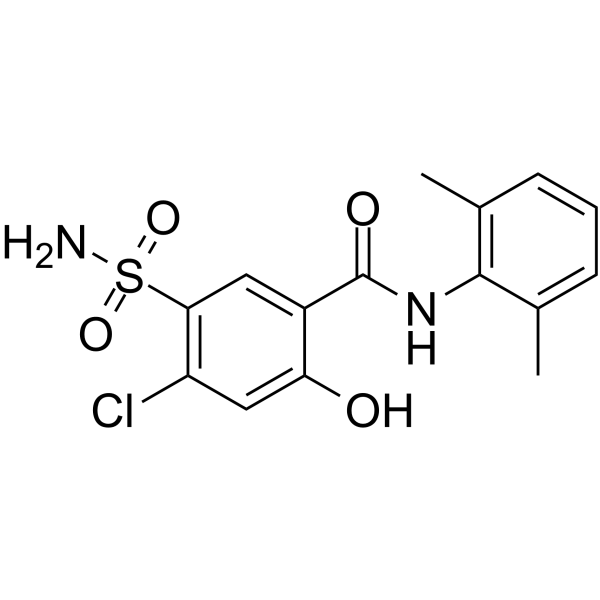
Xipamide is an orally active carbonic anhydrase (CA) inhibitor and Na +/Cl --potassium transporter inhibitor with diuretic and antihypertensive effects. Xipamide reduces NaCl reabsorption by inhibiting the Cl -/NaCO3 - anion exchanger, and increases calcium reabsorption while promoting potassium and magnesium excretion. Xipamide is mainly cleared via the renal pathway and causes a temporary decrease in glomerular filtration rate under specific conditions. Xipamide does not affect Ca 2+ signaling induced by endothelin-1 and other factors, nor does it inhibit various ion cotransport or pump activities in red blood cells. Xipamide can be used in researches related to cardiovascular diseases, hypertension (especially with left ventricular hypertrophy), advanced renal failure, and liver cirrhosis with ascites .
loading...
    loading...
Cat. No.: HY-B0504R
CAS No.: 60-27-5
Synonyms: NSC13123 (Standard)
Creatinine (Standard) is the analytical standard of Creatinine. This product is intended for research and analytical applications. Creatinine (NSC13123) is an orally active, blood-brain barrier-permeable modulator of GABAA and NMDA receptors, with activities of antioxidation and metabolic regulation. Creatinine is generated via non-enzymatic conversion of creatine and phosphocreatine in muscle. Creatinine serum levels correlate with muscle mass, glomerular filtration rate, and extrarenal clearance, serving as an evaluation biomarker for renal function, muscle mass, and clinical outcomes, and used for perioperative renal risk assessment. In addition, Creatinine can induce specific Cryptococcus species to produce creatinine deiminase and act as their nitrogen source, while it can be secreted via renal tubules. Creatinine is widely used in research related to various diseases such as neurodegenerative diseases, psychiatric disorders, acute kidney injury, chronic kidney disease, and renal failure .
loading...
    loading...
Cat. No.: HY-B0504S1
CAS No.: 1173022-95-1
Synonyms: NSC13123-13C
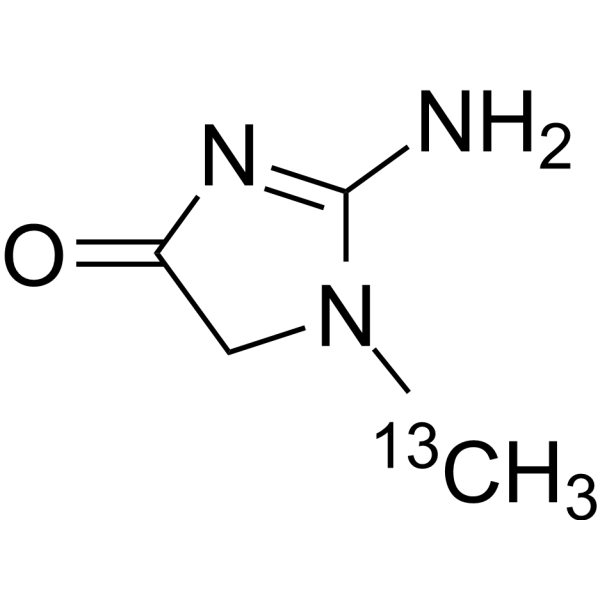
Creatinine- 13C is the 13C-labeled Creatinine. Creatinine (NSC13123) is an orally active, blood-brain barrier-permeable modulator of GABAA and NMDA receptors, with activities of antioxidation and metabolic regulation. Creatinine is generated via non-enzymatic conversion of creatine and phosphocreatine in muscle. Creatinine serum levels correlate with muscle mass, glomerular filtration rate, and extrarenal clearance, serving as an evaluation biomarker for renal function, muscle mass, and clinical outcomes, and used for perioperative renal risk assessment. In addition, Creatinine can induce specific Cryptococcus species to produce creatinine deiminase and act as their nitrogen source, while it can be secreted via renal tubules. Creatinine is widely used in research related to various diseases such as neurodegenerative diseases, psychiatric disorders, acute kidney injury, chronic kidney disease, and renal failure .
loading...
    loading...
Cat. No.: HY-10657
CAS No.: 733734-61-7
Purity:  99.08%
Target:  

Urotensin Receptor

Research Areas:  

Cardiovascular Disease Others

SB-706375 is an antagonist of the Urotensin II (UII) receptor. By blocking the Urotensin II receptor, SB-706375 reduces the kidney's response to UII and Urotensin-related peptide (URP) and significantly increases the Glomerular Filtration Rate (GFR). SB-706375 can be used in research on kidney diseases and hypertension .
loading...
    loading...
Cat. No.: HY-B0594R
CAS No.: 66108-95-0
Research Areas:  

Cancer

Iohexol (Standard) is the analytical standard of Iohexol. This product is intended for research and analytical applications. Iohexol is a non-ionic, water-soluble contrast agent used as a reference marker for the determination of glomerular filtration rate (GFR) at the level of renal function. Iohexol can be used for contrast in myelography, computerized tomography (cisternography, ventriculography) and MicroCT imaging .
loading...
    loading...
Cat. No.: HY-109071
CAS No.: 1313706-17-0
Synonyms: MB-102
Target:  

Fluorescent Dye

Research Areas:  

Others

Relmapirazin (MB-102) is a fluorescent tracer agent for real-time measurement of glomerular filtration rate .
loading...
    loading...
Cat. No.: HY-B0504S5
Synonyms: NSC13123-15N
Creatinine- 15N (NSC13123- 15N) is the 15N-labeled Creatinine (HY-B0504). Creatinine (NSC13123) is an orally active, blood-brain barrier-permeable modulator of GABAA and NMDA receptors, with activities of antioxidation and metabolic regulation. Creatinine is generated via non-enzymatic conversion of creatine and phosphocreatine in muscle. Creatinine serum levels correlate with muscle mass, glomerular filtration rate, and extrarenal clearance, serving as an evaluation biomarker for renal function, muscle mass, and clinical outcomes, and used for perioperative renal risk assessment. In addition, Creatinine can induce specific Cryptococcus species to produce creatinine deiminase and act as their nitrogen source, while it can be secreted via renal tubules. Creatinine is widely used in research related to various diseases such as neurodegenerative diseases, psychiatric disorders, acute kidney injury, chronic kidney disease, and renal failure .
loading...
    loading...
Cat. No.: HY-134368
CAS No.: 5959-90-0
Target:  

Calcium Channel

Research Areas:  

Cardiovascular Disease

Ap3A is a vasoactive molecule that regulates intracellular Ca 2+ levels. Ap3A can promote the growth of vascular smooth muscle cells .
loading...
    loading...
Cat. No.: HY-160431
CAS No.: 82864-43-5
Research Areas:  

Metabolic Disease

8(9)-EET is one of the main metabolites produced by the metabolism of arachidonic acid (HY-109590) through the cytochrome P450 epoxide pathway. 8(9)-EET is an effective substrate for COX-1 and COX-2. 8(9)-EET activates PPARα in HEK293 cells and inhibits the activity of NF-κB induced by IL-1β in a PPARα-dependent and -independent manner. The (8S,9R)-isomer of 8(9)-EET ([(8S,9R)-EET]) causes vasoconstriction, thereby reducing renal plasma flow and glomerular filtration rate .
loading...
    loading...
Cat. No.: HY-P10279
CAS No.: 95896-08-5
Synonyms: Human atrial natriuretic factor (102–126)
Anaritide is a synthetic form of atrial natriuretic peptide (ANP) composed of 25 amino acids. Anaritide increases glomerular filtration rate by dilating into and contracting out the bulbar arterioles. Anaritide can be used to study the effects on patients with acute tubular necrosis, particularly in improving dialysis free survival .
loading...
    loading...
Cat. No.: HY-100819
CAS No.: 1365266-79-0
Target:  

CCR

Research Areas:  

Metabolic Disease

RO5234444 is an orally active CCR2 antagonist, with IC50s of 22nM for human CCR2 and 161 nM for mouse CCR2. RO5234444 alleviates glomerulosclerosis, reduces albuminuria, and significantly improves the glomerular filtration rate (GFR) in the uninephrectomized (1K) type 2 diabetic db/db mouse model. RO5234444 can be used for the study of type 2 diabetic nephropathy .
loading...
    loading...
Cat. No.: HY-B2081
CAS No.: 73-09-6
Synonyms: W-2900A
Target:  

Others

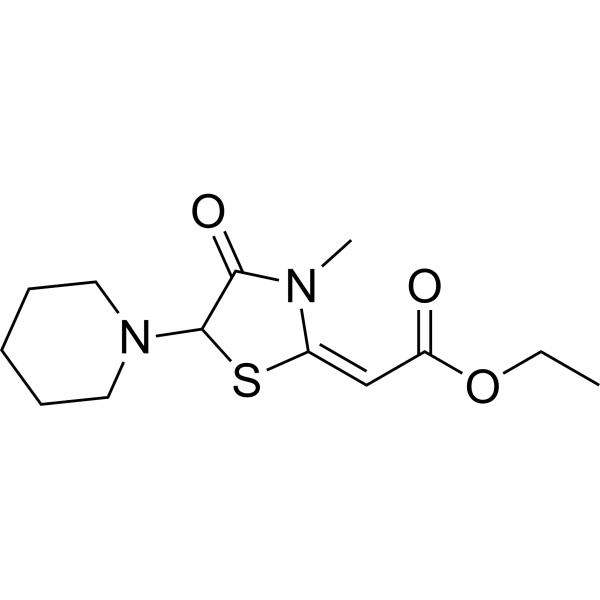
Etozolin (W-2900A) is a diuretic agent. Etozolin inhibits fluid and electrolyte reabsorption in the loop of Henle. Etozolin can be used in research of congestive heart failure, hypertension and edema .
loading...
    loading...
Cat. No.: HY-10657R
CAS No.: 733734-61-7
SB-706375 (Standard) is the analytical standard of SB-706375 (HY-10657). This product is intended for research and analytical applications. SB-706375 is an antagonist of the Urotensin II (UII) receptor. By blocking the Urotensin II receptor, SB-706375 reduces the kidney's response to UII and Urotensin-related peptide (URP) and significantly increases the Glomerular Filtration Rate (GFR). SB-706375 can be used in research on kidney diseases and hypertension .
loading...
    loading...
Cat. No.: HY-14998
CAS No.: 26718-25-2
Synonyms: MK 185
Target:  

β-catenin PPAR Wnt

Research Areas:  

Endocrinology

Halofenate, structurally akin to clofibrate, was evaluated in hypertriglyceridemic patients over 6-week periods in a controlled, double-blind crossover trial. It effectively reduced serum triglycerides by 50%, with minimal impact on serum cholesterol levels. Additionally, it lowered serum uric acid by 30% and exhibited uricosuric effects independent of glomerular filtration rate. Halofenate was associated with a significant increase in plasma thyroxine (T4), accompanied by a decrease in protein-bound iodine and T4 by column. In vitro studies confirmed its ability to displace T4 from thyroid-binding proteins, suggesting a thyroxine-displacing effect, which could influence thyroid function in vivo .
loading...
    loading...
Cat. No.: HY-111282
CAS No.: 85394-14-5
Target:  

Dipeptidyl Peptidase

Research Areas:  

Endocrinology

MK-789 is a competitive reversible inhibitor of dehydropeptidase I (DHP-I). MK-789 competitively blocks the entry of N-formimidoylthienamycin into proximal tubular cells, thereby inhibiting its renal metabolism. MK-789 shifts the renal excretion pathway of N-formimidoylthienamycin to glomerular filtration only, increasing its urinary recovery rate and renal clearance. MK-789 is applicable to studies on renal metabolism and pharmacokinetics .
loading...
    loading...

