1. Search Result
Search Result
Pathways Recommended: Stem Cell/Wnt Cell Cycle/DNA Damage
Results for "

glomerular mesangial cells

" in MedChemExpress (MCE) Product Catalog:

4

Inhibitors & Agonists

1

Biochemical Assay Reagents

1

Natural
Products

1

Oligonucleotides

Cat. No. Product Name Target Research Areas Chemical Structure
  • HY-101044
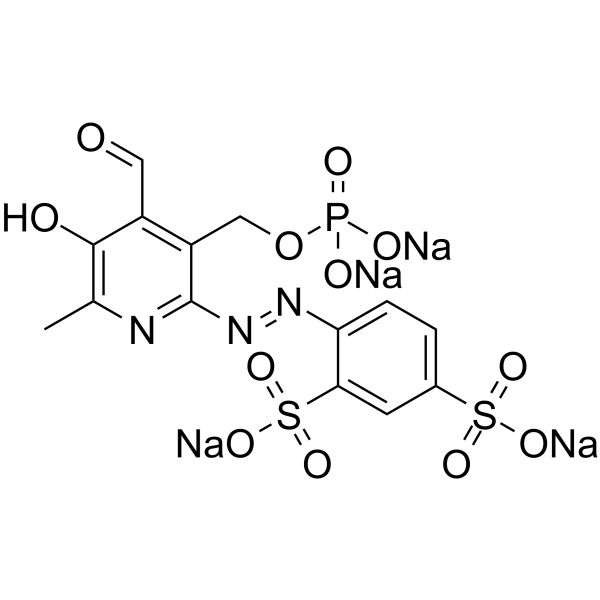
    PPADS tetrasodium
    5+ Cited Publications

    P2X Receptor Na+/Ca2+ Exchanger Neurological Disease
    PPADS tetrasodiuma is a non-selective P2X receptor antagonist. PPADS tetrasodiuma blocks recombinant P2X1, -2, -3, -5 with IC50s ranging from 1 to 2.6 μM. PPADS tetrasodiuma blocks native P2Y2-like (IC50~0.9 mM) and recombinant P2Y4 (IC50~15 mM) receptors. PPADS tetrasodiuma is an inhibitor of the reverse mode of the Na/Ca 2+ exchanger in guinea pig airway smooth muscle .
    PPADS tetrasodium
  • HY-172279A

    Liposome Cancer
    DSPE-PEG2000-TAT is a cell-penetrating peptide-modified PEGylated phospholipid conjugate and cellular uptake enhancer. DSPE-PEG2000-TAT forms via conjugation of Cys-TAT to DSPE-PEG2000-Mal. DSPE-PEG2000-TAT enhances liposomal cellular uptake and siRNA transfection efficiency in glomerular mesangial and macrophage cells. DSPE-PEG2000-TAT can be used for drug delivery .
    DSPE-PEG2000-TAT
  • HY-114557

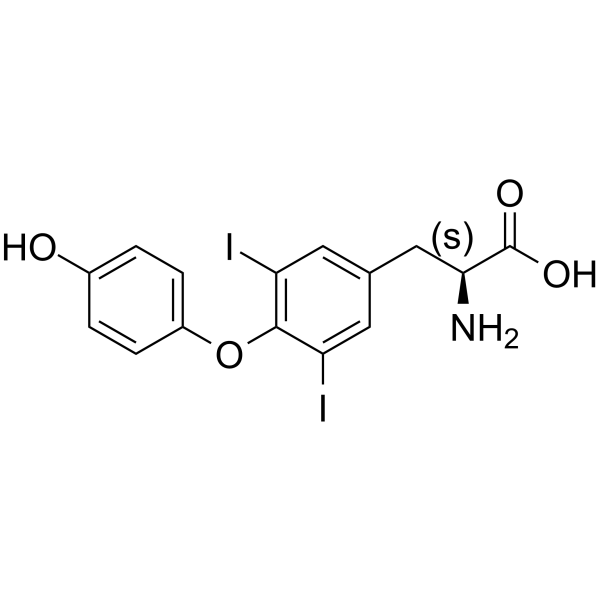
    3,5-Diiodo-L-thyronine

    JNK NF-κB Sirtuin PGC-1α COX TGF-β Receptor Collagen Metabolic Disease Inflammation/Immunology Endocrinology
    NSC 90469 (3,5-Diiodo-L-thyronine) is an orally active thyroid hormone derivative. NSC 90469 inhibits JNK phosphorylation and NF-κB acetylation, blocks SIRT1 protein expression, induces elevated PGC-1α levels, and stimulates COX activity. NSC 90469 enhances UCP1-mediated thermogenesis, increases hepatic Dio1 activity, inhibits TSH levels and hypothalamic-pituitary-thyroid axis function, enhances lipid metabolism, and regulates energy metabolism via the mitochondrial pathway. NSC 90469 prevents blood glucose reduction, reduces urinary albumin excretion, inhibits renal matrix expansion, decreases TGF-β1 expression, and reduces renal fibronectin and type Ⅳ collagen deposition. NSC 90469 also increases energy expenditure and prevents diet-induced overweight. NSC 90469 can be used in studies related to diabetic nephropathy, hypothyroidism, non-alcoholic fatty liver disease, and diet-induced obesity .
    NSC 90469
  • HY-116392F

    Glucosylceramide Synthase (GCS) Neurological Disease Metabolic Disease Cancer
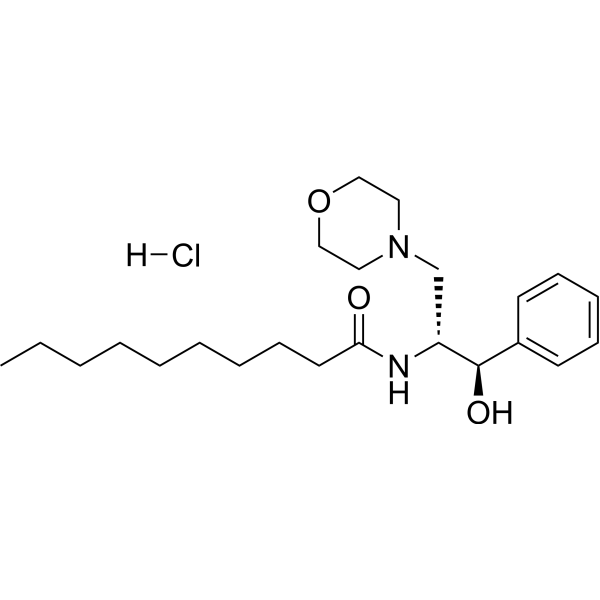
    D-threo-PDMP hydrochloride is a potent glucoceramide synthase (GCS) inhibitor, which reduces the glycosphingolipids (such as GM3 and GD3) on the cell surface by inhibiting glycosylation, reduces the total length of the axon plexus and the number of axon branch points, and inhibits neurite growth. D-threo-PDMP hydrochloride inhibits the synthesis of GM3, thereby reducing the adhesion ability of B16 melanoma cells and mimicking the pathological effects of hyperglycemia/TGF-β1. D-threo-PDMP hydrochloride inhibits the synthesis of GD3, thereby protecting liver cells from apoptosis induced by TNF-α. D-threo-PDMP hydrochloride can be used to study diseases related to targeted glycosphingolipid metabolism .
    D-threo-PDMP hydrochloride

Inquiry Online

Your information is safe with us. * Required Fields.

Salutation


Country or Region *

Applicant Name *


Organization Name *

Department *


Email Address *


Product Name *

Cat. No.


Requested quantity *

Phone Number *


Remarks

Inquiry Online

Inquiry Information

Product Name:
Cat. No.:
Quantity:
MCE Japan Authorized Agent:

