12 Results for "

hTRPA1

" in MedChemExpress (MCE) Product Catalog:
Products (12)

12 Results for "hTRPA1" in MCE Product Catalog:

4
4 Cited Publications
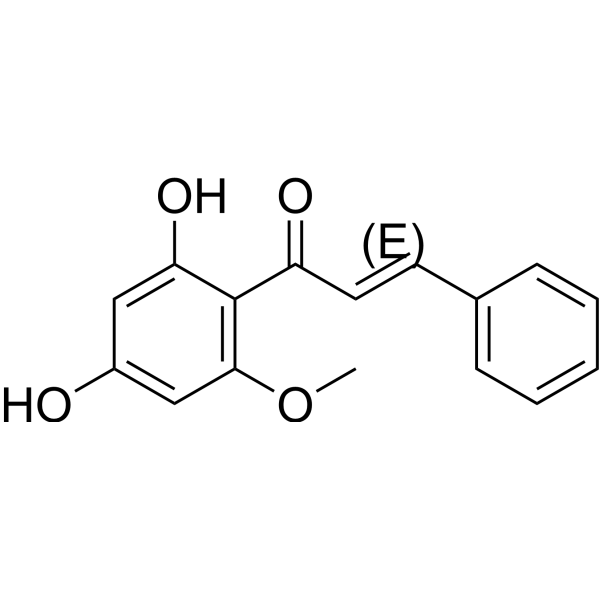
Cat. No.: HY-N1378
CAS No.: 19309-14-9
Synonyms: (E)-Cardamomin; (E)-Alpinetin chalcone
(E)-Cardamonin ((E)-Cardamomin) is a novel antagonist of hTRPA1 cation channel with an IC50 of 454 nM.
loading...
    loading...
1
1 Cited Publications
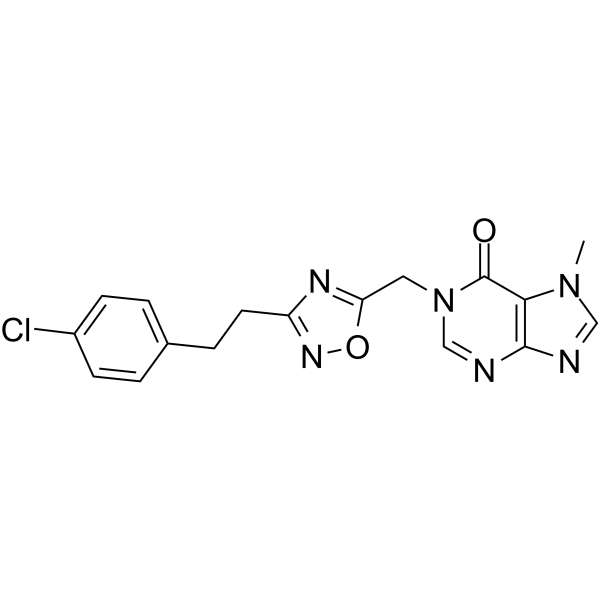
Cat. No.: HY-148236
CAS No.: 2741956-55-6
Purity:  99.74%
Target:  

TRP Channel

Research Areas:  

Inflammation/Immunology

BAY-390, a chemical probe, is a selective, across species active and brain penetrating TRPA1 inhibitor. BAY-390 inhibits hTRPA1 FLIPR, hTRPA1 Ephys, rTRPA1 FLIPR and rDRG Ephys with IC50s of 16, 82, 63 and 35 nM, respectively. BAY-390 can be used for the research of inflammation [1].
loading...
    loading...
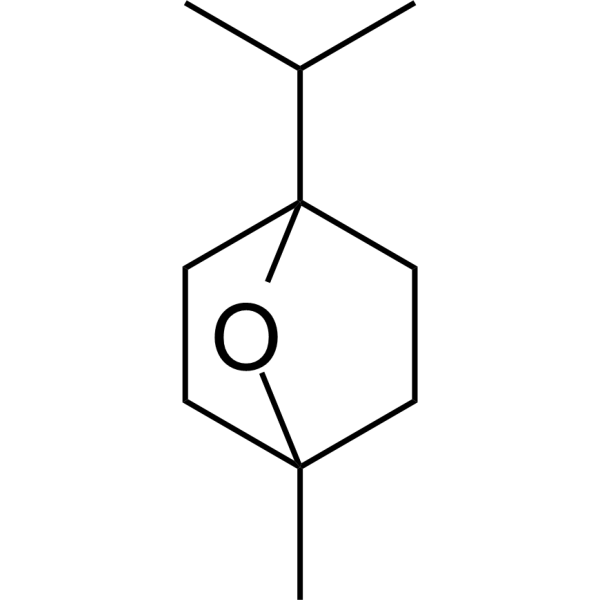
Cat. No.: HY-N7117
CAS No.: 470-67-7
1,4-Cineole is an oxygenated monoterpene found in eucalyptus oil. 1,4-Cineole is a hTRPM8 and hTRPA1 agonist. 1,4-Cineole can increase intracellular Ca 2+ concentration. 1,4-Cineole exhibits anti-anxiety and anti-depression effects. 1,4-Cineole can be used for the research of neurological disease, such as depression [1] .
loading...
    loading...
Cat. No.: HY-108329
CAS No.: 1883711-97-4
Purity:  99.73%
Target:  

TRP Channel

AM-0902 is a potent, selective transient receptor potential A1 (TRPA1) antagonist with IC50s of 71 and 131 nM for rTRPA1 and hTRPA1, respectively.
loading...
    loading...
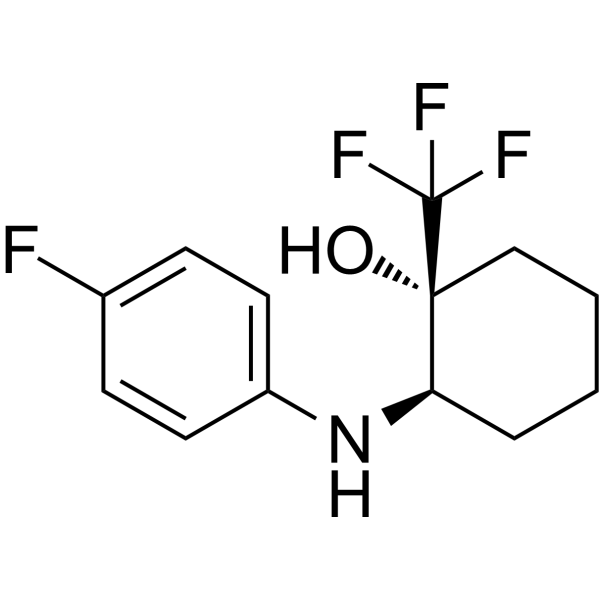
Cat. No.: HY-N12605
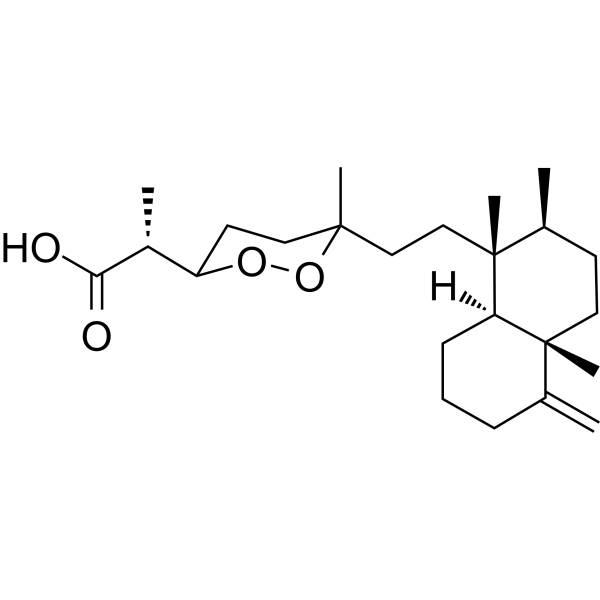
hTRPA1-IN-1 (19), a norsesterterpenoid that can be isolated from the Marine Sponge Diacarnus spinipoculum, is an inhibitor of transient receptor potential Ankyrin 1 (TRPA1), with an IC50 of 2 μM [1].
loading...
    loading...
Cat. No.: HY-N1378R
CAS No.: 19309-14-9
Synonyms: (E)-Cardamomin (Standard); (E)-Alpinetin chalcone (Standard)
(E)-Cardamonin (Standard) is the analytical standard of (E)-Cardamonin. This product is intended for research and analytical applications. (E)-Cardamonin ((E)-Cardamomin) is a novel antagonist of hTRPA1 cation channel with an IC50 of 454 nM.
loading...
    loading...
Cat. No.: HY-136820S1
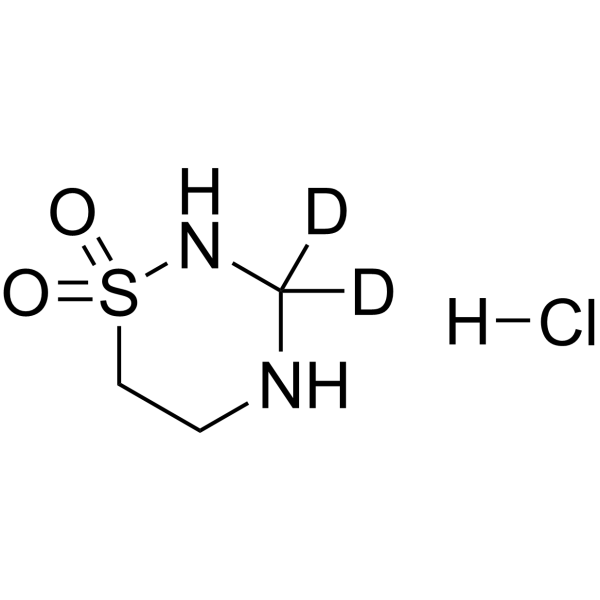
Taurultam-d2 hydrochloride is the d2-labeled Taurultam (HY-136820) hydrochloride. Taurultam is the major active hydrolytic metabolite of Taurolidine (HY-W011522), which selectively activates hTRPA1 to trigger effects in sensory neurons. Taurultam exhibits activity against SARS-CoV-2 variants, influenza A viruses (H1N1, H3N2) and influenza B viruses. Taurultam induces mild tracheal sensory nerve stimulation and CGRP release in mice. Taurultam can be used in studies related to SARS-CoV-2 infection, influenza virus infection, and co-infection with SARS-CoV-2 and influenza A virus. [1]
loading...
    loading...
Cat. No.: HY-N7117R
CAS No.: 470-67-7
1,4-Cineole (Standard) is the analytical standard of 1,4-Cineole (HY-N7117). 1,4-Cineole is an oxygenated monoterpene found in eucalyptus oil. 1,4-Cineole is a hTRPM8 and hTRPA1 agonist. 1,4-Cineole can increase intracellular Ca 2+ concentration. 1,4-Cineole exhibits anti-anxiety and anti-depression effects. 1,4-Cineole can be used for the research of neurological disease, such as depression [1] .
loading...
    loading...
Cat. No.: HY-183281
Target:  

TRP Channel

Research Areas:  

Others

TRPV3 antagonist-1 is a selective TRPV3 channel antagonist with an IC50 of 11.97 μM. TRPV3 antagonist-1 shows selectivity over hTRPV1, hTRPV4, hTRPA1, and hTRPM8. TRPV3 antagonist-1 shows low cytotoxicity [1].
loading...
    loading...
Cat. No.: HY-108329R
CAS No.: 1883711-97-4
AM-0902 (Standard) is the analytical standard of AM-0902 (HY-108329). This product is intended for research and analytical applications. AM-0902 is a potent, selective transient receptor potential A1 (TRPA1) antagonist with IC50s of 71 and 131 nM for rTRPA1 and hTRPA1, respectively.
loading...
    loading...
Cat. No.: HY-136820
CAS No.: 38668-01-8
Taurultam is the major active hydrolytic metabolite of Taurolidine (HY-W011522), which selectively activates hTRPA1 to trigger effects in sensory neurons. Taurultam exhibits activity against SARS-CoV-2 variants, influenza A viruses (H1N1, H3N2) and influenza B viruses. Taurultam induces mild tracheal sensory nerve stimulation and CGRP release in mice. Taurultam can be used in studies related to SARS-CoV-2 infection, influenza virus infection, and co-infection with SARS-CoV-2 and influenza A virus. [1]
loading...
    loading...
Cat. No.: HY-182517
CAS No.: 2225980-49-2
Target:  

TRP Channel

Research Areas:  

Inflammation/Immunology

AG1529 is a TRPV1 inhibitor and capsaicinoid-based soft agent with a human TRPV1 IC50 of 0.9-0.93 μM. AG1529 reversibly blocks capsaicin-evoked TRPV1 activation, binds to the TRPV1 capsaicin binding site, moderately affects pH-induced TRPV1 gating, and does not alter voltage- or heat-mediated TRPV1 responses. AG1529 suppresses TRPV1-mediated neuronal excitability, reduces capsaicin- and pH-evoked neuronal firing, abolishes histaminergic and inflammation-mediated TRPV1 sensitization. AG1529 exhibits anti-nociceptive and antipruritic effects, attenuates in vivo hyperalgesia and pruritus, dose-dependently reduces acute histaminergic itch in rodents, and mildly blocks hTRPA1 and hTRPM8 channel activity. AG1529 undergoes hydrolysis and dermal deactivation, minimizes TRPV1-associated side reactions, does not evoke capsaicin-like burning sensation, and does not disrupt physiological thermal regulation. AG1529 can be used for the research of inflammatory cutaneous nociception and acute histaminergic pruritus [1] .
loading...
    loading...
  • 1

