1. Search Result
Search Result
Results for "

human wild-type AR

" in MedChemExpress (MCE) Product Catalog:

7

Inhibitors & Agonists

2

Natural
Products

1

Isotope-Labeled Compounds

Cat. No. Product Name Target Research Areas Chemical Structure
  • HY-16985
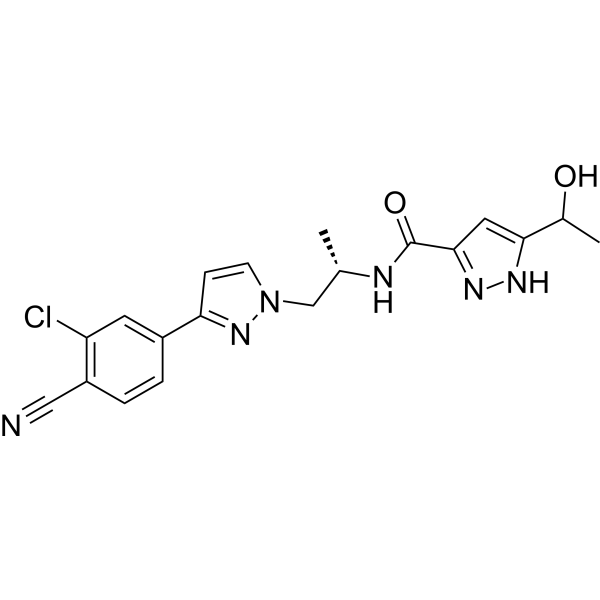
    Darolutamide
    5+ Cited Publications

    ODM-201; BAY-1841788

    Androgen Receptor Cancer
    Darolutamide (ODM-201) is an orally active competitive androgen receptor (AR) antagonist. Darolutamide has a Ki of 11 nM for rat wild-type AR (wtAR) and IC50 of 26 nM for human wild-type AR (hAR)-mediated transcriptional activation . Darolutamide inhibits testosterone-induced AR nuclear translocation and transcriptional activation . Darolutamide exerts selective effects on AR-positive cells by inhibiting AR-dependent signaling pathways, and its active metabolite retains full antagonistic activity against AR mutants . Darolutamide can be used for the research of prostate cancer, including androgen receptor-dependent prostate cancer .
    Darolutamide
  • HY-N0475

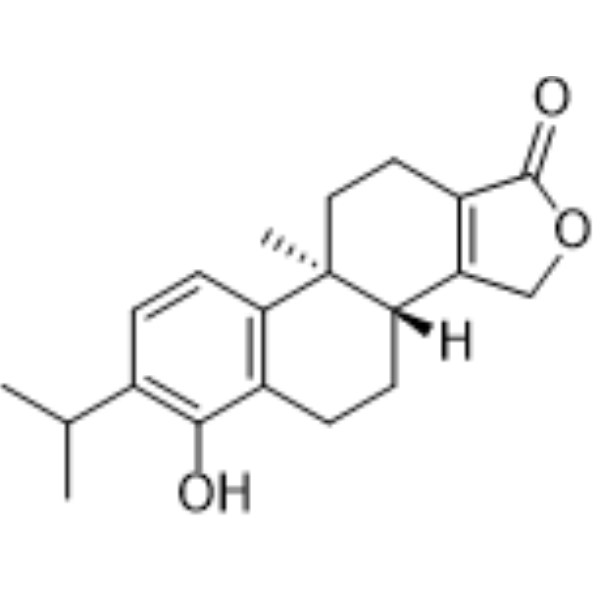
    Hypolide; (+)-Triptophenolide

    Androgen Receptor Pyroptosis Caspase Bcl-2 Family Apoptosis Inflammation/Immunology Cancer
    Triptophenolide (Hypolide) is a colorless crystal isolated from the ethyl acetate extract of Tripterygium wilfordii. Triptophenolide is an orally active pan‑antagonist of the androgen receptor (AR) with an IC50 of 467 nM against human wild‑type AR. Triptophenolide reduces AR expression, inhibits AR nuclear translocation, downregulates prostate‑specific antigen mRNA levels, and suppresses the growth of AR‑positive prostate cancer cells. Triptophenolide shows anti-tumor effects against breast cancer by inhibiting cell proliferation and migration, inducing G1-phase arrest and apoptosis, repressing xenograft tumor growth. Triptophenolide inhibits pyroptosis, alleviates tissue inflammation, and ameliorates synovial injury. Triptophenolide can be used for the study of prostate cancer, rheumatoid arthritis and breast cancer .
    Triptophenolide
  • HY-16985S

    ODM-201-d4; BAY-1841788-d4

    Isotope-Labeled Compounds Androgen Receptor Cancer
    Darolutamide-d4 (ODM-201-d4) is deuterium labeled Darolutamide (HY-16985). Darolutamide (ODM-201) is an orally active competitive androgen receptor (AR) antagonist, with a Ki of 11 nM for rat wild-type AR (wtAR) and an IC50 of 26 nM for human wild-type AR (hAR)-mediated transcriptional activation . Darolutamide inhibits testosterone-induced AR nuclear translocation and transcriptional activation . Darolutamide exerts selective effects on AR-positive cells by inhibiting AR-dependent signaling pathways, and its active metabolite retains full antagonistic activity against AR mutants . Darolutamide can be used for the research of prostate cancer, including androgen receptor-dependent prostate cancer .
    Darolutamide-d4
  • HY-16985R

    ODM-201 (StandARd); BAY-1841788 (StandARd)

    Reference Standards Androgen Receptor Cancer
    Darolutamide (Standard) is the analytical standard of Darolutamide (HY-16985). This product is intended for research and analytical applications. Darolutamide (ODM-201) is an orally active competitive androgen receptor (AR) antagonist, with a Ki of 11 nM for rat wild-type AR (wtAR) and an IC50 of 26 nM for human wild-type AR (hAR)-mediated transcriptional activation . Darolutamide inhibits testosterone-induced AR nuclear translocation and transcriptional activation . Darolutamide exerts selective effects on AR-positive cells by inhibiting AR-dependent signaling pathways, and its active metabolite retains full antagonistic activity against AR mutants . Darolutamide can be used for the research of prostate cancer, including androgen receptor-dependent prostate cancer .
    Darolutamide (Standard)
  • HY-N0475R

    Hypolide (StandARd); (+)-Triptophenolide (StandARd)

    Reference Standards Androgen Receptor Pyroptosis Caspase Bcl-2 Family Apoptosis Inflammation/Immunology Cancer
    Triptophenolide (Standard) (Hypolide) is the analytical standard of Triptophenolide (HY-N0475). This product is intended for research and analytical applications. Triptophenolide is a colorless crystal isolated from the ethyl acetate extract of Tripterygium wilfordii. Triptophenolide is an orally active pan‑antagonist of the androgen receptor (AR) with an IC50 of 467 nM against human wild‑type AR. Triptophenolide reduces AR expression, inhibits AR nuclear translocation, downregulates prostate‑specific antigen mRNA levels, and suppresses the growth of AR‑positive prostate cancer cells. Triptophenolide shows anti-tumor effects against breast cancer by inhibiting cell proliferation and migration, inducing G1-phase arrest and apoptosis, repressing xenograft tumor growth. Triptophenolide inhibits pyroptosis, alleviates tissue inflammation, and ameliorates synovial injury. Triptophenolide can be used for the study of prostate cancer, rheumatoid arthritis and breast cancer .
    Triptophenolide (Standard)
  • HY-168384

    STING TNF Receptor Interleukin Related CD28 Inflammation/Immunology
    M04 is an agonist of STING. It induces the expression of the IFN reporter gene in HEK293T cells expressing wild-type human STING, but does not induce this expression in HEK293T cells expressing the R71H-G230A-R293Q (HAQ) STING variant or in mouse RAW 264.7 cells, indicating that its activity is dependent on allelic and species variations. M04 induces the production of TNF-α, IL-10, IL-1β, and IL-12p70 in human peripheral blood mononuclear cells (PBMCs). At a concentration of 50 µM, M04 stimulates dendritic cells isolated from PBMCs to express the MHC class II cell surface receptor HLA-DR and co-stimulatory molecules CD40, CD80, and CD86, and also enhances their ability to activate T cells in an ex vivo assay. M04 can be used in research on inflammatory immune diseases .
    M04
  • HY-183667

    Androgen Receptor Kallikrein Cancer
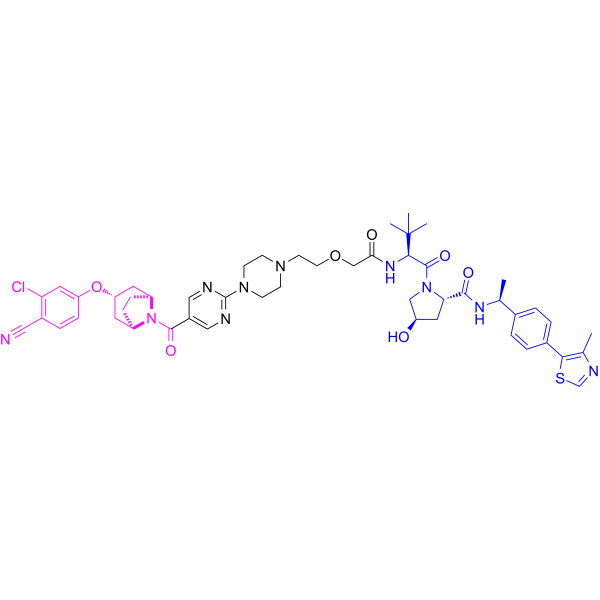
    JNJ-pan-AR is an orally active androgen receptor (AR) inhibitor with an IC50 of 19 nM and a Ki of 8.4 nM against human wild-type AR. JNJ-pan-AR abolishes androgen-induced KLK2 and KLK3 mRNA expression and reduces androgen-dependent colony formation in prostate cancer cells. JNJ-pan-AR blocks AR nuclear translocation, inhibits PSA protein expression, and represses the growth of AR-dependent tumor cells and ARF877L-driven tumor xenografts. JNJ-pan-AR blocks transactivation and signaling of wild-type AR and various mutant AR variants. JNJ-pan-AR is applicable for research on castration-resistant prostate cancer .
    JNJ-pan-AR

Inquiry Online

Your information is safe with us. * Required Fields.

Salutation


Country or Region *

Applicant Name *


Organization Name *

Department *


Email Address *


Product Name *

Cat. No.


Requested quantity *

Phone Number *


Remarks

Inquiry Online

Inquiry Information

Product Name:
Cat. No.:
Quantity:
MCE Japan Authorized Agent:

