Search Result
Results for "
hydroxylamine
" in MedChemExpress (MCE) Product Catalog:
4
Biochemical Assay Reagents
6
Isotope-Labeled Compounds
| Cat. No. |
Product Name |
Target |
Research Areas |
Chemical Structure |
-
- HY-Y0882
-
|
|
Monoamine Oxidase
|
Cardiovascular Disease
|
|
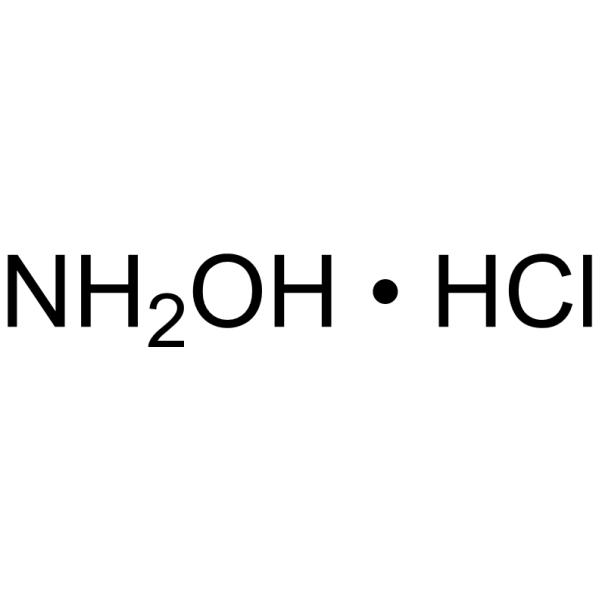
Hydroxylamine hydrochloride is a selective Monoamine oxidase (MAO) inhibitor used for inhibiting of platelet aggregation. Hydroxylamine hydrochloride is an intermediate of nitrogen cycle in aerobic ammonium oxidizers microorganisms, such as ammonium oxidizing bacteria (AOB), ammonium oxidizing archaea (AOA) and complete ammonium oxidizing bacteria (comammox). Hydroxylamine hydrochloride impacts NO and N2O emissions by aerobic ammonium oxidizers microorganisms and inhibits nitrite oxidizing bacteria (NOB) activity .
|
-
-
- HY-17365
-
-
-
- HY-125586
-
|
|
DNA/RNA Synthesis
ADC Payload
|
Cancer
|
|
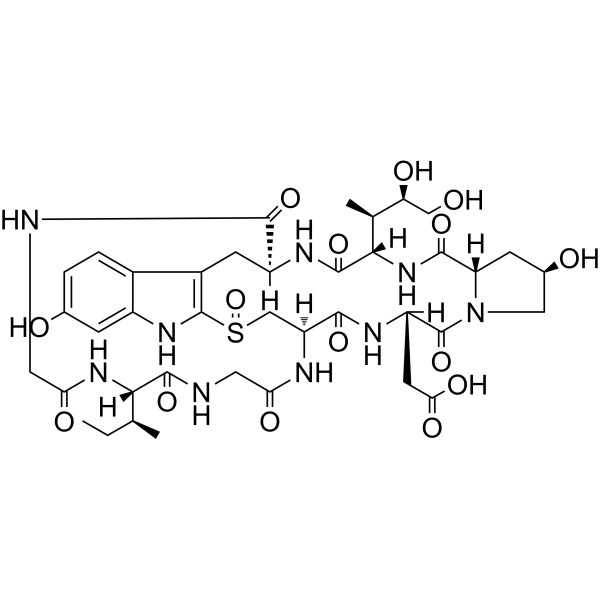
β-Amanitin is a cyclic peptide toxin in the poisonous Amanita phalloides mushroom. β-Amanitin inhibits inhibits eukaryotic RNA polymerase II and III. β-Amanitin inhibits protein synthesis. β-Amanitin can be used as a cytotoxic component of antibody-drug conjugates (ADCs) .
|
-
-
- HY-148983
-
|
|
Monoamine Oxidase
Bacterial
GLUT
|
Infection
Metabolic Disease
Inflammation/Immunology
|
|
Hydroxylamine (50% w/w in water) is an inorganic highly reactive compound and antibacterial agent. Hydroxylamine (50% w/w in water) acutely activates the transport activity of GLUT1, inhibits Monoamine oxidase activity. Hydroxylamine (50% w/w in water) inhibits nitrite oxidizing bacteria. Hydroxylamine (50% w/w in water) activates glucose uptake. Hydroxylamine (50% w/w in water) can be used in the research of inflammatory diseases and allergies[1][2][3][4] .
|
-
-
- HY-13543
-
|
CB 1954
|
Quinone Reductase
DNA Alkylator/Crosslinker
|
Cancer
|
|
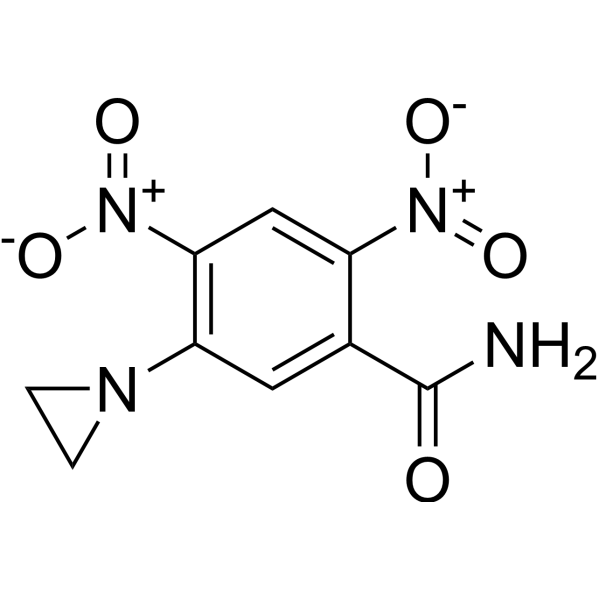
Tretazicar (CB 1954), an antitumor proagent, is highly selective against the Walker 256 rat tumour line. Tretazicar is enzymatically activated to generate a bifunctional agent, which can form DNA-DNA interstrand cross-links. Tretazicar in rat cells involves the reduction of its 4-nitro group to a 4-hydroxylamine by the enzyme NAD(P)H:quinone oxidoreductase 1 (NQO1) .
|
-
-
- HY-Y0882S1
-
|
|
Monoamine Oxidase
|
Cardiovascular Disease
|
|
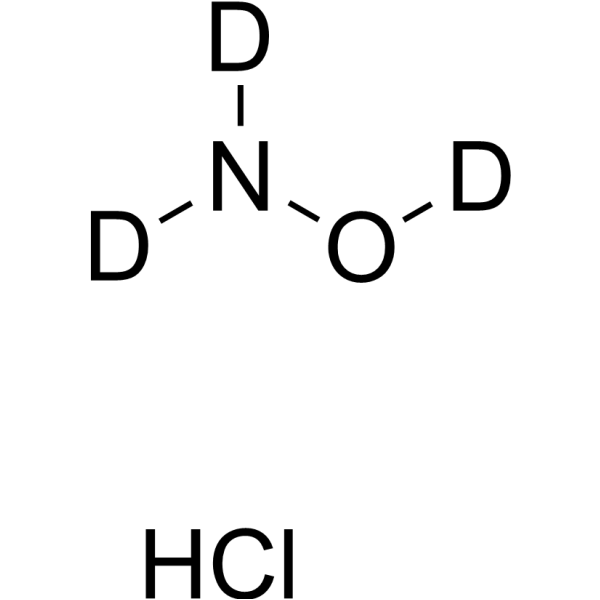
Hydroxylamine-d3 (hydrochloride) is the deuterium labeled Hydroxyamine hydrochloride. Hydroxylamine hydrochloride is a selective Monoamine oxidase (MAO) inhibitor used for inhibiting of platelet aggregation. Hydroxylamine hydrochloride is an intermediate of nitrogen cycle in aerobic ammonium oxidizers microorganisms, such as ammonium oxidizing bacteria (AOB), ammonium oxidizing archaea (AOA) and complete ammonium oxidizing bacteria (comammox). Hydroxylamine hydrochloride impacts NO and N2O emissions by aerobic ammonium oxidizers microorganisms and inhibits nitrite oxidizing bacteria (NOB) activity .
|
-
-
- HY-W000438
-
|
|
Amino Acid Derivatives
|
Others
|
|
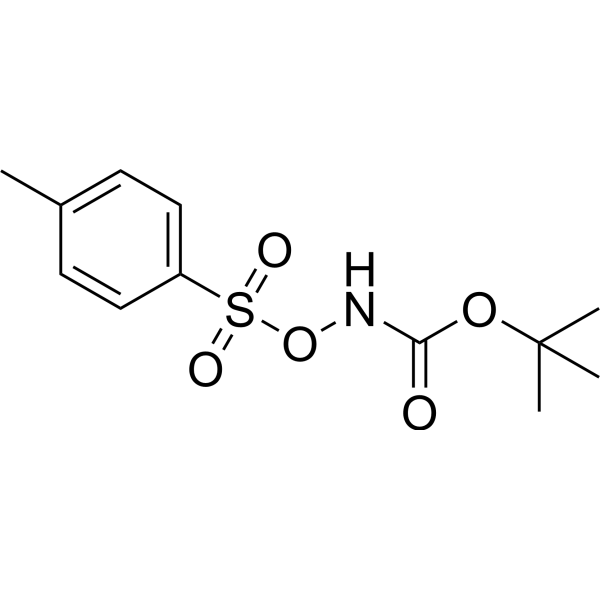
N-Boc-O-tosyl hydroxylamine is a safe and efficient nitrogen source for N-amination of aryl and alkyl amines. N-Boc-O-tosyl hydroxylamine promotes electrophilic N-amination of aryl amines and alkyl amines to generate β-Boc-protected aryl hydrazines and alkyl hydrazines .
|
-
-
- HY-P10447
-
|
Fengycin IX; SNA-60-367-3
|
Phospholipase
|
Infection
|
|
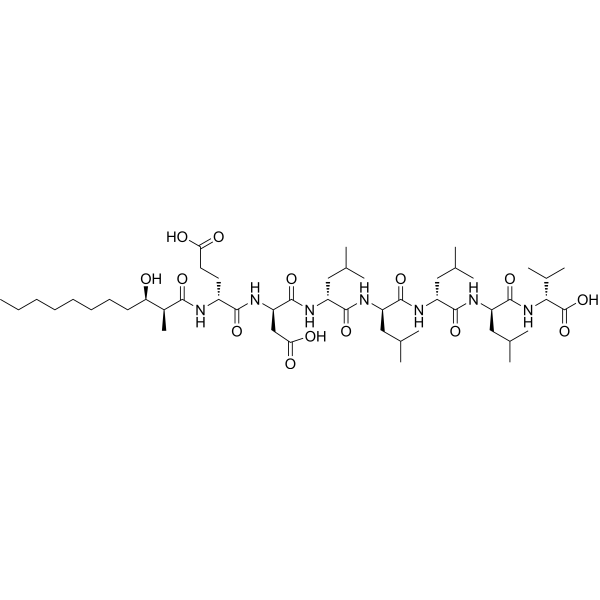
Plipastatin A1 is a lipopeptide with phospholipase A2 inhibitory activity. Plipastatin A1 inhibits conidial germination of Botrytis cinerea in vitro and reduces the incidence of gray mold on tomato leaves. Plipastatin A1 is applicable to research related to gray mold .
|
-
-
- HY-Y0024
-
|
|
Environmental Pollutants
Drug Intermediate
|
Others
|
|
4-Methoxyacetophenone is a versatile aromatic ketone that is widely used in the synthesis of various organic compounds. 4-Methoxyacetophenone has a pleasant aroma and can be used to create scents. 4-Methoxyacetophenone can also be used to make dyes and pigments .
|
-
-
- HY-137155
-
|
DDS-NOH
|
Reactive Oxygen Species (ROS)
|
Inflammation/Immunology
|
|
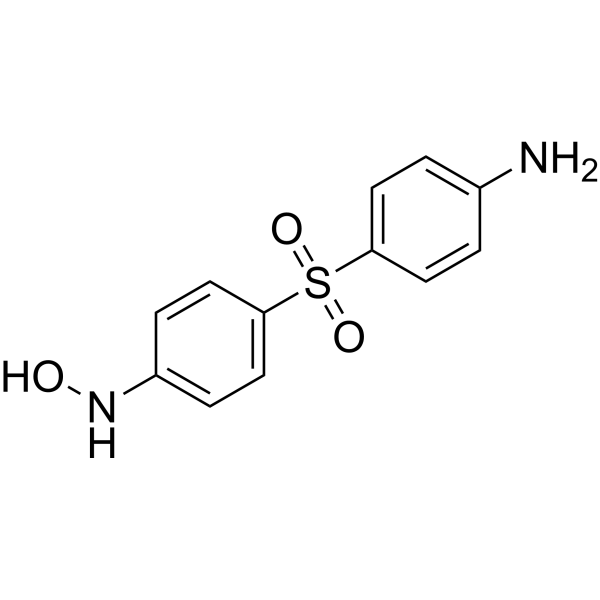
Dapsone hydroxylamine (DDS-NOH) induces methemoglobinemia. Dapsone hydroxylamine inhibits catalase (CAT) activity and reactive oxygen species generation. Dapsone hydroxylamine also has anti-inflammatory activity .
|
-
-
- HY-W012469
-
|
|
Biochemical Assay Reagents
|
Others
|
|
O-(4-Nitrobenzyl)hydroxylamine hydrochloride is a biochemical assay reagent used for the preparation of N-(4-nitrobenzyloxy)-amino acid as substrates for an unambiguous N-hydroxypeptide synthesis.
|
-
-
- HY-P3100
-
|
|
Parasite
|
Infection
|
|
Orfamide A is a major metabolite of insecticidal biosurfactant in Pseudomonas sp. F6 and has aphidicidal activity. Orfamide A can be used for aphid control in organic agriculture. Orfamide A exhibits dose-dependent mortality against aphids with an LC50 value of 34.5 μg/mL .
|
-
-
- HY-151786
-
|
|
ADC Linker
|
Others
|
|
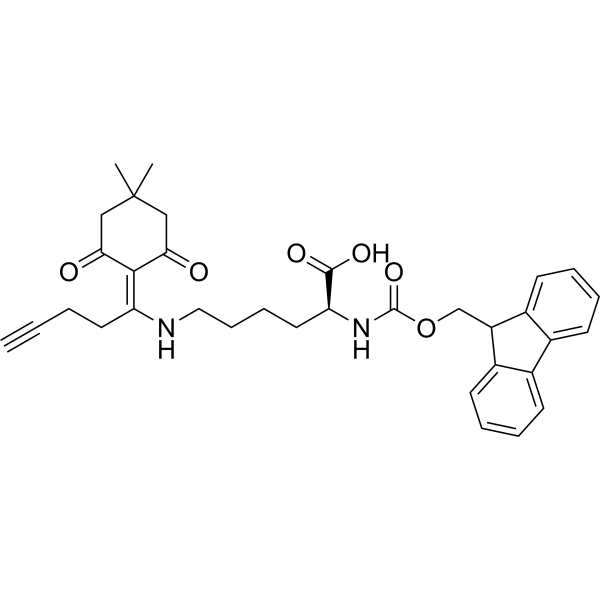
Fmoc-L-Lys(Pentynoyl-DIM)-OH is a click chemistry reagent containing an azide. Fmoc-L-Lys(Pentynoyl-DIM)-OH can be used as a SPPS building block for the “helping hand” strategy for purification of highly insoluble peptides. Solubilizing residues are attached to the Lys side-chains using Click-chemistry. The solubilizing tag can be removed with 1M hydrazine or hydroxylamine solution . It contains an azide group and can undergo copper-catalyzed azide-alkyne cycloaddition (CuAAc) with molecules containing alkyne groups. It can also undergo ring strain-promoted alkyne-azide cycloaddition (SPAAC) with molecules containing DBCO or BCN groups.
|
-
-
- HY-147384
-
|
|
Calcium Channel
|
Cardiovascular Disease
|
|
CXL-1020 is a hydroxylamine-based nitroxyl (HNO) donor. CXL-1020 improves cardiac inotropy/lusitropy and Ca 2+ cycling in rats with abnormal relaxation. CXL-1020 induces vasorelaxation and improves cardiac function in canine models. CXL-1020 has been used to research systolic heart failure and stable heart failure .
|
-
-
- HY-158104
-
|
|
ATF6
|
Others
|
|
LPPM-8 is a ligand of Med25 and an inhibitor of Med25 protein-protein interactions (PPIs). LPPM-8 engages Med25 through interaction with the H2 face of its Activator Interaction Domain and stabilizes full-length protein in the cellular proteome. LPPM-8 is an orthosteric inhibitor of H2-binding transcriptional activators (such as ATF6a). LPPM-8 can be used for studying Med25 and Mediator complex biology .
|
-
-
- HY-137155S
-
-
-
- HY-W722122
-
|
N-(1-((3r,5r,7r)-Adamantan-1-yl)ethyl)hydroxylamine-d4
|
Isotope-Labeled Compounds
|
Others
|
|
N-(1-(Adamantan-1-yl)ethyl)hydroxylamine-d4 (N-(1-((3r,5r,7r)-Adamantan-1-yl)ethyl)hydroxylamine-d4) is the deuterium labeled N-(1-(adamantan-1-yl)ethyl)hydroxylamine (HY-75864).
|
-
-
- HY-W073314
-
|
O-(2,2,2-Trifluoroethyl)hydroxylamine hydrochloride
|
Biochemical Assay Reagents
|
Others
|
|
2,2,2-Trifluoroethoxyamine (O-(2,2,2-Trifluoroethyl)hydroxylamine) hydrochloride can be used as an oxime reactant for coupling reactions with reducing sugars .
|
-
-
- HY-106429
-
|
|
Reactive Oxygen Species (ROS)
|
Others
|
|
OT-551 (free base) is a lipophilic, disubstituted hydroxylamine with antioxidant properties. OT-551 can be used as an eye drop and can be converted by intraocular esterases to its active metabolite, Tempol-H (TP-H). OT-551 can be utilized in geographic atrophy and macular degeneration research .
|
-
-
- HY-156846
-
-
-
- HY-13543R
-
|
CB 1954 (Standard)
|
DNA Alkylator/Crosslinker
Reference Standards
|
Cancer
|
|
Tretazicar (Standard) is the analytical standard of Tretazicar. This product is intended for research and analytical applications. Tretazicar (CB 1954), an antitumor proagent, is highly selective against the Walker 256 rat tumour line. Tretazicar is enzymatically activated to generate a bifunctional agent, which can form DNA-DNA interstrand cross-links. Tretazicar in rat cells involves the reduction of its 4-nitro group to a 4-hydroxylamine by the enzyme NAD(P)H:quinone oxidoreductase 1 (NQO1) .
|
-
-
- HY-Y1860S
-
|
O-Benzylhydroxylamine-d5; O-(Phenylmethyl)hydroxylamine-d5
|
Isotope-Labeled Compounds
|
Others
|
|
Benzyloxyamine-d5 (O-Benzylhydroxylamine-d5) is a deuterium labeled Benzyloxyamine.
|
-
-
- HY-W591965
-
|
|
Biochemical Assay Reagents
|
Others
|
|
t-Boc-Aminooxy-pentane-amine is a linker containing an aminooxy group and a primary amine. The aminooxy group can be used in bioconjugation. It reacts with an aldehyde to form an oxime bond. If a reductant is used, it will form a hydroxylamine linkage. The amino group is reactive with carboxylic acids, activated NHS esters, carbonyls (ketone, aldehyde) etc.
|
-
-
- HY-W800649
-
|
|
Biochemical Assay Reagents
|
Others
|
|
Aminooxy-PEG2-amine hydrochloride (compound L3) is an aqueous soluble crosslinker. The aminooxy group can be used in bioconjugation. It reacts with an aldehyde to form an oxime bond, if a reductant is used, it will form a hydroxylamine linkage. The amino group is reactive with carboxylic acids, activated NHS esters, carbonyls (ketone, aldehyde) etc. Aminooxy compounds are very reactive and sensitive; they cannot be stored for long term .
|
-
-
- HY-Y0882S
-
|
|
Isotope-Labeled Compounds
Monoamine Oxidase
|
Cardiovascular Disease
|
|
Hydroxylamine- 15N hydrochloride is the 15N-labeled Hydroxylamine hydrochloride (HY-Y0882). Hydroxylamine hydrochloride is a selective Monoamine oxidase (MAO) inhibitor used for inhibiting of platelet aggregation. Hydroxylamine hydrochloride is an intermediate of nitrogen cycle in aerobic ammonium oxidizers microorganisms, such as ammonium oxidizing bacteria (AOB), ammonium oxidizing archaea (AOA) and complete ammonium oxidizing bacteria (comammox). Hydroxylamine hydrochloride impacts NO and N2O emissions by aerobic ammonium oxidizers microorganisms and inhibits nitrite oxidizing bacteria (NOB) activity .
|
-
-
- HY-151787
-
|
|
ADC Linker
|
Others
|
|
Fmoc-L-Lys(N3-Aca-DIM)-OH is a click chemistry reagent containing an azide group. Used as a SPPS building-block for the “helping hand” strategy for purification of highly insoluble peptides. Solubilizing residues are attached to the Lys side-chains using Click-chemistry. The solubilizing tag can be removed with 1M hydrazine or hydroxylamine solution . It contains an azide group and can undergo copper-catalyzed azide-alkyne cycloaddition (CuAAc) with molecules containing alkyne groups. It can also undergo ring strain-promoted alkyne-azide cycloaddition (SPAAC) with molecules containing DBCO or BCN groups.
|
-
-
- HY-W011938S
-
|
|
Isotope-Labeled Compounds
|
Others
|
|
O-((Perfluorophenyl)methyl)hydroxylamine-d2 (hydrochloride) is the deuterium labeled O-((Perfluorophenyl)methyl)hydroxylamine hydrochloride .
|
-
-
- HY-182595
-
|
|
Biochemical Assay Reagents
|
Others
|
|
Hydroxylamine Solution, 1.5 M, pH 8.5, is composed of 1.5 M hydroxylamine hydrochloride, deionized water, etc., with a pH of 8.5. Hydroxylamine Solution, 1.5 M, pH 8.5, is mainly used to remove unstable fluorescent groups or biotin during antibody labeling.
|
-
-
- HY-182594
-
|
|
Biochemical Assay Reagents
|
Others
|
|
Hydroxylamine Solution, 1.5 M, pH 8.0, is composed of 1.5 M hydroxylamine hydrochloride, deionized water, etc., with a pH of 8.0. Hydroxylamine Solution, 1.5 M, pH 8.0, is mainly used to remove unstable fluorescent groups or biotin during antibody labeling.
|
-
-
- HY-180497
-
|
|
Biochemical Assay Reagents
|
Others
|
|
DBNBS is a radical spin trapper. DBNBS rapidly reacts with the Cys-34 residue in BSA to generate hydroxylamine. DBNBS spin traps the protein-centered radicals generated by porphyrin photooxidation of BSA .
|
-
-
- HY-N18367
-
|
Wgx-50
|
nAChR
Interleukin Related
Akt
|
Neurological Disease
Inflammation/Immunology
|
|
Lemairamin (Wgx-50) is a hydroxylamine compound. Lemairamin can be isolated from the pericarps of the Zanthoxylum plants. Lemairamin activates α7nAChR, stimulates the expression of IL-10 and POMC. Lemairamin shows a decrease in Akt. Lemairamin attenuates DSS-induced intestinal inflammation. Lemairamin alleviates pain hypersensitivity .
|
-
-
- HY-W800650
-
|
|
Biochemical Assay Reagents
|
Others
|
|
Aminooxy-PEG1-amine is a chemical reagent containing an aminooxy group and a primary amine. The aminooxy group is reactive with an aldehyde to form an oxime bond. If a reductant is used, it will form a hydroxylamine linkage. The amino group is reactive withactivated NHS esters, or carboxylic acid in the presence of coupling reagent EDC. Aminooxy compounds are very reactive and sensitive; they cannot be stored for long term.
|
-
-
- HY-P11783
-
|
|
Fungal
|
Infection
|
|
Surfactin C2 is a lipopeptide produced by Bacillus subtilis A18 with antifungal activity. Surfactin C2 acts against Heterobasidion annosum and Heterobasidion parviporum. Surfactin C2 exerts its activity mainly through membrane‑active effects to disrupt fungal cell structures and inhibit mycelial growth. Surfactin C2 can be used for the research of butt rot and root rot of conifers .
|
-
-
- HY-P2209
-
|
Daechuine S27; N-Demethylamphibine H
|
Parasite
Phosphodiesterase (PDE)
|
Infection
|
|
Nummularine B (Daechuine S27; N-Demethylamphibine H) is an anti-parasite agent. Nummularine B inhibits calmodulin-dependent phosphodiesterase activity with an IC50 of 16.8 μM. Nummularine B inhibits the growth of Plasmodium and Leishmania donovani in vitro. Nummularine B inhibits the calmodulin-dependent activity of actomyosin Ca 2+-ATPase. Nummularine B is applicable to research related to malaria and visceral leishmaniasis .
|
-
-
- HY-P4948
-
|
|
Biochemical Assay Reagents
|
Others
|
|
Coumarin-phalloidin is a kind of phalloidin labeled with Coumarin (HY-N0709). Coumarin-phalloidin is a new type of actin probe that can be used for triple immunofluorescence microscopic observation of the cell skeleton .
|
-
| Cat. No. |
Product Name |
Type |
-
- HY-Y0024
-
|
|
Biochemical Assay Reagents
|
|
4-Methoxyacetophenone is a versatile aromatic ketone that is widely used in the synthesis of various organic compounds. 4-Methoxyacetophenone has a pleasant aroma and can be used to create scents. 4-Methoxyacetophenone can also be used to make dyes and pigments .
|
-
- HY-W012469
-
|
|
Biochemical Assay Reagents
|
|
O-(4-Nitrobenzyl)hydroxylamine hydrochloride is a biochemical assay reagent used for the preparation of N-(4-nitrobenzyloxy)-amino acid as substrates for an unambiguous N-hydroxypeptide synthesis.
|
-
- HY-182595
-
|
|
Biochemical Assay Reagents
|
|
Hydroxylamine Solution, 1.5 M, pH 8.5, is composed of 1.5 M hydroxylamine hydrochloride, deionized water, etc., with a pH of 8.5. Hydroxylamine Solution, 1.5 M, pH 8.5, is mainly used to remove unstable fluorescent groups or biotin during antibody labeling.
|
-
- HY-182594
-
|
|
Biochemical Assay Reagents
|
|
Hydroxylamine Solution, 1.5 M, pH 8.0, is composed of 1.5 M hydroxylamine hydrochloride, deionized water, etc., with a pH of 8.0. Hydroxylamine Solution, 1.5 M, pH 8.0, is mainly used to remove unstable fluorescent groups or biotin during antibody labeling.
|
| Cat. No. |
Product Name |
Target |
Research Area |
-
- HY-17365
-
-
- HY-125586
-
|
|
DNA/RNA Synthesis
ADC Payload
|
Cancer
|
|
β-Amanitin is a cyclic peptide toxin in the poisonous Amanita phalloides mushroom. β-Amanitin inhibits inhibits eukaryotic RNA polymerase II and III. β-Amanitin inhibits protein synthesis. β-Amanitin can be used as a cytotoxic component of antibody-drug conjugates (ADCs) .
|
-
- HY-105055
-
|
|
Peptides
|
Cancer
|
|
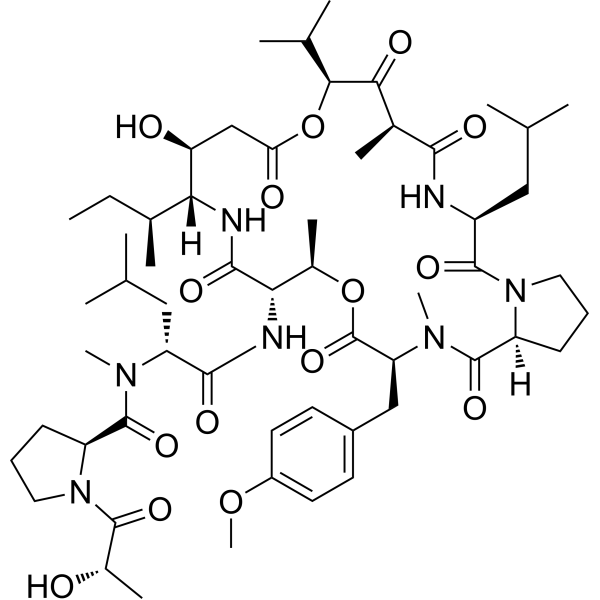
Didemnin B is a depsipeptide extracted from the marine tunicate Trididemnin cyanophorum. Didemnin B can be used for the research of cancer .
|
-
- HY-P10447
-
|
Fengycin IX; SNA-60-367-3
|
Phospholipase
|
Infection
|
|
Plipastatin A1 is a lipopeptide with phospholipase A2 inhibitory activity. Plipastatin A1 inhibits conidial germination of Botrytis cinerea in vitro and reduces the incidence of gray mold on tomato leaves. Plipastatin A1 is applicable to research related to gray mold .
|
-
- HY-P4755
-
|
|
Peptides
|
Others
|
|
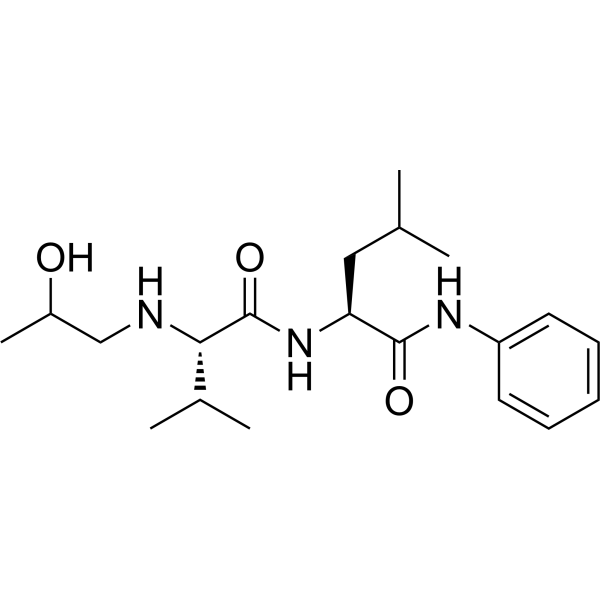
N-((RS)-2-Hydroxy-propyl)-Val-Leu-anilide is a polypeptide that can be found by peptide screening. Peptide screening is a research tool that pools active peptides primarily by immunoassay. Peptide screening can be used for protein interaction, functional analysis, epitope screening, especially in the field of agent research and development .
|
-
- HY-P3100
-
|
|
Parasite
|
Infection
|
|
Orfamide A is a major metabolite of insecticidal biosurfactant in Pseudomonas sp. F6 and has aphidicidal activity. Orfamide A can be used for aphid control in organic agriculture. Orfamide A exhibits dose-dependent mortality against aphids with an LC50 value of 34.5 μg/mL .
|
-
- HY-125357
-
|
|
Peptides
|
Metabolic Disease
|
|
Ternatin (compound 2) is a cyclic heptapeptides that can be isolated from mushroom Coliorus versicolor. Ternatin inhibits fat-accumulation with an IC50 of 0.027 μM in 3T3-L1 adipocytes .
|
-
- HY-158104
-
|
|
ATF6
|
Others
|
|
LPPM-8 is a ligand of Med25 and an inhibitor of Med25 protein-protein interactions (PPIs). LPPM-8 engages Med25 through interaction with the H2 face of its Activator Interaction Domain and stabilizes full-length protein in the cellular proteome. LPPM-8 is an orthosteric inhibitor of H2-binding transcriptional activators (such as ATF6a). LPPM-8 can be used for studying Med25 and Mediator complex biology .
|
-
- HY-P11783
-
|
|
Fungal
|
Infection
|
|
Surfactin C2 is a lipopeptide produced by Bacillus subtilis A18 with antifungal activity. Surfactin C2 acts against Heterobasidion annosum and Heterobasidion parviporum. Surfactin C2 exerts its activity mainly through membrane‑active effects to disrupt fungal cell structures and inhibit mycelial growth. Surfactin C2 can be used for the research of butt rot and root rot of conifers .
|
-
- HY-P2209
-
|
Daechuine S27; N-Demethylamphibine H
|
Parasite
Phosphodiesterase (PDE)
|
Infection
|
|
Nummularine B (Daechuine S27; N-Demethylamphibine H) is an anti-parasite agent. Nummularine B inhibits calmodulin-dependent phosphodiesterase activity with an IC50 of 16.8 μM. Nummularine B inhibits the growth of Plasmodium and Leishmania donovani in vitro. Nummularine B inhibits the calmodulin-dependent activity of actomyosin Ca 2+-ATPase. Nummularine B is applicable to research related to malaria and visceral leishmaniasis .
|
-
- HY-P4948
-
|
|
Biochemical Assay Reagents
|
Others
|
|
Coumarin-phalloidin is a kind of phalloidin labeled with Coumarin (HY-N0709). Coumarin-phalloidin is a new type of actin probe that can be used for triple immunofluorescence microscopic observation of the cell skeleton .
|
| Cat. No. |
Product Name |
Category |
Target |
Chemical Structure |
| Cat. No. |
Product Name |
Chemical Structure |
-
- HY-Y0882S1
-
|
|
|
Hydroxylamine-d3 (hydrochloride) is the deuterium labeled Hydroxyamine hydrochloride. Hydroxylamine hydrochloride is a selective Monoamine oxidase (MAO) inhibitor used for inhibiting of platelet aggregation. Hydroxylamine hydrochloride is an intermediate of nitrogen cycle in aerobic ammonium oxidizers microorganisms, such as ammonium oxidizing bacteria (AOB), ammonium oxidizing archaea (AOA) and complete ammonium oxidizing bacteria (comammox). Hydroxylamine hydrochloride impacts NO and N2O emissions by aerobic ammonium oxidizers microorganisms and inhibits nitrite oxidizing bacteria (NOB) activity .
|
-
-
- HY-137155S
-
|
|
|
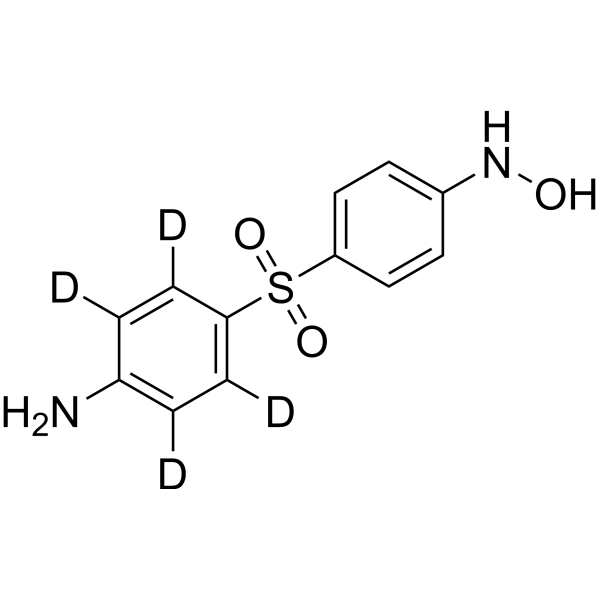
Dapsone hydroxylamine-d4 is the deuterium labeled Dapsone hydroxylamine .
|
-
-
- HY-W722122
-
|
|
|
N-(1-(Adamantan-1-yl)ethyl)hydroxylamine-d4 (N-(1-((3r,5r,7r)-Adamantan-1-yl)ethyl)hydroxylamine-d4) is the deuterium labeled N-(1-(adamantan-1-yl)ethyl)hydroxylamine (HY-75864).
|
-
-
- HY-Y1860S
-
|
|
|
Benzyloxyamine-d5 (O-Benzylhydroxylamine-d5) is a deuterium labeled Benzyloxyamine.
|
-
-
- HY-Y0882S
-
|
|
|
Hydroxylamine- 15N hydrochloride is the 15N-labeled Hydroxylamine hydrochloride (HY-Y0882). Hydroxylamine hydrochloride is a selective Monoamine oxidase (MAO) inhibitor used for inhibiting of platelet aggregation. Hydroxylamine hydrochloride is an intermediate of nitrogen cycle in aerobic ammonium oxidizers microorganisms, such as ammonium oxidizing bacteria (AOB), ammonium oxidizing archaea (AOA) and complete ammonium oxidizing bacteria (comammox). Hydroxylamine hydrochloride impacts NO and N2O emissions by aerobic ammonium oxidizers microorganisms and inhibits nitrite oxidizing bacteria (NOB) activity .
|
-
-
- HY-W011938S
-
|
|
|
O-((Perfluorophenyl)methyl)hydroxylamine-d2 (hydrochloride) is the deuterium labeled O-((Perfluorophenyl)methyl)hydroxylamine hydrochloride .
|
-
| Cat. No. |
Product Name |
|
Classification |
-
- HY-151786
-
|
|
|
Azide
Alkynes
|
|
Fmoc-L-Lys(Pentynoyl-DIM)-OH is a click chemistry reagent containing an azide. Fmoc-L-Lys(Pentynoyl-DIM)-OH can be used as a SPPS building block for the “helping hand” strategy for purification of highly insoluble peptides. Solubilizing residues are attached to the Lys side-chains using Click-chemistry. The solubilizing tag can be removed with 1M hydrazine or hydroxylamine solution . It contains an azide group and can undergo copper-catalyzed azide-alkyne cycloaddition (CuAAc) with molecules containing alkyne groups. It can also undergo ring strain-promoted alkyne-azide cycloaddition (SPAAC) with molecules containing DBCO or BCN groups.
|
-
- HY-151787
-
|
|
|
Azide
|
|
Fmoc-L-Lys(N3-Aca-DIM)-OH is a click chemistry reagent containing an azide group. Used as a SPPS building-block for the “helping hand” strategy for purification of highly insoluble peptides. Solubilizing residues are attached to the Lys side-chains using Click-chemistry. The solubilizing tag can be removed with 1M hydrazine or hydroxylamine solution . It contains an azide group and can undergo copper-catalyzed azide-alkyne cycloaddition (CuAAc) with molecules containing alkyne groups. It can also undergo ring strain-promoted alkyne-azide cycloaddition (SPAAC) with molecules containing DBCO or BCN groups.
|
Your information is safe with us. * Required Fields.
Inquiry Information
- Product Name:
- Cat. No.:
- Quantity:
- MCE Japan Authorized Agent:

