1. Search Result
Search Result
Results for "

involuntary

" in MedChemExpress (MCE) Product Catalog:

15

Inhibitors & Agonists

2

Isotope-Labeled Compounds

Cat. No. Product Name Target Research Areas Chemical Structure
  • HY-B1188

    mAChR Neurological Disease
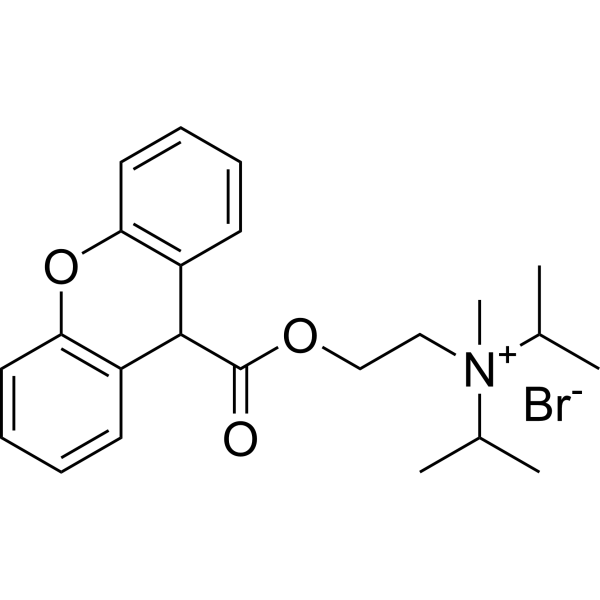
    Propantheline bromide is an orally active mAChR antagonist. Propantheline bromide can be used in the research of smooth muscle dysfunction, excessive sweating, cramps or spasms of the stomach, intestines or bladder, and involuntary urination. Propantheline bromide can hardly cross the blood-brain barrier .
    Propantheline bromide
  • HY-A0024

    (R)-(+)-Tolterodine; (+)-Tolterodine; (R)-Tolterodine; PNU-200583

    mAChR Cytochrome P450 Neurological Disease Cancer
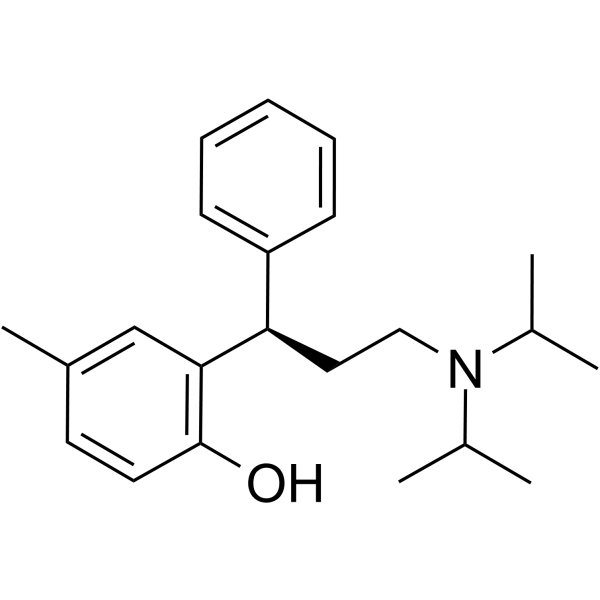
    Tolterodine ((R)-(+)-Tolterodine) is a mAChR inhibitor and substrate for cytochrome P450 enzymes. Tolterodine competitively binds acetylcholine, reduces sympathetic excitation, and inhibits involuntary bladder muscle contraction. Tolterodine restores the Nrf2/NF-κB signaling pathway, mediates protection against inflammatory response and ferroptosis. Tolterodine ameliorates LPS (HY-D1056)-induced reactive oxygen species production and lipid oxidation. Tolterodine can be used for the research of urinary tract infections and overactive bladder .
    Tolterodine
  • HY-90010

    Kabi-2234; PNU-200583E

    mAChR Cytochrome P450 Neurological Disease Cancer
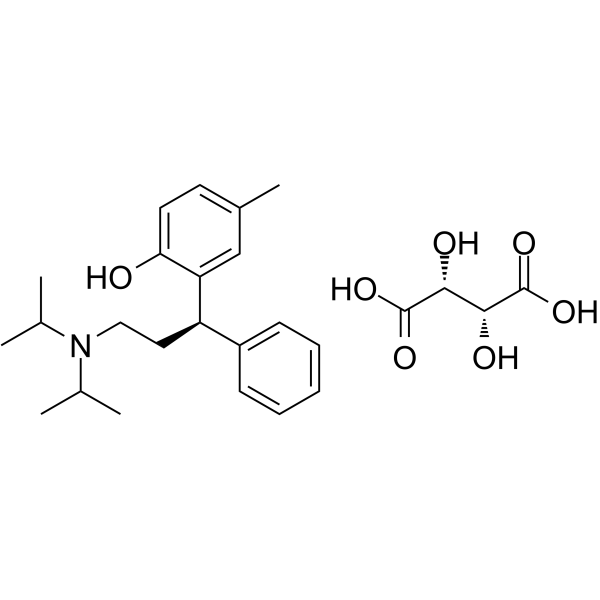
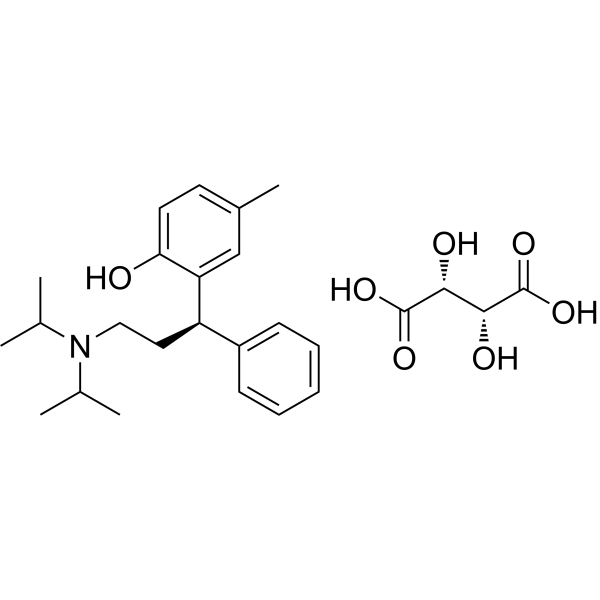
    Tolterodine tartrate (Kabi-2234) is a mAChR inhibitor and substrate for cytochrome P450 enzymes. Tolterodine tartrate competitively binds acetylcholine, reduces sympathetic excitation, and inhibits involuntary bladder muscle contraction. Tolterodine tartrate restores the Nrf2/NF-κB signaling pathway, mediates protection against inflammatory response and ferroptosis. Tolterodine tartrate ameliorates LPS (HY-D1056)-induced reactive oxygen species production and lipid oxidation. Tolterodine tartrate can be used for the research of urinary tract infections and overactive bladder .
    Tolterodine tartrate
  • HY-131678

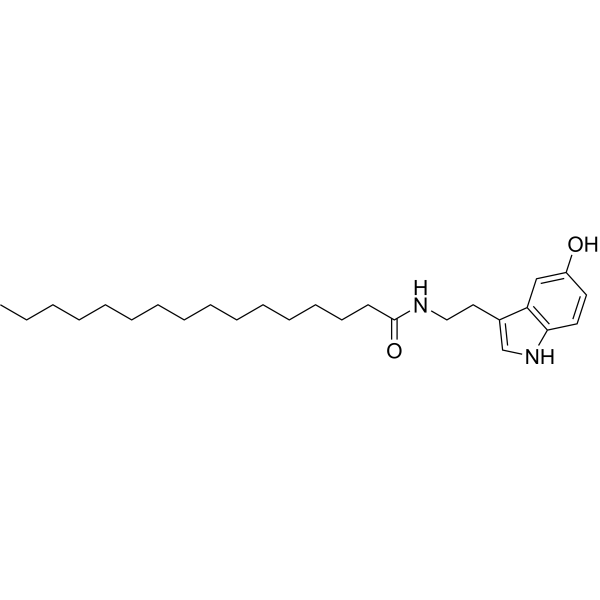
    PA-5HT

    FAAH Neurological Disease
    Palmitoyl serotonin is a hybrid molecule patterned after arachidonoyl serotonin, antagonist of FAAH. Palmitoyl serotonin inhibits L-3,4-dihydroxyphenylalanine (HY-N0304) induced abnormal involuntary movements. Palmitoyl serotonin has the potential for the research of parkinson's disease (PD) .
    Palmitoyl serotonin
  • HY-137447A

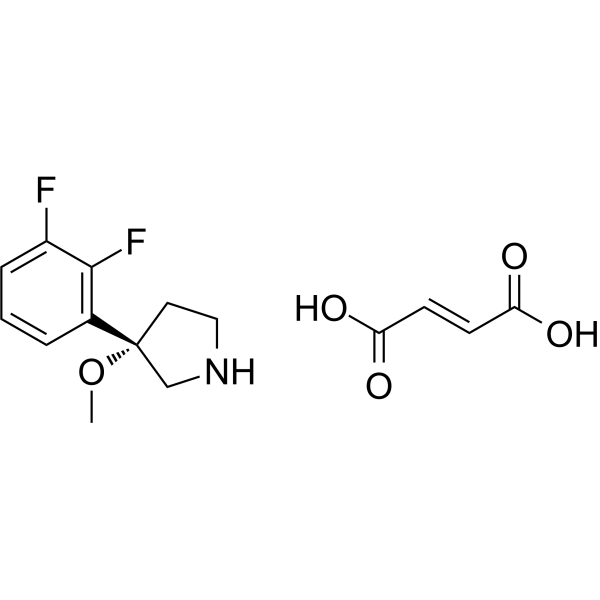
    IRL752 fumarate

    Adrenergic Receptor Neurological Disease
    Pirepemat (IRL752) fumarate is a corticalpreferring catecholamine- and cognition-promoting agent. Pirepemat fumarate is used for the study of Parkinson's disease .
    Pirepemat fumarate
  • HY-137447

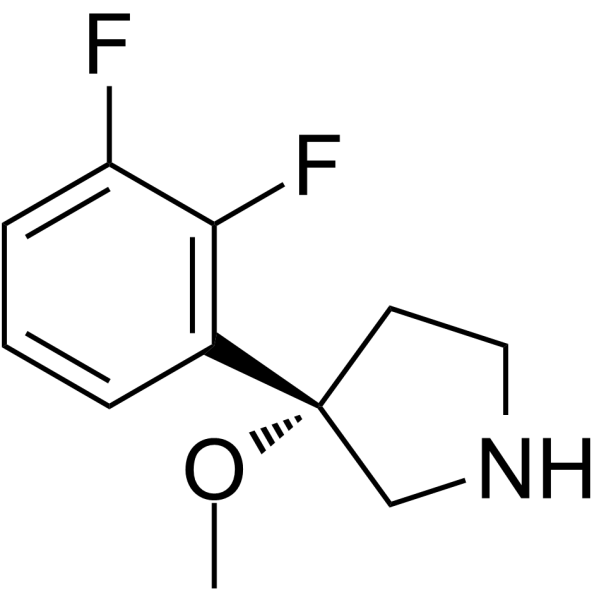
    IRL752

    Dopamine Receptor Cholinesterase (ChE) Adrenergic Receptor Neurological Disease
    Pirepemat (IRL752) is a corticalpreferring catecholamine- and cognition-promoting agent. Pirepemat (IRL752) is used for the study of Parkinson's disease . IRL752 is a selective enhancer of cortical dopamine, acetylcholine and norepinephrine .
    Pirepemat
  • HY-153091

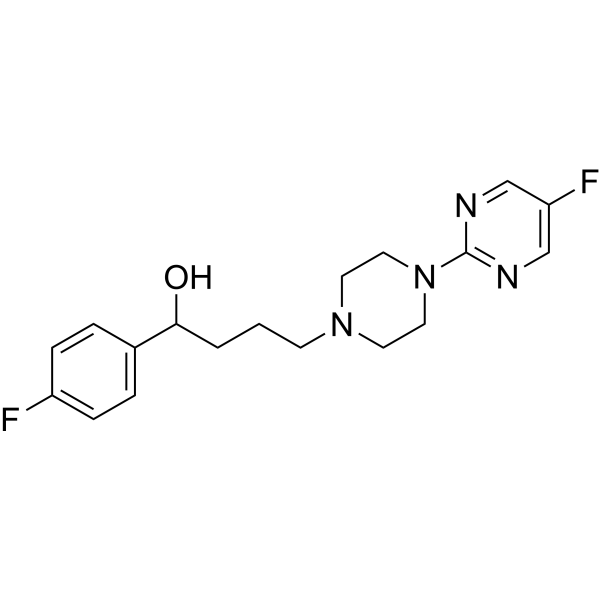
    Adrenergic Receptor 5-HT Receptor Sigma Receptor Neurological Disease
    BMY 14802 is a sigma-1 receptor (σ1R) antagonist, as well as an agonist at serotonin (5-HT) 1A and adrenergic alpha-1 receptors. BMY 14802 inhibits abnormal involuntary movement (AIM) in rat Parkinson's disease (PD) model, with down-regulating the expression of AIM .
    BMY 14802
  • HY-B1188R

    Reference Standards mAChR Neurological Disease
    Propantheline (bromide) (Standard) is the analytical standard of Propantheline (bromide). This product is intended for research and analytical applications. Propantheline bromide is an orally active mAChR antagonist. Propantheline bromide can be used in the research of smooth muscle dysfunction, excessive sweating, cramps or spasms of the stomach, intestines or bladder, and involuntary urination .
    Propantheline bromide (Standard)
  • HY-111242

    Dopamine Receptor Neurological Disease
    SV 156 is a potent and selective D2 dopamine receptor antagonist, with a Ki of 2.5 nM for hD2. SV 156 has approximately 40-fold binding selectivity for D2 dopamine receptors compared to the D3 receptor subtype. SV 156 can be used for L-DOPA (HY-N0304)-associated abnormal involuntary movements (AIMs) research .
    SV 156
  • HY-A0024S

    (R)-(+)-Tolterodine-d14 hydrochloride; (+)-Tolterodine-d14 hydrochloride; (R)-Tolterodine-d14 hydrochloride; PNU-200583-d14 hydrochloride

    Isotope-Labeled Compounds mAChR Cytochrome P450 Neurological Disease
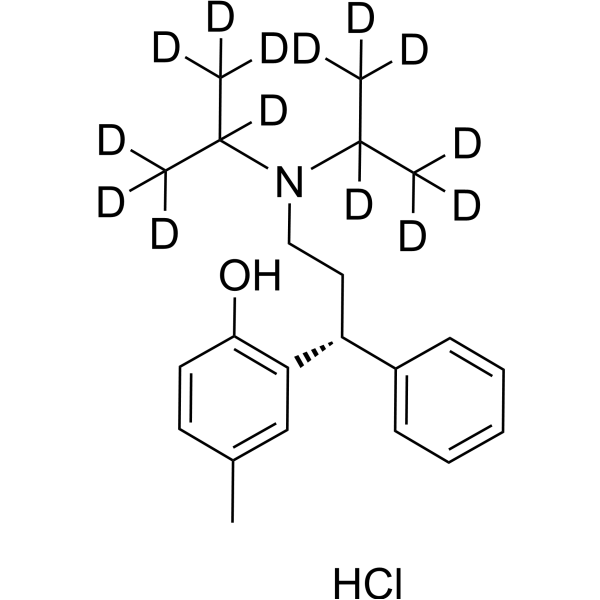
    Tolterodine-d14 (hydrochloride) is the deuterium labeled Tolterodine hydrochloride . Tolterodine ((R)-(+)-Tolterodine) is a mAChR inhibitor and substrate for cytochrome P450 enzymes. Tolterodine competitively binds acetylcholine, reduces sympathetic excitation, and inhibits involuntary bladder muscle contraction. Tolterodine restores the Nrf2/NF-κB signaling pathway, mediates protection against inflammatory response and ferroptosis. Tolterodine ameliorates LPS (HY-D1056)-induced reactive oxygen species production and lipid oxidation. Tolterodine can be used for the research of urinary tract infections and overactive bladder.
    Tolterodine-d14 hydrochloride
  • HY-A0024R

    (R)-(+)-Tolterodine (Standard); (+)-Tolterodine (Standard); (R)-Tolterodine (Standard); PNU-200583 (Standard)

    Reference Standards mAChR Cytochrome P450 Neurological Disease Cancer
    Tolterodine (Standard) is the analytical standard of Tolterodine. This product is intended for research and analytical applications. Tolterodine ((R)-(+)-Tolterodine) is a mAChR inhibitor and substrate for cytochrome P450 enzymes. Tolterodine competitively binds acetylcholine, reduces sympathetic excitation, and inhibits involuntary bladder muscle contraction. Tolterodine restores the Nrf2/NF-κB signaling pathway, mediates protection against inflammatory response and ferroptosis. Tolterodine ameliorates LPS (HY-D1056)-induced reactive oxygen species production and lipid oxidation. Tolterodine can be used for the research of urinary tract infections and overactive bladder.
    Tolterodine (Standard)
  • HY-90010R

    Kabi-2234 (Standard); PNU-200583E (Standard)

    Reference Standards mAChR Cytochrome P450 Neurological Disease Cancer
    Tolterodine (tartrate) (Standard) is the analytical standard of Tolterodine tartrate. This product is intended for research and analytical applications. Tolterodine ((R)-(+)-Tolterodine) is a mAChR inhibitor and substrate for cytochrome P450 enzymes. Tolterodine competitively binds acetylcholine, reduces sympathetic excitation, and inhibits involuntary bladder muscle contraction. Tolterodine restores the Nrf2/NF-κB signaling pathway, mediates protection against inflammatory response and ferroptosis. Tolterodine ameliorates LPS (HY-D1056)-induced reactive oxygen species production and lipid oxidation. Tolterodine can be used for the research of urinary tract infections and overactive bladder.
    Tolterodine tartrate (Standard)
  • HY-182773

    Melanocortin Receptor Metabolic Disease
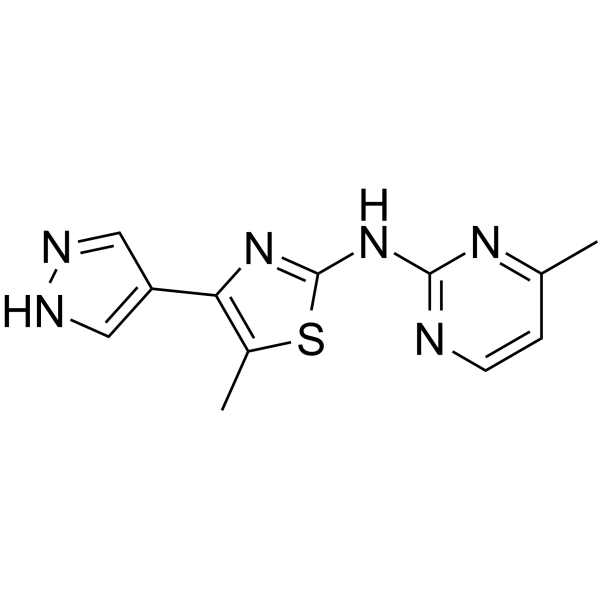
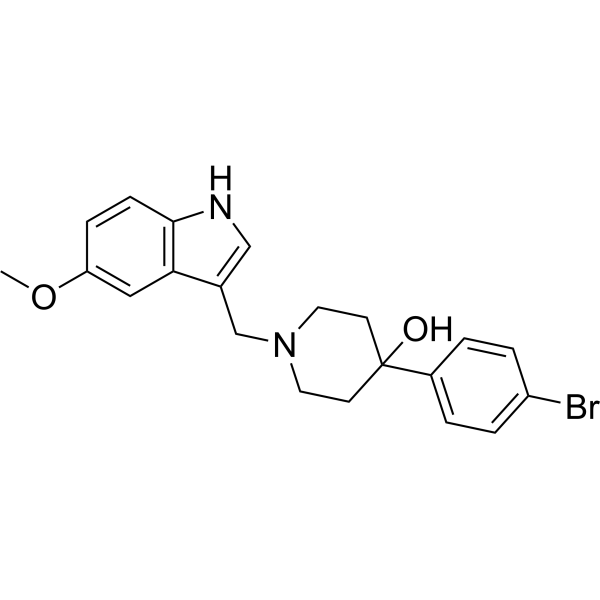
    MC4R Antagonist-1 (compound 1) is an MC4R-selective antagonist (IC50<10 nM). MC4R Antagonist-1 can be used for the research of cachexia, anorexia, anorexia nervosa, involuntary weight loss, failure to thrive, sarcopenia, muscle wasting, muscle weakness, frailty, osteoporosis .
    MC4R Antagonist-1
  • HY-90010S

    Kabi-2234-d14; PNU-200583E-d14

    Isotope-Labeled Compounds mAChR Cytochrome P450 Neurological Disease Cancer
    Tolterodine tartrate-d14 (Kabi-2234-d14) is deuterium labeled Tolterodine tartrate. Tolterodine ((R)-(+)-Tolterodine) is a mAChR inhibitor and substrate for cytochrome P450 enzymes. Tolterodine competitively binds acetylcholine, reduces sympathetic excitation, and inhibits involuntary bladder muscle contraction. Tolterodine restores the Nrf2/NF-κB signaling pathway, mediates protection against inflammatory response and ferroptosis. Tolterodine ameliorates LPS (HY-D1056)-induced reactive oxygen species production and lipid oxidation. Tolterodine can be used for the research of urinary tract infections and overactive bladder.
    Tolterodine tartrate-d14
  • HY-18654A

    mGluR Neurological Disease
    ADX88178 TFA is an orally active, blood-brain barrier-penetrant, selective positive allosteric modulator of mGluR4, with an EC50 of 3.5 nM against hmGluR4. ADX88178 TFA modulates mGlu4 activity, enhances glutamate-mediated receptor activation, and increases the apparent affinity of glutamate for the receptor. ADX88178 TFA reverses haloperidol-induced catalepsy, potentiates the effects of levodopa (L-DOPA) and quinpirole, but fails to alleviate established abnormal involuntary movements, does not exacerbate L-DOPA-induced dyskinesia, and does not affect forelimb akinesia when administered alone. ADX88178 TFA can be used in research related to L-DOPA-induced dyskinesia and Parkinson's disease .
    ADX88178 TFA

Inquiry Online

Your information is safe with us. * Required Fields.

Salutation


Country or Region *

Applicant Name *


Organization Name *

Department *


Email Address *


Product Name *

Cat. No.


Requested quantity *

Phone Number *


Remarks

Inquiry Online

Inquiry Information

Product Name:
Cat. No.:
Quantity:
MCE Japan Authorized Agent:

