
1. Search Result
Search Result
Results for "

lysosomal dysfunction

" in MedChemExpress (MCE) Product Catalog:

11

Inhibitors & Agonists

3

Natural
Products

Cat. No. Product Name Target Research Areas Chemical Structure
  • HY-59291

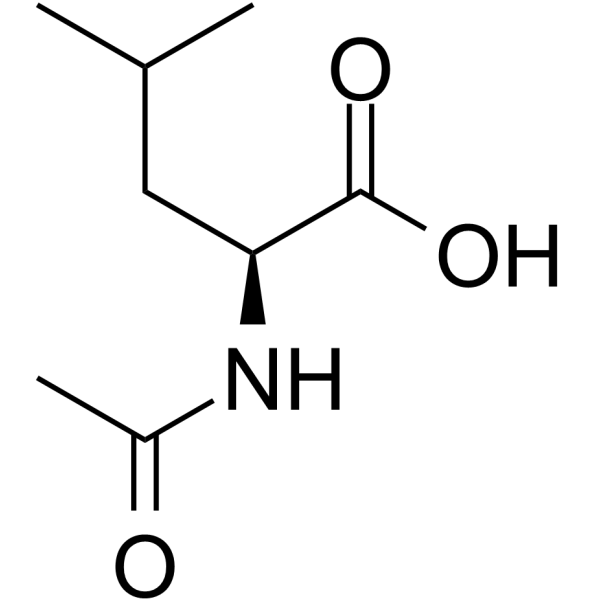
    N-Acetyl-L-leucine

    Amino Acid Derivatives Neurological Disease Metabolic Disease Inflammation/Immunology
    Levacetylleucine (N-acetyl-L-leucine), an orally bioavailable and brain-penetrant compound, is an acetylated derivative of amino acid Leucine. Levacetylleucine is the active form of N-acetyl-leucine (NAL). Levacetylleucine attenuates neuronal death and neuroinflammation in the cortical tissue of mice. Levacetylleucine also potentially improves ameliorates lysosomal and metabolic dysfunction. Levacetylleucine improves compensation of postural symptoms after unilateral chemical labyrinthectomy (UL) in rats. Levacetylleucine is promising for research of neurological manifestations of Niemann-Pick disease type C, traumatic brain injury and neurodegeneration prevention .
    Levacetylleucine
  • HY-W046353

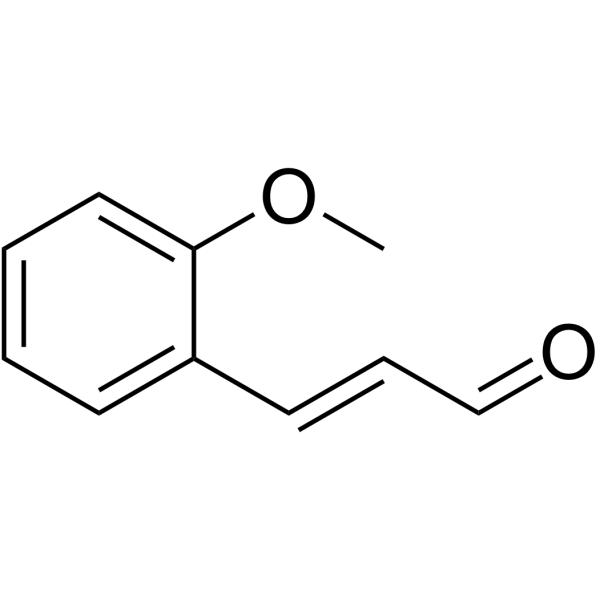
    o-Methoxycinnamaldehyde

    Apoptosis NF-κB Topoisomerase Mitochondrial Metabolism Caspase Cancer
    2-Methoxycinnamaldehyde (o-Methoxycinnamaldehyde) is a natural compound that can be isolated from Cinnamomum cassia. 2-Methoxycinnamaldehyde inhibits topoisomerase-I/II and NF-κB signaling pathway, causes mitochondrial dysfunction, induces lysosomal vesiculation, thereby leading to DNA damage and cell apoptosis. 2-Methoxycinnamaldehyde exhibits antitumor effects .
    2-Methoxycinnamaldehyde
  • HY-129411

    ACT-519276; OGT2378

    Glucosylceramide Synthase (GCS) Metabolic Disease
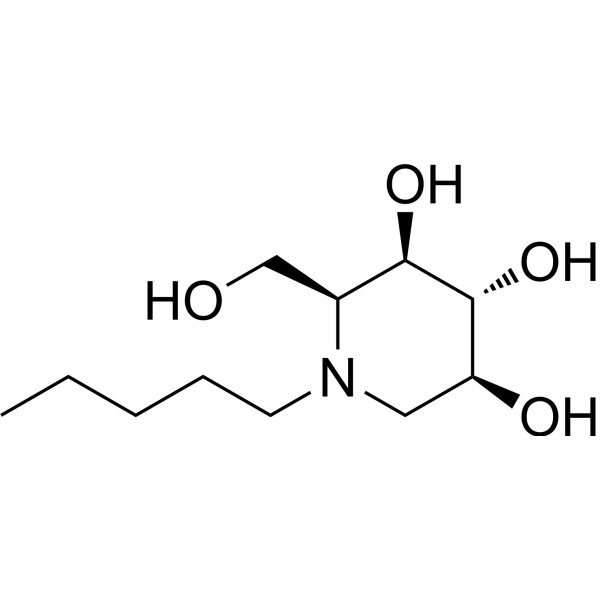
    Sinbaglustat (OGT2378) is a dual inhibitor of glucosylceramide synthase (GCS) and non-lysosomal glucosyl ceramidase (GBA2). Sinbaglustat is an orally available N-alkyl iminosugar that crosses the blood-brain barrier. Sinbaglustat can be used for the research of central neurodegenerative diseases associated with lysosomal dysfunctions .
    Sinbaglustat
  • HY-P2750
    Cathepsin D
    1 Publications Verification

    CTSD

    Biochemical Assay Reagents Cardiovascular Disease Neurological Disease Cancer
    Cathepsin D (CTSD) is a lysosomal aspartic protease encoded by the CTSD gene. Cathepsin D regulates lysosomal protease activity. Loss of Cathepsin D leads to lysosomal dysfunction and the accumulation of various cellular proteins associated with neurodegenerative diseases. Cathepsin D is involved in breast cancer metastasis. Cathepsin D can be used in research on diseases such as breast cancer and stroke .
    Cathepsin D
  • HY-139973

    Amyloid-β Neurological Disease
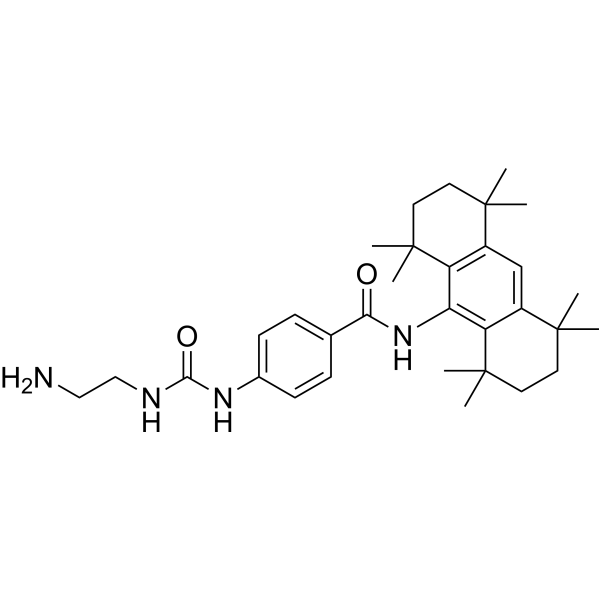
    OAB-14, is a Bexarotene (HY-14171) derivative, improves Alzheimer's disease-related pathologies and cognitive impairments by increasing β-amyloid clearance in APP/PS1 mice. OAB-14 effectively ameliorates the dysfunction of the endosomal-autophagic-lysosomal pathway in APP/PS1 transgenic mice .
    OAB-14
  • HY-168122

    Apoptosis Cancer
    Apoptosis inducer 29 (compund Y9) is an apoptosis inducer that exhibits antitumor effects in non-small cell lung cancer. Apoptosis inducer 29 selectively acidifies lysosomes and induces lysosomal dysfunction, with superior potency to Gboixn (HY-111651) in vitro and in vivo. .
    Apoptosis inducer 29
  • HY-169330

    Drug Metabolite Neurological Disease Metabolic Disease
    3β,5α,6β-Trihydroxycholanic acid is a metabolite of 3β,5α,6β-Trihydroxycholestane (HY-W010934). 3β,5α,6β-Trihydroxycholanic acid can be used in research related to neurodegenerative diseases associated with lysosomal dysfunction .
    3β,5α,6β-Trihydroxycholanic acid
  • HY-W046353R

    o-Methoxycinnamaldehyde (Standard)

    Reference Standards Apoptosis NF-κB Mitochondrial Metabolism Caspase Topoisomerase Cancer
    2-Methoxycinnamaldehyde (Standard) is the analytical standard of 2-Methoxycinnamaldehyde. This product is intended for research and analytical applications. 2-Methoxycinnamaldehyde (o-Methoxycinnamaldehyde) is a natural compound that can be isolated from Cinnamomum cassia. 2-Methoxycinnamaldehyde inhibits topoisomerase-I/II and NF-κB signaling pathway, causes mitochondrial dysfunction, induces lysosomal vesiculation, thereby leading to DNA damage and cell apoptosis. 2-Methoxycinnamaldehyde exhibits antitumor effects .
    2-Methoxycinnamaldehyde (Standard)
  • HY-183274

    Nuclear Hormone Receptor 4A/NR4A Apoptosis PARP Cancer
    Nur77 modulator 5 is a Nur77 modulator. Nur77 modulator 5 induces lysosomal dysfunction, impaired autophagic flux, and apoptosis with increased PARP cleavage, TUNEL positivity, and Annexin V/PI staining. Nur77 modulator 5 can be used for the research of gastric cancer .
    Nur77 modulator 5
  • HY-183351

    Cathepsin DNA/RNA Synthesis Autophagy Apoptosis Cancer
    GN-604 is a targeted drug conjugate (Targeted Drug Conjugate, TDC) formed by conjugation of GNS561 (HY-137978) with DN604, a Pt (II) complex. GN-604 selectively inhibits PPT1, induces lysosomal dysfunction, suppresses autophagy and triggers apoptosis. GN-604 promotes the targeted sequestration of Pt (II) inside cells, induces DNA damage and inhibits the proliferation of malignant cells. GN-604 is applicable to research related to triple-negative breast cancer .
    GN-604
  • HY-182037

    DNA/RNA Synthesis Pyruvate Kinase Cancer
    Multi-target kinase-IN-9 is a multi-target enzyme inhibitor with antiproliferative and antiangiogenic activities, and exhibits remarkable selectivity against hepatocellular carcinoma cells. By broadly binding to the active sites or ATP-binding regions of multiple key enzymes including DNA polymerase β, Pyruvate Kinase M2 (PKM2), Multi-target kinase-IN-9 comprehensively disrupts DNA repair and replication, glycolysis, chromatin dynamics and transcriptional programs, and blocks the self-renewal of cancer stem cells. Multi-target kinase-IN-9 induces genomic instability, lysosomal dysfunction and autophagic flux impairment, thereby triggering tumor cell death, effectively inhibiting tumor proliferation, invasion, metastasis and angiogenesis, and significantly reducing tumor volume in xenograft models. Multi-target kinase-IN-9 is applicable to hepatocellular carcinoma-related research .
    Multi-target kinase-IN-9

Inquiry Online

Your information is safe with us. * Required Fields.

Salutation


Country or Region *

Applicant Name *


Organization Name *

Department *


Email Address *


Product Name *

Cat. No.


Requested quantity *

Phone Number *


Remarks

Inquiry Online

Inquiry Information

Product Name:
Cat. No.:
Quantity:
MCE Japan Authorized Agent:

