5 Results for "

m6A modification

" in MedChemExpress (MCE) Product Catalog:
Products (5)

5 Results for "m6A modification" in MCE Product Catalog:

2
2 Cited Publications
Cat. No.: HY-N0086R
CAS No.: 1867-73-8
Synonyms: 6-Methyladenosine (Standard); N-Methyladenosine (Standard)
N6-Methyladenosine (Standard) is the analytical standard of N6-Methyladenosine. This product is intended for research and analytical applications. N6-Methyladenosine is the most prevalent internal (non-cap) modification present in the messenger RNA (mRNA) of all higher eukaryotes. N6-Methyladenosine can modifies viral RNAs and has antiviral activities. In Vitro: N6-methyladenosine (m6A) is selectively recognized by the human YTH domain family 2 (YTHDF2) protein to regulate mRNA degradation. N6-methyladenosine (m6A), a prevalent internal modification in the messenger RNA of all eukaryotes, is post-transcriptionally installed by m6A methyltransferase (e.g., MT-A70) within the consensus sequence of G(m6A)C (70%) or A(m6A)C (30%). N6-methyladenosine (m6A)-containing RNAs are greatly enriched in the YTHDF-bound portion and diminished in the flow-through portion . N6-methyladenosine (m6A), the most abundant internal RNA modification, functions in diverse biological processes, including regulation of embryonic stem cell self-renewal and differentiation. N6-methyladenosine (m6A) is a large protein complex, consisting in part of methyltransferase-like 3 (METTL3) and methyltransferase-like 14 (METTL14) catalytic subunits .
loading...
    loading...
1
1 Cited Publications
Cat. No.: HY-P10387
Research Areas:  

Cancer

RSM3 is a METTL3-METTL14 complex inhibitor with a Kd of 3.10 μM for the METTL3-METTL14 complex. RSM3 reduces the m 6A modification level of SLC31A1 and the global RNA methylation level. RSM3 upregulates programmed cell death-related genes, enhances cell apoptosis, inhibits pro-cancer signals and suppresses tumor growth. RSM3 is applicable to the research of preeclampsia and cancer .
loading...
    loading...
Cat. No.: HY-N4031
CAS No.: 82375-29-9
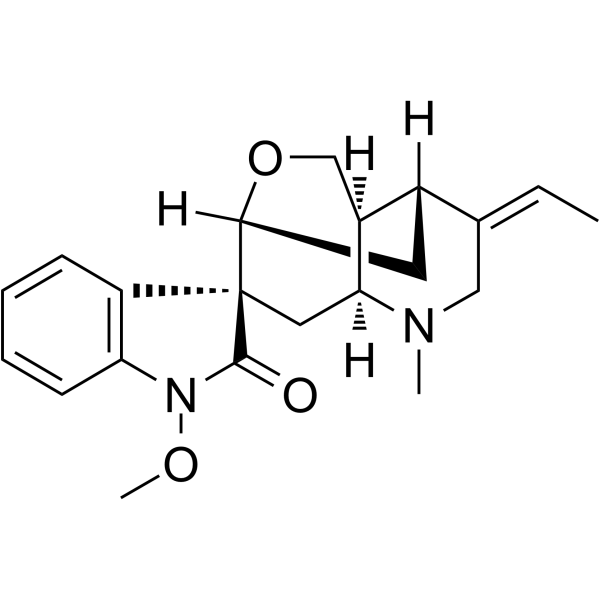
Humantenine is a highly toxic indole alkaloid from Gelsemium elegans (Gardn. & Champ.) Benth. that binds to RNA m6A modification regulatory proteins (ALKBH5, METTL). Humantenine stably binds via hydrogen bonding and hydrophobic interactions and disrupts the m6A methylation level of target genes, thereby impairing the expression of intestinal epithelial cell tight junction and cytoskeleton-related genes, causing intestinal barrier dysfunction and significant intestinal cytotoxicity. The intraperitoneal injection LD50 values of Humantenine are <1 mg/kg in mice, 1.2 mg/kg in male rats and 1.5 mg/kg in female rats, respectively. Species differences exist in the metabolism of Humantenine in human, porcine, goat and rat liver microsomes, and demethylation, dehydrogenation and oxidation occur in liver microsomes .
loading...
    loading...
Cat. No.: HY-159604
CAS No.: 295348-36-6
Target:  

METTL3

Research Areas:  

Cancer

METTL3-IN-9 (compound C3) is an inhibitor of methyltransferase-like METTL3, an RNA methyltransferase that catalyzes the N6-methyladenosine (m6A) modification of mRNA in eukaryotic cells .
loading...
    loading...
Cat. No.: HY-175885
PROTAC FTO degrader 1 is a Fat Mass and Obesity-associated Protein (FTO) PROTAC degrader. PROTAC FTO degrader 1 selectively degrades FTO depending on VHL E3 ligase and ubiquitin-proteasome system. PROTAC FTO degrader 1 can increase m6A modifications on mRNAs associated with ribosome biogenesis and promote their YTHDF2-mediated decay. PROTAC FTO degrader 1 can inhibit cancer cells proliferation and induce apoptosis. PROTAC FTO degrader 1 can be used for the research of cancer, such as acute myeloid leukemia (AML) .
loading...
    loading...

