1. Search Result
Search Result
Results for "

p-EGFR

" in MedChemExpress (MCE) Product Catalog:

17

Inhibitors & Agonists

2

Isotope-Labeled Compounds

2

Click Chemistry

Cat. No. Product Name Target Research Areas Chemical Structure
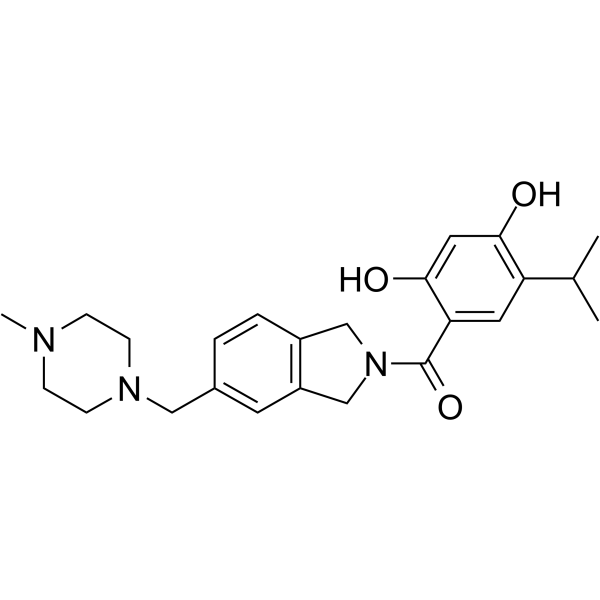
  • HY-14463
    Onalespib
    Maximum Cited Publications
    11 Publications Verification

    AT13387

    HSP Cancer
    Onalespib (AT13387) is a potent and cross the blood-brain barrier heat-shock-protein-90 (Hsp90) inhibitor. Onalespib inhibits the proliferation, survival and migration. Onalespib decreases the expression of EGFR, p-EGFR, AKT, P-AKT, ERK1/2, P-ERK1/2, S6, P-S6 protein. Onalespib shows antitumor activity. Onalespib has the potential for the research of non-small cell lung cancer (NSCLC) .
    Onalespib
  • HY-157229
    STX-721
    1 Publications Verification

    EGFR ERK Cancer
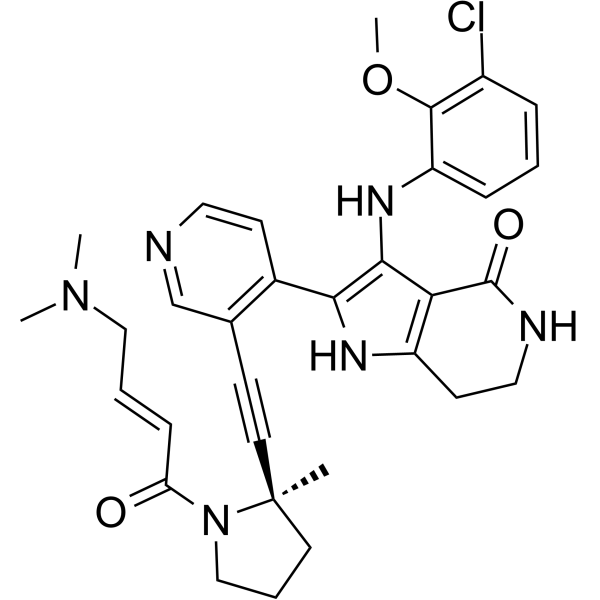
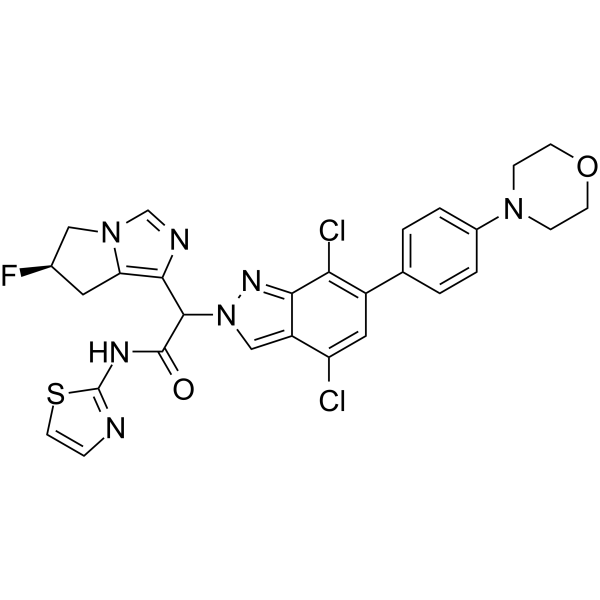
    STX-721 is an orally active, irreversible, covalent EGFR exon 20 insertion (ex20ins) inhibitor that selectively targets ex20ins-mutant dynamic protein states. STX-721 potently inhibits the kinase activity of EGFR ex20ins mutants (NPG, ASV, SVD). STX-721 inhibits phosphorylation of EGFR (pEGFR Y1068) and downstream ERK (pERK Thr202/Tyr204), and suppresses proliferation of ex20ins-mutant Ba/F3 cells and human NSCLC cell lines (NCI-H2073 ASV KI, CUTO-14 ASV). STX-721 induces tumor regression in EGFR ex20ins-mutant PDX/CDX models. STX-721 can be used for the study of non-small cell lung cancer (NSCLC) harboring EGFR or HER2 ex20ins mutations .
    STX-721
  • HY-135699
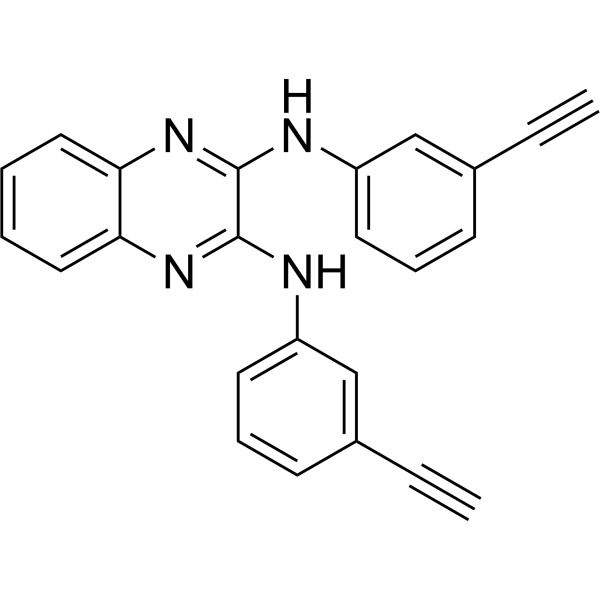
    TD52
    2 Publications Verification

    Apoptosis Phosphatase Akt Cancer
    TD52, an Erlotinib (HY-50896) derivative, is an orally active, potent cancerous inhibitor of protein phosphatase 2A (CIP2A) inhibitor. TD52 mediates the apoptotic effect in triple-negative breast cancer (TNBC) cells via regulating the CIP2A/PP2A/p-Akt signalling pathway. TD52 indirectly reduced CIP2A by disturbing Elk1 binding to the CIP2A promoter. TD52 has less p-EGFR inhibition and has potent anti-cancer activity . TD52 is a click chemistry reagent, it contains an Alkyne group and can undergo copper-catalyzed azide-alkyne cycloaddition (CuAAc) with molecules containing Azide groups.
    TD52
  • HY-13984
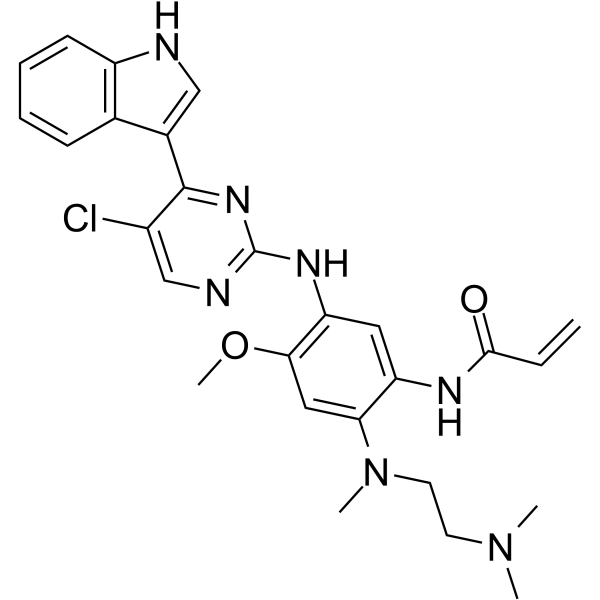
    NT-1
    1 Publications Verification

    EGFR mutant-IN-3

    EGFR ERK Apoptosis Drug Derivative Cancer
    NT-1 (EGFR mutant-IN-3) is a potent mutant EGFR inhibitor and an analog of Osimertinib (HY-15772). This mutant EGFR inhibitor suppresses FGFR WT with an IC50 of 0.4 nM. NT-1 also inhibits EGFR L858R, EGFR Exon 19 deletion and EGFR T790M. NT-1 exerts deeper inhibition on p-EGFR and p-ERK, and induces tumor cell apoptosis. NT-1 can be used in colorectal cancer research .
    NT-1
  • HY-135699A
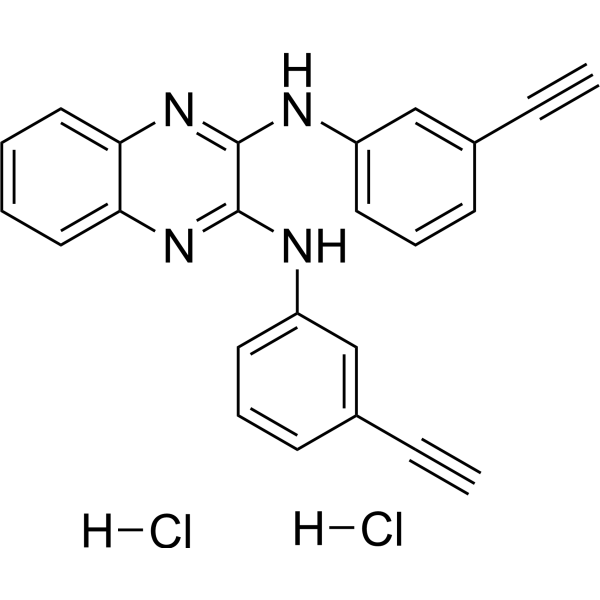
    TD52 dihydrochloride
    2 Publications Verification

    Akt Phosphatase Apoptosis Cancer
    TD52 dihydrochloride, an Erlotinib (HY-50896) derivative, is an orally active, potent cancerous inhibitor of protein phosphatase 2A (CIP2A) inhibitor. TD52 dihydrochloride mediates the apoptotic effect in triple-negative breast cancer (TNBC) cells via regulating the CIP2A/PP2A/p-Akt signalling pathway. TD52 dihydrochloride indirectly reduced CIP2A by disturbing Elk1 binding to the CIP2A promoter. TD52 dihydrochloride has less p-EGFR inhibition and has potent anti-cancer activity . TD52 (dihydrochloride) is a click chemistry reagent, it contains an Alkyne group and can undergo copper-catalyzed azide-alkyne cycloaddition (CuAAc) with molecules containing Azide groups.
    TD52 dihydrochloride
  • HY-142283AS

    AZD-9291-d5 mesylate; Mereletinib-d5 mesylate

    EGFR Cancer
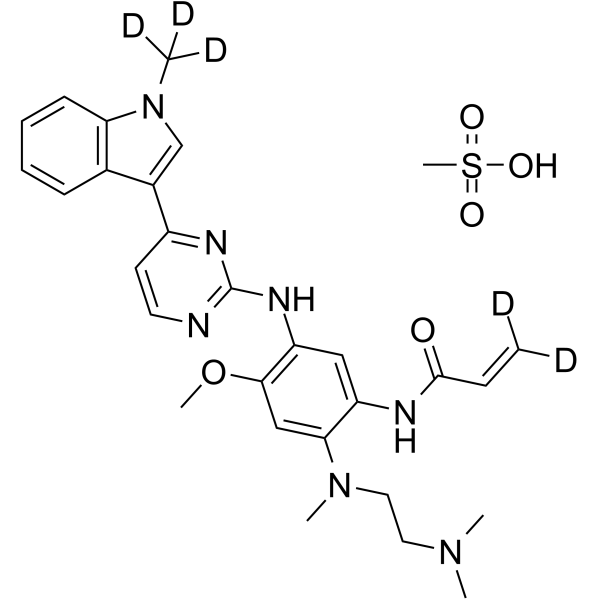
    Dosimertinib-d5 (mesylate) is a potent and orally active EGFR inhibitor. Dosimertinib-d5 (mesylate) decreases the expression of p-EGFR and p-ERK protein levels. Dosimertinib-d5 (mesylate) shows antiproliferative and anti-tumor activity. Dosimertinib-d5 (mesylate) has the potential for the research of non-small-cell lung cancer (NSCLC) .
    Dosimertinib-d5 mesylate
  • HY-113916

    AT13387 lactate

    HSP Cancer
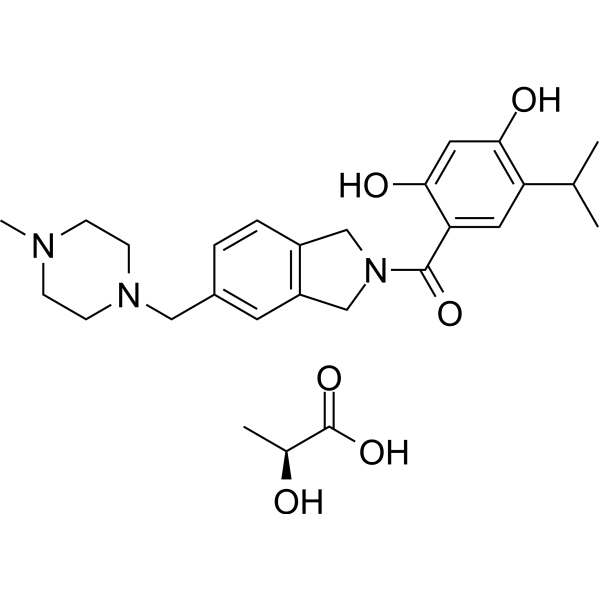
    Onalespib lactate is a potent and cross the blood-brain barrier heat-shock-protein-90 (Hsp90) inhibitor with an Kd value of 0.71 nM. Onalespib lactate inhibits the proliferation, survival and migration. Onalespib lactate decreases the expression of EGFR, p-EGFR, AKT, P-AKT, ERK1/2, P-ERK1/2, S6, P-S6 protein. Onalespib lactate shows antitumor activity. Onalespib lactate has the potential for the research of non-small cell lung cancer (NSCLC) .
    Onalespib lactate
  • HY-142283

    Isotope-Labeled Compounds EGFR Cancer
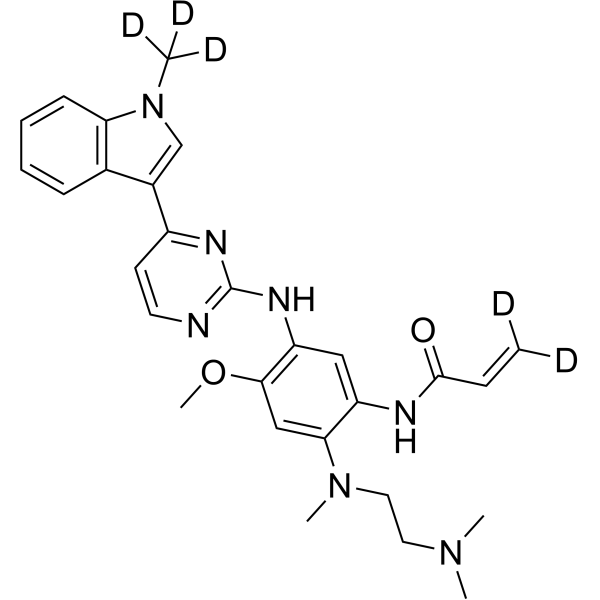
    Dosimertinib-d3-d3 is a potent and orally active EGFR inhibitor. Dosimertinib-d3-d3 decreases the expression of p-EGFR and p-ERK protein levels. Dosimertinib-d3-d3 shows antiproliferative and anti-tumor activity. Dosimertinib-d3-d3 has the potential for the research of non-small-cell lung cancer (NSCLC) .
    Dosimertinib
  • HY-178939

    EGFR Akt PERK Apoptosis Neurological Disease Cancer
    EGFR-IN-181 is an orally active, potent, brain-penetrant EGFRL858R/T790M/C797S triple mutations inhibitor (IC50 = 1.32 nM). EGFR-IN-181 can inhibit EGFR phosphorylation (p-EGFR) and phosphorylation of its downstream signaling proteins AKT (p-AKT) and ERK (p-ERK). EGFR-IN-181 can induce apoptosis and cause G2 phase arrest. EGFR-IN-181 can be used for the study of non-small cell lung cancer (NSCLC) and brain metastases .
    EGFR-IN-181
  • HY-159101

    EGFR PD-1/PD-L1 Cancer
    EP26 is a potent and orally active EGFR and PD-L1 inhibitor with IC50 values of 48.6 nM, 1.77 µM, respectively. EP26 decreased the protein expression of p-EGFR. EP26 induces cell cycle arrest at G0/G1 phase. EP26 has the potential for the research of glioblastoma .
    EP26
  • HY-168559

    EGFR Apoptosis Cancer
    EGFR-IN-131 (compound 3a) is a potent and cross the blood-brain barrier EGFR inhibitor with an IC50 value of 272.9 nM. EGFR-IN-131 shows antiproliferative activity. EGFR-IN-131 induces apoptosis and cell cycle arrest at G0/G1 phase. EGFR-IN-131 decreases the protein expression of p-EGFR .
    EGFR-IN-131
  • HY-178009

    EGFR Apoptosis Akt PERK Cancer
    EGFR-IN-175 is an orally active and selective EGFR L858R/T790M/C797S inhibitor with an IC50 of 18.94 nM. EGFR-IN-175 can induce cell apoptosis and cause G1 phase arrest. EGFR-IN-175 can downregulate p-EGFR, p-AKT, and p-ERK expression. EGFR-IN-175 can be used for the research of cancer, such as lung cancer .
    EGFR-IN-175
  • HY-149824

    EGFR Apoptosis Cancer
    EGFR T790M/L858R-IN-2 is a potent and selective EGFRT790M/L858R inhibitor with IC50 values of 3.5, 1290 nM for EGFRT790M/L858R, EGFR WT, respectively. EGFR T790M/L858R-IN-2 decreases the expression of p-EGFR, P-AKT, P-ERK1/2. EGFR T790M/L858R-IN-2 induces Apoptosis and cell cycle arrest in the G1 phase. EGFR T790M/L858R-IN-2 shows anti-cancer activity .
    EGFR T790M/L858R-IN-2
  • HY-157413

    EGFR Cancer
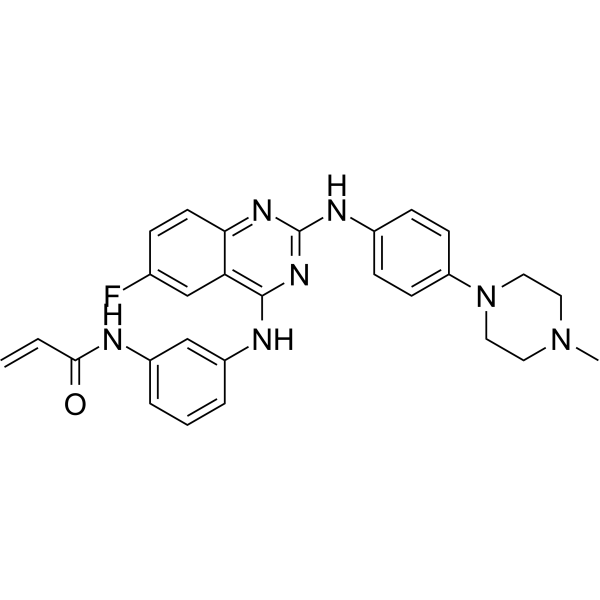
    YS-67 is a potent inhibitor of EGFR with an IC 50 of 5.2 nM. YS-67 significantly inhibits p-EGFR and p-AKT. YS-67 inhibits the proliferation of A549, PC-9, and A431cells with IC 50s of 4.1, 0.5, and 2.1 μM, respectively .
    YS-67
  • HY-152019

    EGFR Cancer
    EGFR/C797S-IN-1 is a potent EGFR-C797S inhibitor with an IC50 value of 0.128 µM. EGFR/C797S-IN-1 shows anti-proliferative activity and anti-tumor activity. EGFR/C797S-IN-1 inhibits the expression of p-EGFR in a dose-dependent manner .
    EGFR/C797S-IN-1
  • HY-163354

    EGFR Cancer
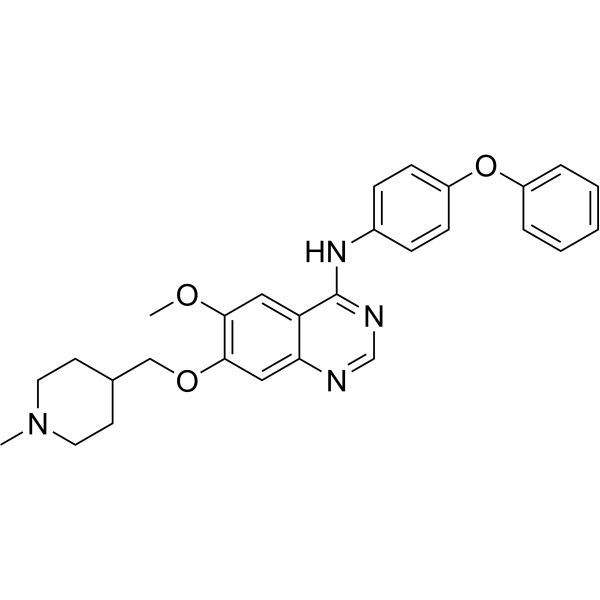
    EGFR-IN-103 (compound 1) is a potent EGFR inhibitor with an IC50 of 6 nM for pEGFR .
    EGFR-IN-103
  • HY-179049

    EGFR Microtubule/Tubulin Akt ERK Autophagy Atg8/LC3 p62 Ferroptosis Reactive Oxygen Species (ROS) Cancer
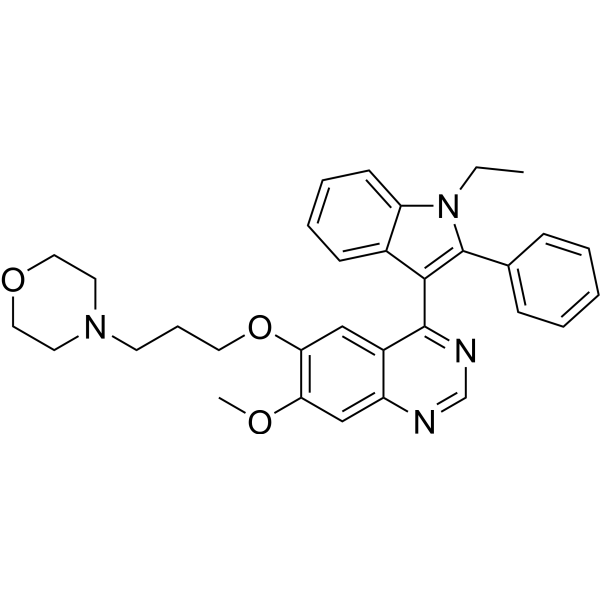
    EGFR/tubulin-IN-1 (Compound 26) is a dual-target inhibitor of EGFR and tubulin. EGFR/tubulin-IN-1 significantly reduces the levels of p-EGFR, p-AKT, and p-ERK in cells, disrupting the microtubule structure of the cells. EGFR/tubulin-IN-1 significantly inhibits the proliferation of H1975 cells and significantly blocks the cells in the G2/M phase. EGFR/tubulin-IN-1 induces the expression of autophagy markers LC3B-II and Beclin-1, while down-regulating the expression of p62. EGFR/tubulin-IN-1 induces ferroptosis, with increased ROS content and depletion of glutathione (GSH). EGFR/tubulin-IN-1 inhibits epithelial-mesenchymal transition (EMT) and tumor metastasis. EGFR/tubulin-IN-1 has a significant tumor-suppressing effect in the H1975 transplanted tumor nude mouse model. EGFR/tubulin-IN-1 can be used for the study of non-small cell lung cancer .
    EGFR/tubulin-IN-1

Inquiry Online

Your information is safe with us. * Required Fields.

Salutation


Country or Region *

Applicant Name *


Organization Name *

Department *


Email Address *


Product Name *

Cat. No.


Requested quantity *

Phone Number *


Remarks

Inquiry Online

Inquiry Information

Product Name:
Cat. No.:
Quantity:
MCE Japan Authorized Agent:

