11 Results for "

pluripotency

" in MedChemExpress (MCE) Product Catalog:
Products (11)

11 Results for "pluripotency" in MCE Product Catalog:

5
5 Cited Publications
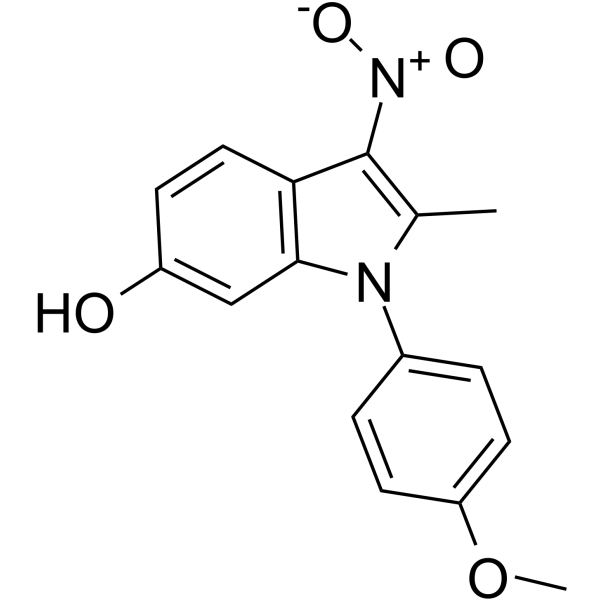
Cat. No.: HY-15838
CAS No.: 147591-46-6
Purity:  99.92%
Target:  

DYRK

Research Areas:  

Cancer

ID-8 is an inhibitor of dual-specificity tyrosine phosphorylation-regulated kinase (DYRK). ID-8 sustains embryonic stem cell (ESC) self-renewal and pluripotency. ID-8 enhances Wnt-mediated hESC survival and proliferation via inhibition of DYRKs .
loading...
    loading...
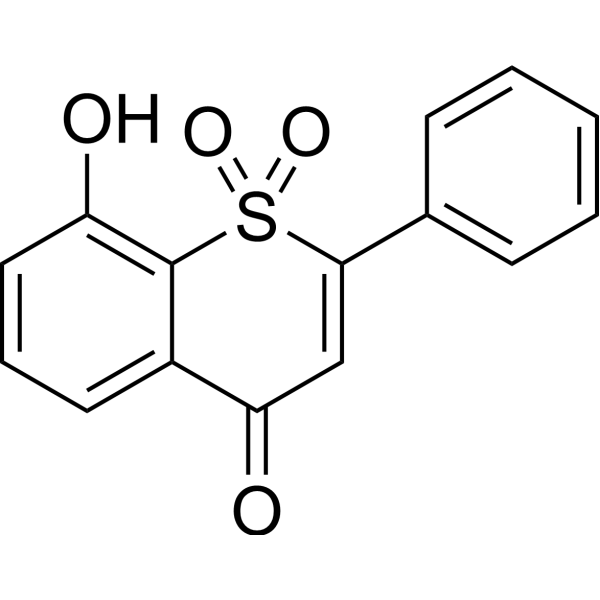
Cat. No.: HY-111002
CAS No.: 96156-26-2
Purity:  98.48%
Synonyms: NSC375009
Target:  

HSP

Research Areas:  

Others

Displurigen (NSC375009) disrupts human embryonic stem cell pluripotency by targeting HSPA8. Displurigen inhibits ATPase activity of HSP70 (IC50 = 225 μM) .
loading...
    loading...
Cat. No.: HY-P10706
CAS No.: 1588764-53-7
Research Areas:  

Others

Ac-ILVAGK-NH2 is a self-assembling peptide that helps human H1 embryonic stem cells maintain their pluripotency .
loading...
    loading...
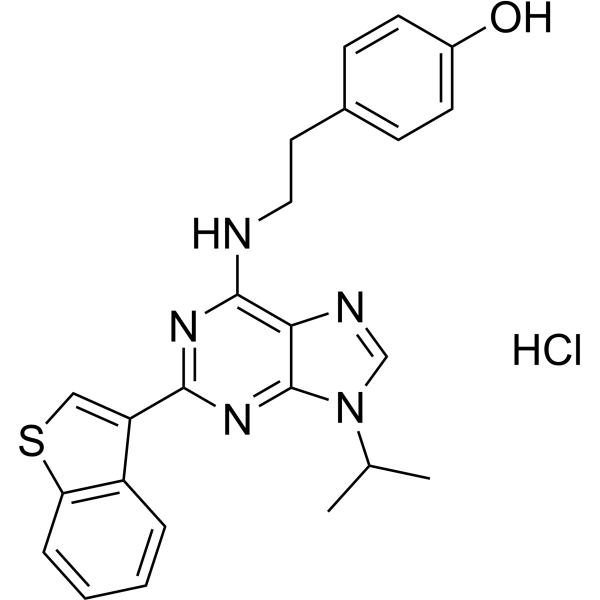
Cat. No.: HY-15001A
CAS No.: 2319882-01-2
Synonyms: SR1 hydrochloride
Research Areas:  

Others

Stemregenin 1 hydrochloride is a purine derivative that antagonizes aryl hydrocarbon receptor signaling in CD34+ cells. IC50 The value is 127 nM. Stemregenin 1 hydrochloride can be used to expand the pluripotency of hematopoietic stem cells (HSC) in stem cell studies .
loading...
    loading...
Cat. No.: HY-174544
Target:  

mRNA

Research Areas:  

Cancer

Human POU class 5 homeobox 1 (POU5F1) mRNA encodes a transcription factor containing a POU homeodomain that plays a key role in embryonic development and stem cell pluripotency. Aberrant expression of this gene in adult tissues is associated with tumorigenesis.
loading...
    loading...
Cat. No.: HY-174574
Target:  

mRNA

Research Areas:  

Cancer

Human NANOG mRNA encodes the human Nanog homeobox (NANOG) protein, a DNA binding homeobox transcription factor that involved in embryonic stem (ES) cell proliferation, renewal, and pluripotency. NANOG can block ES cell differentiation and autorepress its own expression in differentiating cells.
loading...
    loading...
Cat. No.: HY-K6019

MCE Stem Cell Cryopreservation Medium is a ready-to-use, serum-free Cryopreservation Medium optimized for human pluripotent stem cells (PSCs). PSCs preserved with this medium exhibit high post-thaw viability (> 90%) and stable expression of pluripotency markers such as OCT4 and NANOG, providing consistent and reliable cell sources for subsequent expansion and differentiation. This product is suitable for long-term, stable storage of PSCs and downstream applications.

loading...
    loading...
Cat. No.: HY-L017
2,852 compounds

Adult stem cells are important for tissue homeostasis and regeneration due to their ability to self-renew and generate multiple types of differentiated daughters. Self-renewal is reflected by their capacity to undergo multiple/limitless divisions. Several signaling pathways are involved in self-renewal of stem cells, that is, Notch, Wnt, and Hedgehog pathways or Polycomb family proteins. Recent studies mainly focus on cancer stem cell (CSCs), induced pluripotent stem cell (iPSCs), neural stem cell and maintenance of embryonic stem cell pluripotency. Among them, CSCs have been believed to be responsible for tumor initiation, growth, and recurrence that have implications for cancer therapy.

MCE owns a unique collection of 2,852 compounds that can be used for stem cell regulatory and signaling pathway research.

Cat. No.: HY-P11870
Research Areas:  

Others

PADI4_7 is an inert binder of peptidylarginine deiminase IV (PADI4) with a Kd value of 8 nM. PADI4_7 binds to PADI4 but does not modulate its catalytic activity. PADI4_7 can be functionalized into a biotinylated probe (bio-PADI4_7), which enriches intracellular PADI4 from cell extracts for biochemical analyses, including the identification of PADI4-interacting proteins under resting or activated conditions .
loading...
    loading...
Cat. No.: HY-12299G
CAS No.: 837422-57-8
Synonyms: Dual LCK/SRC inhibitor (GMP)
WH-4-023 GMP is WH-4-023 (HY-12299) produced by using GMP guidelines. GMP small molecules works appropriately as an auxiliary reagent for cell therapy manufacture. WH-4-023 (Dual LCK/SRC inhibitor) is a Lck/Src dual target inhibitor with functions in stem cell maintenance and differentiation regulation. WH-4-023 blocks epithelial-mesenchymal transition, supports the self-renewal of porcine embryonic stem cells, and inhibits their differentiation into mesoderm and endoderm. WH-4-023 is a key component of 3i/LAF medium, and enables the stable establishment and long-term maintenance of porcine pre-gastrulation epiblast stem cell lines. Removal of WH-4-023 reduces the expression of pluripotency factors in porcine and human extended pluripotent stem cells. WH-4-023 can be applied to relevant studies such as non-small cell lung cancer resistant to EGFR-TKIs .
loading...
    loading...
Cat. No.: HY-13689G
CAS No.: 133053-19-7
Go 6983 GMP is Go 6983 (HY-13689) produced by using GMP guidelines. GMP small molecules works appropriately as an auxiliary reagent for cell therapy manufacture. Go 6983 is a dual inhibitor targeting Suv39h1/2 (KMT1A/KMT1B) and PKC, as well as a transcriptional activator capable of inducing DNA hypomethylation. Go 6983 stimulates the transcription of Prdm14 by reducing Suv39h1/2 protein levels, decreasing histone modifications in the Prdm14 promoter region, and increasing the recruitment of RNA polymerase II. Go 6983 induces genome-wide DNA hypomethylation by inhibiting de novo methyltransferase expression and increasing Tet1/Tet2 levels, thereby promoting self-renewal and pluripotency maintenance of stem cells. Meanwhile, Go 6983 can block PKC-mediated signaling pathways to reduce the expression of EMT-related genes and eliminate the upregulation of antioxidant genes downstream of NRF2. Go 6983 is mainly used in mechanism studies related to myocardial ischemia/reperfusion injury .
loading...
    loading...
  • 1

